
目录
- 1. Introduction: Unpacking the Palm Kernel Puzzle
2. The Core Difference: How Are They Made?
2.1. Solvent Extraction: The Method for Palm Kernel Meal (PKM)
2.2. Mechanical Pressing: The Method for Palm Kernel Expeller (PKE)
3. Nutritional Showdown: PKM vs. PKE in Feed Value
4. Practical Applications in Animal Feed
5. Economic and Handling Considerations
6. Your Source for Premium Palm Products
7. Conclusion: Which One is Right for Your Needs?
1. Introduction: Unpacking the Palm Kernel Puzzle
In the world of animal nutrition and agriculture, the co-products of the palm oil industry—ranging from 粗棕榈油 to fibrous materials like 油棕果串 和 棕榈仁壳—are invaluable. Two of the most common ingredients derived from this industry are Palm Kernel Meal (PKM) and Palm Kernel Expeller (PKE). While the names are often used interchangeably, there is a crucial 棕榈仁粉和棕榈仁压榨机的区别 that impacts nutrition, cost, and application. Understanding this distinction is essential for farmers, nutritionists, and feed manufacturers aiming for optimal results.
Both products originate from the same source—the 棕榈仁 of the oil palm fruit—but their journey from kernel to feed ingredient diverges significantly. This divergence, rooted in the oil extraction method, creates two distinct products with unique nutritional profiles. This guide will illuminate these differences, helping you make an informed choice for your specific needs.
2. The Core Difference Between Palm Kernel Meal and Palm Kernel Expeller: How Are They Made?
The fundamental distinction between PKM and PKE lies in the method used to extract 棕榈仁油 from the kernel. This single factor dictates the final product’s residual oil content, which in turn affects its energy, protein, and fiber levels.
2.1. Solvent Extraction: The Method for Palm Kernel Meal (PKM)
Palm Kernel Meal is the product left after the oil is extracted using a solvent, most commonly hexane. This chemical process is highly efficient and can extract almost all the oil from the kernel. The kernels are flaked, cooked, and then washed with the solvent, which dissolves the oil.
After the oil-solvent mixture is separated, the remaining flakes are toasted to remove any residual solvent, resulting in a meal with a very low fat content. According to a study published on 科学直接, this high-efficiency process typically leaves a residual oil content of only 1-2% in the final meal.
2.2. Mechanical Pressing: The Method for Palm Kernel Expeller (PKE)
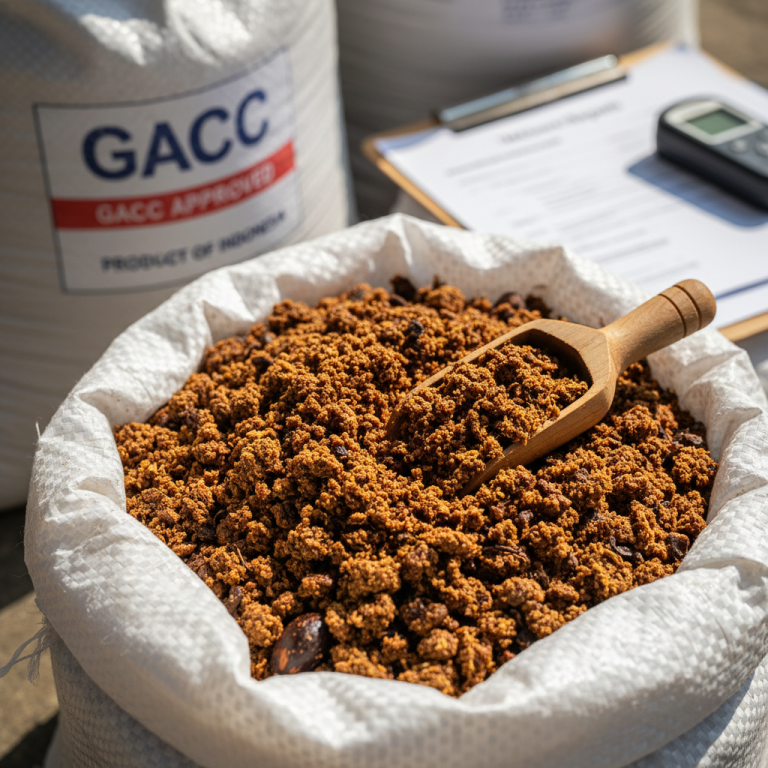
棕榈仁压榨机, on the other hand, is produced through a purely physical process. It involves crushing and pressing the palm kernels in a screw press (an “expeller”) to mechanically squeeze the oil out. No chemicals are used in this method.
This mechanical process is less efficient than solvent extraction, leaving a significantly higher amount of residual oil in the final product. The resulting Palm Kernel Expeller typically contains a fat content ranging from 5% to 12%. This higher oil content is the most significant nutritional distinction between the two.
3. Nutritional Showdown: PKM vs. PKE in Feed Value
The variation in residual fat directly impacts the entire nutritional profile. A higher fat content means higher energy, but it also means the concentrations of other nutrients, like protein and fiber, are proportionally lower. The authoritative animal feed resource Feedipedia provides detailed analyses of these differences.
| 养分 | 棕榈仁粉(PKM) | 棕榈仁压榨机(PKE) |
|---|---|---|
| 粗脂肪 | 低(1-2%) | High (5-12%) |
| 粗蛋白 | Higher (16-19%) | Slightly Lower (14-17%) |
| 粗纤维 | Slightly Higher | Slightly Lower |
| 代谢能 | 降低 | 更高 |
Key Takeaways:
- PKE for Energy: With its higher fat content, PKE is a more energy-dense feed ingredient. This makes it particularly useful in rations for livestock that require high energy levels, such as beef cattle or dairy cows.
PKM for Protein: Because most of the fat has been removed, the protein and fiber in PKM are more concentrated. This can make it a preferable option when protein is the primary target nutrient.
4. Practical Applications in Animal Feed
The choice between PKM and PKE depends heavily on the target animal and the desired outcome. Both are excellent sources of fiber and protein for ruminants, but their use in monogastric animals (like poultry and pigs) is limited due to high levels of non-starch polysaccharides (NSPs), which are difficult for them to digest.
- Ruminants (Cattle, Sheep, Goats): Both PKM and PKE are widely used in ruminant diets. The high fiber content is beneficial for rumen health. PKE’s higher energy can be particularly advantageous for finishing cattle or high-producing dairy cows, as confirmed by research in the Asian-Australasian Journal of Animal Sciences.
家禽和猪: Inclusion rates are generally kept low due to poor digestibility of the fiber. However, PKE may be favored in small amounts for the extra energy.
水产养殖: PKM is sometimes used as a plant-based protein source in fish feed, helping to reduce the reliance on more expensive fishmeal.
5. Economic and Handling Considerations
Beyond nutrition, practical factors can influence the decision. The price of PKE and PKM can fluctuate based on global palm oil prices, logistics, and regional processing capabilities. In some areas, mechanically pressed PKE may be more readily available and cost-effective than solvent-extracted PKM.
Another key consideration is storage. The higher fat content in PKE makes it more susceptible to becoming rancid through oxidation, especially in hot and humid climates. Proper storage is crucial to maintain its quality and palatability. This risk is lower with PKM due to its minimal oil content. For more on best practices, the 联合国粮食及农业组织(粮农组织) offers extensive resources on feed storage.
6. Your Source for Premium Palm Products
正在寻找高品质的棕榈产品?
Makmur Amanah Sejahtera 提供高品质的棕榈产品,例如棕榈仁压榨料、棕榈仁壳、原棕榈油、棕榈仁油等。请通过 WhatsApp +6282140002198 或发送电子邮件至 admin@makmuramanah.co.id 与我们联系。.
7. Conclusion: Which One is Right for Your Needs?
In summary, the primary distinction between PKM and PKE is not their origin, but their processing. This single variable creates a cascade of nutritional and practical differences:
- 棕榈仁粉(PKM): Made via solvent extraction. It is lower in fat, higher in protein concentration, and more stable during storage.
棕榈仁压榨机(PKE): Made via mechanical pressing. It is higher in fat (energy), slightly lower in protein concentration, and requires careful storage to prevent rancidity.
Ultimately, the better choice depends entirely on your goals. If you need an energy boost for your livestock and can manage its storage, PKE is an excellent option. If you are formulating a ration where protein is the limiting factor and want a more stable product, PKM is the superior choice. By understanding these nuances, you can optimize your feed formulations for better performance and cost-efficiency.

 Chinese
  English
  Indonesian
  Arabic