
目录
- 椰壳炭究竟是什么?
- 椰壳炭是如何制成的?
- The Top 5 Amazing Benefits of Coconut Shell Charcoal
- 除了烧烤之外:椰壳木炭的常见用途
- 椰壳炭 vs. 传统木炭:孰优孰劣,孰优孰劣?
- How to Choose the Best Coconut Shell Charcoal for Your Needs
- 常见问题解答 (FAQ)
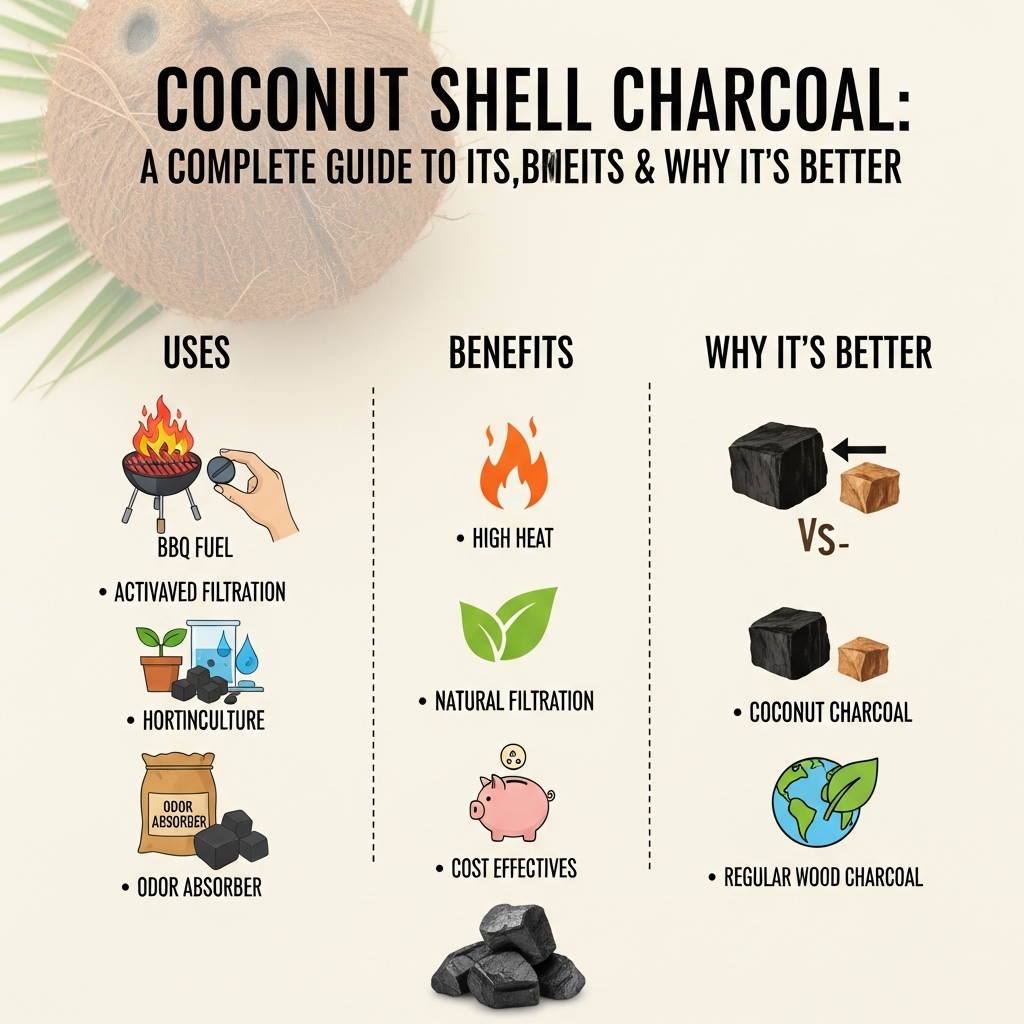
Welcome to your definitive guide on one of the most sustainable and efficient fuels available today. When you think of charcoal, the image of smoky barbecues likely comes to mind. But not all charcoal is created equal. 椰壳炭 is revolutionizing everything from backyard grilling to industrial filtration, offering a cleaner, hotter, and more eco-friendly alternative to its wood-based counterparts. This guide will explore its incredible benefits, diverse uses, and why it stands out as the superior choice.
椰壳炭究竟是什么?
Coconut shell charcoal is a type of charcoal produced from the hard, woody shells of coconuts. Unlike traditional charcoal that relies on cutting down trees, this amazing product is made from a resource that is often considered agricultural waste. This immediately positions it as a more sustainable and environmentally conscious option.
The key difference lies in its composition. It has a higher carbon content and a more uniform, dense structure. This results in a fuel that burns more efficiently, produces less ash, and maintains a consistent temperature for longer periods. It’s the go-to choice for anyone looking for a high-performance, green alternative.

椰壳炭是如何制成的?
The production process is a fascinating blend of simplicity and science. It begins with collecting coconut shells, which are then cleaned and dried. The magic happens through a process called pyrolysis, where the shells are heated in a low-oxygen environment, such as a specialized kiln or drum.
This controlled heating process burns off volatile compounds like water, methane, and hydrogen, leaving behind pure carbon, or “char.” The resulting 椰壳炭 is then cooled and often compressed into uniform briquettes. For applications like water filtration, it undergoes an “activation” process to create a highly porous structure, known as activated carbon.
The Top 5 Amazing Benefits of Coconut Shell Charcoal
1. Remarkably Eco-Friendly and Sustainable
This is perhaps the most significant advantage. Coconut shell charcoal is made from a renewable resource that would otherwise be discarded. This reduces landfill waste and, most importantly, prevents the deforestation associated with traditional lump charcoal production. By choosing it, you are supporting a circular economy, as highlighted by sustainability principles from organizations like the 美国环境保护署(EPA).
From Waste to Wonder: The Power of Agricultural Byproducts
The principle of converting agricultural waste into valuable resources is a cornerstone of a sustainable future. Just as coconut shells are transformed, the palm oil industry offers numerous eco-friendly materials. Products like 棕榈仁壳 are used as efficient biofuel, while the leftover mash, 棕榈仁压榨机, serves as nutritious animal feed. The process begins with the 油棕果串, 由此可得的宝贵 棕榈仁 is extracted to produce both 粗棕榈油 和 棕榈仁油, showcasing a zero-waste approach.
2. Burns Hotter and Lasts Longer
Thanks to its high carbon content and density, coconut charcoal burns at a significantly higher temperature than most wood-based charcoals. It can maintain a steady, hot burn for up to 3-4 hours, providing consistent heat that is perfect for grilling and cooking. This efficiency means you use less fuel over time, saving you money in the long run.
3. Produces Minimal Smoke and Odor
Are you tired of being enveloped in a cloud of smoke every time you grill? Because 椰壳炭 contains very few impurities, it produces almost no smoke or unwanted odors. This creates a more pleasant cooking experience and allows the natural flavor of your food to shine through without being overpowered by a smoky taste.
4. Very Low Ash Content
Cleanup is a breeze with coconut charcoal. It produces as little as 4-6% ash by weight, compared to the 20-40% produced by many traditional charcoal briquettes. Less ash means less mess to clean from your grill or stove, giving you more time to enjoy your meal.
5. Incredible Versatility
While it’s a champion in the world of barbecue, the uses of this material are incredibly diverse. It is the primary source for producing high-quality activated carbon, a critical component in air and water purification systems worldwide. Its journey from a simple shell to a powerful purifying agent is a testament to its amazing properties, a process detailed in many scientific journals.
除了烧烤之外:椰壳木炭的常见用途
The applications for 椰壳炭 extend far beyond the backyard barbecue. Its unique properties make it invaluable in a variety of fields.
- 活性炭生产: This is its most significant industrial use. The microporous structure of activated coconut charcoal makes it highly effective at adsorbing impurities, making it essential for water filters, air purifiers, and even medical treatments.
- 园艺(生物炭): When added to soil, it becomes biochar. This soil amendment improves water retention, increases aeration, and fosters beneficial microbial growth. Many university agricultural programs, like the Cornell Garden-Based Learning program, have researched its benefits for improving soil health.
- 工业燃料: In many parts of the world, it serves as a reliable and cost-effective fuel source for blacksmithing, foundries, and other industrial processes that require a consistent, high-temperature heat source.
- 健康与美容: Activated charcoal from coconut shells is a popular ingredient in toothpaste, face masks, and other cosmetic products due to its purported ability to draw out toxins and impurities.

椰壳炭 vs. 传统木炭:孰优孰劣,孰优孰劣?
To truly understand its superiority, let’s compare 椰壳炭 to traditional wood-based lump charcoal and briquettes. This comparison highlights why so many are making the switch to this superior fuel.
| 特征 | 椰壳木炭 | Traditional Lump Charcoal | 传统煤球 |
|---|---|---|---|
| 热输出 | 非常高且稳定 | 高但不稳定 | 中等且稳定 |
| 燃烧时间 | Long (3-4 hours) | 短至中 | 中等的 |
| 抽烟 | 非常低 | 中高 | Medium (can have chemical smell) |
| 灰分含量 | Very Low (4-6%) | 低至中等 | High (20%+) |
| 可持续性 | Excellent (Made from waste) | Poor (Deforestation) | Poor (Often contains additives) |
How to Choose the Best Coconut Shell Charcoal for Your Needs
购物时 椰壳炭, keep these tips in mind to ensure you get a high-quality product:
- 检查 100% 天然成分: Avoid products with fillers, binders, or chemical additives. The best options are made purely from coconut shells.
- Consider the Shape: Briquettes are uniform and easy to manage, making them great for most grilling applications. Hexagonal briquettes with a hole in the center often provide superior airflow and a more even burn.
- 阅读评论: Look for feedback on burn time, heat consistency, and ash production. Reputable grilling communities, such as the forums on AmazingRibs.com, often have user reviews and recommendations.
常见问题解答 (FAQ)
1. Is coconut shell charcoal completely smokeless?
While it is not 100% smokeless, it is as close as you can get. It produces very little smoke, especially compared to wood charcoal. Any smoke you do see is typically from food drippings rather than the fuel itself.
2. Does it make my food taste like coconut?
No, not at all. The carbonization process removes all the compounds that would create a coconut flavor. It is a neutral fuel that allows the true taste of your food to stand out.
3. Is coconut shell charcoal more expensive?
The upfront cost may sometimes be slightly higher, but its long burn time and efficiency make it more economical in the long run. You’ll find yourself using less charcoal per cooking session, which provides excellent value.
正在寻找高品质的棕榈产品?
Makmur Amanah Sejahtera 提供高品质的棕榈产品,例如棕榈仁压榨料、棕榈仁壳、原棕榈油、棕榈仁油等。请通过 WhatsApp +6282140002198 或发送电子邮件至 admin@makmuramanah.co.id 与我们联系。.
综上所述,, 椰壳炭 is more than just a trend; it’s a smarter, cleaner, and more sustainable way to fuel our fires. Whether you’re a barbecue enthusiast, a gardener, or someone passionate about making eco-friendly choices, it offers a powerful solution that benefits both you and the planet. Make the switch today and experience the remarkable difference for yourself.

 Chinese
  English
  Indonesian
  Arabic