
目录
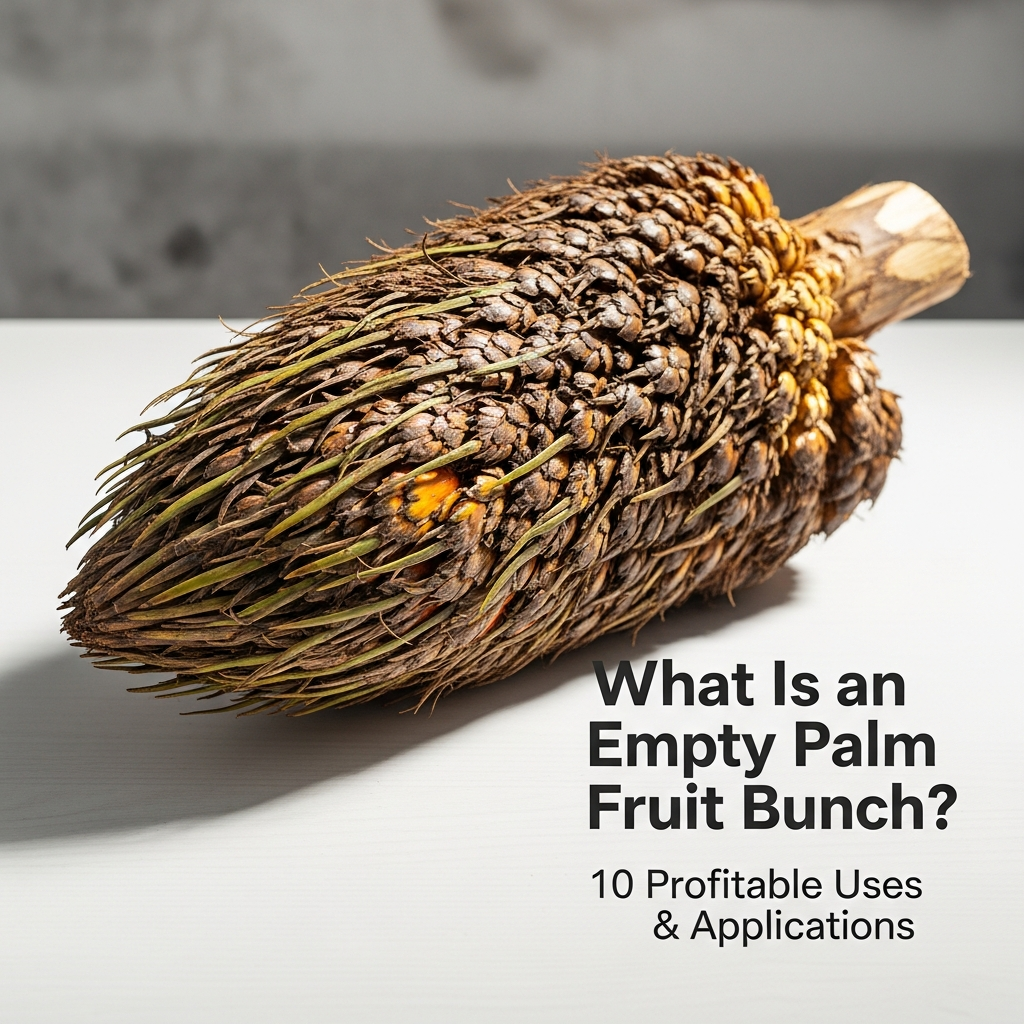
- What Exactly Is an Empty Palm Fruit Bunch (EFB)?
- 10 Profitable Uses & Applications for an Empty Palm Fruit Bunch
- The Future of the Empty Palm Fruit Bunch in the Circular Economy
- 结论:变废为宝
The palm oil industry is a global powerhouse, but it generates enormous amounts of biomass waste. For decades, the primary byproduct, the 空棕榈果串 (EFB), was seen as a disposal problem. Today, however, innovation has transformed this agricultural residue into a valuable resource with dozens of profitable applications, championing a more sustainable and circular economy.
This guide explores what an empty palm fruit bunch is and dives into ten remarkable ways it’s being used to create value-added products. From generating green energy to creating eco-friendly materials, the EFB is a testament to the power of sustainable innovation. Let’s uncover the potential locked within this humble biomass.

What Exactly Is an Empty Palm Fruit Bunch (EFB)?
一个 空棕榈果串 is the fibrous stalk left behind after the palm fruits have been stripped from the fresh 油棕果串 提取 粗棕榈油. The milling process also separates the 棕榈仁, which is later processed into valuable 棕榈仁油. For every ton of crude palm oil produced, approximately 1.2 tons of EFB are generated.
Composed primarily of lignocellulose (lignin, cellulose, and hemicellulose), EFB has a high moisture content when fresh. Historically, these bunches were either incinerated, which caused air pollution, or left to rot in landfills, releasing methane. Now, technology allows us to harness their potential, turning a significant environmental challenge into a profitable opportunity.
10 Profitable Uses & Applications for an Empty Palm Fruit Bunch
The versatility of the empty palm fruit bunch is its greatest strength. Its fibrous nature and organic composition make it a perfect raw material for a wide range of industries. Here are ten of the most profitable and impactful applications in 2025.
1. Biofuel and Bioenergy Production from the Empty Palm Fruit Bunch
One of the most significant uses for an empty palm fruit bunch is in energy generation. EFB can be processed into various forms of biofuel, including bio-pellets, which are dense, easy-to-transport solid fuels. It can also be used directly in boilers at palm oil mills to generate electricity and steam, reducing reliance on fossil fuels. Other byproducts, like the hardy 棕榈仁壳, are also widely used for similar energy purposes.
This process not only provides a renewable energy source but also creates a closed-loop system where waste from production powers the facility itself. According to the 国际可再生能源机构(IRENA), 像空果串这样的生物质是全球向可持续能源转型的重要组成部分。.
2. High-Quality Compost and Organic Fertilizer
When shredded and composted, EFB transforms into a nutrient-rich organic fertilizer. This compost improves soil structure, enhances water retention, and returns vital organic matter to the land, reducing the need for chemical fertilizers. For palm plantations, this creates a perfect circular system where waste from the harvest nourishes the next crop.
3. 可持续纸浆和纸张生产
The high cellulose content in an 空棕榈果串 makes it a viable alternative to wood for producing pulp and paper. This non-wood fiber source helps reduce deforestation and lessens the environmental impact of the paper industry. The paper produced is suitable for packaging materials, writing paper, and other paper products.

4. Eco-Friendly Building Materials
The strong fibers of EFB can be mixed with binding agents to create durable, lightweight, and eco-friendly building materials. Products like fiberboards, particleboards, and insulation panels are becoming increasingly popular in green construction. This application of the empty palm fruit bunch provides a sustainable alternative to conventional, often less environmentally friendly, materials.
5. 蘑菇培养基
一个 空棕榈果串 serves as an excellent substrate for growing edible mushrooms, such as oyster mushrooms. The lignocellulosic material provides the necessary nutrients for mushroom mycelium to thrive. This creates an additional revenue stream for farmers and contributes to local food security.
6. Animal Feed for Livestock
Though naturally high in fiber, EFB can be processed through methods like steam treatment and fermentation to become a palatable and nutritious feed for ruminant animals like cattle and goats. This converts a waste product into a valuable component of the livestock feed supply chain, promoting sustainable agriculture practices much like the protein-rich 棕榈仁压榨机. 。 这 联合国粮食及农业组织(粮农组织) also supports the use of agricultural byproducts in animal feed.
7. Biogas and Methane Production
Through a process called anaerobic digestion, the organic matter in an empty palm fruit bunch can be broken down by microorganisms in an oxygen-free environment to produce biogas. This gas, primarily composed of methane, can be captured and used as a clean energy source for cooking, heating, or electricity generation, as detailed by agencies like the 美国环境保护署(EPA).
8. Production of Bio-Oil via Pyrolysis
Pyrolysis is a thermochemical process that heats biomass in the absence of oxygen to produce bio-oil, biochar, and syngas. Bio-oil derived from an 空棕榈果串 can be upgraded into transportation fuels or used as a substitute for industrial fuel oil, offering a promising path toward decarbonization.
9. Manufacturing of Biodegradable Plastics
The cellulose extracted from EFB fibers can be used to produce biodegradable plastics, or bioplastics. These materials offer a sustainable alternative to petroleum-based plastics, helping to mitigate the global plastic pollution crisis. Research published on platforms like 科学直接 frequently highlights advancements in creating biopolymers from agricultural waste.
10. Erosion Control and Mulching
In its raw, shredded form, the empty palm fruit bunch is an effective mulch. When spread on plantation grounds, it helps prevent soil erosion from wind and rain, suppresses weed growth, and conserves soil moisture by reducing evaporation. This simple, low-cost application directly improves plantation health and productivity.
The Future of the Empty Palm Fruit Bunch in the Circular Economy
The transformation of the 空棕榈果串 from a problematic waste into a sought-after raw material is a powerful example of the circular economy in action. As technology continues to advance, we can expect even more innovative and profitable applications to emerge. The focus is shifting towards integrated biorefineries where a single EFB can yield multiple products, maximizing value and minimizing waste.
This shift not only boosts the economic sustainability of the palm oil industry but also significantly enhances its environmental credentials. By fully utilizing every part of the harvest, the sector can move closer to a zero-waste model, creating green jobs and sustainable products along the way.
Makmur Amanah Sejahtera 提供高品质的棕榈产品,例如棕榈仁压榨料、棕榈仁壳、原棕榈油、棕榈仁油等。请通过 WhatsApp +6282140002198 或发送电子邮件至 admin@makmuramanah.co.id 与我们联系。. 这 空棕榈果串 is no longer just a byproduct; it is a co-product with immense potential. The ten profitable uses outlined here—from generating renewable energy and building green homes to producing biodegradable plastics and enriching soil—showcase its incredible versatility. As the world pushes for more sustainable solutions, the humble EFB stands out as a key player in the bio-based economy. Its journey from a discarded stalk to a cornerstone of green innovation is a compelling story of how we can turn environmental challenges into economic and ecological triumphs.正在寻找高品质的棕榈产品?
结论:变废为宝
 Chinese
  English
  Indonesian
  Arabic