棕榈核榨油机从印度尼西亚的出口商
+62 821 4000 2198

Empty Palm Fruit Bunch (EFB): 11 Amazing Uses (2025 Guide)

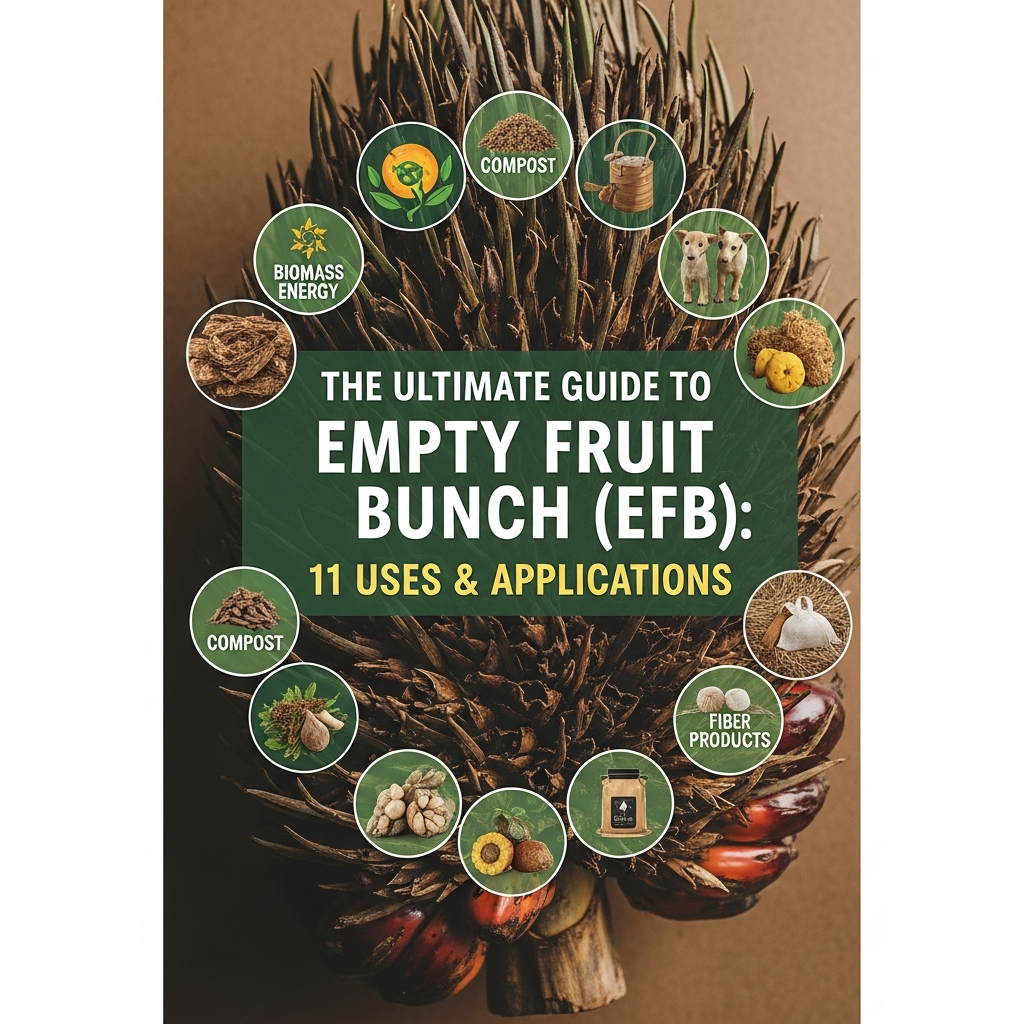
The global palm oil industry is a powerhouse, but it generates a massive amount of biomass waste. For every ton of 毛棕榈油 produced, approximately one ton of 空棕榈果串(EFB) is left behind. For decades, this fibrous material was considered a nuisance. Today, however, it’s being recognized as a valuable resource, a cornerstone of the circular economy. This guide explores the incredible versatility of this humble byproduct.

From generating clean energy to enriching soil and creating sustainable materials, the applications are transforming waste into wealth. We will delve into 11 proven uses that showcase the immense potential of the 空棕榈果串(EFB) and its role in creating a more sustainable future.

What Exactly is an Empty Palm Fruit Bunch (EFB)?

An 油棕果串 is a key component of palm oil processing. After the valuable fruits are stripped from the bunch to extract oil, the remaining fibrous stalk is what we call an 空棕榈果串(EFB). These fruits also contain the valuable 棕榈仁, which is itself processed to produce 棕榈油. The remaining EFB, composed mainly of lignocellulosic material (cellulose, hemicellulose, and lignin), is tough, moist, and incredibly abundant.

Instead of being discarded or burned in the open, which causes significant air pollution, modern practices now focus on repurposing EFB. This shift not only mitigates environmental damage but also opens up new revenue streams for the industry, turning a costly disposal problem into a profitable solution.

A large pile of raw Empty Palm Fruit Bunch (EFB) at a processing facility.
EFB is a key byproduct of the palm oil milling process, now recognized for its value.

11 Innovative Uses & Applications for Empty Palm Fruit Bunch (EFB)

The unique composition of EFB makes it suitable for a wide range of applications across various sectors. Here are 11 of the most impactful uses that are gaining traction globally.

1. Biofuel and Renewable Energy

One of the most significant uses for an 空棕榈果串(EFB) is as a source of renewable energy. The raw bunches can be processed into pellets or briquettes, creating a dense, high-calorific solid fuel. These can then be used to power boilers in the palm oil mills themselves or sold to other industrial power plants, reducing reliance on fossil fuels. This application directly supports the global push for cleaner energy sources, as detailed by the 国际可再生能源机构(IRENA).

2. Organic Compost and Fertilizer

EFB is rich in potassium and other essential organic nutrients. Through composting, it decomposes into a dark, nutrient-dense material that is perfect for conditioning soil. This organic fertilizer improves soil structure, water retention, and aeration, leading to healthier crops and reduced needs for chemical fertilizers. It is a perfect example of closing the nutrient loop in agriculture.

3. Pulp and Paper Production

The long, strong fibers within the 空棕榈果串(EFB) make it an excellent alternative to wood for producing pulp and paper. This non-wood source helps alleviate pressure on natural forests, combating deforestation. The resulting paper is high-quality and suitable for a variety of packaging and printing applications, contributing to a more sustainable paper industry.

4. Mushroom Cultivation Substrate

The sterile, fibrous nature of processed EFB provides an ideal substrate for growing various types of edible mushrooms, particularly oyster mushrooms. The bunch provides the necessary nutrients and physical structure for mycelium to colonize and fruit. This has created a new, profitable agricultural niche for palm oil-producing regions.

5. Animal Feed for Ruminants

When properly processed (often through shredding and fermentation), EFB can be used as a source of roughage in animal feed for ruminants like cattle, goats, and sheep. While not a primary source of protein, it adds bulk and fiber to the animals’ diet, aiding digestion. Research published in journals like the 动物饲料科学与技术杂志 often explores such alternative feedstocks.

6. Agricultural Mulching

Shredded 空棕榈果串(EFB) makes for an excellent mulching material in horticulture and large-scale farming. Spreading it around the base of plants helps suppress weed growth, retain soil moisture by reducing evaporation, and regulate soil temperature. As it slowly decomposes, it also adds valuable organic matter back into the soil.

7. Bio-oil and Biochar Production

Through a process called pyrolysis, EFB can be heated in an oxygen-starved environment to produce two valuable products: bio-oil and biochar. Bio-oil is a type of biofuel that can be refined for energy, while biochar is a stable form of carbon that can be used to sequester carbon and dramatically improve soil health. This technology represents a high-value application for the 空棕榈果串(EFB).

8. Medium-Density Fibreboard (MDF)

The fibers from EFB can be pressed with a resin to create Medium-Density Fibreboard (MDF) and particleboard. These engineered wood products are used extensively in the furniture and construction industries. Using EFB fiber reduces the demand for virgin wood and provides a sustainable building material, a concept championed by organizations like the Forest Stewardship Council (FSC) that promote responsible forestry.

9. Bioplastics and Biocomposites

Researchers are actively developing methods to extract nanocellulose from EFB fibers. This high-strength, lightweight material can be used as a reinforcing agent in biocomposites or as a base for creating biodegradable plastics. This cutting-edge application positions the 空棕榈果串(EFB) as a key player in the future of sustainable materials. For more on this, a study in the journal 聚合物 provides deep insights into cellulosic materials.

10. Sound and Heat Insulation Panels

The natural fibrous matrix of EFB gives it excellent sound and heat insulation properties. When compressed into panels, it can be used as an eco-friendly insulation material for buildings. This natural alternative to synthetic insulation materials like foam or fiberglass is non-toxic and biodegradable.

11. Erosion Control Mats (Geotextiles)

The long, durable fibers of the 空棕榈果串(EFB) can be woven into large mats or nets. These geotextiles are laid over exposed slopes, riverbanks, and construction sites to prevent soil erosion. They stabilize the soil while allowing vegetation to regrow, eventually biodegrading and leaving a stable, natural landscape.

The Environmental and Economic Impact of EFB

Utilizing the 空棕榈果串(EFB) is a win-win scenario. Environmentally, it reduces landfill waste, prevents air pollution from open burning, and decreases the carbon footprint of the palm oil industry. Economically, it creates new value chains and generates employment. This circular economy approach transforms a linear “take-make-dispose” model into a sustainable, regenerative cycle. By utilizing not just EFB but also other byproducts like 棕榈核榨油机 用于动物饲料和 棕榈壳 for biofuel, the entire process becomes vastly more efficient and environmentally friendly.

Conclusion: The Future is in the Fiber

"(《世界人权宣言》) 空棕榈果串(EFB) is no longer waste; it is a resource teeming with potential. From powering homes and feeding livestock to building furniture and creating bioplastics, its 11 diverse applications highlight a major shift towards sustainability and resourcefulness.

As technology continues to advance, we can only expect to uncover more innovative uses for this remarkable byproduct. By embracing the full potential of the EFB, the palm oil industry can pave the way for a truly green and circular economy.

Your Source for Sustainable Palm Products

Makmur Amanah Sejahtera 提供高品质的棕榈产品,如棕榈仁压榨机、棕榈仁壳、棕榈原油、棕榈仁油等。请通过 WhatsApp +6282140002198 与我们联系,或发送电子邮件至 admin@makmuramanah.co.id。

empty-palm-fruit-bunch-efb-11-uses-applications

默认值

您的电子邮件地址不会被公布。

zh_CNChinese