
RBD棕榈油CP6 is one of the most popular and versatile cooking oils in the world, prized for its stability, affordability, and performance. As a key player in the global edible oils market, understanding its specifications, applications, and how it differs from other grades like CP8 and CP10 is essential for both consumers and industrial buyers. This comprehensive guide breaks down everything you need to know about this vital commodity.
目录
From Fruit to Oil: The Palm Oil Journey
To appreciate RBD棕榈油CP6, 了解它的起源很有帮助。这段旅程始于…… 油棕果串, a large cluster of reddish fruits. The flesh of this fruit is pressed to extract 粗棕榈油 (CPO), which is the raw material that gets refined into palm olein. The fruit’s seed, known as the 棕榈仁, is also processed to produce 棕榈仁油, another valuable product. The processing also yields important by-products, including 棕榈仁压榨机, 用作动物饲料, 棕榈仁壳, ,一种流行的生物燃料。.
RBD棕榈油CP6究竟是什么?
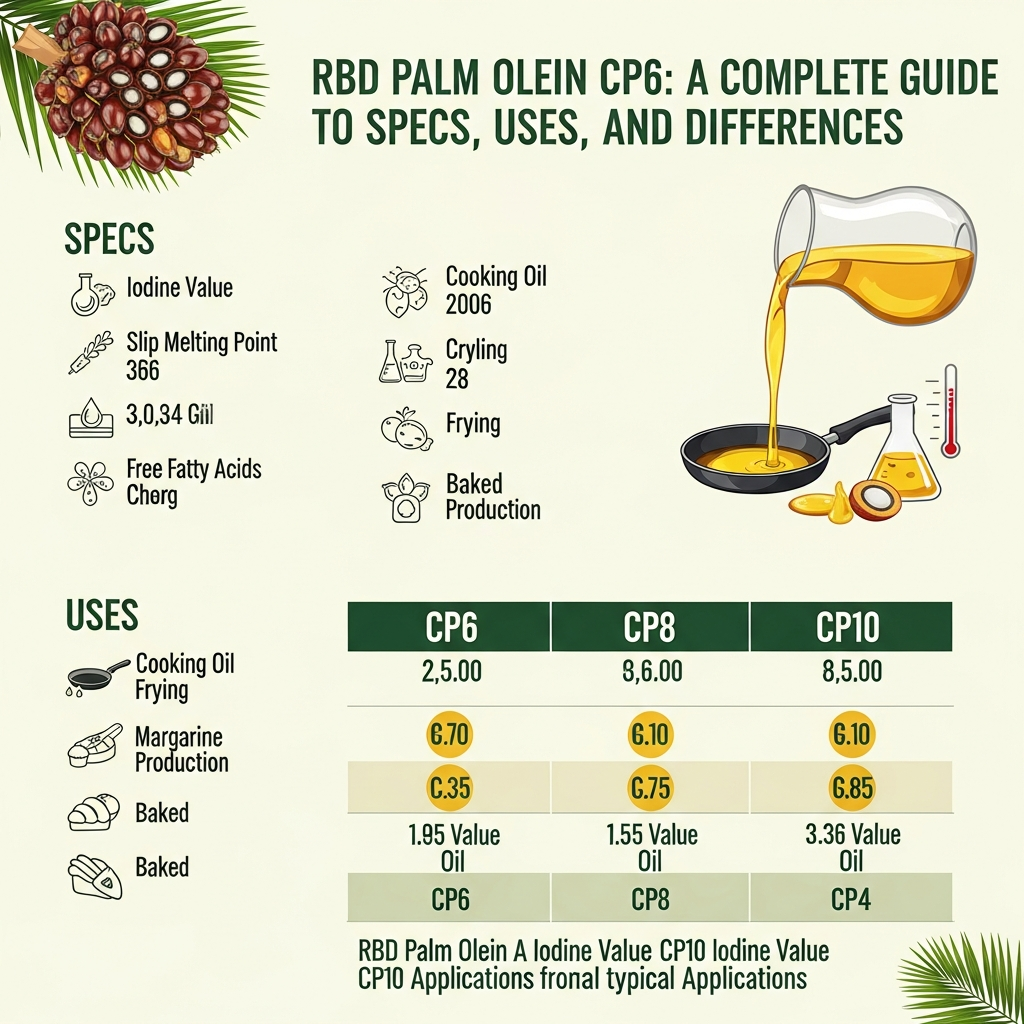
RBD Palm Olein CP6 is the liquid fraction obtained from the fractionation of palm oil after it has undergone a refining, bleaching, and deodorizing process. The “CP6” designation refers to its cloud point of 6° Celsius, which is a critical measure of its quality and suitability for various climates and applications. It is renowned for its high stability at frying temperatures and its neutral flavor profile.
This edible oil is a staple in kitchens and food manufacturing facilities worldwide. Its economic value, coupled with its excellent performance as a frying oil, makes RBD棕榈油CP6 a preferred choice for producing everything from instant noodles and potato chips to confectionery fats and margarine.
Decoding the Terminology: RBD, Palm Olein, and CP6
To fully grasp the nature of this product, it’s important to understand what each part of its name signifies. The name “RBD Palm Olein CP6” provides a complete description of the product’s journey from crude palm oil to a finished good.
What does RBD Stand For?
RBD is an acronym for 精制、漂白、除臭. This three-step process transforms crude palm oil into a stable, edible product:
- 精制: This initial step removes Free Fatty Acids (FFAs) and other impurities, which can cause the oil to smoke and go rancid.
- 漂: The oil is filtered through bleaching earth (a type of clay) to absorb and remove pigments like carotenoids, giving it a light, golden-yellow color.
- 除臭: In the final stage, steam is used under a vacuum to strip away any residual odors and tastes, resulting in a bland, neutral oil.
什么是棕榈油精?
Palm oil is semi-solid at room temperature. To create a liquid cooking oil, it undergoes a process called fractionation. During fractionation, the oil is cooled down, allowing the solid, higher-melting-point fats (known as palm stearin) to crystallize. The remaining liquid portion is then separated, and this liquid is 棕榈油.
The Importance of CP6 (Cloud Point 6°C)
The “CP” number indicates the Cloud Point, which is the temperature at which the oil starts to become cloudy or hazy as it solidifies. For RBD棕榈油CP6, this occurs at 6°C (42.8°F). A lower cloud point is desirable, especially in temperate or cooler climates, as it ensures the oil remains liquid and clear for longer.

RBD棕榈油CP6的主要规格
Quality control is paramount in the edible oil industry. The specifications for RBD Palm Olein CP6 are standardized to ensure consistency and safety. While specific values can vary slightly by supplier, they generally adhere to international standards like those set by the 食品法典委员会.
| 范围 | 典型值 |
|---|---|
| 游离脂肪酸(FFA)(以%棕榈酸计) | 0.1% 最大值 |
| 水分和杂质 (M&I) | 0.1% 最大值 |
| 碘值(维斯) | 56分钟 |
| 浊点(摄氏度) | 最高温度 6°C |
| 颜色(5.25英寸 Lovibond 色卡) | 3 红色 max |
Top 5 Applications and Uses of RBD Palm Olein CP6
独特的性质 RBD棕榈油CP6 make it incredibly versatile. Its high oxidative stability and cost-effectiveness are key drivers of its widespread use.
1. 油炸和烹饪
With a high smoke point (around 235°C or 455°F), it is an ideal choice for deep frying in both industrial food production and household kitchens. It imparts a crispy texture to foods without adding any unwanted flavor.
2. Manufacturing of Margarine and Shortening
Its semi-solid nature at lower temperatures makes it a crucial ingredient in producing margarines, shortenings, and other spreads, providing the necessary structure and mouthfeel.
3. Confectionery Products
In the confectionery industry, RBD棕榈油CP6 is used in coatings, fillings for baked goods, and in the production of chocolates where specific melting characteristics are required.
4. Instant Noodle Production
A significant portion of global palm olein is used for flash-frying instant noodles. The process cooks the noodles quickly and dehydrates them, extending their shelf life. You can learn more about fats in nutrition from the 世界卫生组织(世卫组织).
5. Dairy Fat Substitute
It serves as a cost-effective substitute for dairy fat in products like ice cream, whipped toppings, and coffee creamers, offering similar functional properties.

RBD棕榈油CP6、CP8和CP10:详细对比
The primary difference between CP6, CP8, and CP10 grades of RBD Palm Olein lies in their cloud point. This single specification dictates their suitability for different climates and applications. A lower cloud point indicates a higher degree of fractionation, making the oil more resistant to cold.
Understanding this distinction is crucial for procurement and product formulation. Using an oil with a higher cloud point (like CP10) in a cold region can result in the oil solidifying in storage or on supermarket shelves, which is undesirable for consumers.
- RBD棕榈油CP6: Cloud point of 6°C. It is considered a premium grade, suitable for temperate and cooler climates as it remains liquid at lower temperatures.
- RBD棕榈油CP8: Cloud point of 8°C. This is a common standard grade, balancing cost and performance for use in moderate climates.
- RBD棕榈油CP10: Cloud point of 10°C. This is the most widely produced grade, ideal for tropical and hot climates where ambient temperatures prevent solidification. For more insights on commodity markets, publications from institutions like the 食品化学期刊 are an excellent resource.
Health and Nutritional Benefits
While often debated, palm oil has several nutritional advantages. RBD棕榈油CP6 is naturally free of trans fats, which are known to negatively impact cardiovascular health. It is also a rich source of Vitamin E (specifically tocotrienols), a powerful antioxidant. For a balanced view on dietary fats, the 美国心脏协会 provides extensive guidelines.
As with any fat or oil, moderation is key to a healthy diet. When choosing products, considering sustainably sourced palm oil helps ensure your choices are both healthy and environmentally conscious.
为什么选择 RBD 棕榈油 CP6?
综上所述,, RBD棕榈油CP6 stands out as a high-quality, versatile, and economically significant edible oil. Its excellent frying stability, neutral taste, and resistance to cold make it a superior choice for a wide array of food applications, especially in regions with temperate climates. By understanding its specifications and how it compares to other grades, you can make an informed decision for your cooking or manufacturing needs.
Makmur Amanah Sejahtera 提供高品质的棕榈产品,例如棕榈仁压榨料、棕榈仁壳、原棕榈油、棕榈仁油等。请通过 WhatsApp +6282140002198 或发送电子邮件至 admin@makmuramanah.co.id 与我们联系。.正在寻找高品质的棕榈产品?
 Chinese
  English
  Indonesian
  Arabic