
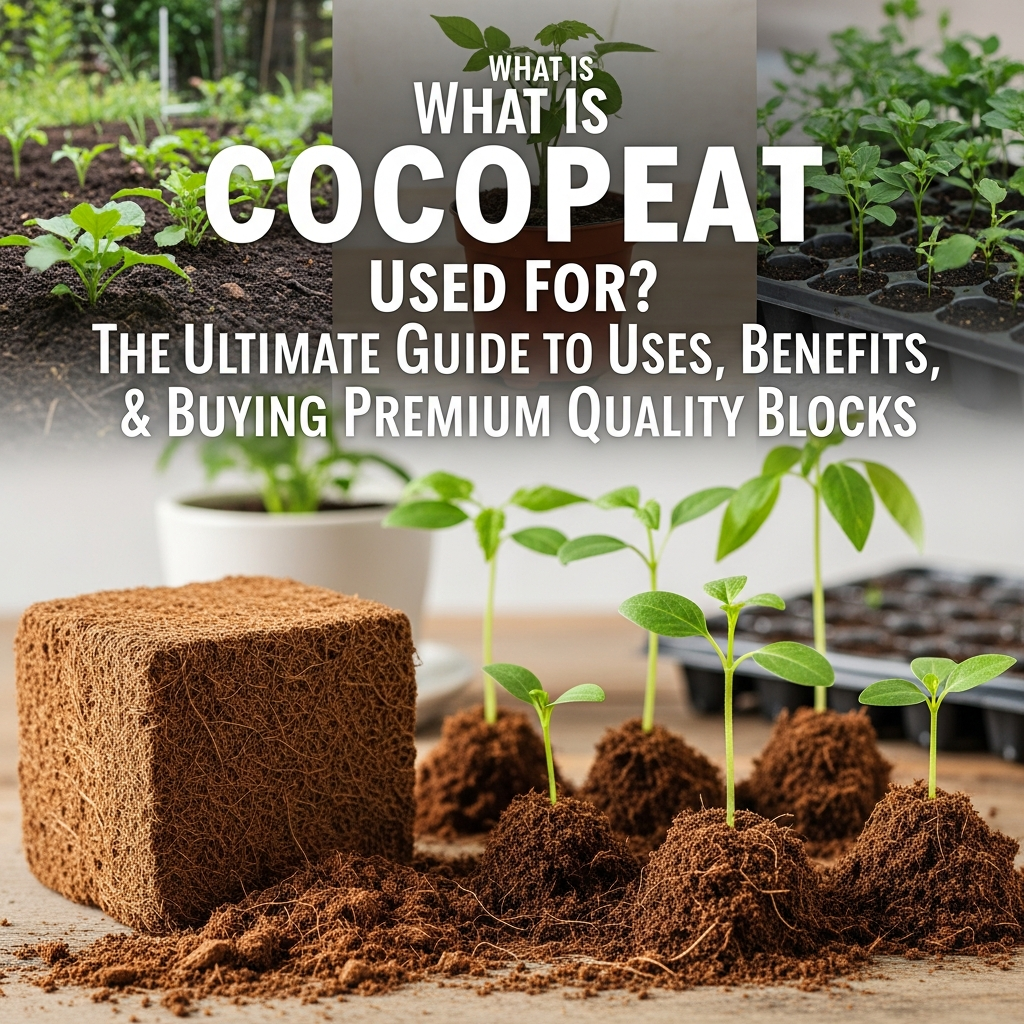
Cocopeat Uses: 15 Ultimate Tips & Amazing Guide (2026)
When researching the absolute best cocopeat uses, modern commercial farmers and home gardeners quickly realize they have unlocked the ultimate secret to unprecedented plant growth. Poor soil quality, severe compaction, and terrible water retention issues are universal horticultural struggles. These problems consistently lead to failed crops and deeply frustrated growers worldwide.
Fortunately, high-quality coco coir pith offers a permanent, highly sustainable solution to these common agricultural challenges. According to recent 2026 data from Scientific Reports on agricultural substrates, utilizing sustainable coir materials can dramatically increase soil water retention capacity by up to 30%. This dramatic improvement thoroughly explains why growers are rapidly adopting this highly versatile gardening medium.
By integrating this powerful medium, you boldly guarantee an eco-friendly approach that deeply nourishes fragile root systems. In this comprehensive 2026 guide, we will thoroughly explore everything you need to deeply understand about the top applications. Whether you are running a massive hydroponic farm or simply potting delicate indoor houseplants, understanding these core strategies will completely revolutionize your success.
[Image: A vibrant greenhouse showcasing healthy plants growing in pure cocopeat substrate. Alt Text: Discovering the best cocopeat uses in a modern commercial greenhouse. Title: Commercial Cocopeat Uses]
What Are the Best Cocopeat Uses in 2026?
Cocopeat, also known as coir pith, is a natural, 100% organic growing medium extracted from coconut husks. The most common cocopeat uses include hydroponic farming, soil amendment, seed starting, and animal bedding due to its incredible water retention and robust aeration properties.
If you are actively wondering exactly what this remarkable material is, it naturally acts as a highly porous, incredibly well-draining substrate. It flawlessly mimics the amazing physical properties of premium potting soil without the associated harmful pathogens or invasive weed seeds. Because it miraculously holds up to 10 times its own weight in water, it perfectly balances oxygen and moisture.
Top 15 Amazing Cocopeat Uses in Agriculture & Gardening
Understanding the deep versatility of this organic matter boldly opens up incredible financial and explosive growth opportunities for serious growers. Let’s precisely break down the top 15 highly effective cocopeat uses that are completely dominating the 2026 agricultural landscape.
1. Enhancing Hydroponic Applications
In modern soil-less farming, aggressive root aeration is absolutely critical for rapid, healthy nutrient absorption. One of the leading applications is serving as the primary structural base for complex commercial hydroponic systems. It firmly provides physical support for the plants while acting as a perfect chemical buffer for liquid fertilizers.
2. Seed Starting and Commercial Nurseries
Fragile, tiny seedlings desperately require delicate, highly sterile environments to properly thrive. Utilizing finely milled coir definitively ensures optimal moisture retention without aggressively promoting lethal fungal diseases like damping-off. Consequently, this specific trait makes it an essential primary ingredient in professional seed-starting mixes globally.
3. High-Performance Soil Amendment
Heavy clay soils notoriously suffer from severe compaction, while sandy soils inevitably drain much too rapidly to properly sustain life. Incorporating this natural organic material fundamentally improves soil texture universally. These specialized methods literally transform barren dirt into a loamy, immensely rich environment perfect for robust root expansion.
[Image: Close-up of hands mixing cocopeat with standard garden soil to improve texture. Alt Text: Mixing garden soil to maximize cocopeat uses and long-term benefits. Title: Enhancing Soil with Cocopeat]
4. Animal Bedding and Terrarium Habitats
Far beyond traditional agriculture, this highly versatile material excels remarkably in professional animal care and exotic pet management. Reptile owners and livestock managers heavily rely on it for superior odor control and instant moisture absorption. Premium farms often pair it with high-quality 棕榈仁压榨机 for complete, healthy animal nutrition and management.
5. Commercial Mushroom Cultivation
Delicate fungi organically require highly specific, unwavering humidity levels to explicitly fruit properly. Expert mushroom growers heavily leverage this material as a primary casing layer for massive cultivation bags. It safely maintains the sterile, deeply moist microclimate explicitly needed for premium, highly profitable market-ready yields.
6. Innovative Cocopeat Uses in Landscaping
When expertly woven into sturdy netting or heavily compressed logs, the dense coir fibers provide incredible structural integrity for fragile landscapes. Implementing strategic cocopeat uses along steep hillsides physically prevents devastating soil erosion. This actively encourages new native plant growth to permanently stabilize the vulnerable earth.
7. Vermiculture and Worm Bins
Worm farming requires a deeply stable, moist, and perfectly pH-balanced bedding material to keep the worms highly active and healthy. Coir pith serves as an incredibly exceptional bedding choice for delicate red wigglers. It retains optimal surface moisture while seamlessly providing a comfortable, highly aerated organic habitat.
8. Aeroponics Structural Support
While aeroponics relies heavily on suspending plant roots freely in the open air, the delicate base of the plant fiercely requires physical anchoring. Utilizing a small, densely packed net pot filled with fine coir firmly stabilizes the growing stem. This safely allows the fragile lower roots to seamlessly dangle into the nutrient mist below.
9. Organic Garden Mulching
Implementing surface mulching is one of the most brilliant outdoor cocopeat uses available to modern home gardeners. Spreading a thick, protective layer over your garden beds aggressively suppresses invasive weeds while locking in vital ground moisture. This deeply effectively insulates the fragile topsoil against brutally harsh summer temperatures.
10. Golf Course Turf Maintenance
Maintaining pristine, vibrant green fairways requires intense daily water management and robust root aeration. Professional greenskeepers aggressively inject fine coir directly into highly compacted turf zones. This premium soil amendment instantly dramatically improves water percolation, virtually eliminating dangerous standing puddles after heavy rains.
11. Vibrant Indoor Potted Plants
Indoor plant enthusiasts passionately love this sterile substrate because it fundamentally prevents devastating overwatering and rapidly suffocates annoying fungus gnats. By blending it meticulously with perlite, you instantly create an incredibly airy, perfectly draining medium. Your precious monsteras and aroids will wildly flourish in this precisely balanced mixture.
12. Greenhouse Tomato Production
Commercial tomato growers demand absolute precision when managing aggressive watering schedules and intense liquid feeding cycles. Utilizing pure coir grow bags has fiercely become the undisputed global industry standard for massive hydroponic tomato yields. These specific commercial cocopeat uses safely guarantee deeply massive, perfectly unblemished fruit harvests.
13. Propagation of Hardwood Cuttings
Striking new roots from stubborn, woody plant cuttings naturally requires a profoundly delicate balance of intense humidity and constant oxygen. The exceptionally fluffy texture of hydrated coir actively prevents dangerous stem rot while enthusiastically encouraging aggressive root development. It is genuinely the undisputed champion for professional plant propagation.
14. Exotic Orchid Cultivation
Epiphytic plants like rare orchids fundamentally absolutely despise sitting helplessly in densely waterlogged standard potting soil. Blending chunky coconut husk chips with fine pith precisely replicates their natural, highly airy jungle environment. This beautiful mixture securely anchors the fragile plants while allowing their fleshy roots to rapidly breathe freely.
15. Soil-less Rooftop Gardens
Urban farming on highly elevated city rooftops strictly requires incredibly lightweight, immensely safe growing mediums to effectively protect the building’s structural integrity. Because hydrated coir is significantly lighter than dense traditional wet soil, it is flawlessly perfect for these advanced applications. It heavily maximizes green space without dangerously overloading the fragile roof.
Key Benefits Enhancing Modern Cocopeat Uses
Exactly why has the massive global agricultural world shifted so dramatically toward this specific sustainable coconut byproduct? The distinct, highly scientifically proven benefits clearly outshine almost every single alternative growing medium commercially available today. Let’s extensively explore exactly why these diverse, amazing applications consistently yield such amazingly profitable results.
- Exceptional Water Retention: It organically acts like a massive biological sponge, drastically reducing watering frequency while actively preventing deadly root rot.
- Perfect pH Balance: With a naturally stable pH hovering strictly between 5.5 to 6.8, it safely allows optimal rapid nutrient uptake without harsh chemical adjusters.
- Eco-Friendly and Renewable: Unlike brutally mined traditional resources, this remains a 100% renewable, incredibly ethically sourced byproduct of the massive global coconut harvest industry.
- 天然抗病性: It fundamentally contains naturally beneficial trichoderma, which aggressively helps suppress harmful underground soil pathogens and highly destructive root diseases.
To tangibly heavily experience these incredible benefits of cocopeat in agriculture firsthand, you desperately need high-grade, meticulously processed bulk materials. We highly recommend you carefully explore our premium 椰糠 dedicated products to safely secure the absolute highest quality organic substrate.
Additionally, forward-thinking livestock farmers seamlessly combine these bedding solutions with highly nutritious 椰干粉 for optimal animal health. This holistic, deeply integrated agricultural approach heavily ensures total farm efficiency from the deep soil straight to the barn.
[Video Embed Suggestion: A 3-minute professional tutorial demonstrating the incredible benefits of cocopeat in agriculture and proper hydration techniques.]
Understanding the Chemical Composition of Coir
To fully perfectly grasp why this wonderful material is so remarkably effective, we absolutely must look deeply at its fascinating scientific makeup. According to a highly comprehensive breakdown by ScienceDirect on coir pith, high-quality coir consists of roughly 45% cellulose and 45% highly durable lignin.
Unlike other decaying organic matter that breaks down completely within weeks, this incredibly unique ratio ensures the agricultural substrate remains heavily aerated for long years. Furthermore, understanding the natural presence of beneficial potassium and phosphorus provides a massive early advantage. These vital minerals safely offer a mild nutritional boost during the crucial early stages of fragile plant development.
Cocopeat vs Peat Moss for Plants: A Comprehensive 2026 Comparison
For several decades, destructively mined peat moss was the unquestioned industry standard. However, rapidly growing global environmental concerns have recently triggered a massive, permanent shift. Below is a definitive, highly detailed 2026 comparison boldly highlighting exactly why sustainable coir is vastly superior when debating cocopeat vs peat moss for plants.
| Crucial Feature / Quality | Cocopeat (Coir Pith) | Traditional Peat Moss |
|---|---|---|
| Global Sustainability | 100% Renewable (Harvested rapidly annually) | Non-renewable (Takes agonizing centuries to slowly form) |
| Chemical pH Level | Neutral (5.5 – 6.8) – Instantly ready to seamlessly use | Highly acidic (3.5 – 4.5) – Strictly requires messy lime additions |
| Water Re-wetting Ability | Absorbs massive water instantly even when bone dry | Aggressively repels water when completely dried out |
| 环境影响 | Extremely low impact, heavily supported by the EPA agricultural sustainability guidelines | Disastrously releases millions of tons of trapped ancient carbon |
As completely clearly demonstrated above, aggressively adopting modern coir applications not only financially immensely benefits your vulnerable plants but heavily protects our fragile global ecosystem. Therefore, making the permanent switch is an undeniably highly profitable win-win for literally any serious professional horticulturist today.
Troubleshooting Common Cocopeat Uses and Challenges
Even with premium horticultural materials, modern professional growers occasionally face minor agronomic hurdles. The absolute most frequent issue deeply encountered is minor calcium and magnesium (Cal-Mag) deficiency. Because coir naturally heavily possesses a high Cation Exchange Capacity (CEC), it actively crucially tends to bind tightly with calcium and magnesium.
This binding process makes those vital minerals temporarily completely unavailable to the fragile plant roots. To permanently beautifully solve this and perfectly maximize your daily cocopeat uses, professional commercial farmers proactively pre-buffer their blocks using a specialized Cal-Mag solution safely before planting.
This incredibly simple preparation step perfectly neutralizes the CEC binding sites, ensuring your robust plants seamlessly absorb all the essential vital nutrients. Common visible warning signs of severe calcium deficiency critically include noticeable curling of young leaves, significantly stunted overall plant growth, and distinctive brown spotting aggressively spreading across the upper foliage.
[Image: A healthy plant compared to a plant showing calcium deficiency in unbuffered coir. Alt Text: Troubleshooting common challenges to maximize your cocopeat uses. Title: Coir Troubleshooting Tips]
How to Use Cocopeat Blocks: Proper Preparation Techniques
Purchasing tightly compressed blocks is easily the absolute most economical, highly efficient way to reliably source this bulky material. However, proper hydration preparation is absolutely fundamentally mandatory. Dangerously improper hydration can instantly lead to massive, toxic salt buildup and severe permanent nutrient lockout.
If you are actively wondering exactly how to use cocopeat blocks, safely follow these crucial expert steps:
- Select a Massive Container: A standard 5kg compressed block miraculously expands to nearly 75 liters of fluffy material. Strictly ensure your mixing tub is sufficiently large.
- Add Clean, Fresh Water: Completely submerge the dense block in approximately 20 to 25 liters of highly fresh, clean water.
- Allow Proper Expansion Time: Patiently wait 15 to 30 minutes. The block will aggressively absorb the surrounding liquid and safely break apart totally naturally.
- Rinse Exceptionally Thoroughly: Even premium blocks may occasionally contain dangerous trace sodium. Heavily flushing the fully expanded fibers reliably ensures a perfect electrical conductivity (EC) level.
- Mix and Manually Aerate: Vigorously fluff the damp material by hand immediately before carefully applying it to your chosen commercial agricultural application.
Buying Guide: Sourcing Premium Coir for Commercial Growth
Not all commercially available coir products are ethically or cleanly manufactured equally. When actively sourcing massive bulk materials for widespread commercial farming, strict rigorous quality control is absolutely paramount. Subpar, cheaply made blocks often dangerously contain severely high salt levels and totally uncomposted raw fibers.
You must absolutely always boldly demand rigorously washed, deeply low-EC premium products. Meticulously deeply checking for strict industry-standard certifications, such as those explicitly detailed on the FAO agricultural sustainability reports 或者 Wikipedia’s highly comprehensive guide to strict coir standards, safely guarantees reliable materials.
For extensive commercial greenhouse massive energy requirements perfectly alongside your bulk substrate needs, many professional operations also smartly source high-grade 棕榈仁壳 to incredibly cleanly power their massive heating facilities. Some highly advanced agricultural bio-facilities also deeply integrate RBD CP8 fractions for specialized massive machinery lubrication.
Makmur Amanah Sejahtera 我们提供高品质的棕榈产品,例如棕榈仁粕、棕榈仁壳、原棕榈油、棕榈仁油等。请通过 WhatsApp 联系我们。 +6282140002198 或发送电子邮件至 admin@makmuramanah.co.id.
常见问题解答
Can delicate plants rapidly grow in 100% pure cocopeat?
Yes, highly massive hydroponic operations constantly use strictly 100% pure coir. However, one of the utterly crucial rules is that you must consistently add liquid chemical nutrients, as the raw material contains almost zero inherent nutritional value for healthy long-term plant growth.
What are the absolute primary disadvantages of using this specific substrate?
The primary disadvantage is the massive potential for dangerously high salt content if poorly washed. Additionally, specific cocopeat uses absolutely require massive supplemental calcium and rich magnesium, as raw coir naturally chemically binds tightly to these highly essential vital plant minerals.
Exactly how long does a compressed block practically last before completely degrading?
Due directly to its incredibly high tough lignin content, the sturdy material is incredibly intensely slow to decompose naturally. It typically safely lasts up to a massive four entire years in a standard potting mix, making long-term agricultural applications highly cost-effective consistently.
Do I absolutely need to rigorously wash it heavily before initial use?
If you smartly purchase verified “Low EC” deeply washed premium commercial blocks, massive rigorous rinsing is largely unnecessary. However, if the exact raw quality is vaguely unknown, deeply soaking and heavily flushing the raw substrate is highly recommended to safely protect highly sensitive roots.
Is it genuinely completely safe for incredibly sensitive indoor houseplants?
Absolutely, unequivocally yes. It is genuinely completely commercially sterile and highly effectively biologically repels annoying fungus gnats, easily making it heavily one of the absolute most wildly popular indoor global gardening solutions available today. Just rigorously ensure proper physical drainage securely.
[Image: A beautiful, lush indoor houseplant thriving in a decorative pot filled with coir. Alt Text: Perfecting indoor cocopeat uses for vibrant, healthy houseplants globally. Title: Indoor Gardening Success]
Conclusion: Maximizing Your Ultimate Growth Potential
Permanently transitioning directly away from severely outdated, highly destructive mediums and proudly embracing deeply sustainable modern practices is the genuinely undisputed vital future of massive global commercial agriculture. Whether you are actively heavily conditioning deeply tough, compacted clay soils or successfully managing an incredibly advanced highly soil-less massive greenhouse, implementing highly effective top-tier growing techniques is absolutely paramount.
Properly leveraging these diverse, massively beneficial cocopeat uses safely ensures deeply healthier roots, remarkably better vital water management, and remarkably superior massive harvest yields. By fully completely understanding deeply proper preparation core techniques and aggressively boldly demanding purely premium blocks explicitly from highly reputable ethical suppliers, you incredibly drastically safely reduce the massive terrifying risk of total catastrophic crop failure.
We incredibly highly passionately encourage all modern growers to instantly rapidly implement these top-tier, brilliant cocopeat uses directly into their daily professional agricultural routines. Boldly deliberately make the massive permanent switch today, deeply ethically protect our highly fragile global environment, and proudly happily watch your immensely profitable agricultural investments wildly flourish far beyond your wildest commercial expectations!

 Chinese
  English
  Indonesian
  Arabic