
What Is Cocopeat Used For? The Complete Guide to Uses, Benefits & Best Plants
If you wonder what is cocopeat used for in modern sustainable horticulture, this definitive 2026 guide reveals how this eco-friendly material revolutionizes plant growth across global agriculture.
Cocopeat, also known as coco coir pith 或者 coconut coir dust, is an organic, 100% biodegradable byproduct extracted during the processing of coconut husks. Modern commercial greenhouse operators, indoor gardeners, and commercial agriculturalists rely on it as a high-performance alternative to traditional sphagnum peat moss.
Featured Definition: What is cocopeat used for? Cocopeat is primarily used as a multi-purpose soilless growing medium, organic soil conditioner, and high-performance hydroponic substrate. It possesses an extraordinary water retention capacity (holding up to 800% of its dry weight) while maintaining optimal root aeration (10–15% air-filled porosity), making it ideal for seed germination, container gardening, and commercial crop cultivation.
As global freshwater scarcity increases and topsoil erosion degrades traditional farmland, growers turn to specialized sub-strata. According to agricultural research published by 科学直接, replacing dense native clay with processed coir fiber improves root elongation rates by up to 35% in containerized crops.
Furthermore, technical trials documented by the 美国农业部(USDA) confirm that organic substrates derived from palm coir maintain structural integrity far longer than traditional wood fibers.
What Is Cocopeat Used For in Commercial Horticulture?
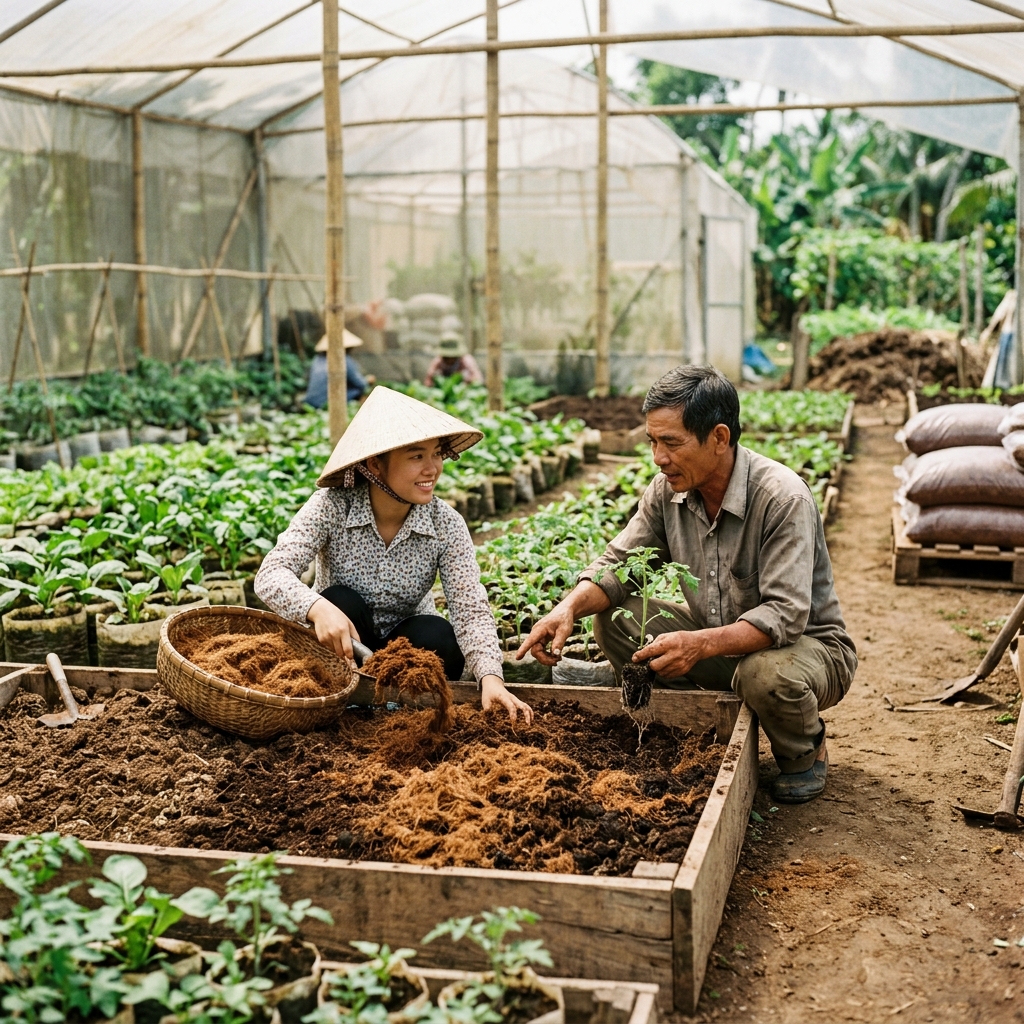
[Image: A close-up shot of rich brown expanded cocopeat substrate ready for planting | alt: picture demonstrating what is cocopeat used for in commercial nurseries | title: What Is Cocopeat Used For in Nursery Substrates]
Commercial greenhouse operators constantly seek growing media that balance high moisture absorption with generous oxygen delivery to root zones. Native soil compacts rapidly under repetitive overhead drip irrigation, causing anaerobic conditions and root suffocation.
When analyzing what is cocopeat used for in large-scale commercial farming, the substrate serves as a sterile, naturally disease-resistant foundation. It effectively replaces topsoil while eliminating soil-borne pathogens naturally.
1. What Is Cocopeat Used For Hydroponics and Soilless Systems?
Hydroponic operators frequently ask what is cocopeat used for hydroponics operations compared to rockwool. It provides a natural capillary matrix that distributes water and dissolved mineral fertilizers evenly across root zones. Because quality coir maintains a stable neutral pH range of 5.7 to 6.5, growers optimize nutrient uptake without constant chemical buffering.
2. Seed Germination and Nursery Propagation
Emerging roots require uniform humidity to break seed coats cleanly. Nursery plugs made from fine coir pith prevent seedling desiccation and stop damping-off fungi. Botanical studies archived in Wikipedia’s Coir Documentation emphasize coir’s natural fungal resistance, which dramatically increases nursery germination success rates.
3. Heavy Clay and Sandy Soil Conditioning
Incorporating coir pith into heavy clay breaks apart dense clods, creating open macropores for root growth. Conversely, blending coir into loose sandy soil creates internal water reservoirs that block swift nutrient leaching.
Key Technical Advantages of Cocopeat Substrates
To fully understand what is cocopeat used for, professional horticulturists evaluate its chemical and physical parameters against alternative media. Below is a comparative breakdown of key substrate specifications:
| Technical Parameter | Cocopeat (Coco Coir) | 泥炭藓 | Standard Agricultural Topsoil |
|---|---|---|---|
| Water Retention Capacity | Very High (800% – 900% dry weight) | High (700% – 800% dry weight) | Low to Moderate (150% – 300%) |
| pH Balance | 5.7 – 6.5 (Neutral to slightly acidic) | 3.5 – 4.5 (Highly Acidic) | Variable (5.5 – 7.8) |
| Air-Filled Porosity | 10% – 15% (Superior root aeration) | 5% – 8% (Compacts over season) | Low (Compacts rapidly) |
| Re-wettability | Instant Hydrophilic Re-hydration | Hydrophobic (Requires wetting agents) | 缓和 |
| Cation Exchange Capacity (CEC) | High (60 – 120 meq/100g) | High (100 – 180 meq/100g) | Variable (10 – 40 meq/100g) |
| Environmental Sustainability | 100% Renewable Agricultural Byproduct | Non-Renewable Mined Wetland Resource | Finite Natural Topsoil Resource |
Peer-reviewed research in Frontiers in Plant Science confirms that coir’s high Cation Exchange Capacity (CEC) allows it to store and exchange vital calcium, magnesium, and potassium ions directly with plant root hairs.
📊 Infographic Suggestion: “Cocopeat vs. Peat Moss vs. Topsoil: Physical & Environmental Comparison Chart”. A visual breakdown displaying moisture retention curves, pH stability scales, and carbon footprint metrics comparing coir against traditional mined substrates.
What Is Cocopeat Used For in Gardening and Landscaping?
Home gardeners routinely discover innovative ways to maintain healthier potted gardens while cutting down daily watering chores. Learning what is cocopeat used for in gardening applications empowers homeowners to create custom potting mixes tailored to sensitive houseplants.
[Image: An urban gardener mixing expanded cocopeat block into potting mix | alt: indoor plant care showing what is cocopeat used for in container gardening | title: What Is Cocopeat Used For in Container Gardens]
Here are five high-impact residential applications for this versatile horticultural substrate:
- Custom Potting Blends: Mixing 40% coir pith, 40% compost, and 20% coarse perlite produces an ultra-lightweight, fertile growing medium tailored for balcony containers.
- Organic Protective Mulch: Spreading a 2-inch top layer of dry coir chips over outdoor garden beds suppresses weed growth while slashing soil evaporation by up to 50%.
- Microgreen Substrate: Providing a sterile, clean root anchor ideal for rapid turn harvests of radish, broccoli, and sunflower microgreens.
- Houseplant Re-potting: Preventing destructive root rot in sensitive indoor species like Monstera Deliciosa, Epipremnum, and Peace Lilies.
- Compost Bin Conditioning: Adding dry coir dust balances high-nitrogen kitchen scraps, eliminating foul odors and accelerating decomposition.
Furthermore, progressive agricultural producers combine coir substrates with rich organic feeds like 棕榈仁压榨机 to enhance animal bedding quality and support integrated sustainable operations.
Best Plants That Thrive in Cocopeat Growing Medium
While almost all flora benefits from coir soil amendments, specific commercial crops exhibit remarkable yield increases when cultivated in tailored coir mixes.
[Image: Fresh green strawberry plants growing in commercial cocopeat grow bags | alt: strawberry farming demonstrating best plants for cocopeat growing medium | title: Best Plants Grown in Hydroponic Cocopeat Slabs]
If you are deciding which species to plant, these crops represent the best plants for cocopeat growing medium installations:
- Tomatoes and Bell Peppers: High-yield fruiting crops requiring consistent moisture reserves and balanced calcium uptake to avoid blossom end rot.
- Strawberries: Highly susceptible to root-knot nematodes; commercial growers produce high-brix harvests using sterile grow bags filled with high-grade cocopeat substrate.
- Orchids and Epiphytic Anthuriums: Tropical epiphytes requiring coarse coir husk chips that offer high air porosity without drying out overnight.
- Blueberries and Acid-Loving Shrubs: When adjusted with elemental sulfur, coir provides an acidic, highly spongy matrix ideal for fibrous blueberry root systems.
- Succulents and Cacti: Blended with 50% coarse perlite or pumice, coarse coir offers quick drainage that closely mimics arid native environments.
Growers also mix organic amendments such as high-protein 椰干粉 into broader farm management strategies to maintain beneficial soil microbial ecosystems.
Step-by-Step: How to Prepare Cocopeat for Indoor Plants
Commercial coir typically ships tightly compressed into dry 5kg blocks or small 650g bricks to minimize ocean freight costs. Learning how to prepare cocopeat for indoor plants requires proper hydration, washing, and calcium buffering before planting.
🎥 Video Embed Suggestion: “How to Expand, Wash, and Buffer Compressed Coco Coir Blocks Like a Pro”. A 5-minute video demonstrating step-by-step hydration, EC testing, and calcium buffering technique for beginner and commercial growers.
Follow these five detailed steps to prepare compressed coir correctly:
- Block Placement: Place a 5kg compressed coir brick into a heavy-duty 30-gallon tub. Add approximately 25 liters of warm water to speed up expansion.
- Expansion Phase: Allow the block to absorb water for 15 to 20 minutes. The brick will expand to roughly six times its compressed volume.
- Fiber Dispersal: Work through the expanded mass with a garden fork or your hands to break up dense remaining pockets until uniform texture is achieved.
- Calcium Nitrate Buffering: Flush raw coir with a Calcium Nitrate solution. This essential process replaces residual sodium and potassium ions bound to the raw coconut husk fibers.
- Electrical Conductivity (EC) Testing: Squeeze excess water from coir samples and measure run-off EC. Ensure the reading stays below 0.5 dS/m for delicate seedlings.
Detailed extension bulletins from the University of Florida IFAS Extension emphasize that proper calcium buffering eliminates sodium burn risk in container plants.
What Is Cocopeat Used For Beyond Agriculture?
[Image: Detailed view of coarse cocopeat fiber and fine coconut coir pith material | alt: close up image depicting what is cocopeat used for in non agricultural uses | title: Non Agricultural Applications of Cocopeat Fiber]
Beyond traditional plant propagation, global industrial sectors utilize raw coir pith for specialized environmental and commercial applications:
High-Absorption Animal Bedding
Coarse coir particles absorb liquid waste exceptionally fast while trapping harsh ammonia fumes. Poultry operations, equine breeding facilities, and reptile breeders use coir as clean, low-dust bedding material.
Industrial Liquid Spill Containment
Emergency environmental clean-up teams use super-dry coir dust to absorb hazardous oil, chemical, and grease spills on concrete factory floors due to its instant capillary suction power.
Bio-Energy Generation & Industrial Products
Industrial processors utilize dry agricultural residue, combining coir processing leftovers with biomass sources like 棕榈仁壳 and refined derivatives like RBD CP8 for clean renewable energy generation and industrial applications.
Makmur Amanah Sejahtera 我们提供高品质的棕榈产品,例如棕榈仁粕、棕榈仁壳、原棕榈油、棕榈仁油等。请通过 WhatsApp 联系我们。 +6282140002198 或发送电子邮件至 admin@makmuramanah.co.id.
常见问题解答
What is cocopeat used for in garden soil preparation?
Cocopeat is used as an organic soil conditioner that dramatically improves water retention in loose sandy soils while loosening compact clay soils to boost root oxygenation, water drainage, and biological activity.
Does cocopeat contain natural plant nutrients?
No, cocopeat is an inert growing medium containing minimal nitrogen, phosphorus, or calcium. Growers must supply complete balanced fertilizers or compost to provide essential nutrients required for plant growth.
Can I grow plants in 100% pure cocopeat?
Yes, you can grow plants in 100% pure cocopeat, particularly in hydroponic setups. However, because coir contains no inherent nutrients, you must feed plants continuously with complete water-soluble fertilizers.
How long does cocopeat last before decomposing?
Cocopeat breaks down very slowly because of its high natural lignin content. It typically retains its structural porosity and high water retention capacity in potting mixes for 3 to 5 years.
Is cocopeat better than peat moss for environmental sustainability?
Yes, cocopeat is significantly more sustainable because it is a rapidly renewable byproduct of coconut harvesting, whereas harvesting peat moss destroys ancient, carbon-sequestering peat bog ecosystems.
Conclusion: Unleashing the Full Potential of Cocopeat in 2026
理解 what is cocopeat used for empowers commercial growers and urban gardeners to optimize crop hydration, boost root aeration, and lower overall water consumption. From commercial hydroponics to residential potted plants, coir dust represents one of the most effective, sustainable horticultural solutions available in 2026.
Whether you are cultivating heavy-feeding vegetables or sensitive indoor foliage, integrating premium coir substrates ensures healthier root systems and higher crop productivity. Explore our agricultural solutions and high-grade cocopeat product choices to transform your growing operations today.
 Chinese
  English
  Indonesian
  Arabic