
Table of Contents
- What Is an Empty Palm Fruit Bunch?
- The Incredible Value of EFB Biomass
- Top 5 Groundbreaking Applications of EFB
- Environmental and Economic Benefits
- Challenges and the Future Outlook
- Conclusion: From Waste to Wonder
In the world of sustainable resources, few materials have a more transformative story than the Empty Palm Fruit Bunch (EFB). Once considered agricultural waste from the booming palm oil industry, this fibrous biomass is now being recognized as a powerhouse of potential. It’s a prime example of the circular economy in action, turning a disposal problem into a profitable solution.
This guide explores the incredible journey of EFB, from its origins in the palm oil mill to its diverse applications in energy, agriculture, and manufacturing. We will delve into why this humble byproduct is becoming a cornerstone of green innovation and a key player in the global pursuit of sustainability.
What Is an Empty Palm Fruit Bunch?
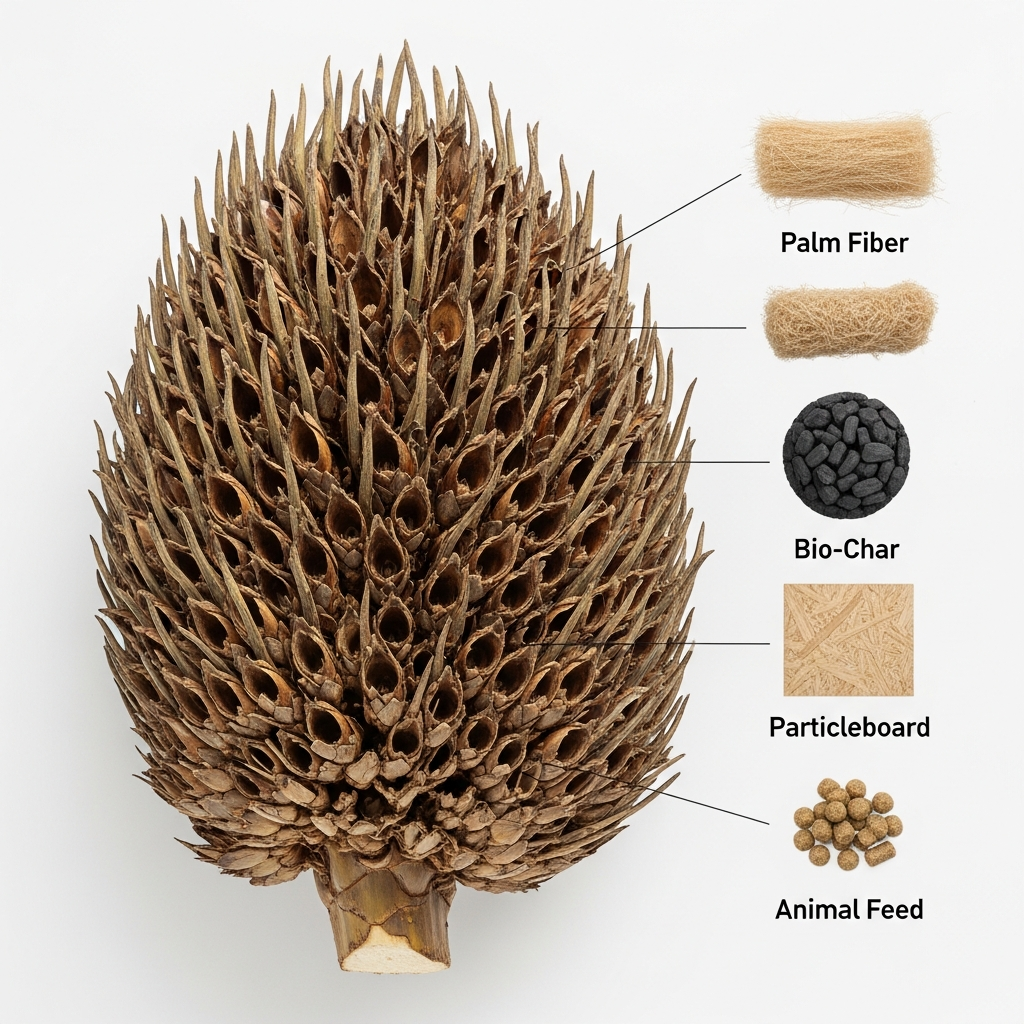
An EFB is the fibrous stalk that remains after the fruit from an Oil Palm Fruit Bunch has been removed. The primary goal of this process is to produce Crude Palm Oil (CPO). After the oil is extracted from the fruit’s mesocarp, the nut is cracked to obtain the Palm Kernel. This kernel is then crushed to produce Palm Kernel Oil (PKO) and Palm Kernel Expeller (PKE), a valuable animal feed.
For every ton of CPO produced, approximately one ton of EFB is generated. Given the scale of global palm oil production, understanding what to do with this massive volume of biomass material is crucial for the industry’s environmental footprint.

The Incredible Value of EFB Biomass
The shift in perspective from viewing EFB as waste to a valuable resource is a game-changer. This transition is driven by both economic incentives and a growing demand for sustainable alternatives to traditional materials. The value of this biomass lies in its composition: a rich blend of fiber, nutrients, and energy potential.
This aligns perfectly with the principles of a circular economy, where resources are kept in use for as long as possible, extracting maximum value before being recovered and regenerated. Instead of occupying landfills, EFB is now fueling power plants, enriching soil, and creating eco-friendly products.
Top 5 Groundbreaking Applications of EFB
The versatility of EFB has led to a wide range of innovative applications across various sectors. Here are five of the most significant uses for this remarkable biomass.
1. Biofuel and Renewable Energy
One of the primary uses for EFB is as a source of renewable energy. Its high calorific value makes it an excellent fuel for boilers in palm oil mills, often generating enough electricity to power the entire facility. It can also be processed into pellets or briquettes, similar to other biomass fuels like Palm Kernel Shell, for easier transport and use in co-firing with coal in power plants, as highlighted by the International Renewable Energy Agency (IRENA).
2. Organic Fertilizer and Compost
When shredded and composted, EFB transforms into a nutrient-rich organic fertilizer. It is particularly high in potassium, a vital nutrient for plant growth. This compost improves soil structure, water retention, and microbial activity, reducing the need for chemical fertilizers. This application of the fibrous byproduct is a cornerstone of sustainable agriculture in palm plantations.
3. Pulp and Paper Production
The long fibers within EFB make it a viable alternative to wood for producing pulp and paper. This non-wood source helps reduce pressure on forests and minimizes the environmental impact of the paper industry. Research published in journals like Industrial Crops and Products has demonstrated the feasibility of EFB-based paper, showcasing its potential to create a more sustainable supply chain.

4. Medium for Mushroom Cultivation
The sterilized and pasteurized fibers of EFB serve as an excellent substrate for growing various types of mushrooms, particularly oyster mushrooms. The byproduct provides the necessary nutrients and physical structure for the mycelium to thrive, creating a profitable side business for farmers and contributing to local food security.
5. Advanced Bio-Materials
Cutting-edge research is unlocking even more advanced applications. Scientists are exploring its use in creating bioplastics, composite boards (as a substitute for particleboard), and biofuels like bio-ethanol. These innovations, often discussed in scientific literature on platforms like Scopus, position EFB as a key feedstock for the future bio-economy.
Environmental and Economic Benefits
Utilizing EFB offers a dual advantage. Environmentally, it prevents the release of methane that would occur if the bunches were left to rot. It also reduces the carbon footprint of industries by replacing fossil fuels and wood-based products. Economically, it creates new revenue streams for palm oil producers, reduces waste management costs, and stimulates local economies through job creation.
Challenges and the Future Outlook
Despite its immense potential, challenges remain. The high moisture content of a fresh Empty Palm Fruit Bunch (around 60-70%) makes transportation and processing difficult. Efficient dewatering and drying technologies are essential to overcome this hurdle. Furthermore, developing scalable and cost-effective conversion technologies is key to unlocking its full potential.
The future, however, is bright. As technology improves and the global focus on sustainability intensifies, the demand for EFB-derived products is set to grow. This unique biomass is poised to become a globally recognized commodity in the green economy.
Conclusion: From Waste to Wonder
The Empty Palm Fruit Bunch is a powerful testament to the potential hidden within industrial byproducts. What was once a costly nuisance for palm oil mills is now a celebrated resource driving innovation in renewable energy, sustainable agriculture, and green materials. Its journey from a discarded stalk to a cornerstone of the circular economy is a remarkable story of value, vision, and environmental stewardship.
—
Makmur Amanah Sejahtera provides high-quality palm products such as Palm Kernel Expeller, Palm Kernel Shell, Crude Palm Oil, Palm Kernel Oil, etc. Kindly contact us at WhatsApp +6282140002198 or email us at admin@makmuramanah.co.id.Looking for High-Quality Palm Products?
 English
  Indonesian
  Chinese
  Arabic