
Palm Kernel Expeller GACC: #1 Ultimate Export Guide (2026)
Palm Kernel Expeller is rapidly evolving into the premier choice for high-energy livestock feed, particularly for the demanding Chinese market. As we move into 2026, the agricultural trade landscape is shifting, with strict biosecurity protocols becoming the new baseline for market entry. Global demand for cost-effective, high-protein feed ingredients is at an all-time high, making the role of GACC-certified suppliers more critical than ever.
Navigating the complexities of international customs and nutritional specifications determines the success of your export operations. The General Administration of Customs China (GACC) enforces rigorous standards that separate premium suppliers from the rest. Understanding these regulations is not just about compliance; it is about securing the viability of your supply chain.
This comprehensive guide dives deep into the technical specifications, export requirements, and nutritional advantages of GACC Palm Kernel Expeller. Whether you are a feed formulator in Shandong or a trader in Jakarta, these insights will help you maximize herd productivity and ensure seamless customs clearance.
What is Palm Kernel Expeller (PKE)?
Palm Kernel Expeller (PKE), widely known in the industry as Palm Kernel Meal, is a distinct byproduct derived from the mechanical extraction of oil from palm kernels. Unlike solvent-extracted varieties, the mechanical expeller process preserves a higher percentage of residual oil, making it a nutrient-dense ingredient for livestock rations.
When we discuss “GACC PKE,” we are referring to a specific grade of product produced by facilities that have successfully registered with the General Administration of Customs of the People’s Republic of China. This registration is a rigorous seal of quality. It certifies that the facility meets stringent hygiene standards, pest control measures, and traceability protocols required to export to the world’s largest feed market.
The distinction is vital. Standard PKE may be suitable for local markets, but GACC-certified material guarantees a level of biosecurity that mitigates the risk of transboundary diseases. For buyers, this certification acts as a primary filter, ensuring that the feed is safe, traceable, and consistent.
The Critical Role of GACC Compliance in 2026
China’s import policies have tightened significantly over the last decade. In 2026, the GACC system is more integrated and digital than ever before. The “GACC” prefix is not merely a bureaucratic label; it is a comprehensive quality assurance framework that spans the entire production chain.
To achieve this status, a processing plant—typically located in major producing nations like Indonesia or Malaysia—must undergo a multi-stage audit. First, the local quarantine agency verifies the plant’s sanitation and pest management systems. Subsequently, Chinese authorities review and approve the facility. Only then can the Palm Kernel Expeller produced there be legally shipped to Chinese ports.
For importers, sourcing non-compliant material is a recipe for disaster. Cargoes arriving without the proper GACC registration codes face immediate rejection, repatriation, or destruction. This makes partnering with a fully certified supplier the single most important step in the procurement process.
Nutritional Superiority: Expeller vs. Solvent Extraction
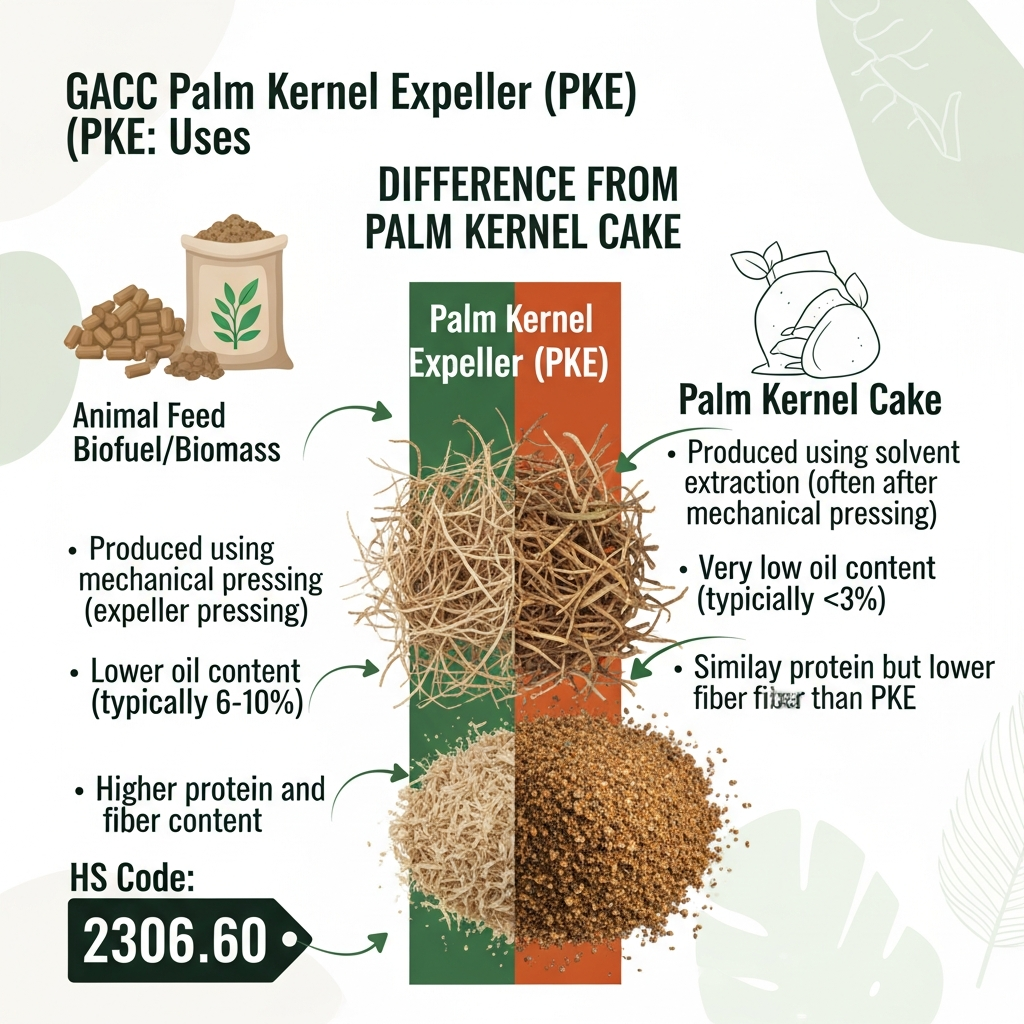
A frequent point of confusion among buyers is the difference between Palm Kernel Expeller and Palm Kernel Cake/Meal produced via solvent extraction. While they originate from the same raw material, the processing method fundamentally alters their nutritional value.
Palm Kernel Expeller is produced using mechanical screw presses. This physical pressure squeezes the oil out of the kernel but inevitably leaves a residual oil content of 6% to 12%. This residual oil is a potent source of metabolizable energy, making expeller meal particularly valuable for animals with high energy requirements.
In contrast, solvent extraction uses chemicals like hexane to wash the oil out, reducing the residual fat to as low as 0.5%. While this increases the relative protein concentration slightly, it strips the feed of its energy density. For dairy cattle, the extra energy from the expeller variant is often preferred to support milk production and body condition maintenance.
Comparative Nutritional Analysis
| Feature | Palm Kernel Expeller (Mechanical) | Palm Kernel Meal (Solvent) |
|---|---|---|
| Extraction Method | Mechanical Screw Press | Chemical Solvent (Hexane) |
| Crude Fat (Oil) | 6% – 12% (High Energy) | 0.5% – 2% (Low Energy) |
| Crude Protein | 14% – 16% | 16% – 18% |
| Palatability | High (Nutty Aroma) | Moderate (Dry/Bland) |
| Primary Application | High-energy ruminant diets | General protein filler |
Understanding this table is crucial for feed formulators. If you substitute expeller with solvent meal without adjusting the energy component of the ration, you may see a drop in animal performance.
Key Benefits for Livestock Production
The versatility of Palm Kernel Expeller makes it a staple in feed mills across Asia, Europe, and New Zealand. Its unique combination of fiber, protein, and energy offers specific advantages for different livestock classes.
Boosting Dairy Cattle Performance
For ruminants, PKE is exceptional. The fiber in PKE is highly digestible for cattle, promoting a healthy rumen environment. More importantly, the residual palm oil contains medium-chain fatty acids. Research has shown that these specific fats can bypass the rumen to some extent, directly contributing to milk fat synthesis.
Dairy farmers feeding Palm Kernel Expeller often report an increase in milk solids, which determines the payout price in many markets. It is common to include PKE at rates of 20-30% of the total dry matter intake for lactating cows.
Strategies for Beef Cattle
In beef production, cost per kilogram of gain is the primary metric. PKE offers a cost-effective alternative to expensive grains like corn or soy. Its moderate protein content (14-16%) matches the requirements for growing steers and backgrounding cattle perfectly. Because it is safe and palatable, it can be fed ad libitum in pasture-based systems to supplement grass shortages during dry seasons.
Usage in Poultry and Swine Diets
Historically, PKE was limited in monogastric diets due to its high fiber content and gritty texture. However, modern feed technology has changed this. By adding specific enzymes like mannanase, producers can break down the fiber matrix, unlocking more nutrients for poultry and swine.
While inclusion rates are lower (typically 5-10%), it serves as an excellent functional fiber source. It helps maintain gut health and regulates passage rate, which can improve litter quality in broiler houses.
HS Codes and Global Trade Classifications
Correct classification is the backbone of international trade. Misclassifying goods can lead to shipment rejections, fines, or delays at customs. For Palm Kernel Expeller, the Harmonized System (HS) Code is specific and must be accurate on all documentation.
Official HS Code Specifications
The global HS Code for oil-cake and other solid residues resulting from the extraction of palm nuts or kernels is 2306.60. Be aware of the following nuances:
- HS Code 2306.60.00: The standard international code for residues of palm nuts or kernels.
- HS Code 2306.60.10 / 2306.60.90: Regional variations often used in ASEAN trade agreements to differentiate between ground (meal) and unground (cake) forms.
When exporting to China under GACC, the HS Code on your Bill of Lading, Certificate of Origin, and Phytosanitary Certificate must match exactly with the code registered by the manufacturer in the GACC database. Even a single digit discrepancy can cause the cargo to be held at the port of entry.
Production Process: Ensuring Quality from the Source
The journey of high-quality PKE begins at the palm oil mill. The process starts with the separation of the palm kernel from the shell. The shell itself is a valuable biomass fuel, known as Palm Kernel Shell, which is often exported separately for energy generation.
Once separated, the kernels are crushed. Precise temperature control during this expelling phase is vital. If the temperature rises too high due to friction (Maillard reaction), the protein can become heat-damaged and indigestible. If the pressure is too low, the oil content remains too high, which can lead to rancidity.
Top-tier suppliers monitor these parameters continuously. They also ensure that the product is cooled immediately after pressing to prevent condensation and mold growth—a critical step for passing GACC’s strict aflatoxin tests.
Quality Parameters for Export
Buyers should demand a Certificate of Analysis (COA) that guarantees:
- Profat (Protein + Fat): Minimum 21%
- Moisture: Maximum 10% (Critical for shipping safety)
- Dirt/Shell: Maximum 15%
- Color: Uniform Dark Brown
- Aflatoxin: < 20 ppb (or as per specific country regulation)
Managing Logistics and Shipping Risks
Shipping agricultural commodities across the equator requires careful planning. Palm Kernel Expeller is hygroscopic, meaning it absorbs moisture from the air. If the moisture content exceeds 10% at the time of loading, the risk of “sweating” inside the container increases dramatically.
This excess moisture can lead to self-heating and even spontaneous combustion in extreme cases. Furthermore, warm and moist conditions are ideal for fungal growth, leading to mycotoxin contamination. Reputable exporters use desiccants and line shipping containers with kraft paper or cardboard to protect the cargo from condensation damage.
For related palm products like RBD CP8 (Cooking Oil), different tank containers are used, but the principle of strict hygiene remains the same. The logistics for solid bulk items like PKE and Copra Meal focus heavily on keeping the product dry and cool.
Comparing PKE with Other Feed Ingredients
How does PKE stack up against other common feed ingredients? While Soybean Meal is the king of protein, it is also the most expensive. PKE offers a middle ground.
PKE vs. Copra Meal
Both are byproducts of tropical oils. Copra Meal comes from coconuts and has a higher bypass protein value, which is excellent for dairy cows. However, PKE is generally more abundant and cost-effective for providing bulk energy. Many formulators use a blend of both to optimize amino acid profiles.
PKE vs. Corn Gluten Feed
Corn Gluten Feed is another medium-protein fiber source. PKE often competes directly with it in ration formulations. PKE tends to have higher fat (energy) content compared to standard Corn Gluten Feed, giving it an edge in energy-deficient diets.
Makmur Amanah Sejahtera provides high-quality palm products such as Palm Kernel Expeller, Palm Kernel Shell, Crude Palm Oil, Palm Kernel Oil, etc. Kindly contact us at WhatsApp +6282140002198 or email us at admin@makmuramanah.co.id.
Frequently Asked Questions
What is the shelf life of Palm Kernel Expeller?
When stored in a cool, dry warehouse with moisture below 10%, Palm Kernel Expeller typically has a shelf life of 6 to 12 months. High humidity is the biggest enemy, as it accelerates mold growth and rancidity of the residual oil.
Does PKE require heat treatment for export to China?
GACC protocols focus on pest freedom and pathogen control. While specific heat treatment isn’t always a standalone requirement, the production process must ensure the elimination of quarantine pests like Trogoderma granarium. Fumigation prior to shipment is often a mandatory step.
Can I use PKE for horse feed?
Yes, PKE is increasingly popular for horses as a “cool energy” source. It provides energy through fiber and oil rather than starch, which helps avoid behavioral issues associated with high-grain diets. It is particularly good for conditioning older horses.
What is the difference between PKE and Palm Kernel Shell?
PKE is the soft, nutritious residue inside the kernel used for feed. Palm Kernel Shell is the hard, woody outer layer used primarily as biomass fuel for boilers and power plants. They are completely different products with different HS codes.
How do I verify a GACC registration number?
You can verify registration numbers on the official website of the General Administration of Customs China (GACC). Access the “Import and Export Food Safety” bureau section to search for approved overseas manufacturers of feed ingredients.
Conclusion
The global agricultural market of 2026 demands precision, safety, and efficiency. Palm Kernel Expeller remains a cornerstone of sustainable livestock nutrition, offering an unbeatable balance of energy and cost-efficiency. However, the path to profitability lies in strict adherence to quality standards.
For exporters and importers targeting the Chinese market, GACC compliance is the non-negotiable gateway. By understanding the nuances of the expeller process, correctly applying HS Code 2306.60, and ensuring your supply chain is free from contaminants, you secure a competitive advantage.
Whether you are supplementing dairy rations to boost milk fat or seeking a reliable biomass partner, the key is sourcing from trusted, certified producers. Prioritizing GACC-compliant Palm Kernel Expeller today ensures a resilient and profitable business for the future.
 English
  Indonesian
  Chinese
  Arabic