
棕榈粕 GACC:首要终极出口指南(2026年)
棕榈仁压榨机 正迅速成为高能牲畜饲料的首选,尤其是在要求严苛的中国市场。迈入2026年,农业贸易格局正在发生变化,严格的生物安全规程已成为市场准入的新基准。全球对高性价比、高蛋白饲料原料的需求处于历史最高水平,这使得获得 GACC 认证的供应商的作用比以往任何时候都更加关键。
应对复杂的国际海关要求和营养规格,决定了您出口业务的成败。中国海关总署(GACC)执行的严苛标准将优质供应商与其他供应商区分开来。理解这些法规不仅关乎合规,更关乎确保您供应链的生存力。
这本全面指南深入探讨了 GACC 的技术规格、出口要求和营养优势 棕榈仁压榨机。无论您是山东的饲料配方师还是雅加达的贸易商,这些见解都将帮助您最大化提升畜群生产力,并确保无缝通关。
什么是棕榈仁压榨机(PKE)?
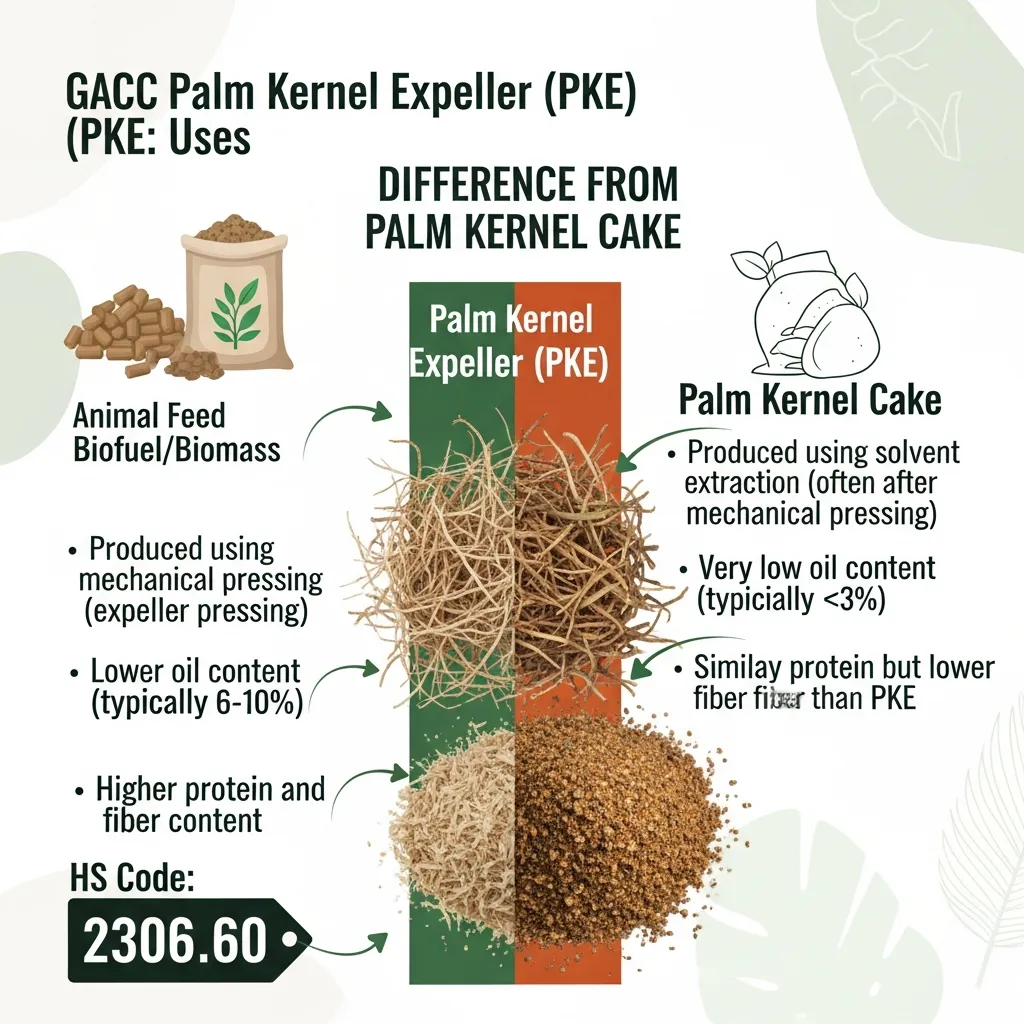
棕榈仁压榨机 (PKE),在业内通常被称为棕榈粕(Palm Kernel Meal),是通过机械压榨从油棕仁中提取油脂所得到的特有副产品。与溶剂浸提品种不同,机械压榨工艺保留了更高比例的残留油脂,使其成为牲畜日粮中高营养密度的原料。
当我们讨论“GACC PKE”时,指的是由已成功在中华人民共和国海关总署注册登记的工厂所生产的特定等级产品。这一注册是一项严格的质量印记。它证明该设施符合出口到全球最大饲料市场所必需的严格卫生标准、病虫害防控措施和可追溯性规程。
这种区分至关重要。标准 PKE 可能适用于当地市场,但经过 GACC 认证的原料保证了一定程度的生物安全,从而降低了跨境疾病的风险。对于买家而言,该认证是一道主要把关机制,确保饲料安全、可追溯且品质一致。
2026年 GACC 合规的关键作用
过去十年中,中国的进口政策显著收紧。到2026年,GACC 系统比以往任何时候都更加集成化和数字化。“GACC”前缀不仅仅是一个官方标签;它是一个贯穿整个生产链的全面质量保证框架。
要获得这一资质,通常位于印度尼西亚或马来西亚等主要生产国的加工厂必须经过多阶段的审核。首先,当地检疫机构核实工厂的卫生和虫害管理系统。随后,中国主管机构对该设施进行审查并予以批准。只有这样, 棕榈仁压榨机 在此生产的产品才能合法运抵中国港口。
对于进口商而言,采购不合规的原料是致命隐患。未具备正规 GACC 注册代码运抵的货物将面临直接退运、遣返或销毁。这使得与获得完全认证的供应商合作成为采购过程中最为关键的一步。
卓越营养:机械压榨与溶剂浸提对比
买家经常感到困惑的一个问题是 棕榈仁压榨机 与通过溶剂浸提法生产的棕榈仁粕/饼之间的区别。虽然它们来自相同的原料,但加工方法从根本上改变了它们的营养价值。
棕榈仁压榨机 是通过机械螺旋压榨机生产的。这种物理压力将油从棕榈仁中挤出,但不可避免地留下了6%至12%的残油量。这种残油是代谢能的高效来源,使压榨粕对能量需求高的动物尤为宝贵。
相比之下,溶剂浸提使用正己烷等化学试剂洗出油脂,将残余脂肪降低至仅0.5%。虽然这略微增加了相对蛋白质浓度,但剥夺了饲料的能量密度。对于奶牛而言,压榨型产品所带来的额外能量往往更受青睐,能够有效支持产奶量和维持体况。
营养成分对比分析
| 特征 | Palm Kernel Expeller (Mechanical) | Palm Kernel Meal (Solvent) |
|---|---|---|
| 提取方法 | 机械螺旋压榨 | 化学溶剂(己烷) |
| 粗脂肪(油) | 6% – 12% (High Energy) | 0.5% – 2% (Low Energy) |
| 粗蛋白 | 14% – 16% | 16% – 18% |
| 适口性 | High (Nutty Aroma) | Moderate (Dry/Bland) |
| 主要应用 | High-energy ruminant diets | General protein filler |
Understanding this table is crucial for feed formulators. If you substitute expeller with solvent meal without adjusting the energy component of the ration, you may see a drop in animal performance.
Key Benefits for Livestock Production
多功能性 棕榈仁压榨机 makes it a staple in feed mills across Asia, Europe, and New Zealand. Its unique combination of fiber, protein, and energy offers specific advantages for different livestock classes.
Boosting Dairy Cattle Performance
For ruminants, PKE is exceptional. The fiber in PKE is highly digestible for cattle, promoting a healthy rumen environment. More importantly, the residual palm oil contains medium-chain fatty acids. Research has shown that these specific fats can bypass the rumen to some extent, directly contributing to milk fat synthesis.
Dairy farmers feeding 棕榈仁压榨机 often report an increase in milk solids, which determines the payout price in many markets. It is common to include PKE at rates of 20-30% of the total dry matter intake for lactating cows.
Strategies for Beef Cattle
In beef production, cost per kilogram of gain is the primary metric. PKE offers a cost-effective alternative to expensive grains like corn or soy. Its moderate protein content (14-16%) matches the requirements for growing steers and backgrounding cattle perfectly. Because it is safe and palatable, it can be fed ad libitum in pasture-based systems to supplement grass shortages during dry seasons.
Usage in Poultry and Swine Diets
Historically, PKE was limited in monogastric diets due to its high fiber content and gritty texture. However, modern feed technology has changed this. By adding specific enzymes like mannanase, producers can break down the fiber matrix, unlocking more nutrients for poultry and swine.
While inclusion rates are lower (typically 5-10%), it serves as an excellent functional fiber source. It helps maintain gut health and regulates passage rate, which can improve litter quality in broiler houses.
HS Codes and Global Trade Classifications
Correct classification is the backbone of international trade. Misclassifying goods can lead to shipment rejections, fines, or delays at customs. For 棕榈仁压榨机, the Harmonized System (HS) Code is specific and must be accurate on all documentation.
Official HS Code Specifications
The global HS Code for oil-cake and other solid residues resulting from the extraction of palm nuts or kernels is 2306.60. Be aware of the following nuances:
- HS Code 2306.60.00: The standard international code for residues of palm nuts or kernels.
- HS Code 2306.60.10 / 2306.60.90: Regional variations often used in ASEAN trade agreements to differentiate between ground (meal) and unground (cake) forms.
When exporting to China under GACC, the HS Code on your Bill of Lading, Certificate of Origin, and Phytosanitary Certificate must match exactly with the code registered by the manufacturer in the GACC database. Even a single digit discrepancy can cause the cargo to be held at the port of entry.
Production Process: Ensuring Quality from the Source
The journey of high-quality PKE begins at the palm oil mill. The process starts with the separation of the palm kernel from the shell. The shell itself is a valuable biomass fuel, known as 棕榈仁壳, which is often exported separately for energy generation.
Once separated, the kernels are crushed. Precise temperature control during this expelling phase is vital. If the temperature rises too high due to friction (Maillard reaction), the protein can become heat-damaged and indigestible. If the pressure is too low, the oil content remains too high, which can lead to rancidity.
Top-tier suppliers monitor these parameters continuously. They also ensure that the product is cooled immediately after pressing to prevent condensation and mold growth—a critical step for passing GACC’s strict aflatoxin tests.
Quality Parameters for Export
Buyers should demand a Certificate of Analysis (COA) that guarantees:
- 粗蛋白与粗脂肪总量(Profat): Minimum 21%
- 水分: Maximum 10% (Critical for shipping safety)
- Dirt/Shell: Maximum 15%
- 颜色: Uniform Dark Brown
- 黄曲霉毒素: < 20 ppb (or as per specific country regulation)
Managing Logistics and Shipping Risks
Shipping agricultural commodities across the equator requires careful planning. 棕榈仁压榨机 is hygroscopic, meaning it absorbs moisture from the air. If the moisture content exceeds 10% at the time of loading, the risk of “sweating” inside the container increases dramatically.
This excess moisture can lead to self-heating and even spontaneous combustion in extreme cases. Furthermore, warm and moist conditions are ideal for fungal growth, leading to mycotoxin contamination. Reputable exporters use desiccants and line shipping containers with kraft paper or cardboard to protect the cargo from condensation damage.
For related palm products like RBD CP8 (Cooking Oil), different tank containers are used, but the principle of strict hygiene remains the same. The logistics for solid bulk items like PKE and 椰干粉 focus heavily on keeping the product dry and cool.
将PKE与其他饲料原料进行对比
How does PKE stack up against other common feed ingredients? While Soybean Meal is the king of protein, it is also the most expensive. PKE offers a middle ground.
PKE vs. Copra Meal
Both are byproducts of tropical oils. 椰干粉 comes from coconuts and has a higher bypass protein value, which is excellent for dairy cows. However, PKE is generally more abundant and cost-effective for providing bulk energy. Many formulators use a blend of both to optimize amino acid profiles.
PKE vs. Corn Gluten Feed
Corn Gluten Feed is another medium-protein fiber source. PKE often competes directly with it in ration formulations. PKE tends to have higher fat (energy) content compared to standard Corn Gluten Feed, giving it an edge in energy-deficient diets.
Makmur Amanah Sejahtera 我们提供高品质的棕榈产品,例如棕榈仁粕、棕榈仁壳、原棕榈油、棕榈仁油等。请通过 WhatsApp 联系我们。 +6282140002198 或发送电子邮件至 admin@makmuramanah.co.id.
常见问题解答
What is the shelf life of Palm Kernel Expeller?
When stored in a cool, dry warehouse with moisture below 10%, 棕榈仁压榨机 typically has a shelf life of 6 to 12 months. High humidity is the biggest enemy, as it accelerates mold growth and rancidity of the residual oil.
Does PKE require heat treatment for export to China?
GACC protocols focus on pest freedom and pathogen control. While specific heat treatment isn’t always a standalone requirement, the production process must ensure the elimination of quarantine pests like Trogoderma granarium. Fumigation prior to shipment is often a mandatory step.
Can I use PKE for horse feed?
Yes, PKE is increasingly popular for horses as a “cool energy” source. It provides energy through fiber and oil rather than starch, which helps avoid behavioral issues associated with high-grain diets. It is particularly good for conditioning older horses.
PKE 与棕榈仁壳有什么区别?
PKE is the soft, nutritious residue inside the kernel used for feed. 棕榈仁壳 is the hard, woody outer layer used primarily as biomass fuel for boilers and power plants. They are completely different products with different HS codes.
How do I verify a GACC registration number?
You can verify registration numbers on the official website of the 中国海关总署 (GACC). Access the “Import and Export Food Safety” bureau section to search for approved overseas manufacturers of feed ingredients.
结论
The global agricultural market of 2026 demands precision, safety, and efficiency. 棕榈仁压榨机 remains a cornerstone of sustainable livestock nutrition, offering an unbeatable balance of energy and cost-efficiency. However, the path to profitability lies in strict adherence to quality standards.
For exporters and importers targeting the Chinese market, GACC compliance is the non-negotiable gateway. By understanding the nuances of the expeller process, correctly applying HS Code 2306.60, and ensuring your supply chain is free from contaminants, you secure a competitive advantage.
Whether you are supplementing dairy rations to boost milk fat or seeking a reliable biomass partner, the key is sourcing from trusted, certified producers. Prioritizing GACC-compliant 棕榈仁压榨机 today ensures a resilient and profitable business for the future.



