
GACC Approved PKE: #1 Guide to Avoid 2026 Import Mistakes
Understanding the intricacies of GACC Approved PKE is the single most critical factor for successfully exporting animal feed to China in 2026. Many exporters face daunting complexities and the risk of costly rejections, turning a lucrative opportunity into a logistical nightmare.
This comprehensive guide demystifies the entire process. It provides a clear, step-by-step roadmap to ensure your Palm Kernel Expeller meets China’s rigorous standards. We will equip you with the expert knowledge to navigate registration, verify suppliers, and avoid common pitfalls that derail even seasoned traders.
What is GACC Approved PKE and Why Is It Critical?
GACC Approved PKE is Palm Kernel Expeller from a production facility officially registered and approved by the General Administration of Customs of the People’s Republic of China (GACC). This approval is a non-negotiable, mandatory “golden ticket” for any PKE products entering the vast Chinese market. For context, China’s feed production exceeded 300 million metric tons last year, according to industry reports.
Without this official registration, your shipment will be rejected at the port. This leads to significant financial loss, contractual disputes, and potential blacklisting. It is a cornerstone of China’s food and feed safety system, designed to protect its massive agricultural sector.

Defining GACC and Its Role in Imports
The GACC is the frontline authority regulating all goods entering and exiting China. It absorbed the responsibilities of the former AQSIQ (General Administration of Quality Supervision, Inspection and Quarantine), creating a unified and more stringent oversight body. For feed ingredients, GACC’s role is to ensure all imports are safe, traceable, and compliant with China’s biosecurity and quality standards. This is managed through their comprehensive online system known as the China Import Food Enterprise Registration (CIFER).
The Significance of Palm Kernel Expeller (PKE) in Animal Feed
Palm Kernel Expeller (PKE) is a high-value by-product of the palm oil extraction process. It’s prized globally as a key ingredient in compound feeds for livestock, particularly ruminants like cattle, due to its high fiber and moderate protein content. The nutritional value and safety of PKE are well-documented in scientific literature, further justifying GACC’s stringent verification process. As a cost-effective feed component, PKE plays a vital role in the global feed supply chain, making market access to major consumers like China essential for producers.
The “Approved” Status: Your Golden Ticket to China
Achieving “GACC Approved PKE” status signifies that a specific overseas production facility has been inspected, audited, and deemed capable of consistently producing PKE that meets China’s safety and quality requirements. This approval is facility-specific, not company-specific. Therefore, importers in China will only contract with suppliers whose manufacturing plants are on the official GACC list. This verification is a critical due diligence step for all parties involved.
The 2026 GACC Registration Process: A Step-by-Step Walkthrough
Navigating the GACC registration for PKE requires a meticulous and organized approach. The process is managed digitally through the CIFER system and demands precision. Any errors or omissions can lead to significant delays or outright rejection of the application.
- Competent Authority Recommendation: The first step often involves an application through the competent authority in the exporting country (e.g., the Ministry of Agriculture). They will assess your facility’s compliance with local standards before recommending it to the GACC.
- CIFER System Application: Once recommended, your company must create an account and submit a detailed application through the GACC’s CIFER portal. This includes extensive information about your facility, production process, quality control systems (like HACCP), and traceability measures.
- Documentation Submission: A comprehensive dossier of documents must be uploaded. This typically includes business licenses, export permits, facility floor plans, details on raw material sourcing, pest control records, and product specifications.
- GACC Review and Audit: GACC officials will meticulously review the submitted application and documents. They may follow up with a remote video audit or, in some cases, an on-site physical inspection of the facility to verify the information provided.
- Approval and Listing: Upon successful completion of the review and audit, the GACC will issue a unique registration number in China and add the facility to the official public list of approved exporters. This registration is typically valid for 5 years.
Navigating the GACC Approved PKE Supplier List
For importers, verifying a supplier’s status is a crucial part of procurement. For exporters, being on this list is your most powerful marketing tool for the Chinese market. It is the definitive source of truth for customs officials and buyers alike.
How to Verify a Supplier’s GACC Status
Verification is straightforward. The GACC maintains a publicly accessible database where anyone can search for approved facilities via the CIFER portal. You can search by country, product category, and the specific registration number. Always use this official source, as unofficial lists or verbal assurances are worthless at the customs gate.
Common Red Flags of Non-Compliant Suppliers
Exercise extreme caution if a potential supplier exhibits these red flags:
- Inability or unwillingness to provide a valid GACC registration number for their specific facility.
- Offering to ship PKE produced at a different, non-registered facility.
- Appearing on unofficial “approved lists” but not on the official GACC database.
- A lack of transparency regarding their quality control and traceability systems.
Partnering with such a supplier is a high-risk gamble that will likely result in your shipment being seized by Chinese customs.

GACC vs. AQSIQ: Understanding the 2026 Regulatory Shift
Understanding the history of China’s import regulations provides context for the current stringent environment. Before 2018, the key authority was AQSIQ. However, a major government restructuring integrated AQSIQ’s responsibilities into the GACC.
This consolidation was designed to streamline customs clearance while simultaneously tightening control over food and feed safety. While the name changed, the core mission of safeguarding public health intensified. For exporters, this means the level of scrutiny is higher than ever.
| Aspect | AQSIQ (Pre-2018) | GACC (2018 – 2026) |
|---|---|---|
| Governing Body | Administration of Quality Supervision, Inspection and Quarantine | General Administration of Customs of the P.R.C. |
| Scope | Primarily focused on quality inspection and quarantine. | Integrated role including customs clearance, inspection, quarantine, and facility registration. |
| Registration System | Multiple systems, often paper-based or through various platforms. | Centralized digital system via the CIFER portal. |
| Focus | Product-level inspection at the border. | Comprehensive oversight from the overseas facility (source) to the border. |
Critical Mistakes to Avoid When Importing GACC Approved PKE
Even with an approved supplier, errors in documentation or labeling can lead to disaster. These are the most common and costly mistakes that importers and exporters must actively avoid to ensure smooth customs clearance.
Misclassifying Your GACC Approved PKE Product
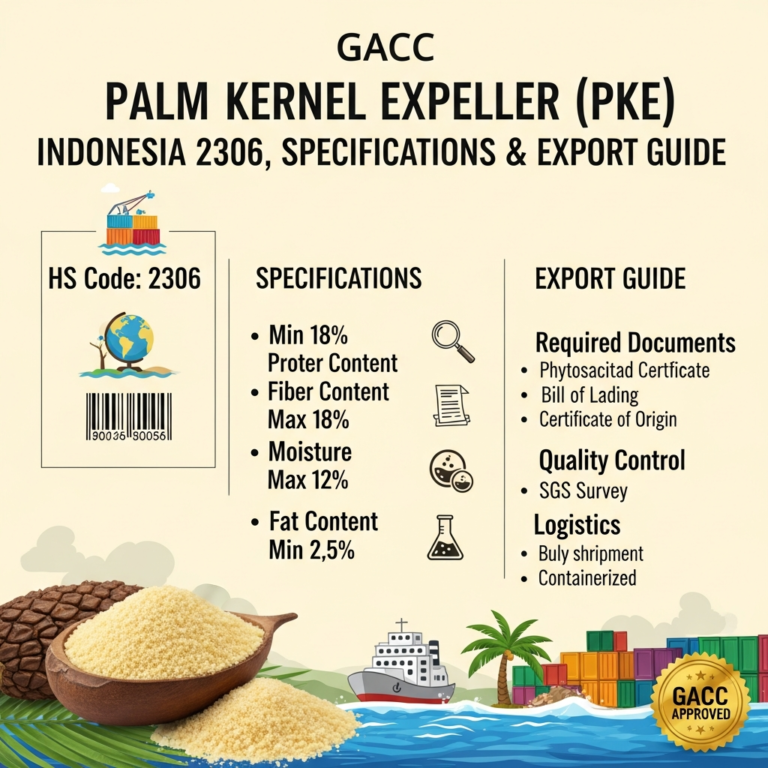
Using the wrong Harmonized System (HS) code is a frequent error. PKE has a specific code (HS Code 2306.60.00), and using a general code for “oil cake” can trigger inspections and delays. Ensure all commercial documents, from the invoice to the bill of lading, use the correct, specific HS code.
Incomplete or Inaccurate Documentation
Chinese customs demand perfection in paperwork. Every document must be consistent, and the GACC registration number must be clearly stated on shipping documents. A simple discrepancy in weight, value, or description between the commercial invoice, packing list, and certificate of origin can flag your container for a full-scale inspection. This can cause delays of weeks or even months.
Ignoring Labeling and Packaging Requirements
GACC has strict rules for labeling feed ingredient bags. Labels must be in simplified Chinese and include critical information such as product name, GACC registration number, net weight, production date, and shelf life. Failure to comply is a direct violation and a common reason for import rejection. You can consult industry publications like FeedNavigator for updates on these regulations.
[Video Suggestion] Facility Tour and Quality Control Process
Embedding a short, professionally produced video here would significantly enhance trust. A video tour of the PKE production facility, showing quality control, machinery, and hygiene standards, provides powerful visual proof of compliance and builds confidence with potential buyers.

Beyond PKE: Other GACC Regulated Products
It’s important to recognize that GACC’s oversight extends to a wide range of agricultural and feed commodities. If your business trades in other products, you must ensure they also comply. Many suppliers of high-quality Palm Kernel Expeller also produce other valuable feed ingredients like Copra Meal and soil conditioners like Cocopeat, which fall under similar GACC scrutiny. Furthermore, related palm industry products, such as Palm Kernel Shell, may have their own separate import requirements. Always verify the status of each specific commodity you intend to ship to China.
Makmur Amanah Sejahtera provides high-quality palm products such as Palm Kernel Expeller, Palm Kernel Shell, Crude Palm Oil, Palm Kernel Oil, etc. Kindly contact us at WhatsApp +6282140002198 or email us at admin@makmuramanah.co.id.

Frequently Asked Questions (FAQs) about GACC Approved PKE
What is the validity period of a GACC registration?
A GACC registration for overseas feed production facilities is typically valid for five years. Exporters must apply for renewal at least six months before the expiration date to ensure there is no lapse in their approved status and to avoid disruption to their export activities.
Can I use an agent or consultant for GACC registration?
Yes, many companies work with specialized consultants who are experts in the GACC registration process. These agents can help navigate the complex requirements, prepare documentation, and communicate with the authorities. This can be invaluable for companies unfamiliar with the Chinese regulatory landscape.
What happens if I ship PKE from a non-approved facility?
Shipping PKE from a non-approved facility will lead to immediate rejection by Chinese customs under GACC Decree 248. The shipment will either be returned to the origin at the shipper’s expense or destroyed. This is a severe violation that can also lead to the importer being blacklisted.
How often is the GACC approved list updated?
The GACC updates its lists of approved facilities dynamically. As new facilities are approved, or as existing ones have their registration expire or revoked, the online database is updated. It is essential to check the live database for the most current information before finalizing any import contract.

Conclusion: Your Partner in GACC Compliance
In conclusion, mastering the requirements for GACC Approved PKE is not just an administrative task; it’s a fundamental business strategy for the Chinese market in 2026. From understanding the step-by-step registration process to diligently verifying suppliers and avoiding common documentation pitfalls, every detail matters. The potential rewards of accessing China’s massive feed market are immense, but so are the risks of non-compliance. By following this guide and prioritizing regulatory adherence, you can confidently navigate the complexities and establish a successful, long-term trade relationship. Ensuring your supply chain is built on a foundation of fully compliant, GACC Approved PKE is the only path to sustainable success.
 English
  Indonesian
  Chinese
  Arabic