

Palm Kernel Expeller Egypt: 5 Proven Vital Secrets (2026)
Securing high-grade Palm Kernel Expeller Egypt shipments has become a strategic priority for commercial livestock operations managing escalating compound feed costs. Egypt’s intensive dairy, beef, and sheep sectors face persistent foreign exchange hurdles and shifting global grain markets. Consequently, feed formulators across the Nile Delta are pivoting aggressively toward sustainable, fiber-rich protein alternatives from Southeast Asia.
Feed processors in Cairo, Alexandria, and El-Beheira continually balance crude protein requirements against soaring input margins. In 2026, importing palm derivatives provides an indispensable buffer against volatile domestic grain supplies. Furthermore, international suppliers now offer tailored ocean freight solutions that streamline bulk delivery into major Egyptian seaports.

Understanding Palm Kernel Expeller Egypt: Market Dynamics and Feasibility
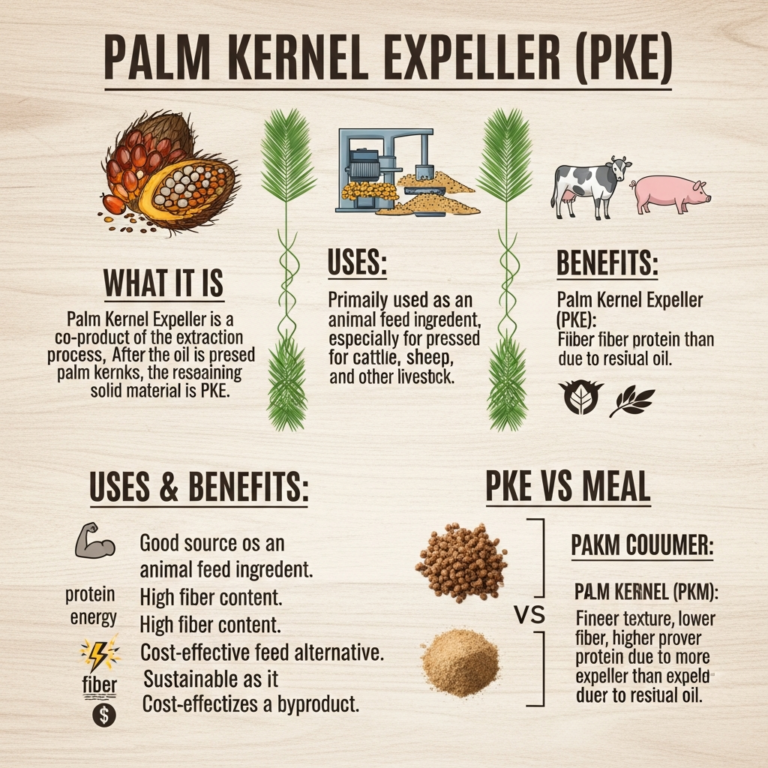
Palm Kernel Expeller (PKE) is a nutrient-dense, mechanically extracted by-product of crushed oil palm kernels, delivering balanced crude protein (14%–18%) and exceptional neutral detergent fiber. In Egyptian agribusiness, imported PKE serves as an economical energy and roughage extender for cattle, water buffalo, and sheep rations.
Egypt imports over 80% of its coarse feed ingredients annually, according to official commodity trade data from the Food and Agriculture Organization (FAO). Traditional dependence on yellow corn and soybean meal creates substantial financial exposure during global market swings. Therefore, integrating Palm Kernel Expeller Egypt contracts into daily total mixed rations (TMR) stabilizes operational feed expenses without sacrificing daily liveweight gain.
Livestock producers throughout the Menofia and Sharkia governorates rely heavily on ruminant production for domestic meat and milk output. The distinct ruminal degradation rate of palm expeller fiber promotes a stable rumen pH, mitigating subacute ruminal acidosis (SARA) during high-starch feeding cycles. Moreover, local mills frequently blend PKE alongside supplementary fiber sources such as copra meal to produce nutritionally balanced, highly palatable commercial pellets.
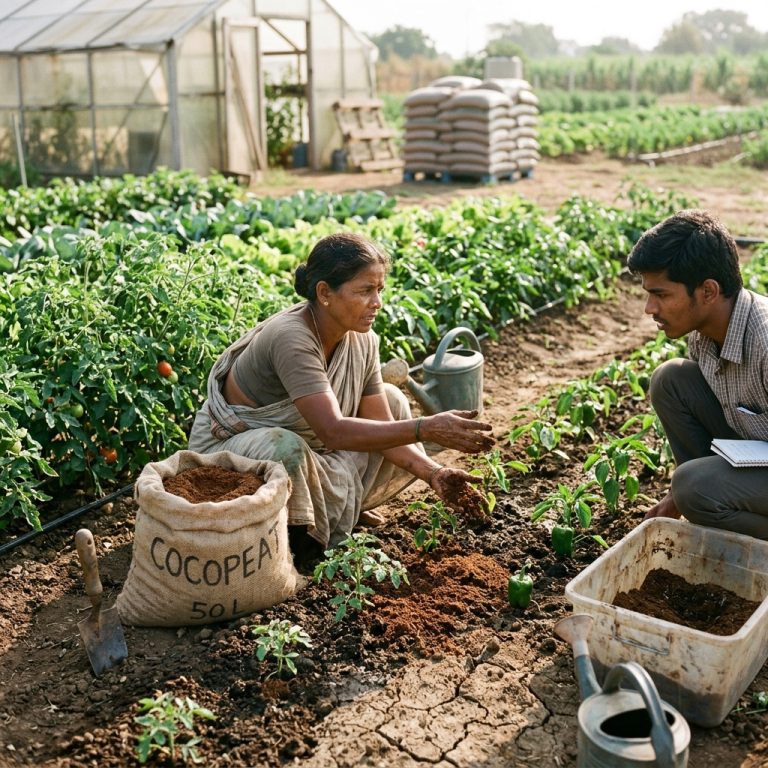
Agronomic processing facilities also leverage complementary by-products within integrated agricultural complexes. For example, greenhouse operations in the desert reclamation projects utilize horticultural substrates like cocopeat to conserve moisture, highlighting the synergy of tropical agricultural inputs across Egypt’s modern farming landscape.
Current Palm Kernel Expeller Egypt Price per Ton in 2026
Procurement directors tracking Palm Kernel Expeller Egypt costs must monitor both origin free-on-board (FOB) rates in Indonesia and prevailing bulk dry freight rates across the Indian Ocean and Red Sea corridors. The commercial market in 2026 trades within defined price bands dictated by moisture content, residual oil levels, and ocean transport charges.
Historically, ocean freight variances directly influence landed costs at Egyptian discharge terminals. While FOB prices from primary Indonesian ports like Belawan and Dumai remain competitively anchored, final delivered values depend upon shipping availability and fuel surcharges. Nevertheless, palm expeller consistently trades at a 35% to 45% discount compared to imported coarse grains on an equivalent dry-matter basis.
Navigating Palm Kernel Expeller Egypt Pricing: FOB vs. CIF Alexandria
Purchasing managers evaluate contracts under two primary terms: FOB Origin or CIF Egyptian Port. A CIF contract transfers logistical risk to the overseas exporter, ensuring predictable delivery budgets for Egyptian buyers navigating local bank letter-of-credit (LC) timelines.
- Raw Product Cost (FOB): Represents mechanical crushing expenses, processing standards, and domestic origin transport within Sumatra or Kalimantan.
- Maritime Bulk Freight: Covers Supramax or Handymax chartered vessel capacity traversing international maritime routes to Egypt’s Mediterranean or Red Sea gates.
- Marine Cargo Insurance: Provides vital financial indemnity against transit moisture exposure, heating, or spoilage during long-haul sea passages.
- Port Handling and Storage: Incorporates discharge tariffs, stevedoring fees, and silos demurrage charges at Egyptian quaysides.
Historical Price Trends and Ocean Freight Volatility Impact
Evaluating palm kernel expeller price per ton Egypt 2026 metrics requires cross-referencing fuel bunker costs, container availability, and bulk carrier charter rates. When Suez Canal maritime routing faces congestion or strategic realignments, landed CIF Alexandria feed ingredients experience transient price premiums that proactive purchasing managers mitigate through quarterly forward contracts.
The following benchmark comparison illustrates typical pricing structures and product grades observed across the Mediterranean market in 2026:
| Feed Ingredient Grade | Crude Protein (Min) | Profat Content (Min) | Estimated FOB Indonesia (USD/MT) | Estimated CIF Alexandria (USD/MT) |
|---|---|---|---|---|
| Standard Palm Kernel Expeller (PKE) | 14.5% | 21.0% | $130 – $145 | $185 – $210 |
| Premium Low-Moisture PKE Pellets | 16.0% | 22.5% | $145 – $160 | $200 – $225 |
| Solvent-Extracted Palm Kernel Meal | 17.0% | 18.5% | $125 – $140 | $180 – $205 |
| Standard Commercial Copra Meal | 20.0% | 27.0% | $220 – $245 | $280 – $310 |

Official HS Code 2306.60 and Regulatory Framework in Egypt
Navigating customs clearance for Palm Kernel Expeller Egypt consignments requires absolute precision regarding tariff classification and phytosanitary compliance. The international Harmonized System assigns palm kernel residues to a specific sub-heading that governs duty rates, import taxation, and regulatory oversight across Egyptian customs posts.
Importers must declare all shipments under the standardized nomenclature maintained by the World Customs Organization (WCO):
- HS Code 2306.60: Oilcake and other solid residues, whether or not ground or in the form of pellets, resulting from the extraction of palm nuts or kernels.
- National Customs Sub-heading (Egypt): HS code 230660 Egypt — specifically allocated to raw and pelleted palm kernel expeller imported for direct feed compounding.
The Egyptian Ministry of Agriculture and Land Reclamation enforces strict regulatory mandates to safeguard animal health. Consequently, every arriving cargo undergoes mandatory screening by the General Organization for Export and Import Control (GOEIC) alongside the Central Administration of Plant Quarantine (CAPQ).
Customs Clearance Palm Kernel Meal Alexandria Port Requirements
Egyptian port authorities enforce zero-tolerance policies regarding clerical discrepancies. Executing customs clearance palm kernel meal Alexandria port protocols without demurrage penalties demands complete document alignment before the carrying vessel drops anchor:
- Original Clean on Board Bill of Lading: Indicating precise cargo volume, vessel IMO, and consigned receiver in Egypt.
- Commercial Invoice & Packing List: Authenticated by relevant commercial chambers and reflecting exact HS Code 2306.60 declarations.
- Phytosanitary Certificate: Issued by the origin nation’s quarantine department, certifying freedom from noxious weeds, storage pests, and invasive pathogens.
- Certificate of Origin: Proving Indonesian or Malaysian manufacturing origin to apply legitimate bilateral trade tariffs.
- Veterinary & Non-Radioactive Certificate: Demonstrating that the feedstuff contains zero animal-origin contaminants or radioactive fallout.
- Independent Inspection Certificate: Verifying aflatoxin levels remain below 20 ppb and moisture stays under 10% upon loading.
Mandatory Quality Assays: CAPQ, GOEIC, and Mycotoxin Thresholds
Egyptian regulatory authorities collect random composite samples from every hold during bulk discharge. Testing protocols confirm the total absence of Salmonella, zero radiation remnants, and strict adherence to the Egyptian Standard ES 1484/2005 for animal feedstuffs. Consignments failing to pass moisture or mold screening face immediate rejection or compulsory re-export.
How to Import Palm Kernel Expeller to Egypt via the Nafeza System
Understanding how to import palm kernel expeller to Egypt requires full mastery of the National Single Window for Foreign Trade platform, known as Nafeza (National Single Window). Commercial importers purchasing Palm Kernel Expeller Egypt feed must comply with Advance Cargo Information (ACI) protocols before suppliers dispatch vessels from loading berths.
Step-by-Step Nafeza ACID Animal Feed Customs Protocol
The Nafeza ACID animal feed customs workflow connects buyers, shipping agents, and overseas exporters via a shared digital ledger:
- Importer Registration: The Egyptian buyer creates an active digital account on the Nafeza platform, securing an electronic signature and commercial validation.
- Issuance of the ACID Number: The importer inputs preliminary shipment data at least 48 hours prior to vessel departure, generating a unique 19-digit Advanced Cargo Information Declaration (ACID) number.
- Supplier Integration via CargoX: The foreign supplier registers on the blockchain-backed CargoX platform to upload all commercial documents embedded with the verified ACID code.
- Port Arrival & Automated Sampling: Upon berth placement in Damietta or Alexandria, CAPQ and GOEIC inspectors draw composite samples for microbiological and chemical assays.
- Customs Duties and Duty Release: Once analytical results confirm non-GMO status, safe moisture, and absence of mycotoxins, customs issues final tax clearance and cargo release.

Expert Video Guide: Navigating Bulk Feed Import Logistics
[Video Embed Placeholder: “Mastering Egypt’s Nafeza ACI System for Bulk Agricultural Imports” — An in-depth technical walk-through detailing digital document submission, CargoX verification, and port sampling procedures.]
Palm Kernel Expeller Specifications for Egyptian Livestock Diets
Optimizing feed formulas with high-performance Palm Kernel Expeller Egypt supplies allows dairy and feedlot managers to maintain exceptional biological performance at a reduced cost per kilogram of gain. Comprehensive nutritional studies published in Animal Feed Science and Technology and referenced on Feedipedia demonstrate that PKE supplies vital digestible fiber that supports steady ruminal fermentation without lowering fat-corrected milk yield.
Egyptian dairy producers managing Holstein and Brown Swiss herds frequently encounter milk fat depression during intense summer heatwaves. Incorporating 15% to 25% PKE into lactation rations supplies dietary medium-chain fatty acids (primarily lauric and myristic acids) that directly stimulate de novo milk fat synthesis. In contrast to high-starch grains, PKE digests steadily, safeguarding internal rumen microflora.
For high-yield dairy enterprises requiring dense bypass energy, farm nutritionists frequently combine PKE rations with rumen-protected fats, such as calcium salts of palm oil fatty acids. In intensive broiler and layer facilities, precision energy supplementation can also incorporate purified energy oils like RBD CP8 to satisfy caloric demands. Simultaneously, agricultural processing operations utilize solid co-products like palm kernel shell for boiler biomass energy, demonstrating the unmatched commercial efficiency of the palm processing chain.
Ruminant Livestock Feed Egypt Applications: Dairy and Beef Rations
Understanding exact palm kernel expeller specifications for Egyptian livestock enables feed manufacturers to tailor formulations according to production stage:
- Lactating Dairy Cows: 15% – 25% of total dry matter intake (enhances milk fat percentage, stabilizes rumen pH, and extends forage reserves).
- Beef Feedlot Cattle: 20% – 35% of total concentrate ration (promotes uniform marbling, stable average daily gains, and low digestive disorder risks).
- Growing Sheep and Goats: 10% – 20% of concentrate mix (provides balanced crude protein and palatable energy for desert and pasture-supplemented herds).
- Broiler Poultry & Laying Hens: 3% – 5% maximum (elevated fiber limits inclusion in monogastric formulas, though enzyme conditioning yields marginal cost savings).

In addition to nutritional benefits, the physical pellet form of processed palm expeller enhances handling ergonomics. Mechanized feeding units and automatic batch mixers experience reduced dust levels and minimal bridging inside overhead feed silos. Consequently, local feed mills throughout Egypt achieve higher pelleting efficiency when including conditioned palm kernel meal animal feed in extruded commercial formulas.
Partnering with a dedicated Indonesian palm expeller supplier ensures continuous technical support, verified phytosanitary protocols, and consistent bulk vessel dispatches tailored to Egyptian port infrastructure.
Makmur Amanah Sejahtera provides high-quality palm products such as Palm Kernel Expeller, Palm Kernel Shell, Crude Palm Oil, Palm Kernel Oil, etc. Kindly contact us at WhatsApp +6282140002198 or email us at admin@makmuramanah.co.id.
Frequently Asked Questions
What is the average protein content of Palm Kernel Expeller imported into Egypt?
Standard Palm Kernel Expeller Egypt imports feature crude protein ranging between 14.5% and 17.0%. Combined with an average residual fat level of 6% to 9%, it delivers both supplementary amino acids and dense energy required for intensive ruminant production across Egyptian livestock farms.
What is the exact customs duty rate for HS Code 2306.60 in Egypt?
Raw animal feed ingredients under HS code 230660 Egypt receive preferential agricultural status. Shipments generally qualify for zero customs duty or low basic rates (0%–5%), alongside complete value-added tax exemptions designed to support domestic meat and milk production affordability.
How does Nafeza ACID approval work for palm expeller shipments?
Egyptian importers generate a 19-digit ACID number on Nafeza before vessel loading. The overseas exporter submits shipping manifests, commercial invoices, and phytosanitary certificates via CargoX at least 48 hours prior to vessel departure, ensuring automated customs clearance validation upon arrival.
Can Egyptian feed manufacturers substitute corn entirely with Palm Kernel Expeller?
No. While palm expeller is an outstanding energy and fiber booster, its high neutral detergent fiber limits cereal substitution to 25%–35% in cattle rations. Complete replacement impairs total starch digestion and reduces weight gain velocity in monogastric animals.
Which Egyptian ports handle bulk shipments of Palm Kernel Expeller?
Bulk shipments of palm expeller enter primarily through Mediterranean deep-water ports like Alexandria, El-Dekheila, and Damietta. These terminals offer specialized pneumatic suction discharge systems, grain flat-storage silos, and direct access to major Delta highway transportation networks.
Strategic Sourcing for Egypt’s Feed Industry
Navigating global grain shortages requires Egyptian feed compounders and livestock producers to implement forward-thinking procurement models. By securing dependable supply chains for premium palm expeller, commercial enterprises insulate their operations against commodity volatility while enhancing dairy and beef productivity.
Partnering with certified producers guarantees strict compliance with Nafeza regulations, guaranteed aflatoxin safety thresholds, and consistent nutrient parameters. Discovering reliable overseas suppliers is the definitive first step to lower production overhead and achieve sustained commercial success. Establishing an efficient direct pipeline for Palm Kernel Expeller Egypt orders will empower your enterprise to lead the regional livestock sector through 2026 and beyond.

 English
 Indonesian
 Chinese
 Arabic
