Table of Contents
- What Exactly Is Copra Meal?5 Key Benefits of Copra Meal for Animal FeedAnalyzing the Nutritional Content of Copra MealPotential Disadvantages of Copra Meal and Smart Ways to Overcome ThemCopra Meal Price Analysis for Animal Feed in the 2025 MarketPractical Guide to Using Copra Meal for Various LivestockConclusionContact Us for Your Palm Product Needs
In modern livestock farming, feed cost efficiency is the key to profitability. One increasingly popular alternative feed solution is copra meal for animal feed. This feed ingredient is not only economical but also rich in essential nutrients that can boost the growth and productivity of your livestock, from cattle and goats to poultry.
However, how can you maximize its benefits? What are its specific advantages, its protein content, and the price trends in 2025? This article will thoroughly explore everything you need to know about copra meal as a reliable feed source.
What Exactly Is Copra Meal?
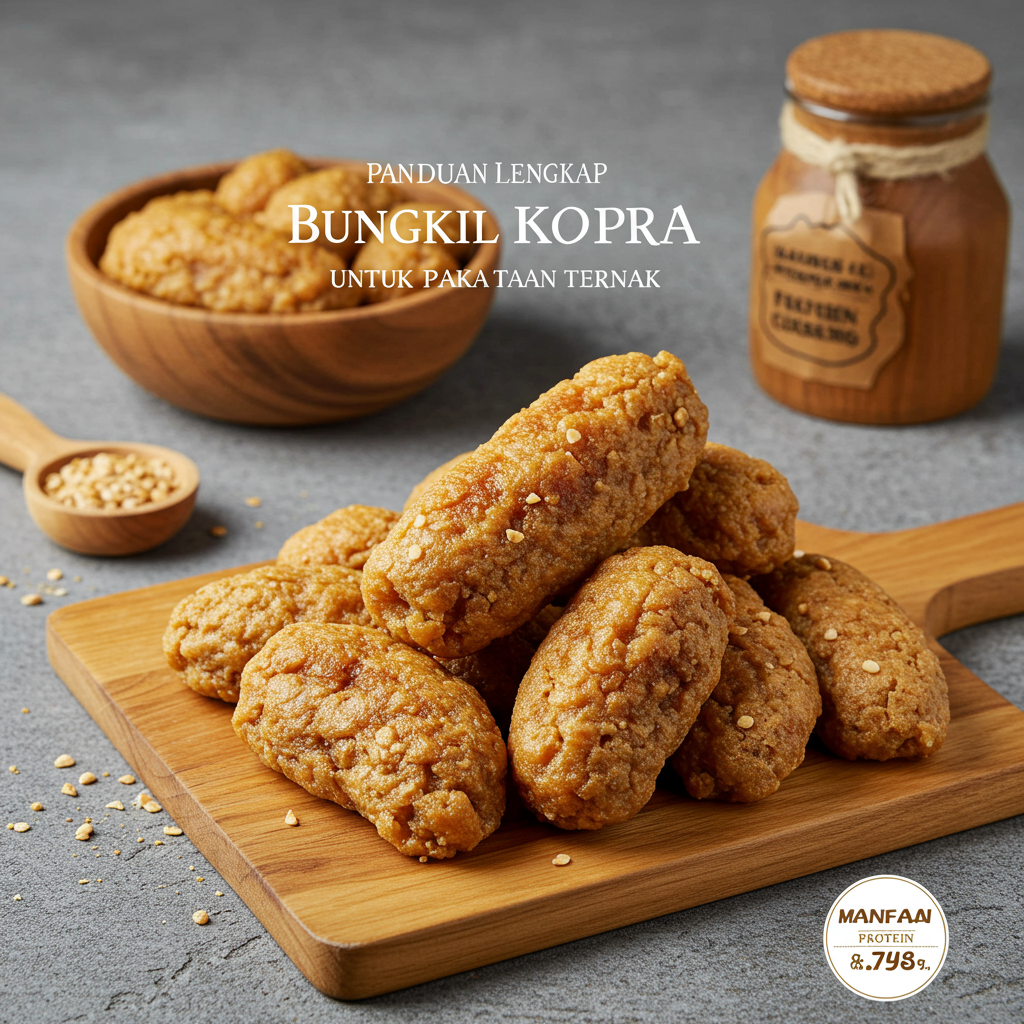
Copra meal (coconut meal or copra cake) is a by-product (by-product) from the oil extraction process of dried coconut flesh known as copra. After the coconut oil is extracted, the remaining residue is what is called copra meal.
It is important to understand that this differs from oil palm products, such as Palm Kernel Expeller derived from palm kernel. The oil extracted from copra is coconut oil, not Palm Kernel Oil or Crude Palm Oil which is also common in the industry. The remaining solid material from copra is still rich in protein, fiber, and residual oil, making it a valuable source of energy and nutrition. Its dry texture makes it easy to store and mix into rations.

5 Key Benefits of Copra Meal for Animal Feed
Using copra meal for animal feed provides various strategic benefits for livestock farmers. Here are the five main benefits:
1. Highly Economical Protein Source
Compared to other protein sources such as soybean meal, copra meal prices tend to be more affordable. This makes it a smart choice for reducing operational feed costs, which often represent the largest expense component in livestock farming.
2. Increasing Body Weight and Production
With a protein content of around 18-25% and residual fat as an energy source, copra meal is effective in supporting body weight gain in beef cattle. In dairy cattle, these nutrients help maintain stable milk production.
3. Good Fiber Content for Ruminant Digestion
The high crude fiber in copra meal is very beneficial for ruminants (cattle, buffalo, goats). This fiber helps maintain rumen health and promotes a smooth digestive system. By comparison, other by-products such as Oil Palm Empty Fruit Bunches are also rich in fiber, but are generally used for compost or bioenergy. For livestock nutrition, you can read more via IPB Journal of Animal Production Science and Technology.
4. Good Palatability
Copra meal has a distinctive coconut aroma that livestock tend to like. This can increase appetite and ensure livestock consume their feed rations optimally.
5. Dense Energy Source
The residual coconut oil in copra meal is a dense source of energy, essential for daily livestock activities and metabolic processes for growth.
Analyzing the Nutritional Content of Copra Meal
Nutritional composition of copra meal for animal feed can vary depending on the oil extraction process. However, in general, the following is an estimate of its nutritional content.
| Nutritional Component | Estimated Content |
|---|---|
| Crude Protein | 18% – 25% |
| Crude Fiber | 12% – 18% |
| Crude Fat | 6% – 12% |
| Metabolizable Energy | 2.500 – 3.000 kcal/kg |
| Calcium (Ca) | 0.15% – 0.25% |
| Phosphorus (P) | 0.50% – 0.60% |
It is important to note that while it is rich in protein, the amino acid profile of copra meal is not as complete as soybean meal (its lysine and methionine contents are lower). Therefore, its use often needs to be combined with other feed ingredients.
Potential Disadvantages of Copra Meal and Smart Ways to Overcome Them
Despite its many benefits, there are several things to watch out for when using copra meal for animal feed. One of them is the potential for aflatoxin contamination if storage is improper. Make sure you purchase from a trusted supplier and store it in a dry place.
In addition, its high fiber content can be an issue for monogastric livestock (poultry, swine) if fed in excessive portions. The solution is to limit its inclusion percentage in the feed ration, typically no more than 15-20% for poultry.
Pro Tip: For poultry feed, consider adding enzyme supplements to help break down the crude fiber in copra meal, ensuring more optimal nutrient absorption.
Copra Meal Price Analysis for Animal Feed in the 2025 Market
Price copra meal for animal feed is highly volatile, influenced by the coconut harvest season, oil industry demand, and logistics costs. In 2025, prices are expected to remain competitive compared to imported feed ingredients.
In general, prices at the farmer level can range between IDR 3,500 to IDR 5,500 per kilogram. For comparison, other by-products such as Palm Kernel Shells have a different market, more commonly used as biomass fuel. Always compare prices from multiple suppliers and monitor commodity benchmarks via official websites such as the Food Price Panel from the National Food Agency.

Practical Guide to Using Copra Meal for Various Livestock
Each type of livestock has different requirements and tolerances for copra meal. Here is a practical guide.
For Cattle and Other Ruminants
Cattle, buffalo, and goats can tolerate copra meal in larger amounts. The recommended inclusion rate is 15% to 30% of the total concentrate mix. This is highly effective for fattening programs or as a supplement for dairy cattle feed.
For Chickens and Poultry
Due to its high fiber content, the inclusion rate for poultry (broilers and layers) should be lower, around 5% to 15%. Ensure the ration remains balanced by adding other protein sources. A study from the Faculty of Animal Husbandry at Udayana University showed good results at this level, which you can explore further through related research journals.
For Swine
Similar to poultry, its use in swine also needs to be limited. A safe figure is around 10% to 20% in rations, especially during the growing phase (grower) and finishing phase (finisher).
Conclusion
Copra meal for animal feed is a highly viable, economical, and nutritious alternative when used correctly. By understanding its benefits, nutritional content, and proper application, you can optimize feed costs while improving the productivity of your livestock business.
The key to successful use of copra meal for animal feed lies in balanced formulation and guaranteed raw material quality. Always consult your feed formulation with an animal nutritionist to achieve the best results in 2025 and beyond.
Contact Us for Your Palm Product Needs
Makmur Amanah Sejahtera provides high-quality palm products such as Palm Kernel Expeller (PKE), Palm Kernel Shell (PKS), Crude Palm Oil (CPO), Palm Kernel Oil (PKO), and more. Please contact us via WhatsApp at +6282140002198 or email to admin@makmuramanah.co.id.