Table of Contents
- What Is Coconut Shell Charcoal?How is Coconut Shell Charcoal Made?7 Key Benefits and Advantages of Coconut Shell CharcoalDetailed Uses of Coconut Shell CharcoalHow to Choose Quality Coconut Shell CharcoalFrequently Asked Questions (FAQ)Contact UsConclusion
Welcome to the ultimate guide on coconut shell charcoal, one of the alternative energy sources that is becoming increasingly popular and reliable. If you often grill satay, barbecue, or are even looking for more efficient fuel for your business, you might already be familiar with this product. This coconut shell charcoal is not just a substitute for regular wood charcoal, but a smart, eco-friendly, and economical choice.
Today, awareness of sustainable products is steadily growing. This is why coconut shell charcoal has become a top choice. This article will thoroughly explore everything you need to know, from its remarkable benefits and manufacturing process to tips for choosing the best quality on the market.
What Is Coconut Shell Charcoal?
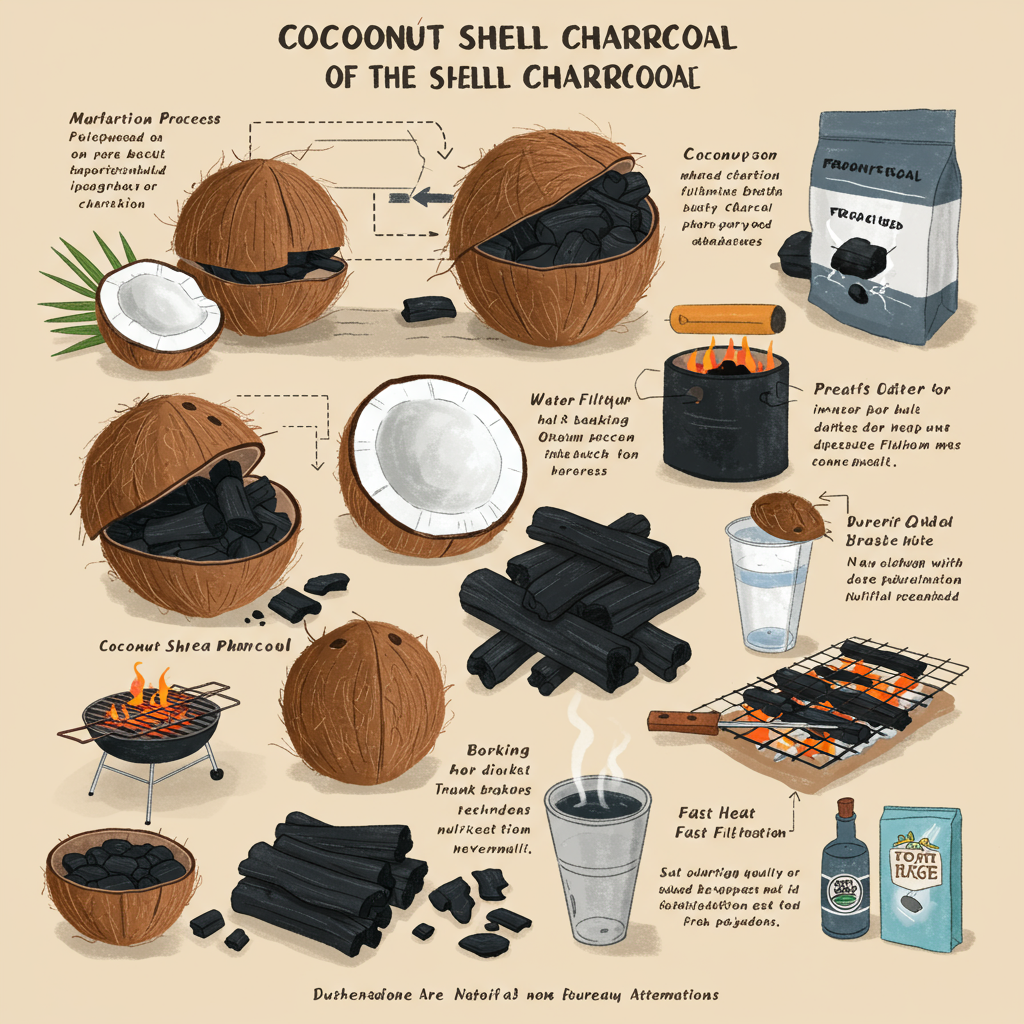
Coconut shell charcoal is charcoal made from the shells of mature coconuts. The production process involves burning coconut shells under low-oxygen or completely oxygen-free conditions, known as the pyrolysis process. The result is high-quality charcoal with unique characteristics.
Unlike wood charcoal derived from felling trees, coconut shell charcoal utilizes agricultural waste. This makes it one of the most environmentally friendly renewable energy products. Its quality often surpasses regular charcoal, especially in terms of burning duration and heat output.
How is Coconut Shell Charcoal Made?
The production of coconut shell charcoal is fairly straightforward, but requires the right technique to yield the highest quality. The process can be divided into several main stages:
- Collection and Drying: Coconut shells that have been separated from the coir and meat are collected, then sun-dried until completely dry. The goal is to reduce moisture content so that the combustion process is more efficient.Pyrolysis Process (Carbonization): The dried coconut shells are placed into a combustion drum or specialized kiln. Then, the shells are burned under low-oxygen conditions. This process eliminates volatile components (such as water and gases) and leaves behind pure carbon.Cooling and Screening: Once the burning process is complete, the charcoal is left to cool down completely to prevent it from turning into ash. Afterwards, the charcoal is sifted to separate the charcoal pieces from dust and impurities.

7 Key Benefits and Advantages of Coconut Shell Charcoal
Popularity coconut shell charcoal is not without reason. Here are its seven main advantages that make it the best choice today.
1. Higher and Longer-Lasting Heat
One of the biggest advantages of this charcoal is its very high calorific value. According to various studies, the calorific value of coconut shell charcoal can reach 7,000 kcal/kg, much higher than wood charcoal. This means this charcoal produces more stable heat and can burn longer, making it highly efficient for cooking.
2. Environmentally Friendly
This charcoal is made from coconut shell waste that would otherwise be discarded. By utilizing it, we help reduce organic waste and curb deforestation rates. Its use supports circular economy principles, where waste from one industry becomes raw material for another. This aligns with environmental conservation campaigns that are increasingly being promoted.
3. Less Smoke (Toxin-Free)
When burned, coconut shell charcoal of high quality produces significantly less smoke compared to wood charcoal. This makes it more comfortable to use in semi-open areas and healthier because it reduces exposure to harmful substances. Cooked food will also not have a pungent smoky smell.
4. Versatile Applications
The benefits of this charcoal are not limited to barbecuing. This product is a primary raw material for manufacturing activated carbon, which is widely used in water filtration, air purification, and pharmaceutical industries. This flexibility gives it very high economic value.
5. Imparts a Distinctive Aroma to Food
For culinary lovers, aroma is everything. The use of coconut shell charcoal imparts a distinctive, pleasant smoky aroma to grilled foods, such as satay, grilled fish, and grilled corn. This aroma is distinct and considered more delectable than the aroma from other types of charcoal, as frequently discussed on various leading culinary websites.
6. More Economical
Although its price might be slightly higher per kilogram, its long burning duration makes using coconut shell charcoal becomes more economical. You do not need to constantly add charcoal during long cooking sessions. Its heat efficiency also accelerates the cooking process, thereby saving time and energy.
7. Supporting the Local Economy
Indonesia is one of the largest coconut producers in the world. The coconut shell charcoal industry empowers many local farmers and artisans. By purchasing this product, you indirectly support the domestic economy, especially in rural areas. This product is also one of the mainstay export commodities, as noted by the Ministry of Trade of the Republic of Indonesia.
Detailed Uses of Coconut Shell Charcoal
As mentioned earlier, the uses of this charcoal are very broad. Here are some of its primary applications:
- Cooking Fuel: The number one choice for satay restaurants, grilled fish, and other culinary businesses due to its stable heat and pleasant aroma.Briquette Raw Material: This charcoal is crushed and molded into briquettes, which are popular for shisha/hookah and barbecue purposes in export markets.Activated Carbon: Due to its porous structure, coconut shell charcoal is highly ideal to be processed into activated carbon. This activated carbon functions as an adsorbent to purify water, absorb toxins, and purify gases.Other Industries: Also used in the metallurgical industry as a reducing agent and as a growing medium in several modern agricultural methods such as hydroponics.
Coconut Shell Charcoal in the Context of Renewable Energy
As a renewable energy source, coconut shell charcoal serves as an essential part of the biomass ecosystem in Indonesia. Its utilization aligns with other products derived from agricultural waste, especially the palm oil industry. For instance, Palm Kernel Shell (palm kernel shells) is also popular as an industrial boiler fuel. The palm oil industry itself generates various primary products such as Crude Palm Oil and Palm Kernel Oil which is extracted from palm kernel. Even residues from the oil extraction process, such as Palm Kernel Expeller, are utilized as highly nutritious animal feed, and other waste such as Oil Palm Fruit Bunch processed into fertilizer or fuel. This shows how every part of the natural resource can be utilized optimally.
How to Choose Quality Coconut Shell Charcoal
To get the maximum benefit, make sure you choose coconut shell charcoal with the best quality. Look for the following characteristics:
- Dry and Hard: Good charcoal feels light yet very hard. When dropped or tapped, it produces a clear, metallic sound like ceramics, not a dull, heavy thud.Shiny Black Color: Choose charcoal that is jet black and slightly shiny. Avoid dull or brownish charcoal, as this indicates incomplete carbonization.Minimal Dust and Fragments: Good packaging should contain charcoal pieces of relatively uniform size with minimal dust or crumbs at the bottom.Hard to Break: Try to break a piece of charcoal. If it is very difficult to break by hand, it is a sign of premium quality.
Frequently Asked Questions (FAQ)
Is coconut shell charcoal better than wood charcoal?
In general, yes. Coconut shell charcoal excels in terms of longer burning duration, higher heat, and less smoke. In addition, this charcoal is much more environmentally friendly because it is made from waste.
Is this charcoal safe for health?
Yes, this charcoal is very safe. Because it produces minimal smoke and contains no hazardous chemicals (if naturally processed), it is considered one of the healthiest fuels for cooking.
Where can I buy quality coconut shell charcoal?
You can find it in traditional markets, major supermarkets, or purchase directly from manufacturers. For the best quality, look for trusted suppliers with good customer reviews.
Contact Us for Palm Product Needs
Makmur Amanah Sejahtera provides high-quality palm products such as Palm Kernel Expeller, Palm Kernel Shell, Crude Palm Oil, and Palm Kernel Oil. For information and orders, please contact us via WhatsApp at +6282140002198 or email to admin@makmuramanah.co.id.
Conclusion
Coconut shell charcoal is a smart, efficient, and responsible choice in the modern era. With superior heat, long burning duration, minimal smoke, and eco-friendly aspects, this product deserves to be the top choice for all burning needs, both for household and industrial purposes.
By switching to coconut shell charcoal, you not only achieve tastier cooking results, but also contribute to environmental sustainability and support the local economy. It is time to make this premium product a part of your lifestyle.