
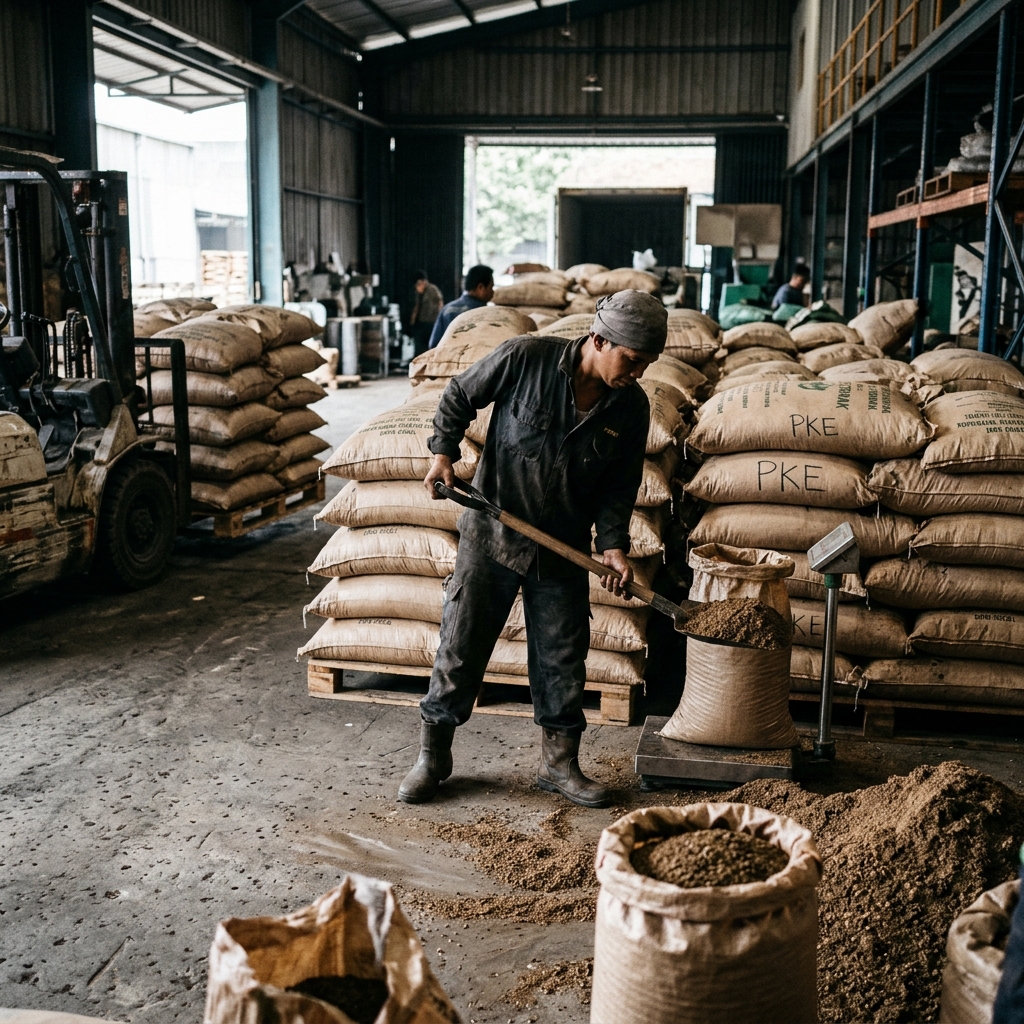
Palm Kernel Expeller is a strategic animal feed raw material proven to significantly boost daily livestock weight gain while cutting concentrate feed costs by up to 30%. The ruminant livestock sector and commercial feed industry in Indonesia face challenges from surging prices of imported soybean-based feed. This comprehensive guide thoroughly reviews the nutritional characteristics, practical benefits, technical specification analysis, and estimated price movements of this commodity in the East Java market.
The need for alternative energy and protein sources has become a top priority for livestock business operators in the modern era. Based on report data from the Ministry of Agriculture of the Republic of Indonesia, feed formulation efficiency accounts for 60% to 70% of total operational costs in livestock fattening operations. Therefore, utilizing oil palm plantation by-products is a logical solution to the demand for sustainable, high-economic-value feed supplies.
What Is Palm Kernel Expeller? Definition and Characteristics
By definition, Palm Kernel Expeller (PKE) is a solid by-product obtained from the mechanical extraction (screw pressing) of oil from palm kernels. This cattle concentrate feed commodity comes in flat flakes or coarse granules ranging from light to dark brown, featuring a distinct, savory roasted aroma highly favored by livestock.
In international markets and domestic trade, this material is also often referred to as mechanically processed palm kernel meal. Referring to technical data from Feedipedia (INRA/CIRAD/AFZ/FAO), PKE features a dense bulk density and superior shelf life compared to fresh forage feed. These characteristics make it a top choice for beef cattle, goat, and sheep farmers, as well as commercial-scale poultry feed industries.

In addition to being used in single-ingredient formulations for ruminant feed, this commodity can be combined with other agro-industrial ingredients such as Copra Meal to enrich the amino acid variation and lipid profile in modern ruminant rations.
Significant Differences Between Palm Kernel Expeller (PKE) and Palm Kernel Meal (PKM)
Many novice livestock practitioners assume PKE and palm kernel meal are identical products. In fact, their processing methods result in substantial differences in physical properties and nutritional value for livestock:
- Processing Method: Palm Kernel Expeller is extracted purely mechanically using high-pressure screw presses without chemical solvents, whereas solvent-extracted meal uses chemical hexane.
- Residual Oil Content (Residual Fat): PKE retains vegetable fat residues between 6%–10%, which serve as an instant source of metabolizable energy. In contrast, chemically extracted meal leaves fat below 2%–3%.
- Texture and Palatability: PKE has a moister texture and a caramelized vegetable oil aroma that appeals to livestock appetite, while chemically extracted products tend to be dusty and dry.
High-Quality Palm Kernel Expeller Manufacturing Process
The manufacturing process of PKE begins with the separation of fragments Palm Kernel Shell from the palm kernel meat using hydrocyclones or precision-speed air separators. The cleaned kernels are then dried until moisture reaches a safe level before entering the preheating (conditioning) stage.
Next, the palm kernels are pressed gradually in the barrel of a twin-screw expeller machine. The generated mechanical pressure extracts crude palm kernel oil (CPKO), while compacting the nutritious solid residue into thin, fibrous flakes. These flakes are then gradually cooled and milled into a uniform particle size to maintain nutritional stability during logistical storage.

Nutritional Content and Export-Standard Palm Kernel Expeller Specifications
The nutritional quality of palm kernel meal products is determined by the freshness of raw materials and the efficiency of the palm kernel crushing machinery. Consistent quality standards ensure that feed formulations do not suffer nutritional deviations that harm livestock farmers.
Scientific research published in ScienceDirect Agricultural and Biological Sciences confirms that the fiber found in palm kernel meal is dominated by mannan-type hemicellulose, which is very favorable for rumen microbiome activity.
| Analysis Parameters | Export Quality Standard PKE | Domestic Market Standard | Standard Test Method |
|---|---|---|---|
| Crude Protein | Min. 14.5% – 16.5% | Min. 13.0% – 15.0% | Kjeldahl / AOAC |
| Crude Fat / Oil Content | 7.0% – 9.5% | 6.0% – 10.0% | Soxhlet Extraction |
| Moisture Content | Max. 8.0% – 10.0% | Max. 11.0% | Oven Gravimetry 105°C |
| Crude Fiber | Max. 15.0% – 18.0% | Max. 19.0% | Acid-Base Gravimetry |
| Ash Content | Max. 4.0% – 5.5% | Max. 6.0% | Muffle Furnace 600°C |
| Metabolizable Energy (Ruminant ME) | 2.300 – 2.500 kkal/kg | 2.100 – 2.300 kkal/kg | Bomb Calorimeter |
| Palm Kernel Shell Contamination | Max. 5.0% | Max. 8.0% – 10.0% | Manual Sieving & Sorting |
The technical specifications above demonstrate that the nutritional content of animal feed palm kernel expeller offers an optimal balance between fat energy density and essential crude protein. The low moisture parameter of under 10% ensures the feed remains safe from spoilage molds, such as Aspergillus flavus aflatoxin-producing agents during shipment.
5 Key Benefits of Palm Kernel Expeller for Modern Livestock Farming
The utilization of this oil palm co-product has evolved from a simple filler into a high-performance staple concentrate. Here are the five key benefits driving the high market demand for PKE:
- Improves Average Daily Gain (ADG): The protein content ranging from 14–16% and abundant metabolizable energy stimulate consistent muscle mass growth in beef cattle without excessive carcass fat accumulation.
- Maintains Rumen Fermentation Stability: The neutral detergent fiber (NDF) in this meal is slowly digestible, preventing subacute ruminal acidosis that frequently affects cattle fed excessive starch-based concentrates.
- Enhances Milk Fat Content in Dairy Cattle: The medium-chain fatty acids in PKE are absorbed directly toward the mammary gland, resulting in a higher percentage of premium-value milk fat.
- Ration Budget Efficiency: The cost per unit of protein in palm kernel meal is significantly more affordable than soybean meal (SBM), delivering wider operational profit margins for farmers.
- Superior Shelf Life: Thanks to controlled moisture levels and natural antioxidants, this product maintains a stable shelf life of up to 6 months in well-ventilated storage warehouses.
To multiply energy density for high-producing dairy cows, professional farmers can combine the PKE ration with rumen-protected supplements, such as Calcium Salts of Palm Oil Fatty Acids to fulfill calorie requirements optimally.
Comparative Analysis: Palm Kernel Expeller vs Alternative Feed Ingredients
In formulating cost-effective feed rations without sacrificing nutritional quality, livestock producers must compare the nutritional profiles of alternative feed commodities. According to international agricultural records from Wikipedia Palm Kernel Meal, the utilization of this palm kernel-based ingredient has been globally recognized in leading livestock countries such as New Zealand and the Netherlands.
| Parameter Characteristics | Palm Kernel Expeller | Soybean Meal (SBM) | Rice Bran | Copra Meal (Copra) |
|---|---|---|---|---|
| Average Crude Protein | 14% – 16% | 44% – 48% | 11% – 13% | 20% – 22% |
| Natural Fat Content | 7% – 9.5% | 1% – 2% | 10% – 12% | 8% – 11% |
| Ration Crude Fiber | 15% – 18% | 5% – 7% | 10% – 14% | 11% – 13% |
| Market Supply Availability | Abundant Year-Round | Dependent on Global Imports | Seasonal Based on Rice Harvest | Quite Limited |
| Relative Price Level | Highly Economical | High (Exchange Rate Fluctuations) | Medium Fluctuation | Medium to High |
Through the comparative data above, it is evident that although soybean meal excels in protein concentration, the domestic supply stability and price efficiency ratio of Palm Kernel Expeller provide the best financial protection for modern livestock farming businesses.
Video: Demonstration of the palm kernel mechanical screw press system producing high-standard Palm Kernel Expeller.
Formulation Guide and Livestock Dosage Limits
Despite having a favorable nutritional profile, the utilization of palm kernel expeller must be adjusted to the physiological capacity of each animal's digestive tract. Non-starch polysaccharides in the form of mannan require a gradual adaptation process by the rumen microbiome.
1. Beef Cattle (Fattening)
Beef cattle possess the highest tolerance toward this processed palm kernel feed. This ingredient can be incorporated at 30% to 50% of the total daily concentrate ration. In intensive fattening programs, farmers can supplement it with pure energy sources such as RBD CP8 or sugarcane molasses to boost appetite and daily weight gain.
2. Dairy Cattle
For lactating dairy cows, the recommended proportion ranges from 15% to 25% of the total ration's dry matter. This measured inclusion has been proven to maintain milk volume stability while increasing the percentage of solids-not-fat (SNF) and raw milk fat content.
3. Goats and Sheep
Goats and sheep exhibit prime performance with an inclusion of 20% to 30% PKE in the concentrate ration. Dietary introduction must be implemented gradually over a 7–10 day transition period to allow the rumen microbial population to adapt fully.
4. Poultry and Monogastric Animals
The short digestive tract of poultry has limited natural mannanase enzymes. Restrict palm kernel expeller inclusion to a maximum of 5%–8% for broilers and laying hens, or add multi-enzyme supplementation to effectively break down the mannan fiber cell walls.
Analysis and Price Movements of Palm Kernel Expeller in Surabaya 2026
Surabaya plays a central role as the logistics transit and distribution hub for agricultural commodities in eastern Indonesia. The Port of Tanjung Perak serves as the primary gateway, taking in palm kernel meal supplies from plantations in Sumatra and Kalimantan for distribution to farms across East Java, Bali, and West Nusa Tenggara.

Entering 2026, fluctuations in the Surabaya PKE price are influenced by the interplay of four primary operational factors:
- Inter-Island Shipping Costs (Freight Rates): Charter rates for barges or bulk containers from loading ports in Dumai, Belawan, and Sampit to Surabaya determine the landed cost burden at the discharge port.
- International Export Demand Volume: Trade contracts from mega-scale purchasing nations such as New Zealand, South Korea, and China can tighten physical stock availability at the local depot level.
- Fresh Fruit Bunch (FFB) Harvest Season: Oil palm plantation yields affect the operational capacity of palm oil mills as well as the abundance of daily meal volumes.
- Depot Packaging Methods: Containerized loose bulk shipments offer greater cost efficiency compared to orders packaged in 50 kg double-stitched woven bags.
Based on recent trends, the 2026 palm kernel expeller reference price in Surabaya remains stable in the range of IDR 2,200 to IDR 3,100 per kilogram for bulk orders. Livestock farmers purchasing through an official East Java palm kernel expeller distributor network receive guaranteed quality specifications and assured on-time delivery.
Frequently Asked Questions About Palm Kernel Expeller
Here is a collection of concise, practical answers to technical questions regarding the use of palm kernel meal products:
Is Palm Kernel Expeller safe for direct consumption by livestock?
Yes, this feed product is very safe for direct consumption by ruminant livestock. PKE is a pure natural concentrate free from hazardous chemicals, provided it is stored in dry, well-ventilated conditions and protected from destructive mold contamination or rancid odors.
What is the shelf life of Palm Kernel Expeller in a feed warehouse?
The optimal shelf life of PKE ranges from 4 to 6 months in a well-ventilated warehouse. Ensure the bag stacks rest on wooden pallets and do not touch walls or concrete floors directly to prevent moisture vapor from triggering mold growth.
Why do East Java farmers prefer Palm Kernel Expeller over rice bran?
Farmers choose PKE because of its consistent supply and price stability across all seasons. Unlike rice bran, whose availability fluctuates with rice harvest cycles and carries a high risk of being adulterated with ground hulls when grain supplies tighten.
How can you ensure Palm Kernel Expeller quality is free from excessive shell fragments?
Quality can be verified through laboratory sieve testing or direct visual inspection. Premium quality PKE has a shell content below 5%, a crisp texture, a uniform golden-brown color, and no burnt odor resulting from scorching during processing.
Where can you find a trusted official Palm Kernel Expeller distributor in the Surabaya area?
Stable, high-quality supplies can be ordered through an integrated agro-industrial distributor at Surabaya's logistics gateway. Secure official supplies with complete laboratory certificates of analysis through primary suppliers Palm Kernel Expeller with guaranteed tonnage for your delivery fleet.
Conclusion
Optimizing livestock business profitability relies on selecting high-nutrient feed ingredients with a competitive cost structure. Palm Kernel Expeller proves to be the most rational concentrate ration alternative thanks to the synergy of balanced protein, pure plant-fat energy density, and rumen-safe fiber content. Supported by strategic Surabaya port distribution routes, sourcing this high-quality feed commodity ensures continuous livestock growth for long-term business sustainability.



