
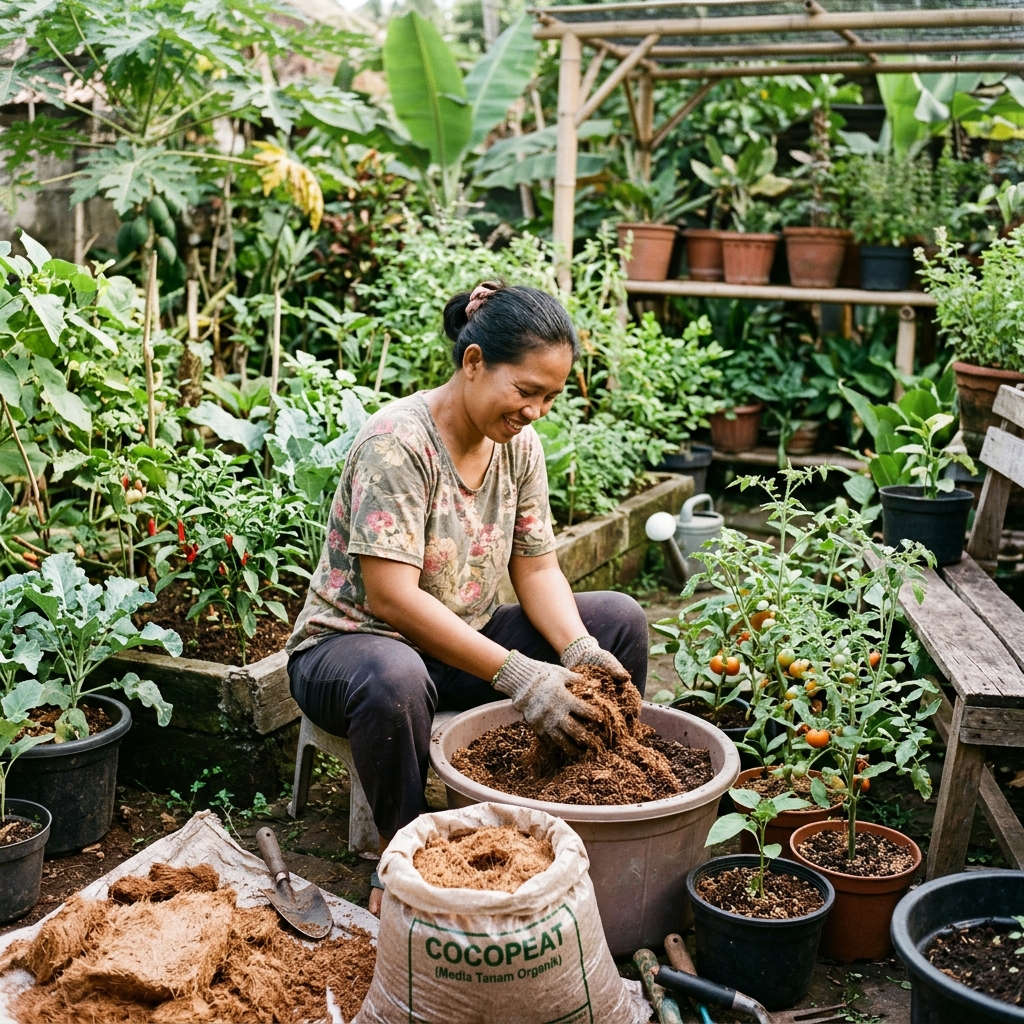
Knowing which plants cocopeat is suitable for is the most crucial first step for horticulture practitioners, ornamental plant enthusiasts, and modern urban farming developers alike. Many beginner growers encounter fatal obstacles such as root rot and stunted seedlings due to a lack of understanding regarding the retention properties of coconut coir media. Based on global agricultural research in 2026, the application of standardized, processed coconut coir media can increase water use efficiency by up to 70% compared to conventional soil.
Broadly speaking, the technical answer to which plants cocopeat is suitable for encompasses a variety of vegetation requiring stable moisture and optimal air circulation. This spectrum ranges from seasonal leafy vegetables, aroid ornamental plants, generative seedling nurseries, and potted fruit trees to hydroponic horticultural commodities. However, using this organic material requires specific washing treatments to eliminate growth-inhibiting substances.
The need for alternative organic growing media is becoming increasingly urgent given the diminishing availability of urban fertile soil layers (topsoil). Referring to food security guidelines from Food and Agriculture Organization (FAO), the adoption of soilless growing media (soilless culture) has become a key pillar of future agricultural efficiency. Understanding the physiological adaptability of root systems to coconut fiber media is an absolute key to your harvest's success.

Understanding the Characteristics and Physical Properties of Cocopeat for Agriculture
Cocopeat is an organic cork dust particle obtained from the separation process of coconut coir (coconut coir). This material possesses natural sponge-like properties with a spectacular water-holding capacity, capable of binding water up to eight to ten times its original weight. This physical phenomenon prevents root systems from experiencing extreme drought stress (drought stress) during the scorching midday heat.
In addition to its water retention capacity, the microstructure of coconut coir fibers provides macropores that ensure a smooth drainage and aeration system. A scientific publication in Scientia Horticulturae Elsevier confirms that a balanced air-to-water ratio in coconut coir dust media significantly stimulates primary root elongation compared to compacted clay soil.
The natural acidity level of pure coconut coir falls within the pH range of 5.5 to 6.8. This scale represents the ideal pH window for essential nutrient solubility in tropical plants. However, untreated coconut coir dust typically contains chloride, sodium, and fairly concentrated levels of cocopeat tannins, making freshwater rinsing and sterilization steps absolutely mandatory prior to planting sensitive seedlings.
It should be emphasized that pure organic coconut dust is classified as an inherently nutrient-poor medium. Its Nitrogen (N), Phosphorus (P), and Potassium (K) content values are minimal. This parameter gives agronomists complete freedom to design precision fertigation programs, particularly in open-substrate cocopeat hydroponic systems.
Main Guide: Which Plants Deliver Maximum Yields with Cocopeat?
Determining the suitability of which plants cocopeat is suitable for requires a thorough observation of the root system morphology of each plant species. Below are recommended plants suited for cocopeat based on their agronomic adaptation:
1. Commercial Leafy Vegetables and Horticulture
Fibrous-rooted leafy vegetable crops such as loose-leaf lettuce, bok choy, Japanese spinach, gai lan, and celery exhibit remarkable vegetative growth rates in coconut coir-based media. Homogeneous substrate moisture prevents premature leaf wilting while boosting the fresh weight of crops during the commercial harvest phase.
2. Heavy-Fruiting Vegetable Crops
Bird's eye chili, cherry tomatoes, eggplants, and bell peppers require a stable moisture supply as they enter the fruiting stage. Utilizing a coconut coir mixture mitigates the risk of blossom drop and the blossom end rot phenomenon (blossom end rot) caused by fluctuations in calcium and soil moisture uptake.
3. Araceae (Aroid) Family Collector Ornamental Plants
Tropical aroid collections such as Monstera deliciosa, Philodendron, Anthurium, and Epipremnum require a moist, loose, and porous growing medium. The crumbly texture of coco coir prevents the medium from compacting (anti-compaction), allowing aerial roots to freely absorb oxygen without the threat of root cell rot.
4. Aglaonema Foliage Plants
Applying the right ratio of cocopeat planting media for aglaonema requires careful attention to porosity. When blended evenly with carbonized rice husk and perlite, this coconut coir dust medium maintains the vibrant coloration of aglaonema leaves and consistently stimulates the emergence of rhizome shoots.
5. Nursery-Scale Seed Germination
The germination rate of both vegetable and woody plant seeds has been proven to surge when sown in fine coconut coir dust media. Loose spongy particles provide minimal mechanical resistance for the radicle embryo to penetrate the medium, yielding a seedling success rate exceeding 95%.
6. Potted Fruit Trees (Tabulampot)
Potted fruit trees such as Nagami kumquats, Deli honey water apples, sapodillas, and figs often suffer from rapid dehydration due to limited pot volume. Incorporating coco coir acts as a micro-liquid reserve reservoir that maintains tree turgor stability between regular watering schedules.
7. Tropical Flowering Shrubs
Roses, jasmine, hibiscus, and potted chrysanthemums respond positively to the cool moisture of coco coir media. Consistent water availability stimulates more uniform flower bud initiation and extends the blooming freshness of petals in the garden.
8. Strawberry Cultivation
Strawberries are stoloniferous plants with root systems highly sensitive to both drought and muddy waterlogging. Sterilized coconut substrate prevents strawberry fruits from coming into direct contact with muddy soil that carries pathogenic fungal spores.
9. Substrate Hydroponic Melon and Watermelon Commodities
In greenhouse precision farming systems, melons and watermelons are cultivated using slabs or polybags of pure coconut coir dust. Through programmed drip fertigation lines, plants receive a measured flow of nutrients with optimal root aeration throughout the day.

Cocopeat Mix Formulations by Vegetation Category
Real-world implementation of insights which plants cocopeat is suitable for is determined by the proficiency in blending aeration materials and supporting nutrients. The following matrix presents proven growing media mix formulas:
| Plant Classification | Cocopeat Ratio | Ideal Companion Media | Aeration Type | Target Media Benefits |
|---|---|---|---|---|
| Leafy & Fruiting Vegetables | 40% – 50% | Mix of soil and mature compost (30%), Roasted rice husk (20%) | Moderate – Fast | Maintains fibrous root moisture and supplies bio-nutrients |
| Aroids & Aglaonema | 20% – 30% | Perlite (25%), Fermented raw rice husk (25%), Pine bark (20%) | Extremely Porous | Prevents rhizome rot and stimulates aerial root respiration |
| Generative Seedlings | 70% – 100% | Vermiculite or fine worm castings (0% – 30%) | High Humidity | Supports plumule and radicle penetration without mechanical injury |
| Home Garden Potted Fruit Trees | 30% | Garden topsoil (40%), Fermented manure (30%) | Stable | Reduces the weight of large pots and extends watering retention |
| Cacti & Desert Succulents | 5% – 10% | Malang sand (50%), Pumice (30%), Zeolite (10%) | Lightning Drainage | Merely as a root anchor and temporary micro-moisture retainer |
From the matrix details above, it is evident that mastering which plants cocopeat is suitable for requires adjusting porosity-regulating mix materials so that the medium does not become overly soggy.
Plants That Require Restrictions on Coco Peat Usage
Although coconut coir is highly beneficial, there are groups of flora that are vulnerable to root tissue death if kept in overly wet media:
- Arid Cacti and Succulents: Thick, fleshy succulent stems hold abundant water reserves. Media that dries slowly triggers basal stem rot caused by soil-borne fungi.
- Epiphytic Orchids (Dendrobium & Phalaenopsis): Epiphytic orchid roots rely on a thick velamen layer that requires open air exposure. Fine-grained coco peat will clog velamen respiration, causing roots to rot and turn black.
- Certain Collector Sansevieria: Prolonged water exposure to snake plant rhizomes in low-light pots is prone to triggering bacterial soft rot infections.
Practical Procedures for Processing Coconut Coir Before Planting
To achieve prime cultivation results, cultivation standardization references from the Ministry of Agriculture of the Republic of Indonesia recommend decomposing and washing local organic raw materials before field application for commodities.
How to Wash Cocopeat Before Use
This structured washing step neutralizes nutrient-binding compound residues that risk poisoning young vegetation:
- Soaking and Stirring: Place the dry cocopeat block into a large container, pour clean water until it expands completely, then stir until the loose fibers are unraveled.
- Tannin Water Drainage: Observe the soaking water turning a deep reddish color resembling thick, foamy tea. Drain the soaking water completely.
- Periodic Rinsing: Repeat the soaking, rinsing, and squeezing procedure 2 to 3 times until the squeezed liquid runs naturally clear.
- Salinity Verification (EC): Check the rinse solution using an electrical conductivity meter (EC meter). A safe value for root systems is below 0.5 mS/cm.
In addition to coconut coir processing waste, the integration of other plantation biomass residues is increasingly popular in advancing circular agriculture. The utilization of hard materials such as Palm Kernel Shell is now expanded beyond biomass furnace fuel to being processed into high-grade biochar to condition critical soil structures.
Synergy of Natural Materials in Crop Fertility Management
In an integrated agribusiness supply chain, the livestock sector plays a crucial role as a producer of mature manure to complement coconut fiber media. High-protein animal feed derived from palm kernel and copra derivatives such as Palm Kernel Expeller as well as dried copra meal concentrates Copra Meal yield fermented animal manure that is exceptionally rich in natural nitrogen.
Modern ruminant nutrition sectors even supplement feed rations with high-energy fatty acid supplements such as Calcium Salts of Palm Oil Fatty Acids to boost the health of organic fertilizer-producing livestock. If you require a guaranteed-quality supply of pure cocopeat, choose the best medium by utilizing proven products which plants cocopeat is suitable for with strict salinity control to support the growth of your plantation.
Pros and Cons of Cocopeat for Vegetables and Ornamental Plants
Objectively weighing the pros and cons of cocopeat for vegetables helps you anticipate potential cultivation challenges in the future:
Competitive Advantages:
- Eco-Friendly and Renewable: Produced from renewable plant waste without disrupting the sustainability of natural peatland ecosystems like mining peat moss.
- Exceptional Moisture Retention: Reduces manual watering frequency by up to 50%, making it a labor- and water-saving gardening solution during dry seasons.
- Natural Resistance to Soil Pests: The lignocellulose structure is unattractive to termites, white grubs, and certain wood-decay fungi.
- Slow Physical Decomposition: The substrate does not easily degrade or compact inside the pot, offering a productive lifespan of many years.
Challenges and Mitigation Strategies:
- High Initial Tannin Content: Neutralized through running-water soaking and thorough draining prior to planting.
- Zero Essential Nutrient Content: Addressed through enrichment with mature compost, fermented manure, or a regular AB Mix nutrient solution formula.
- Risk of Excessive Density: Mitigated by combining it with coarse-porous aeration amendments such as perlite or rice husks.
International agricultural research from the International Society for Horticultural Science (ISHS) proves that coconut fiber-based media combined with balanced fertilization can boost food crop biomass by up to 28% compared to compacted soil media.
Makmur Amanah Sejahtera provides high-quality processed palm products such as Palm Kernel Expeller, Palm Kernel Shell, Crude Palm Oil, Palm Kernel Oil, and others. Please contact us via WhatsApp +6282140002198 or email admin@makmuramanah.co.id.
Frequently Asked Questions (FAQ) About Cocopeat
Can cocopeat be used directly without washing it first?
It is strongly discouraged to use raw coco peat directly without washing. Raw material contains concentrated tannins and high chloride salt levels that trigger leaf chlorosis, bind calcium nutrients, and stunt root growth in young plants.
Can 100% pure cocopeat be used to grow chili plants?
Yes, but strictly in drip hydroponic fertigation installations with regular nutrient supplies. For standard outdoor pots, pure coco peat must be blended with mature compost and carbonized rice husks to provide an organic nutrient supply and balanced drainage.
How long is the lifespan of cocopeat in garden plant pots?
Coconut coir dust has high physical durability thanks to the dominance of lignin fiber bonds. This organic growing medium can last 2 to 3 years in pots without experiencing pore structure degradation or excessive soil particle compaction.
Are orchids suitable for growing in fine-grain cocopeat?
Epiphytic orchids are not suitable for fine-particle coconut coir dust because it can clog root breathing pores. Orchid species prefer coarse block-sized coconut husk pieces (coco chips) that create free air pockets around the roots.
Why do plants in coconut coir dust media often develop yellow leaves?
Yellowing leaves are usually caused by raw media that has not been freed from tannins or by micronutrient deficiencies. Coconut coir contains no inherent nutrients, so regular application of nitrogen, calcium, and magnesium fertilizer is strictly required to keep leaves green.
Conclusion
A profound mastery of which plants cocopeat is suitable for unlocks extraordinary agricultural potential for anyone desiring lush, productive plants that withstand heat stress. From commercial vegetables, aroids, young seedlings, to potted fruit trees in urban settings, all exhibit highly positive physiological responses when grown in appropriately formulated coconut coir media. The key to success lies in thorough tannin flushing and a balanced accompanying aeration ratio.
By applying these comprehensive agricultural guidelines, you can formulate the ideal potting substrate for every plant variety in your garden. Do not delay—apply hygienic processing methods, adjust daily fertilizer dosages, and experience the tangible benefits of utilizing which plants cocopeat is suitable for to realize your dream of a lush garden throughout 2026!



