
Copra Meal: The Complete Guide to Its Benefits, Nutrition & Uses in Animal Feed
Tepung kelapa is one of the most promising, yet underutilized, feed ingredients in modern livestock production. As global feed costs continue to rise, finding sustainable and cost-effective alternatives without sacrificing animal health is a top priority for farmers and nutritionists.
This comprehensive guide delivers the solution. We will explore the immense potential of this valuable coconut byproduct, detailing its nutritional composition, proven benefits, and practical applications in animal feed. By the end, you will understand precisely how to leverage copra meal to enhance your feeding strategy and improve your bottom line.
What is Copra Meal? A Deep Dive
Copra meal is a protein-rich feed ingredient derived from the kernel of the coconut (Cocos nucifera). It is the byproduct remaining after the extraction of coconut oil from copra, which is the dried coconut kernel. Often called “coconut meal” or “copra cake,” it is a vital resource in tropical regions where coconuts are abundant.
Unlike other feed ingredients that require dedicated farming, this is a byproduct of the thriving coconut oil industry, making it an inherently sustainable and circular-economy-friendly choice. Its availability provides a consistent and reliable feed source for various livestock sectors.
From Coconut to Copra Meal: The Production Process
The journey to creating high-quality copra meal involves several key stages. First, coconuts are harvested and the kernels are extracted. These kernels are then dried to reduce their moisture content, turning them into “copra.” This drying can be done through sun-drying, smoke-drying, or kiln-drying.
Next, the copra undergoes an oil extraction process. There are two primary methods:
- Mechanical Expeller Pressing: This is the most common method, where the copra is crushed and pressed under high pressure to squeeze out the oil. The remaining solid “cake” is the copra meal.
- Ekstraksi Pelarut: This method uses a solvent to extract residual oil from the cake, resulting in a meal with a lower fat content but higher protein concentration.
The resulting meal is then ground into a consistent particle size, ready for inclusion in animal feed formulations.
The Key Difference: Copra Meal vs. Other Products
It’s crucial to distinguish copra meal from other coconut-derived products. While desiccated coconut is for human consumption, copra meal is specifically produced for animal nutrition. Furthermore, it should not be confused with raw coconut, which has a much higher oil content.
Products like Cocopeat, derived from the coconut husk, serve entirely different purposes, such as horticultural growing media, and have no nutritional value as animal feed.
Profil Nutrisi Tepung Kelapa Sawit
The nutritional value of copra meal varies based on the oil extraction method and copra quality. However, it is primarily valued for its protein and energy content. According to data from Feedipedia, a leading resource on animal feed, it provides a unique nutritional matrix.
This feed ingredient offers a balanced profile of protein, fiber, and residual oil, making it a versatile component in diets for various animal species. Its unique properties can complement other common feedstuffs to create a highly effective total mixed ration.
Macronutrient Breakdown: Protein, Fiber, and Fat
On a dry matter basis, the composition of a typical mechanically extracted copra meal is as follows:
- Protein Kasar: 20-26%. This protein is rich in arginine and glutamic acid.
- Serat Kasar: 8-12%. The high fiber content is beneficial for gut health in ruminants.
- Residual Oil (Ether Extract): 6-10%. This remaining oil is a good source of metabolizable energy.
This composition makes it an excellent medium-protein and medium-energy feed ingredient. Furthermore, the fatty acid profile, rich in medium-chain fatty acids (MCFAs), offers unique health benefits.
Essential Amino Acids in Copra Meal
While the overall protein content is significant, the amino acid profile defines its utility. Copra meal contains a good supply of arginine, but it is relatively low in lysine and tryptophan. These are often the first limiting amino acids in poultry and swine diets.
Therefore, when formulating rations, it is essential to balance the diet with other protein sources like soybean meal or synthetic amino acids to cover the animal’s complete requirements and ensure optimal growth.
7 Proven Benefits of Copra Meal in Livestock Feed
When used correctly, Tepung Kopra provides a multitude of benefits across different livestock species. Its cost-effectiveness combined with its nutritional and health advantages makes it a compelling choice for any feed operation.
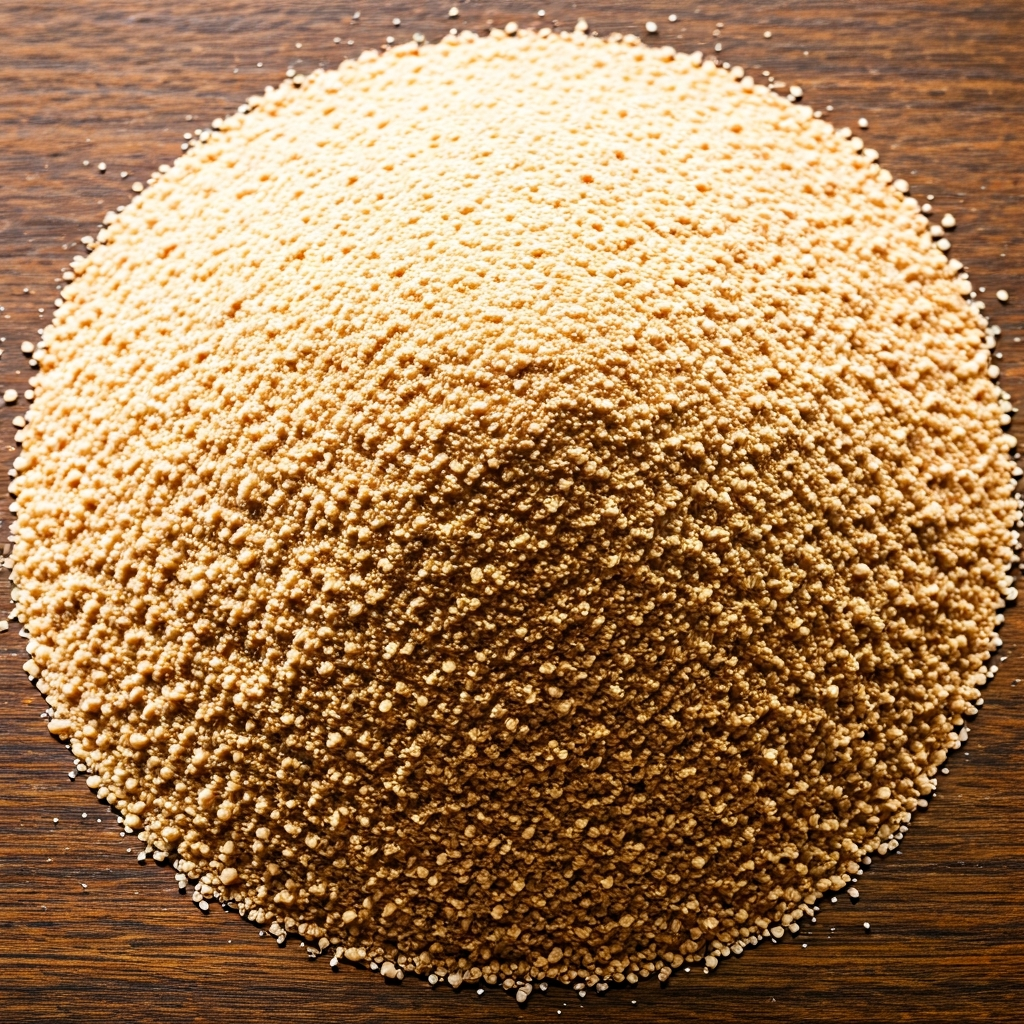
[Image: A close-up shot of light brown, granular copra meal in a large pile or scoop, showcasing its texture. Alt text: A scoop of high-quality Copra Meal, a protein-rich animal feed ingredient.]
- Sangat Hemat Biaya: It is often more affordable than soybean meal or fishmeal, allowing for significant reductions in feed costs without compromising on quality.
- Excellent Bypass Protein for Ruminants: The protein in copra meal is resistant to breakdown in the rumen, meaning more of it is absorbed in the small intestine. This “bypass protein” is crucial for high-producing dairy cows.
- Rich in Healthy Fatty Acids: The residual coconut oil is a great source of Medium-Chain Fatty Acids (MCFAs), like lauric acid. Research from the Jurnal Ilmu Peternakan Susu shows MCFAs have natural antibacterial properties that promote gut health.
- Supports Rumen Health: The high fiber content supports healthy rumen function and fermentation. It can also have a “defaunating” effect, which may reduce methane production and improve energy efficiency in cattle.
- Berkelanjutan dan Ramah Lingkungan: As a byproduct of the coconut oil industry, it reduces waste and promotes a circular economy, making it a more sustainable choice than ingredients grown specifically for feed.
- Improves Feed Palatability: The slightly sweet, nutty aroma of coconut makes the feed more attractive to animals, which can help improve overall feed intake and performance.
- Enzyme Technology Unlocks Full Potential: Historically, its high fiber limited its use in poultry. However, as noted by leading publications like the Jurnal Ilmu dan Teknologi Pakan Hewan, modern enzymes like mannanase effectively break down these fibers, making it highly effective for chickens and pigs.
Applications of Copra Meal in Livestock Nutrition
The unique characteristics of copra meal make it a valuable addition to diets for a wide range of animals. Proper application is key to maximizing these benefits.
[Image: A healthy-looking dairy cow eating from a trough containing a mixed ration. Alt text: A dairy cow benefiting from a diet supplemented with Copra Meal for improved milk production.]
Untuk Hewan Ruminansia (Sapi, Kambing, Domba)
In ruminant nutrition, it shines as an excellent source of bypass protein and energy. This is highly beneficial for high-producing dairy cows and rapidly growing beef cattle, supporting muscle development and milk solids.
Moreover, the high fiber content supports healthy rumen function. The residual coconut oil helps improve energy utilization, making it an ideal supplement for both dairy and beef operations. Some farmers use it alongside other ingredients like Garam Kalsium dari Asam Lemak Minyak Sawit to create a high-energy diet.
For Poultry (Broilers and Layers)
With the use of feed enzyme technology, the limitations of fiber are no longer an issue. Adding enzymes like mannanase unlocks more nutrients and energy, making copra meal a great asset.
When supplemented with enzymes, it can be included in broiler and layer diets at levels up to 20%. It serves as a cost-effective protein source, reduces reliance on soybean meal, and promotes gut health through its lauric acid content.
In Aquaculture (Fish and Shrimp)
The aquaculture industry constantly seeks sustainable alternatives to fishmeal. Copra meal has emerged as a viable plant-based protein for species like tilapia and carp. Its high palatability and good binding properties make it suitable for pelleted feeds.
Similar to poultry, supplementing with lysine and using NSP-degrading enzymes are key to maximizing its effectiveness in aquafeeds, creating a more economically and environmentally sustainable system.
How to Formulate Feeds with Copra Meal
Successfully incorporating copra meal into animal feed requires a scientific approach. It’s not a simple one-for-one replacement for soybean meal. Understanding its limitations and how to overcome them is crucial.
Proper formulation involves balancing the entire diet, considering the target animal, its production stage, and economic goals. This ensures the inclusion of an ingredient like our excellent Tepung Kopra is both effective and profitable.
[Infographic: A clear, visually appealing infographic titled “Copra Meal vs. Soybean Meal”. It should use icons and simple charts to compare key metrics like Protein Content, Fiber Content, Lysine Level, and Bypass Protein value for easy understanding.]
Tingkat Inklusi yang Direkomendasikan
Optimal inclusion rates vary by species and age. Below are general guidelines based on data from the USDA Feedstuffs Compendium and industry best practices:
- Sapi Perah: Up to 3-4 kg per head per day
- Sapi potong: Up to 25% of the total concentrate mix
- Broiler Chickens (with enzymes): 5-15% of the total diet
- Laying Hens (with enzymes): 10-20% of the total diet
- Pigs (Growers/Finishers): 5-10% of the total diet
- Tilapia/Carp: 15-30% of the total diet
Comparison: Copra Meal vs. Soybean Meal
To better understand its place in feed formulation, here is a comparison with soybean meal:
| Gizi | Copra Meal (Expeller) | Soybean Meal (48% CP) |
|---|---|---|
| Protein Kasar | 20-26% | 48-50% |
| Serat Kasar | 8-12% | ~3% |
| Lysine | Rendah | Tinggi |
| Bypass Protein (Ruminants) | Tinggi | Sedang |
Challenges and Considerations
While the benefits are clear, there are challenges to be aware of. Quality can be inconsistent, and issues like mycotoxin contamination can arise if raw materials are not handled correctly. Sourcing from a reliable supplier is paramount.
Furthermore, the high fiber content requires careful formulation, especially for young monogastric animals. For related byproducts with different properties, consider exploring Mesin Pengekstrak Inti Sawit, another valuable feed ingredient.
[Video: Suggestion to embed a short, 2-minute YouTube video titled “How Copra Meal is Made and Used in Animal Feed”. The video should show the process from coconut to meal and include clips of livestock eating it.]
Makmur Amanah Sejahtera provides high-quality palm products such as Palm Kernel Expeller, Cangkang Inti Sawit, Crude Palm Oil (RBD CP8), Palm Kernel Oil, etc. Kindly contact us at WhatsApp +6282140002198 atau kirim email kepada kami di admin@makmuramanah.co.id.
Pertanyaan yang Sering Diajukan (FAQ)
[Image: A simple, clean graphic with a large question mark and icons representing different livestock (cow, chicken, fish). Alt text: Frequently Asked Questions about Copra Meal for animal nutrition.]
Is copra meal good for chickens?
Yes, it is excellent for chickens when used correctly. With the addition of enzymes like mannanase to break down fiber, it becomes a cost-effective protein and energy source that also promotes better gut health through its unique fatty acid profile, reducing reliance on soybean meal.
What is the difference between copra and copra meal?
Copra is the dried kernel of the coconut from which oil is extracted. Copra meal is the protein-rich solid byproduct that remains after the oil extraction process. In short, copra is the raw material, and copra meal is the resulting high-value animal feed ingredient.
Can copra meal replace soybean meal completely?
No, it cannot be a 100% replacement for soybean meal in most diets. This is due to its lower protein content and deficient amino acid profile (specifically lysine). However, it can partially replace soybean meal, significantly reducing overall feed costs while maintaining performance.
Why is there oil left in copra meal?
The common mechanical expeller pressing method cannot remove 100% of the oil from the copra. The 6-10% residual oil that remains is actually a benefit, providing a valuable source of energy and health-promoting medium-chain fatty acids for the animals.
Conclusion: A Smart Choice for Modern Agriculture
In conclusion, copra meal stands out as a valuable and sustainable feed ingredient. Its unique combination of bypass protein for ruminants, cost-effective energy for monogastrics, and health-promoting fatty acids makes it a powerful tool for any animal nutritionist or farmer.
By understanding its nutritional properties, implementing enzyme technology, and sourcing from reputable suppliers, you can significantly reduce feed costs while improving animal performance. The strategic use of Tepung Kopra is a smart, sustainable practice that strengthens the future of animal agriculture.

 Indonesian
  English
  Chinese
  Arabic