
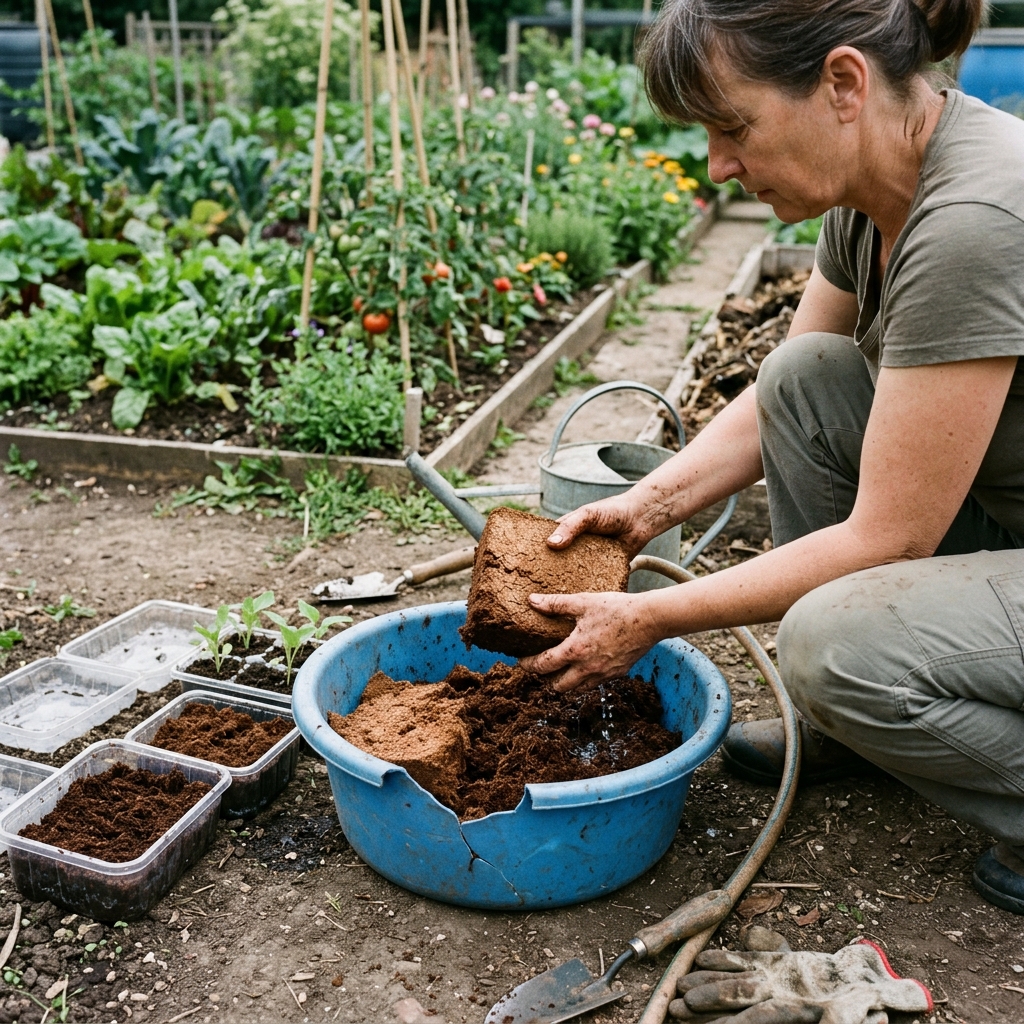
Menggunakan cocopeat untuk tanaman has revolutionized modern gardening, commercial horticulture, and hydroponic farming across the globe. Plant growers often face severe soil compaction, rapid moisture loss, and poor root zone aeration. Fortunately, processed coconut coir offers an eco-friendly, high-performance growing medium that solves these exact structural problems while boosting overall crop performance.
Menurut penelitian yang diterbitkan oleh Organisasi Pangan dan Pertanian (FAO), sustainable agricultural substrates like coconut coir reduce nursery water consumption by up to 30% compared to traditional topsoil mixes. As synthetic additives become less desirable, coconut coir pith has emerged as the premier organic substrate aerator worldwide.
Whether you manage large-scale commercial greenhouses or cultivate home container gardens, learning how to prepare cocopeat bricks for gardening is essential. This comprehensive 2026 guide covers key benefits, step-by-step preparation methods, and exact potting ratios to maximize plant health and yield.
[Image: High-quality hydrated cocopeat for plants displayed in a gardener’s hands, illustrating light texture and rich brown color | alt=”Hydrated cocopeat for plants growing medium” title=”Cocopeat for Plants Texture Overview”]
What is Cocopeat and How is it Produced?
Cocopeat untuk tanaman—frequently referred to as coco coir pith or coconut dust—is a natural fibrous growing medium extracted from outer coconut husks during fiber processing. It functions as a highly porous, lightweight biological sponge capable of holding eight to ten times its dry weight in water.
During processing, raw coconut husks undergo retting, de-husking, and screening. Short fibers and fine dust particles are washed, sun-dried, aged, and compressed into dense blocks, bricks, or loose bags. Industry standards documented in the Wikipedia Coir Overview highlight coir as one of the most durable natural plant fibers available for agricultural applications.
Because raw coir contains natural lignins and cellulose, it decomposes far slower than alternative organic conditioners. This breakdown resistance ensures long-lasting structural aeration for greenhouse containers and elevated raised beds.
Coco Coir vs. Peat Moss: Environmental and Structural Differences
While traditional peat moss takes thousands of years to form in delicate wetland bog ecosystems, coconut coir is a rapidly renewable byproduct of tropical coconut harvesting. As a sustainable alternatif lumut gambut, coir protects fragile natural peatlands from destruction.
Moreover, coir boasts a nearly neutral baseline pH level (5.8 to 6.8), whereas peat moss is naturally acidic and requires heavy agricultural lime buffering before planting. Coir also re-wets effortlessly after drying, while dried peat moss turns hydrophobic and repels incoming irrigation water.
7 Key Benefits of Using Cocopeat for Plants
Integrating coir substrate into your horticultural ecosystem yields immediate physical and physiological benefits for root systems. Exploring cocopeat benefits for indoor plants and outdoor crops reveals seven scientifically backed advantages:
- Exceptional Water Retention: Holds up to 800% of its dry weight in moisture while releasing water gradually to plant roots over extended periods.
- Superior Oxygen Exchange: Maintains a high air-filled porosity (10% to 22%) even when fully saturated, preventing anaerobic conditions and root rot.
- Naturally Neutral pH: Possesses a natural pH of 5.8 to 6.8, creating an ideal nutrient absorption environment for most botanical species.
- Ketahanan terhadap Jamur dan Patogen: Contains natural bio-compounds and beneficial microbes that suppress soil-borne pathogens and root molds.
- Kapasitas Pertukaran Kation (CEC) Tinggi: Retains critical nutrients like calcium, magnesium, and potassium for steady, ongoing plant uptake.
- 100% Eco-Friendly & Renewable: Serves as a sustainable substitute for environmentally threatened peat bogs, reducing global carbon footprints.
- Reusable Soil Conditioner: Resists rapid physical decomposition, allowing growers to wash, sanitize, and reuse the medium for multiple growing cycles.
Commercial agricultural enterprises looking to enrich organic growing substrates often combine coir with specialized organic byproducts. For instance, blending coir with copra meal organic fertilizer provides natural nitrogen and protein nutrition for demanding food crops.
[Image: Step-by-step visual preparation showing a dry compressed brick expanding in water | alt=”Preparing compressed cocopeat for plants in container” title=”How to Prepare Cocopeat for Plants”]
Comparison: Cocopeat vs. Traditional Soil Amendments
To evaluate how coir substrate compares against alternative physical media, review the structural parameters detailed below:
| Milik | Cocopeat (Coco Coir) | Lumut Gambut Sphagnum | Topsoil / Tanah Alami |
|---|---|---|---|
| Tingkat pH | 5.8 – 6.8 (Neutral) | 3,5 – 4,5 (Asam) | Varies (5.0 – 8.0) |
| Retensi Air | Very High (8x–10x weight) | High (6x–8x weight) | Sedang hingga Rendah |
| Aeration / Porosity | Excellent (15%–25%) | Moderate (10%–15%) | Rendah (Mudah memadat) |
| Re-wettability | Mudah (Menyerap air secara instan) | Difficult (Requires wetting agent) | Sedang |
| Keberlanjutan | 100% Produk sampingan terbarukan | Non-renewable peat harvesting | Finite topsoil depletion |
| Laju Dekomposisi | Slow (High lignin content) | Sedang | N/A |
As demonstrated, utilizing high-grade cocopeat untuk tanaman offers vastly superior re-wetting abilities and consistent air exchange compared to heavy clay topsoils or acidic peat moss.
For container drainage and bio-mulching layers, commercial nurseries also incorporate coarse coconut husks alongside palm kernel shell biomass material to create durable, long-lasting drainage channels at the bottom of heavy garden containers.
Cara Menyiapkan Cocopeat untuk Tanaman Langkah Demi Langkah
Raw compressed coir bricks contain high naturally occurring sodium and potassium salts from coastal processing. Preparing the growing medium correctly ensures your crops receive optimal nutrition without high electrical conductivity (EC) spikes or calcium lockouts.
- Rehidrasi Blok: Place your compressed brick into a large container. Add warm water gradually (roughly 4 to 5 liters of water per 1 kg block). Allow the material to soak for 15 to 20 minutes until completely expanded.
- Wash and Flush Salts: Pour excess water through a fine mesh strainer or fabric pot. Flush the expanded medium with fresh clean water 2 to 3 times to rinse away surplus residual sodium chloride.
- Lakukan Buffering dengan Kalsium dan Magnesium: Coco coir cation sites naturally hold onto sodium and potassium while binding calcium and magnesium. Soak your washed medium in a solution of Calcium-Magnesium (Cal-Mag) for 8 to 12 hours to displace sodium cations.
- Drain and Test EC: Squeeze out excess liquid until the medium feels damp like a wrung-out sponge. Verify that the run-off EC is below 0.8 mS/cm using a digital EC meter.
- Fluff and Mix: Break up remaining clumps with a garden fork or your hands to achieve a uniform, fluffy substrate aerator profile ready for planting.
According to plant physiological research published by the Royal Horticultural Society (RHS), calcium buffering prevents localized calcium deficiencies, which commonly cause blossom end rot in tomatoes and tip burn in leafy greens.
[Video Embed: “How to Wash and Buffer Coco Coir Bricks for Maximum Plant Growth” | YouTube URL placeholder]
Recommended Potting Mix Formulas for Different Crops
While processed coconut dust serves as an exceptional physical growing medium, it contains low natural nitrogen, phosphorus, and trace elements. Therefore, blending it with compost, perlite, and organic amendments creates the ultimate balanced potting medium.
Mixing Cocopeat for Plants with Soil and Compost
Achieving the perfect cocopeat potting mix ratio depends directly on your crop species and environmental conditions. For general indoor tropicals, outdoor vegetables, and potted ornamentals, utilize these tried-and-tested balance formulas:
- Universal Potting Blend: 40% Prepared Cocopeat + 40% Aged Organic Compost + 20% Perlite or Pumice.
- Campuran Media Semai untuk Benih: 70% Washed Cocopeat + 20% Vermiculite + 10% Sifted Worm Castings.
- Succulent & Cactus Mix: 30% Cocopeat + 50% Coarse Sand/Pumice + 20% Organic Topsoil.
- Substrat Hidroponik: 70% Coco Coir Pith + 30% Coco Chips (for maximum drainage and root respiration).
Furthermore, agricultural operations managing livestock integrated with crop production often combine organic soil conditioning with high-protein feeds like palm kernel expeller feed supply, optimizing total farm sustainability.
In specialized livestock feed chemistry, adding lipid supplements such as garam kalsium dari asam lemak minyak sawit enhances energy efficiency alongside sustainable substrate practices.
[Image: Infographic showing the optimal 40-40-20 mixing ratio of cocopeat, compost, and perlite | alt=”Infographic detailing optimal potting mix with cocopeat for plants” title=”Cocopeat Potting Mix Ratio Infographic”]
Kesalahan Umum yang Harus Dihindari Saat Menggunakan Cocopeat
Even experienced horticulturists encounter issues when transitioning to coir substrates. Avoiding these critical mistakes will protect your seedling root structures and maximize plant growth:
- Skipping the Buffering Process: Unbuffered low-grade coir binds calcium and magnesium while releasing sodium, causing yellow leaves, leaf tip curl, and stunted growth.
- Overwatering Container Plants: Because coir retains water remarkably well on top, the upper surface may look dry while the root zone remains fully saturated. Always check sub-surface moisture before irrigating.
- Ignoring Micronutrient Fertilization: Cocopeat is an inert soil conditioner. You must supply a balanced liquid fertilizer containing nitrogen, iron, calcium, and magnesium right from early growth.
- Compacting the Growing Medium: Pressing coir down firmly into containers removes essential macro-pores. Keep the substrate light and fluffy to optimize root oxygen exchange.
Penelitian dari ScienceDirect Horticultural Studies confirms that maintaining air-filled porosity above 15% in coir substrates increases root elongation rates by more than 25% across potted vegetable varieties.
Expand Your Agricultural Supply Line with Premium Solutions
Makmur Amanah Sejahtera menyediakan produk sawit berkualitas tinggi seperti Palm Kernel Expeller, Cangkang Sawit, Crude Palm Oil, Palm Kernel Oil, dll. Silakan hubungi kami di WhatsApp +6282140002198 atau kirim email kepada kami di admin@makmuramanah.co.id.
Pertanyaan yang Sering Diajukan
Apakah cocopeat baik untuk semua tanaman?
Yes, cocopeat is suitable for almost all plant species, including vegetables, indoor houseplants, succulents, and flowers. However, because it contains no intrinsic nutrient content, you must combine it with organic compost or balanced liquid nutrient solutions tailored to your specific plant species.
How do you prepare raw cocopeat before planting?
To prepare raw cocopeat, rehydrate the compressed block in warm water, flush it 2 to 3 times to remove residual sodium salts, and buffer it overnight in a Calcium-Magnesium solution. Finally, drain excess moisture and mix with compost or perlite before planting.
Can you plant seeds directly in 100% pure cocopeat?
You can germinate seeds in 100% pure, washed cocopeat because its superior water retention and light texture support delicate sprout roots. However, once true leaves appear, seedlings require transplanting into nutrient-rich soil or light liquid fertilization.
How long does cocopeat last in container garden soil?
Due to its high structural lignin content, cocopeat breaks down very slowly compared to peat moss. It typically retains its physical structure, aeration, and water retention benefits in container soil mixes for 3 to 5 years before requiring replacement.
What are the main disadvantages of using low-quality cocopeat?
Low-quality, unwashed coir contains high sodium salt concentrations that burn sensitive root tips. It can also cause calcium and magnesium lockouts if left unbuffered. Always select low-EC, pre-washed, and buffered coir substrates for optimal plant growth.
Final Thoughts on Optimizing Substrates
Mastering the preparation and application of cocopeat untuk tanaman is one of the single most effective strategies to build robust root systems, conserve water, and accelerate plant development. By properly washing, buffering, and blending coir with nutrient-dense compost, both amateur gardeners and commercial agricultural operators can achieve healthier crops in 2026 and beyond.
[Image: Healthy green vegetable crops growing vigorously in prepared cocopeat potting soil | alt=”Healthy garden crop root system grown using cocopeat for plants” title=”Vegetable Growth in Prepared Cocopeat Medium”]



