
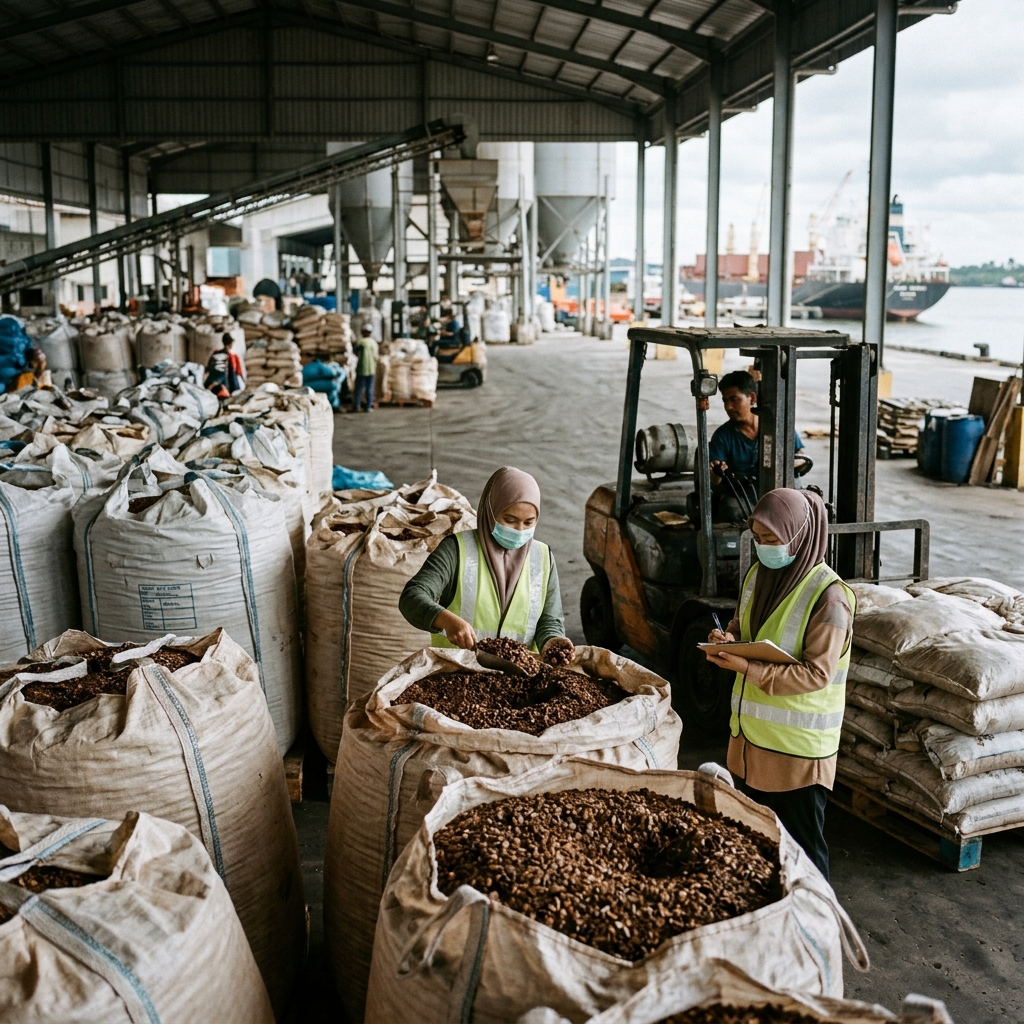
Securing premium GACC-approved palm kernel expeller is now the foremost priority for feed manufacturers supplying the Chinese market. Commercial buyers and livestock nutritionists face increasingly strict customs audits and quality benchmarks at destination ports. Meeting these stringent import criteria requires a transparent supply chain, rigorous lab validation, and proper regulatory certification.
As the livestock and dairy sectors expand worldwide, palm kernel expeller (PKE)—also known as palm kernel meal (PKM)—serves as a vital source of mid-level energy, digestible fiber, and protein. According to agricultural data compiled by the Layanan Pertanian Luar Negeri USDA, global demand for cost-effective oilseed co-products continues to rise, with East Asian markets driving high import volumes. Navigating customs clearance, sustainability mandates, and volatile ocean freight requires up-to-date insight into the palm feed industry.
This comprehensive guide details everything you must verify when buying certified PKE: sanitary registrations, Roundtable on Sustainable Palm Oil (RSPO) accountability, core biochemical thresholds, market pricing mechanics, and reliable procurement pathways.

Understanding GACC-Approved Palm Kernel Expeller Clearance for Feed Commodities
The General Administration of Customs of the People’s Republic of China (GACC) enforces some of the world’s strictest biosecurity, traceability, and sanitary benchmarks for imported agricultural materials. Any foreign processing mill or exporter aiming to supply feed ingredients into the Chinese mainland must hold valid General Administration of Customs China feed registration under Decree 249 and Decree 250.
Purchasing non-registered feedstuffs invariably results in cargo detention, catastrophic demurrage penalties, or mandatory re-export. Consequently, authenticating supplier compliance at the mill level is non-negotiable for international trade teams managing bulk agricultural flows.
When selecting a supplier for GACC-approved palm kernel expeller, global trading companies must confirm that both the manufacturing crushing plant and the registered exporter appear on the official white list issued by Chinese customs authorities. Furthermore, this registration guarantees that the processing environment meets international hazard analysis and critical control points (HACCP) criteria.
Key Regulatory Protocols and Aflatoxin Screening
GACC auditors monitor overseas mills to eliminate biological vectors, chemical contaminants, and weed seeds. To satisfy these audits, processing facilities must implement rigid internal controls:
- Quarantine and Pest Interception: Crushing plants must operate automated fumigation and magnetic separator systems to eliminate storage pests, extraneous foreign matter, and soil residue.
- Pathogen Monitoring: Every production lot must test completely negative for Salmonella species and enteropathogenic bacteria before loading at port.
- Aflatoxin Screening Palm Kernel: Mills must execute batch testing for Aflatoxin B1, ensuring concentrations remain strictly under standard Chinese regulatory hygiene limits (below 20 ppb).
Exporters must pair every bulk shipment of GACC-approved palm kernel expeller with official phytosanitary certificates, certificates of origin, and certified third-party laboratory assay reports. Missing documentation guarantees immediate customs rejections upon arrival in Qingdao, Tianjin, or Guangzhou ports.
The Strategic Value of RSPO Certification in Modern Trade
Environmental governance has reshaped the palm by-product trade over the last decade. Leading agribusiness conglomerates and international lenders mandate proof that sustainable agricultural byproducts originate from deforestation-free plantations. This is where certification through the Forum Meja Bundar tentang Minyak Sawit Berkelanjutan (RSPO) provides undeniable commercial leverage.
Working with verified rspo certified sustainable palm kernel expeller suppliers ensures that the underlying oil palm fruit was cultivated without peatland degradation, habitat destruction, or unethical labor practices. Buyers increasingly prefer Mass Balance (MB) or Identity Preserved (IP) supply chain models to satisfy Corporate Social Responsibility (CSR) metrics.
Moreover, major European and East Asian feed compounders pay measurable premiums for certified sustainable feed. Combining sustainability guarantees with valid customs registration creates an untouchable competitive edge for end users seeking frictionless port clearance and top-tier ESG compliance.

Nutritional Profile and Biochemical Quality Standards
Palm kernel expeller is produced by mechanically pressing the kernel of the oil palm (Elaeis guineensis) following crude oil extraction. It delivers an excellent balance of crude protein, neutral detergent fiber (NDF), and residual lipid energy, making it an exceptional base for beef cattle, dairy cows, and sheep feeds.
Peer-reviewed animal science research published through Sains Langsung indicates that bypass protein and lipid content in quality palm expeller supports balanced rumen fermentation without causing rapid lactic acidosis. This metabolic stability makes it far safer than high-starch grain alternatives during intensive finishing diets.
However, product quality fluctuates across crushing mills based on screw-press efficiency, thermal control, and kernel cleaning. Industrial buyers must require suppliers to adhere to strict palm kernel meal specifications before booking vessel volume.
Feed Grade GACC-Approved Palm Kernel Expeller Specifications
The table below summarizes standard market expectations alongside export specifications for feed grade GACC-approved palm kernel expeller:
| Nutritional Parameter | Standard Grade Range | Nilai GACC Premium | Significance to Formulator |
|---|---|---|---|
| Protein Kasar (CP) | 14.0% – 15.5% | 16.0% – 18.0% Min | Primary amino acid source for rumen microflora |
| Profat (Protein + Lemak) | 21.0% Min | 23.0% – 25.0% Min | Combined total energy and muscle synthesis index |
| Crude Fat / Residual Oil | 6.0% – 8.0% | 8.0% – 10.0% Max | Concentrated dietary energy density |
| Kandungan Air | 10.0% – 12.0% Max | 8.0% – 10.0% Max | Prevents mold propagation and cargo self-heating |
| Serat Kasar | 16.0% – 18.0% Max | 13.0% – 15.0% Max | Ensures digestive tract motility without bulk dilution |
| Sand & Silica / Ash | 4.0% – 5.5% Max | 1.5% – 3.0% Max | Indicates kernel cleanliness and reduces wear on dies |
| Aflatoxin B1 | < 50 ppb | < 20 ppb (Non-detectable) | Crucial compliance factor for GACC port entry |
Moisture control directly affects cargo safety during ocean journeys. If moisture exceeds 10% in tropical cargo holds, fungal growth accelerates, destroying protein value and generating hazardous self-heating zones during transit.
Infographic: Anatomy of Premium Palm Kernel Expeller Quality
[Visual Breakdown: Displaying 16% Min Crude Protein, 8% Residual Oil, <10% Moisture Barrier, and Zero Foreign Matter tolerances required for customs entry.]
Comparative Feeding Efficiencies in Ruminant Livestock Feed Nutrition
Livestock formulators constantly evaluate substitution economics between PKE, soybean meal, rapeseed meal, and tepung kelapa. While soybean meal offers a higher baseline crude protein level (44–48%), its elevated price per ton often strains commercial feed budgets.
In contrast, premium GACC-approved palm kernel expeller delivers cost-effective metabolizable energy suitable for ruminant livestock feed nutrition. Unlike monogastric swine or poultry, cattle possess specialized microflora capable of breaking down the beta-mannan fiber structures unique to palm coproducts.
Furthermore, producers often combine PKE with targeted dietary fats such as garam kalsium dari asam lemak minyak sawit or refined fractions like RBD CP8 to achieve optimal energy balance in high-producing dairy cows during early lactation cycles.
Ruminant Ration Performance Benefits
- Reduced Risk of Subacute Ruminal Acidosis: Because palm expeller contains minimal starch, it creates a stable rumen pH environment even when fed at inclusion rates of up to 30–40% of total dry matter.
- Cost Optimization: Substituting expensive grain fractions with certified PKE significantly lowers feed conversion costs per kilogram of beef or liter of milk produced.
- Natural Mineral Source: Palm expeller offers an organically integrated phosphorus-to-calcium ratio that supports skeletal development and cellular energy transfer.
Pricing Dynamics for GACC-Approved Palm Kernel Expeller in 2026
Pricing for GACC-approved palm kernel expeller depends on crude palm oil (CPO) production volumes in Indonesia and Malaysia, seasonal monsoons, ocean bulk charter rates, and substitution demand from Asian feed compounders. Historic and real-time market trends are monitored worldwide via IndexMundi Commodity Trackers.
Regarding current spot benchmarks, the gacc certified palm kernel expeller price 2026 trades within competitive FOB ranges of $135 to $175 per metric ton from Southeast Asian deepwater ports. Securing RSPO certified palm expeller with verified chain-of-custody documentation commands a modest premium of $8 to $15 per metric ton.
This differential accounts for the intensive laboratory screening, dedicated silo segregation, phytosanitary management, and audit overhead required by Chinese regulatory standards. Factoring ocean freight, CIF China palm feed import contracts reflect transparent cost adjustments aligned with prevailing Supramax and Handysize bulk vessel indices.
Step-by-Step Guide: How to Import GACC Approved Palm Kernel Meal into China
Executing an international supply contract without regulatory validation creates catastrophic logistical and financial exposure. Commercial importers must follow a structured due diligence framework when organizing vessel shipments:
- Validate the GACC Registration Code: Request the foreign processor’s single-window customs registration number and confirm active status on the official GACC import directory.
- Inspect Recent Certificate of Analysis (COA): Demand independent testing from accredited surveyors (such as SGS, Intertek, or Sucofindo) verifying fat, moisture, crude protein in palm meal, sand, and mycotoxin levels.
- Verify Factory RSPO Ledger: Ensure the facility possesses an active RSPO supply chain license if your corporate mandate specifies audited sustainable agricultural byproducts.
- Review Export Packaging & Loading Protocols: Verify dry weather loading procedures and secure container vent sealing to minimize condensation during tropical-to-temperate transits.
- Cross-Check Secondary Biomass Synergies: High-volume industrial processors sourcing feed often consolidate ocean shipping alongside solid biofuels like cangkang inti sawit for coordinated factory thermal power generation.
Makmur Amanah Sejahtera Menyediakan produk-produk kelapa sawit berkualitas tinggi seperti bungkil inti kelapa sawit, cangkang inti kelapa sawit, minyak kelapa sawit mentah, minyak inti kelapa sawit, dll. Silakan hubungi kami di WhatsApp +6282140002198 atau kirim email kepada kami di admin@makmuramanah.co.id.
Pertanyaan yang Sering Diajukan
What is GACC-approved palm kernel expeller?
It is premium palm kernel expeller manufactured by overseas crushing mills registered with the General Administration of Customs of China. This accreditation certifies that the feed commodity satisfies China’s rigorous biosecurity protocols, pest quarantine standards, and biochemical hygiene criteria under Decrees 249 and 250.
Why is RSPO certification valuable when importing palm kernel meal?
RSPO certification proves the palm co-product originates from sustainably managed plantations free from illegal deforestation and peatland draining. It satisfies corporate ESG compliance, mitigates regulatory liability in international markets, and secures access to environmentally conscious livestock feed compounders across global trade routes.
What is the safe moisture limit for export-grade palm kernel expeller?
Export-grade palm kernel expeller must maintain moisture levels below 10.0% maximum. Strict moisture management stops dangerous cargo self-heating, arrests mold formation, and prevents protein denaturing during extended ocean transit across shifting temperature zones in bulk vessel holds.
How does palm kernel expeller compare to soybean meal for cattle feed?
While soybean meal contains higher crude protein, palm kernel expeller offers safe digestible fiber and residual fat without risking subacute ruminal acidosis. PKE functions as a highly economical, non-acidotic energy and protein buffer that significantly lowers overall dairy and beef feeding expenditures.
What documentation must accompany GACC palm kernel expeller shipments?
Each commercial shipment requires an official Phytosanitary Certificate, Certificate of Origin, accredited third-party Certificate of Analysis (evaluating protein, moisture, ash, and aflatoxins), Bill of Lading, Non-GMO declaration, and verified exporter GACC facility registration credentials matching Chinese customs customs registries.
Securing Long-Term Procurement Reliability
Purchasing agricultural byproducts on the spot market without regulatory verification creates major logistical and financial risks. Ensuring that your supplier holds verified facility approvals protects your capital and guarantees smooth port entries.
By prioritizing verified chemical specs, robust moisture handling, and certified sustainability frameworks, you can construct a resilient feed supply chain for your operations. Partnering with a vetted Indonesian producer delivers dependable access to GACC-approved palm kernel expeller that satisfies all global feed benchmarks throughout 2026 and beyond.

 Indonesian
 English
 Chinese
 Arabic
