
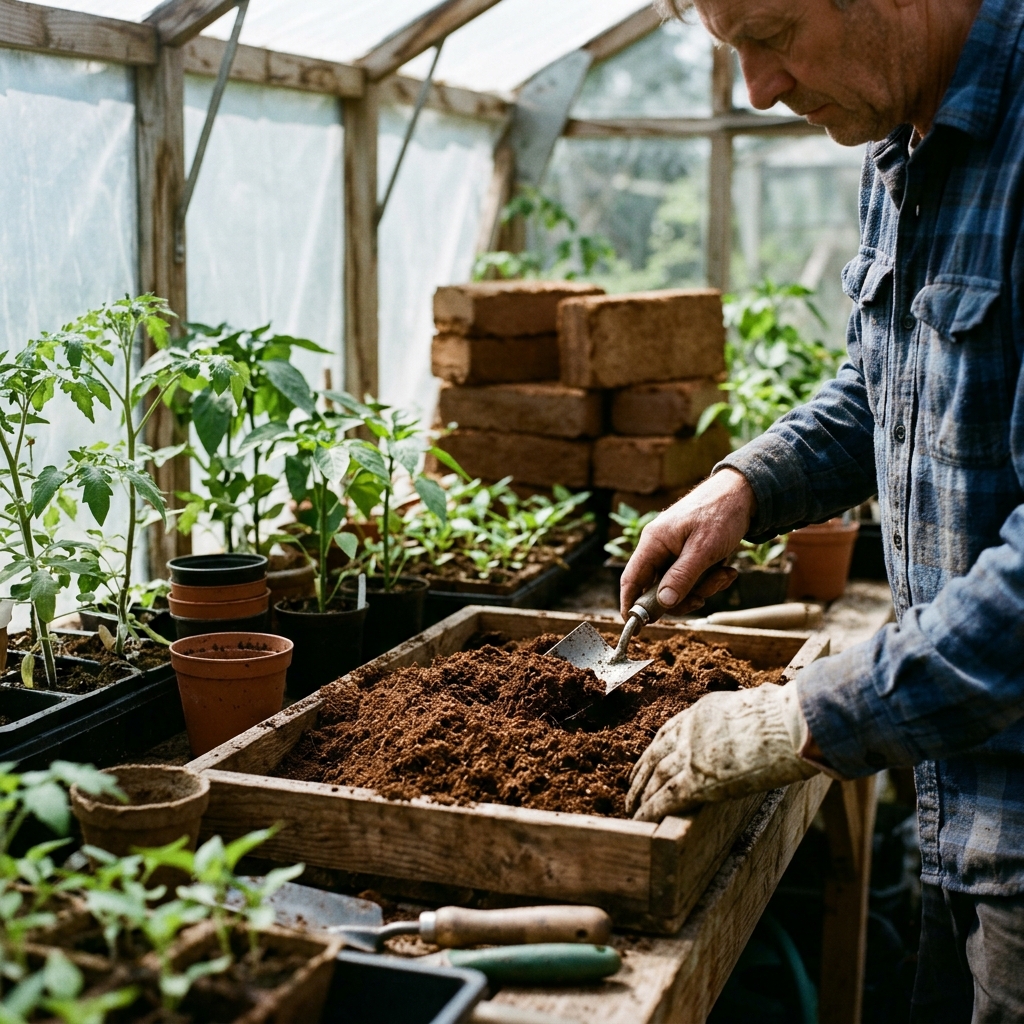
Coco Peat Soil: 7 Proven Benefits for Ultimate Yields 2026
Coco peat soil serves as the backbone of modern intensive horticulture, offering commercial growers and domestic cultivators an ecologically sound alternative to degrading topsoil. Modern agronomy demands inputs that maximize moisture efficiency while eliminating root-zone compaction. By adopting this cellular plant substrate, agricultural operations solve chronic moisture loss and stabilize seasonal harvest consistency.
According to research published by the Organisasi Pangan dan Pertanian (FAO), sustainable soil amendments play a pivotal role in global food security and water conservation. Shifting to an organic soil amendment derived from coconut byproducts empowers growers to slash irrigation demands by up to 50% while accelerating root network development across both greenhouse benches and open agricultural acreage.
What Is Coco Peat Soil? (Definition, Structure & Processing)
Coco peat soil is an organic, biodegradable horticultural substrate manufactured from the processed, rinsed, and aged pith of coconut husks (Cocos nucifera). While agronomists classify it as a hydroponic growing medium rather than true mineral earth, it functions as a high-performance growing medium and soil conditioner. Its sponge-like cellular matrix stores substantial water reserves while maintaining exceptional aeration for root health.

During the mechanical processing of raw coconut husks, manufacturers separate long structural fibers for industrial geotextiles, leaving behind massive volumes of horticultural coir pith. Agronomic research preserved in the USDA Agricultural Research Service archives confirms that properly aged coir dust potting mix maintains physical stability without slumping. This makes it an ideal sustainable growing media choice for high-value crops.
How Industrial Refineries Produce Coco Peat Soil
Processing premium commercial coconut coir substrate requires stringent chemical standardization to safeguard plant health from phytotoxic salinity:
- Raw Husk Aging: Processors stockpile discarded husks for six to twelve months, allowing natural outdoor weathering to stabilize the inner lignin matrix.
- Desalination Washing: Operators wash raw pith in high volumes of freshwater, leaching coastal sodium and chlorine to achieve an electrical conductivity (EC) below 0.5 mS/cm.
- Calcium Nitrate Buffering: Workers soak the pith in a dedicated calcium nitrate bath to displace indigenous monovalent potassium and sodium ions from binding sites.
- Precision Particle Screening: Mechanical screens sift out ultra-fine micro-dust while preserving balanced fibers to optimize oxygen-holding pore space.
- Dehydration & Baling: Clean pith undergoes low-heat mechanical drying to achieve sub-15% moisture before hydraulic presses compress it into 5 kg blocks.
7 Powerful Benefits of Coco Peat Soil for Commercial Growers
Mengintegrasikan coco peat soil across indoor setups or expansive nursery operations delivers decisive physiological benefits compared to field soil or bark mixes.
1. Unrivaled Hydration and Capillary Lift
High-grade horticultural coir pith holds eight to nine times its dry weight in water without choking plant crowns. Its uniform micropores move moisture upward via capillary force, distributing fertigation solutions evenly throughout root zones.
2. Optimized Air-Filled Porosity
Even under frequent irrigation intervals, this cellular matrix preserves 20% to 30% air-filled porosity. Maintaining this high oxygen fraction stops pathogenic fungal outbreaks, encourages vigorous root respiration, and prevents dampening-off in tender seedlings.
3. Stable Agronomic pH Equilibrium
Unlike acidic bog peat that demands substantial pulverized limestone corrections, raw coconut pith naturally sits at a balanced pH of 5.8 to 6.8. This neutral foundation ensures stable bioavailability for macro- and micronutrients without aggressive pH buffering chemicals.
4. Renewable, Carbon-Preserving Profile
Industrial harvesting of peat bogs releases prehistoric subterranean carbon into the atmosphere and damages delicate wetland biomes. Coconuts yield recurring, harvestable agricultural crops every two months, establishing this substrate as a truly circular sphagnum peat moss alternative.
5. High Cation Exchange Capacity (CEC)
Coir features a natural cation exchange capacity running between 40 and 100 meq/100g. This dynamic biochemical holding capacity stores dissolved calcium, magnesium, and trace elements, releasing them on demand as crop root hairs exude uptake ions.
6. Instant Re-Moistening Without Chemical Surfactants
Sphagnum moss turns hydrophobic when dehydrated, requiring synthetic wetting agents to accept moisture. In contrast, dry coir accepts irrigation immediately without repelling water, streamlining nursery bench maintenance.
7. Extended Structural Longevity and Fungal Suppression
The substrate possesses substantial natural lignin polymers that resist premature enzymatic decomposition. Consequently, it maintains pore dimensions across four consecutive crop seasons without degrading into dense, airless muck.
How to Prepare and Buffer Coco Peat Soil for Indoor Plants and Nurseries
Unprocessed coir contains sodium and potassium bound to its cation exchange sites. If you hydrate raw blocks with ordinary tap water, the medium releases excess potassium while locking up your fertilizer’s calcium and magnesium.

Technical Guide: How to Buffer Coco Peat Soil with Calcium Nitrate
Mastering how to buffer coco peat soil with calcium nitrate protects seedlings from severe terminal bud necrosis and leaf-tip burn:
- Block Hydration: Place your 5 kg compressed block into a 100-liter drum. Pour in 25 liters of freshwater. Allow 20 minutes for total structural expansion.
- Salinity Screening: Drain and test the effluent using an EC probe. If the discharge exceeds 0.8 mS/cm, flush the material with freshwater.
- Calcium Nitrate Infusion: Dissolve 150 grams of horticultural-grade calcium nitrate and 80 grams of magnesium sulfate into 25 liters of water. Soak the medium for 24 hours.
- Final Runoff Purge: Drain the chemical buffer solution completely. Rinse lightly with clean irrigation water until runoff EC settles below 0.5 mS/cm.
How to Use Coco Peat Soil for Indoor Plants and Custom Potting Mixes
Indoor container specimens demand tailored substrate drainage to counteract lower evapotranspiration rates. Learning how to use coco peat soil for indoor plants requires balancing coir pith with coarse physical aerators to prevent over-saturation:
- Tropical Foliage Blend: Combine 50% buffered coir pith, 30% coarse perlite, and 20% composted bark for excellent root respiration.
- Hydroponic Run-to-Waste Formulation: Blend 70% fine coir pith with 30% coarse coconut chips to support frequent automated drip fertigation.
- Sterile Seedling Starter: Use 100% fine-sieved, low-EC coir pith to facilitate uninterrupted radicle emergence without chemical fertilizer burn.
In integrated agricultural and agro-industrial production hubs, operations maximize supply chain efficiency by pairing plantation substrates like copra meal animal feed with reliable organic horticultural inputs.
Coco Peat Soil vs Peat Moss Comparison
Peer-reviewed agronomic trials documented by ScienceDirect on horticultural coir properties demonstrate measurable operational variations when comparing coir substrates to bog-mined materials.
| Operational Parameter | Coco Peat Soil | Lumut Gambut Sphagnum |
|---|---|---|
| Ecological Derivation | Reclaimed agricultural coconut husk mesocarp | Mined wetland fossil peat bogs |
| Inherent pH Level | 5.8 – 6.8 (Crop ready) | 3.2 – 4.5 (Mandates agricultural limestone) |
| Moisture Absorption Index | 8x to 9x dry block weight | 10x to 12x dry weight |
| Wetting Behavior | Instant spontaneous hydrophilic absorption | Intensely hydrophobic; requires chemical surfactants |
| Air-Filled Porosity (AFP) | 20% – 30% (Maintains structure after packing) | 10% – 15% (Prone to compaction) |
| Structural Working Life | Up to 4–5 years (High lignin resistance) | 1–2 years before breakdown |
Rigorous comparative nursery testing published through the University of Florida IFAS Extension indicates that woody nursery stock and vegetable starts achieve equal or greater dry root weights in buffered coir compared to commercial peat blends, saving growers substantial fertilizer stabilization inputs.
Commercial Sourcing and Bulk Coco Peat Soil Price Per Ton 2026
Global procurement networks require strict oversight of dry weight tolerances, container configurations, and batch salinity values. Projecting budgets for the upcoming season requires monitoring maritime freight dynamics alongside regional raw material processing output.

Bulk Coco Peat Soil Price Per Ton 2026 Projections
Commercial FOB container pricing across South and Southeast Asian export terminals reveals established commercial ranges for global enterprise operations:
- Raw Washed 5 kg Blocks (EC < 0.5 mS/cm): $290 to $380 per metric ton FOB.
- Pre-buffered Enriched 5 kg Bales: $360 to $490 per metric ton FOB.
- Pre-cut Hydroponic Open-Top Grow Bags: $1.15 to $2.30 per unit according to custom dimensions.
- Pressed 650g Consumer Briquettes: $1.40 to $3.20 per unit across international wholesale nursery suppliers.
Securing reliable bulk orders shields commercial enterprises from seasonal supply chain disruptions. Farms sourcing export-grade coco peat soil gain access to certified laboratory testing for heavy metals, residual chlorides, and moisture-expansion thresholds.
Diversified agro-industrial processors often source supplemental raw biomass solutions, including industrial cangkang inti sawit for boiler combustion and nutrient-dense pengepres inti sawit meal for livestock feed formulations.
Makmur Amanah Sejahtera Menyediakan produk-produk kelapa sawit berkualitas tinggi seperti bungkil inti kelapa sawit, cangkang inti kelapa sawit, minyak kelapa sawit mentah, minyak inti kelapa sawit, dll. Silakan hubungi kami melalui WhatsApp. +6282140002198 atau kirim email kepada kami di admin@makmuramanah.co.id.
Pertanyaan yang Sering Diajukan
Does coco peat soil contain inherent plant nutrients?
No, pure coco peat contains virtually zero plant nutrients like nitrogen, phosphorus, and calcium. It serves as a sterile physical root anchor. Growers must supply a balanced hydroponic fertilizer regimen with every irrigation cycle to achieve optimal plant development.
Why is calcium buffering required before planting in coir?
Raw coir has cation exchange sites naturally saturated with sodium and potassium ions. Without prior calcium buffering, the substrate locks up the calcium in your liquid fertilizer while releasing surplus potassium, leading to fast calcium and magnesium deficiencies across crop foliage.
Can you reuse coco peat soil across successive crop cycles?
Yes, durable coir substrates can be sanitized and reused across four to five crop rotations. Simply extract remaining roots, rinse away accumulated salts, pasteurize the material against pathogens, and re-buffer with calcium nitrate before replanting your next production cycle.
Does coco peat soil prevent fungal root rot and overwatering?
Yes, coir naturally retains up to 30% air-filled porosity even when fully saturated with water. This open physical structure lets surplus irrigation drain away quickly, delivering critical oxygen to the root zone and suppressing anaerobic pathogens like Pythium.
What is the difference between washed and buffered coir?
Washed coir is rinsed only with freshwater to lower electrical conductivity below 0.5 mS/cm by removing surface salts. Buffered coir undergoes a chemical displacement soak using calcium nitrate to replace internal sodium and potassium ions bound within the fibers.

Final Thoughts on Modern Horticultural Substrates
Transitioning toward renewable, high-performance growing substrates is necessary for forward-looking agricultural operations. Deploying premium-grade coco peat soil guarantees maximum yield, ecological sustainability, and reliable commercial profitability across changing environmental conditions.
 Indonesian
 English
 Chinese
 Arabic
