
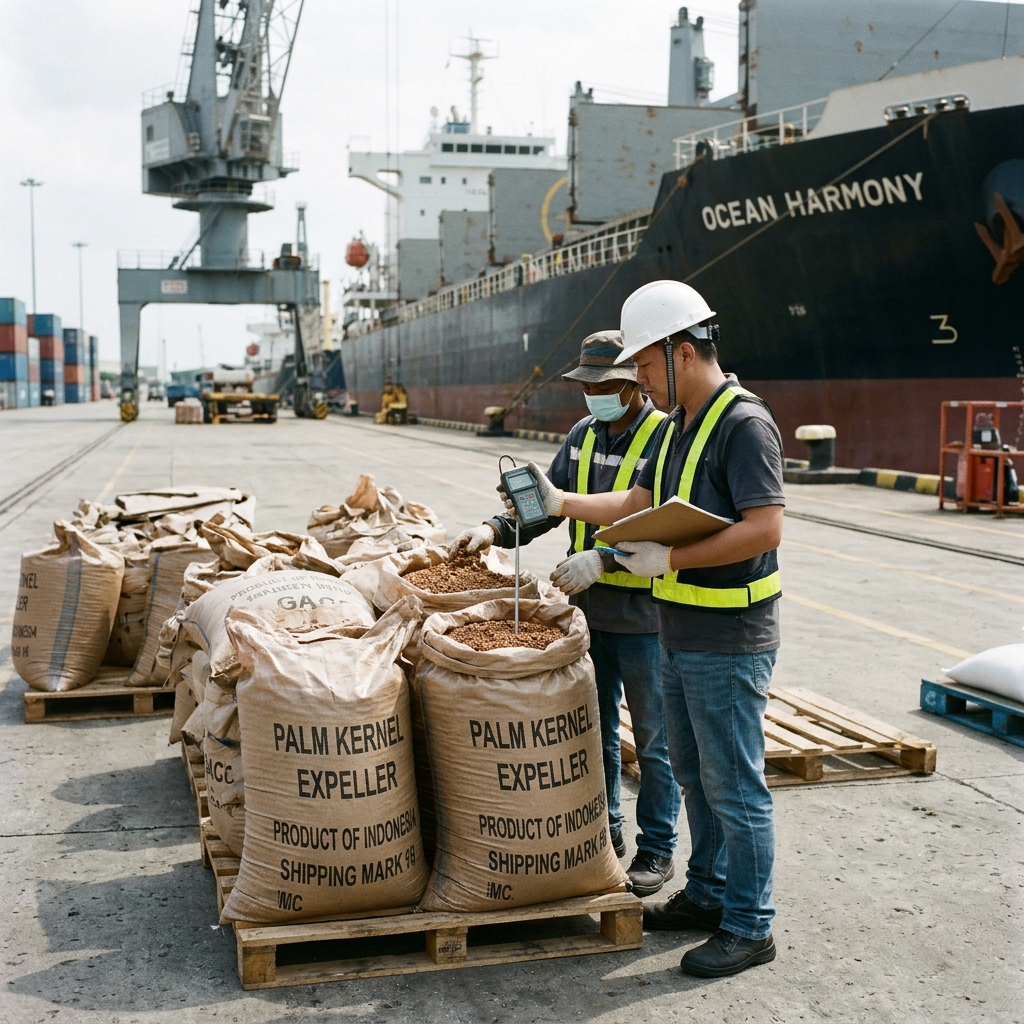
GACC Approved Palm Kernel Expeller: 7 Crucial 2026 Rules
Pengadaan GACC approved palm kernel expeller remains essential for international feed millers targeting China’s lucrative livestock feed market. Navigating strict Chinese import barriers often creates anxiety for traders facing unexpected cargo detentions, severe demurrage costs, or outright port rejections. This definitive guide reveals the exact regulatory pathways, certified sourcing strategies, and technical benchmarks required to clear customs seamlessly.
Global demand for alternative protein and energy sources in livestock diets has surged dramatically over recent years. According to international agricultural trade reports from the Layanan Pertanian Luar Negeri USDA, China imports hundreds of thousands of metric tons of palm-based feed components annually to sustain its massive swine, dairy, and beef industries. However, regulatory shifts under the General Administration of Customs of the People’s Republic of China (GACC) mean that non-compliant shipments face zero tolerance at border inspection points.
What Is GACC Approved Palm Kernel Expeller and Why Does It Matter?
GACC approved palm kernel expeller is a high-energy animal feed by-product derived from mechanical oil extraction of palm nuts, officially accredited by the General Administration of Customs of China. This certification verifies that overseas milling plants meet rigorous Chinese sanitary, phytosanitary, and traceability standards for commercial customs entry.
[Image: High-grade palm kernel expeller pellets loaded inside a clean shipping facility ready for export | Alt text: High quality GACC approved palm kernel expeller ready for export | Title: GACC Approved Palm Kernel Expeller Packaging and Export]
Feed millers value palm kernel expeller (PKE) as an exceptional, cost-effective source of digestible energy, plant-based protein, and dietary fiber. However, importing unverified feed meal exposes procurement managers to significant financial and commercial risks. Purchasing certified GACC approved palm kernel expeller ensures that foreign processing facilities maintain stringent biosecurity protocols, preventing the spread of foreign plant pathogens and dangerous mycotoxins.
The General Administration of Customs enforces these controls through bilateral phytosanitary agreements between China and major palm-producing nations like Indonesia and Malaysia. Overseas crushing facilities cannot ship a single kilogram into the country without securing active General Administration of Customs China feed registration under China’s official inspection system.
How GACC Approved Palm Kernel Expeller Differs from Non-Certified Feed
Livestock operations prioritize certified expeller because it undergoes mandatory lab testing and quarantine screening before loading. In contrast, uncertified expeller meal often comes from unregulated extraction facilities that risk heavy metal contamination, high moisture levels, and secondary mold proliferation during ocean voyages.
Furthermore, certified facilities maintain end-to-end batch tracing from raw palm fruit reception to mechanical pressing, pelletizing, and final bagging. If an issue emerges, customs authorities can trace the product back to its specific production line, preserving trade compliance integrity across every batch of palm kernel meal animal feed.
Nutritional Superiority in Palm Kernel Cake Ruminant Nutrition
In ruminant diets, palm kernel cake ruminant nutrition delivers sustained microbial fermentation in the rumen. Unlike starchy grains that risk subacute ruminal acidosis, the neutral detergent fiber in expeller meal digests gradually, ensuring balanced ruminal pH levels.
Dairy and feedlot cattle utilize this steady energy release to optimize milk production and muscle development. Consequently, commercial nutritionists view verified expeller as an indispensable baseline ingredient in intensive feeding regimens.
Key China Customs Import Requirements for GACC Approved Palm Kernel Expeller
Importing feed ingredients into China requires compliance with strict administrative frameworks overseen by Chinese customs authorities. Specifically, GACC Decree 248 (Regulations on Registration and Administration of Overseas Manufacturers of Imported Food) and Decree 249 (Administrative Measures on Import and Export Food Safety) govern animal feed materials. Any foreign processing facility manufacturing GACC approved palm kernel expeller must hold valid authorization in the China Import Food Enterprises Registration (CIFER) database.
Securing CIFER overseas feed manufacturer approval requires rigorous facility documentation, government recommendations from exporting ministries, and comprehensive hygiene audits. Facilities failing to renew their credentials before expiration face immediate suspension from the GACC public registry.
[Infographic: 7-Step China Customs Clearance Workflow for Animal Feed Imports | Steps: 1. CIFER Mill Verification -> 2. Pre-Shipment Lab COA -> 3. Phytosanitary & Fumigation Certification -> 4. Dual-Language Packaging Marks -> 5. Bill of Lading Filing -> 6. CIQ Port Sampling & Testing -> 7. Final Customs Release | Alt text: Infographic illustrating customs clearance protocol for animal feed imports in China | Title: China Customs Clearance Lifecycle for Palm Kernel Expeller]
Importers and foreign suppliers must coordinate closely to prepare required commercial and quarantine paperwork. Understanding the China customs feed import requirements prevents unnecessary terminal storage costs. The following documentation checklist represents the mandatory legal baseline for border clearance:
- Official Phytosanitary Certificate Livestock Feed: Issued by the national plant protection organization (NPPO) of the exporting country, verifying freedom from quarantine pests.
- Sertifikat Asal: Proving the goods originated strictly within the designated bilateral approval zones (such as Indonesia or Malaysia).
- GACC Enterprise Registration Code: The overseas mill’s valid CIFER registration number printed explicitly on outer shipping bags and transport manifests.
- Sertifikat Analisis (COA): Validating protein, fiber, fat, moisture, and absence of prohibited biological agents.
- Fumigation and Treatment Certificate: Demonstrating effective pest eradication immediately prior to vessel sailing.
Chinese port quarantine officials match every line on these shipping documents against central customs registries. Any discrepancy in facility names, approval numbers, or physical packing marks results in immediate cargo quarantine holds.
Nutritional Profile and Feed Standards (GB 13078 Compliance)
Palm kernel expeller serves as a staple component in modern feed formulation, especially for ruminant rations. Cattle possess the ruminal microflora necessary to ferment its high neutral detergent fiber (NDF) content efficiently. Researchers publishing in the Jurnal Ilmu Peternakan Susu confirm that dietary inclusion of palm kernel expeller enhances milk solid yields without degrading ruminal digestion.
Beyond nutritional value, Chinese customs authorities subject GACC approved palm kernel expeller to China’s National Feed Hygiene Standard (GB 13078). This mandatory benchmark establishes strict maximum residual limits (MRLs) for toxic substances, agricultural chemicals, and fungal metabolites.
| Nutritional / Safety Parameter | Standard Commercial PKE | Mesin Pengekstrak Inti Sawit yang Disetujui GACC | GB 13078 Feed Hygiene Standards |
|---|---|---|---|
| Crude Protein (Dry Matter) | 14.0% – 16.0% | 15.0% – 18.0% Min | Trade Spec Verified |
| Lemak Kasar (Ekstrak Eter) | 6.0% – 8.5% | 6.5% – 9.0% | Optimal Energy Density |
| Serat Kasar | 16.0% – 20.0% | 15.0% – 18.0% Max | Digestibility Benchmarked |
| Kandungan Air | 10.0% – 12.0% | 8.0% – 10.0% Max | ≤ 12.0% (Prevents Mold) |
| Aflatoxin B1 | Uncontrolled / Variable | ≤ 20 μg/kg | ≤ 30 μg/kg Strict Max |
| Heavy Metals (Lead, Arsenic) | Inconsistently Checked | Trace / Compliant | Pb ≤ 10 mg/kg, As ≤ 4 mg/kg |
Maintaining moisture levels below 10% remains critical during maritime shipping across equatorial sea lanes. When ambient humidity drives cargo temperatures higher, uncontrolled condensation sparks fungal proliferation. Consequently, reliable exporters deploy moisture-barrier container liners and precise kiln-drying systems to ensure that GACC approved palm kernel expeller arrives within regulatory thresholds.
[Image: Laboratory technician testing animal feed samples using advanced spectrophotometry | Alt text: Lab testing parameters for GACC approved palm kernel expeller compliance | Title: Analytical Testing of Livestock Feed Expeller]
Feed compounders often formulate palm kernel meal alongside other premium supplements. For high-producing dairy cows needing additional energy without risking rumen acidosis, nutritionists frequently balance diets by pairing palm expeller with bypass fats like garam kalsium dari asam lemak minyak sawit.
Furthermore, blending with supplemental plant proteins such as tepung kelapa creates well-rounded, balanced amino acid profiles for swine and poultry operations. Agricultural operations also integrate organic substrates like cocopeat for specialized farm management and sustainable bedding solutions.
How to Identify and Vet Suppliers of GACC Approved Palm Kernel Expeller
Identifying legitimate suppliers requires proactive due diligence rather than relying on commercial broker claims. Fraudulent intermediaries occasionally manipulate outdated registration certificates or paste expired Chinese authorization codes onto packaging. Sourcing authentic GACC approved palm kernel expeller directly from an experienced Indonesian producer protects your business from expensive border rejections.
To master how to verify GACC approved palm kernel expeller supplier credentials, procurement teams should implement a multi-point verification protocol before entering binding contracts:
- Verify the CIFER Directory: Access the official online portal of China Customs to confirm that the supplier’s manufacturing plant code actively lists palm kernel expeller under its authorized scope of commodities.
- Cross-Check Bilateral Approval Lists: Itu Organisasi Perdagangan Dunia and bilateral trade repositories publish up-to-date phytosanitary protocols. Ensure the exporting province or island holds no active regional pest bans or export suspensions.
- Audit Mill-Level Lab Reports: Request third-party Certificate of Analysis reports from recognized inspection agencies (such as SGS or Sucofindo) taken directly from current production lots.
- Inspect Packaging Protocols: Certified shipments require clear labeling in both Chinese and English, detailing the enterprise registration number, batch code, shelf-life date, and product specifications.
Experienced agricultural exporters also process companion commodities within sustainable palm ecosystems. Many reputable suppliers simultaneously produce biomass resources like cangkang inti sawit, reflecting strong operational capacity, expansive infrastructure, and rigorous processing discipline.
Crucial China Import Requirements for Palm Kernel Expeller 2026
Entering the trade cycle in 2026 brings heightened digital tracing requirements. Customs authorities now demand that shipping identifiers link directly with electronic customs declarations prior to vessel docking.
Furthermore, buyers must verify that the overseas processing mill maintains active bilateral permits. Meeting all China import requirements for palm kernel expeller 2026 demands constant alignment between exporter packing dates and import permit validity windows.
[Video Embed: Industrial tour of an export-ready palm crushing facility detailing mechanical expeller pressing, automated cooling, packaging, and phytosanitary container loading | Title: Overseas Feed Mill Processing and Biosecurity Standards | URL: https://www.youtube.com/watch?v=example-pke-processing]
Logistics, Fumigation, and China Port Quarantine Clearance
Successful delivery of GACC approved palm kernel expeller demands meticulous cargo handling from loading port to destination terminal. Bulk carriers and containerized shipments face rigorous scrutiny upon docking at Chinese maritime hubs such as Qingdao, Tianjin, Shanghai, or Guangzhou.
Prior to departure, authorized phytosanitary agencies oversee cargo fumigation to eliminate stored-product pests, including the red flour beetle (Tribolium castaneum). The technical recommendations established by the Organisasi Pangan dan Pertanian (FAO) and guidance from the European Food Safety Authority specify strict phosphine gas concentration standards to guarantee complete insect eradication without generating hazardous chemical residues.
Navigating the customs clearance protocol for animal feed imports in China requires adhering to a strict three-tier border verification upon arrival:
- Document Reconciliation: Verifying that the bill of lading, phytosanitary certificate, and CIFER manufacturer registration details align perfectly with customs manifests.
- Visual Cargo Assessment: Inspecting the top hold layers or container interiors for live insects, moisture cake formation, mold spots, or foreign soil impurities.
- Randomized Sampling & Incubation: Collecting randomized composite samples for rapid lab titration, testing for Salmonella, toxic mold toxins, and hazardous heavy metals.
Only after physical lab assays pass GB 13078 sanitary tests will customs release the consignment for domestic distribution into Chinese compound feed manufacturing channels.
Key Advantages of Buying Certified Palm Kernel Expeller from Indonesia
When buying certified palm kernel expeller from Indonesia, international buyers benefit from year-round harvesting cycles, high oil extraction efficiencies, and established ocean freight routes to East Asian terminals. Indonesian crushing mills maintain dedicated quality control labs that monitor free fatty acids and moisture continuously.
This operational consistency guarantees that each container of GACC approved palm kernel expeller meets the strict chemical and biological criteria mandated by Chinese authorities, protecting importers from unpredictable trade disputes.
Makmur Amanah Sejahtera Menyediakan produk-produk kelapa sawit berkualitas tinggi seperti bungkil inti kelapa sawit, cangkang inti kelapa sawit, minyak kelapa sawit mentah, minyak inti kelapa sawit, dll. Silakan hubungi kami melalui WhatsApp. +6282140002198 atau kirim email kepada kami di admin@makmuramanah.co.id.
[Image: Commercial container cargo vessel unloading dry bulk animal feed at an international shipping port terminal | Alt text: Port quarantine inspection for GACC approved palm kernel expeller cargo | Title: China Customs Port Clearance for Feed Commodities]
Pertanyaan yang Sering Diajukan
What makes an overseas mill eligible for GACC approval?
To gain eligibility, foreign processing mills must obtain formal recommendation from their home country’s agricultural authority. The facility must comply with Chinese biosecurity standards, operate dedicated pest control protocols, maintain complete supply chain traceability, and pass direct administrative review or virtual inspection audits by GACC officials.
Can Chinese importers clear palm kernel expeller without CIFER registration?
No. China Customs enforces mandatory registration under Decree 248. Any imported shipment of GACC approved palm kernel expeller arriving without an active, verified CIFER registration number will be refused entry, re-exported, or destroyed immediately at the importer’s expense.
What are the primary animal feed applications for palm kernel expeller?
Palm kernel expeller serves primarily as an energy and fiber supplement for beef cattle, dairy cows, sheep, and goats. Due to its balanced fiber and moderate protein profile, feed mills also incorporate processed expeller into gestating sow feeds and poultry rations under precise nutritional blending programs.
What is the standard shelf life for GACC approved palm kernel expeller?
When packaged properly in woven polypropylene bags with moisture-resistant polyethylene liners and stored in well-ventilated dry warehouses, the typical shelf life ranges from 6 to 9 months. Maintaining moisture below 10% prevents lipid rancidity and mycotoxin formation over extended storage periods.
How do international buyers verify whether an Indonesian exporter is genuine?
Buyers should directly check the GACC public registration directory, review valid export certificates from the Indonesian Ministry of Agriculture, request third-party pre-shipment surveyor reports, and verify banking credentials before finalizing procurement contracts.
[Image: High-tech Indonesian palm processing plant demonstrating sustainable crushing operations | Alt text: Modern industrial milling facility manufacturing export ready palm kernel products | Title: Certified Palm Kernel Expeller Processing Facility]
Kesimpulan
China’s growing commercial feed sector continues to offer immense opportunities for livestock operations seeking high-efficiency, cost-effective nutrition. However, navigating regulatory hurdles requires an uncompromised commitment to statutory standards, comprehensive lab testing, and proactive customs validation. Understanding Chinese phytosanitary regulations ensures seamless customs clearance, preventing expensive port rejections and administrative fines.
Securing compliant supply streams directly impacts feed formulation economics and bottom-line stability throughout 2026 and beyond. Partnering with verified mills guarantees that your GACC approved palm kernel expeller arrives fully compliant, fresh, and completely free from regulatory delays.
 Indonesian
 English
 Chinese
 Arabic
