
Palm Kernel Expeller: 5 Proven Benefits & 2026 Egypt Guide
Mesin Pengekstrak Inti Sawit provides a cost-effective, nutrient-dense solution for livestock producers striving to maximize feed efficiency amidst fluctuating grain prices. Modern livestock operations face skyrocketing feed costs and supply disruptions that severely compress profit margins. This comprehensive guide details nutritional specifications, animal performance benefits, and the exact regulatory roadmap required to import high-grade Palm Kernel Expeller directly into Egypt in 2026.
Global animal feed markets continue to navigate structural shifts driven by erratic weather patterns and rising traditional grain costs. According to market data from the Layanan Pertanian Luar Negeri USDA, feed raw materials account for up to 70% of total livestock production expenditures worldwide. In response, feed mills and commercial livestock enterprises in the Middle East and North Africa (MENA) are diversifying ration formulations toward sustainable agro-industrial co-products.
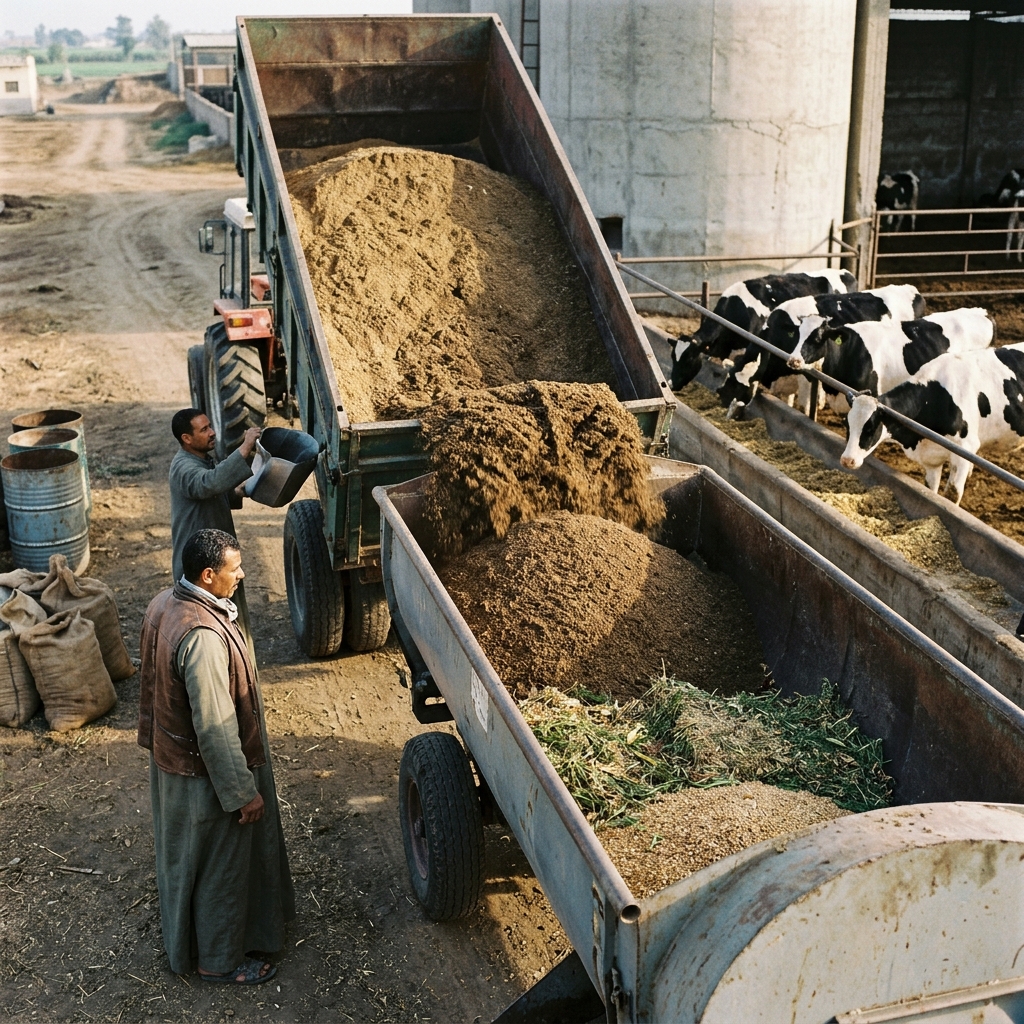
Egypt’s livestock sector in 2026 represents one of the region’s fastest-growing markets for imported animal feed ingredients. Commercial dairy farms, beef feedlots, and integrated sheep operations across the Nile Delta and reclaimed agricultural zones require stable, energy-dense protein meals. Sourcing certified Mesin Pengekstrak Inti Sawit straight from Indonesian processors delivers consistent dry matter intake, gut stability, and significant economic savings.

What Is Palm Kernel Expeller? Definition and Extraction
Palm Kernel Expeller (PKE) is a nutrient-rich, fibrous feed ingredient obtained as a byproduct of crushing oil palm (Elaeis guineensis) kernels using mechanical screw presses. Containing 14% to 18% crude protein and 6% to 10% residual oil, it functions primarily as an energy and medium-protein source for ruminant diets.
While casual market participants often conflate expeller and solvent-extracted meal, their nutritional characteristics differ substantially. Solvent extraction strips virtually all oil down to 1% to 2%, whereas mechanical expeller pressing leaves residual triglycerides that dramatically boost dietary metabolizable energy. Modern feed manufacturers prioritize expeller-grade material because this residual fat delivers slow-release energy without triggering rumen acidosis.
The Mechanical Extraction Process of Palm Kernel Expeller
The manufacturing process begins immediately after separating the fresh fruit bunch flesh from the inner nut during crude palm oil extraction. Processing facilities crack the hard nut shell—frequently sold as Cangkang Inti Sawit for industrial biomass fuel—to isolate the dense internal seed kernel.
Next, operators clean, condition, and gently steam-cook the kernels to break open internal lipid cells. Heavy-duty mechanical screw pressing squeezes the crushed seeds under physical friction and pressure, expelling crude palm kernel oil. The dense cake discharging from the expeller barrel is cooled, kibbled, or pelleted into uniform commercial feed grade material.
Chemical Composition and Nutritional Profile
Nutritional value depends on source quality, kernel maturity, and processing precision. Authoritative analyses published by the Organisasi Pangan dan Pertanian (FAO) highlight that the feed contains elevated neutral detergent fiber alongside balanced amino acids.
- Dry Matter: 89.0% – 92.0%
- Protein Kasar: 14.5% – 18.0%
- Lemak Kasar (Ekstrak Eter): 6.5% – 10.0%
- Serat Kasar: 14.0% – 18.5%
- Serat Deterjen Netral (NDF): 54.0% – 66.0%
- Energi yang Dapat Dimetabolisme (Hewan Ruminansia): 10.5 – 11.8 MJ/kg DM
- Total Digestible Nutrients (TDN): 68.0% – 72.0%
Furthermore, the lipid fraction contains valuable medium-chain fatty acids, primarily lauric acid (C12:0) and myristic acid (C14:0). These functional saturated fatty acids support metabolic resilience, stabilize ruminal fermentation, and bolster immune responses in livestock exposed to seasonal environmental stress.
5 Proven Benefits of Palm Kernel Expeller for Livestock
Integrating Palm Kernel Expeller into commercial rations resolves two of the greatest production hurdles: rising ration costs and metabolic instability. Commercial trials demonstrate that this palm oil byproduct optimizes productivity across diverse climatic conditions.
- Exceptional Ruminal Safety: Unlike finely ground cereal grains packed with rapidly fermentable starches, PKE releases digestible energy through soluble fiber and digestible fat.
- Enhanced Milk Yield and Butterfat: Dairy cows fed balanced rations containing PKE demonstrate sustained peak lactation and noticeably higher milk solid concentrations.
- Cost-Effective Dry Matter Extender: Substituting high-cost imported corn or soybean meal with PKE significantly lowers cost per kilogram of gain in beef finishing units.
- Superior Rumen Health and Cud Chewing: The distinct scratch factor and functional fiber stimulate healthy saliva production and natural rumination cycles.
- Long Shelf Life and Palatability: Low moisture and non-perishable natural fats provide exceptional storage stability even in hot, arid feed bunk environments.
Palm Kernel Expeller Benefits for Dairy Cattle
Commercial dairy herds in warm climates often struggle with milk fat depression during summer heat stress. Feeding Mesin Pengekstrak Inti Sawit counteracts this drop because its lauric-rich residual oil bypasses extensive rumen biohydrogenation, providing direct substrates for mammary lipid synthesis.
Additionally, dairy nutritionists frequently pair expeller meals with rumen-protected bypass fats like Garam Kalsium dari Asam Lemak Minyak Sawit to maximize total energy intake during early lactation. For high-energy finishing or specialty total mixed rations (TMR), formulators also integrate refined palm energy sources like RBD CP8 to satisfy peak caloric demands safely without elevating ruminal acid load.

Superior Ruminant Nutrition and High Fiber Digestibility
Ruminants utilize structural carbohydrates with biological efficiency. Research indexed in ScienceDirect agricultural studies verifies that the hemicellulose and neutral detergent fiber in palm kernel meal degrade steadily within the reticulorumen. This steady breakdown ensures an uninterrupted flow of volatile fatty acids (VFAs)—mainly acetate and propionate—to the liver.
Moreover, the fiber matrix promotes beneficial cellulolytic bacterial colonies. These microbial populations thrive under the neutral ruminal pH maintained by fiber-based diets, improving the animal’s capacity to digest secondary forages such as berseem clover, wheat straw, and corn silage.
Safe Energy Source: Preventing Ruminal Acidosis
Subacute ruminal acidosis (SARA) costs feedlot managers thousands of dollars annually in lost average daily gain, laminitis, and liver abscesses. Grain-heavy diets release large quantities of lactic acid within minutes of consumption. In contrast, PKE contains virtually zero starch.
Consequently, feeding PKE allows herd managers to deliver high energy density without dropping rumen pH below the danger threshold of 5.6. This physiological buffer preserves ruminal papillae health and enhances total nutrient absorption throughout the animal’s finishing cycle.
Comparing Palm Kernel Expeller with Alternative Protein Feeds
Evaluating feed ingredients requires a balanced assessment of crude protein livestock feed metrics, digestible energy, fiber fraction, and wholesale market pricing. The following comparative data illustrates where PKE stands against competing oilseed meals and agro-industrial byproducts:
| Bahan Pakan | Crude Protein (%) | Crude Fiber (%) | Fat / Oil (%) | NDF (%) | Relative Cost Index |
|---|---|---|---|---|---|
| Mesin Pengekstrak Inti Sawit | 15.0 – 17.5 | 15.0 – 18.0 | 7.0 – 9.5 | 58.0 – 64.0 | Rendah hingga Sedang |
| Soybean Meal (44%) | 44.0 – 48.0 | 6.0 – 7.0 | 1.0 – 2.0 | 12.0 – 15.0 | Tinggi |
| Tepung Kopra | 20.0 – 22.0 | 11.0 – 13.0 | 8.0 – 11.0 | 42.0 – 48.0 | Sedang |
| Corn Gluten Feed (21%) | 20.0 – 22.0 | 8.0 – 10.0 | 3.0 – 4.5 | 35.0 – 40.0 | Sedang hingga Tinggi |
| Wheat Bran | 14.5 – 16.0 | 9.5 – 11.5 | 3.5 – 4.5 | 38.0 – 44.0 | Sedang |
While soybean meal supplies higher raw crude protein, its price per metric ton is often more than double that of PKE. Savvy formulators combine PKE with targeted bypass proteins or tropical meals such as Tepung Kopra to craft balanced, cost-effective ruminant diets that lower total feeding expenses.
Palm Kernel Expeller Specifications for Livestock and Practical Inclusion Rates
Maximizing herd performance requires strict adherence to species-specific dietary inclusion limits. Because PKE contains high levels of non-starch polysaccharides (mannans and beta-glucans), monogastric species cannot digest it as efficiently as multi-stomached ruminants.
Inclusion Guidelines for Beef and Dairy Cattle
Dairy and beef rations derive the greatest economic and biological returns from PKE feed rations. For lactating dairy cows, nutritionists recommend introducing PKE gradually over 10 to 14 days to accustom the animals to its earthy flavor and granular texture.
- Lactating Dairy Cattle: 15% to 30% of total daily dry matter intake (approximately 2.0 to 4.5 kg per head/day).
- Beef Finishing Feedlots: 20% to 40% of total ration dry matter (up to 5.0 kg per head/day).
- Growing Heifers and Calves (>6 months): 10% to 20% of dry matter intake.
In beef feedlots, blending PKE with steam-flaked corn or molasses enhances daily dry matter intake while supporting target carcass weights and marbling scores.
Inclusion for Sheep, Goats, and Camels
Small ruminants utilize expeller fiber exceptionally well. Egyptian sheep fattening units and goat breeding operations incorporate PKE up to 20% to 30% of total dry matter. It provides sustained energy without triggering urinary calculi or digestive bloat.
However, herd managers must monitor mineral balance. Palm Kernel Expeller contains naturally high levels of available copper (typically 20 to 35 mg/kg). While dairy cattle, goats, and camels tolerate these levels easily, certain vulnerable sheep breeds are susceptible to copper accumulation. Ensure total dietary copper remains within safe physiological thresholds.
Considerations for Monogastric Animals (Poultry & Swine)
Monogastric species lack the endogenous enzymes required to break down beta-mannan linkages. Feeding unsupplemented PKE to broiler chickens reduces feed conversion efficiency and increases excreta moisture.
When used in commercial broiler finisher or layer diets, inclusion rates should stay between 3% and 7%. Adding commercial beta-mannanase enzyme complexes hydrolyzes complex fibers, unlocking bound energy and permitting inclusion up to 10% without harming litter quality or growth rates.
How to Import Palm Kernel Expeller to Egypt: 2026 Regulations and Customs
Egypt imports millions of metric tons of feed raw materials annually to sustain domestic meat and dairy production. Navigating the country’s updated 2026 regulatory environment ensures smooth customs clearance, prevents port demurrage charges, and guarantees supply integrity.

Egypt’s Feed Regulatory Framework and GOEIC Compliance
All animal feed ingredients arriving at Egyptian marine terminals fall under the oversight of the General Organization for Export and Import Control (GOEIC), operating in coordination with the Egyptian Ministry of Agriculture and Land Reclamation (MALR).
Importers must register commercial entities within the National Single Window for Foreign Trade platform (Nafeza). Consignments must secure Advanced Cargo Information (ACI) declarations before the shipping line issues the final ocean Bill of Lading at the Indonesian loading port.
Essential Import Documentation and Clearance Protocols
Clearing a shipment of Mesin Pengekstrak Inti Sawit through Egyptian customs requires an authenticated documentary packet:
- Commercial Invoice & Packing List: Legalized and detailing net/gross metric tonnage.
- Clean on Board Ocean Bill of Lading: Indicating gross cargo weight and proper shipping marks.
- Sertifikat Fitosanitari: Issued by the Indonesian Agricultural Quarantine Agency verifying cargo is free from quarantine pests, weed seeds, and pathogens.
- Certificate of Origin (Form AK / Form ICO): Certifying Indonesian provenance.
- Sertifikat Analisis (COA): Validating guaranteed crude protein, moisture (maximum 12%), aflatoxin levels (<20 ppb), and sand/silica content (<2.5%).
- Non-Radioactivity and Fumigation Certificates: Required by Egyptian port health officials prior to vessel discharge.
Logistics, Port Handling, and Coastal Warehousing
Egypt’s primary maritime ports handle bulk and containerized agricultural shipments with high discharge efficiency. The most frequent ports of call for feed shipments originating in Southeast Asia include:
- Port of Alexandria & El Dekheila: The nation’s main import hub equipped with deep-water bulk berths, automated discharge equipment, and direct rail links to major agricultural provinces.
- Port of Damietta: Strategically situated to serve commercial feed mills located across the Eastern Nile Delta region.
- Port Said (East and West): Positioned at the entrance of the Suez Canal, offering flexible transshipment and rapid clearance for containerized cargoes.
Upon discharge, cargo must move into dry, well-ventilated storage facilities. Given coastal humidity, bulk storage pads require active aeration to prevent localized hot spots, condensation, and secondary fungal growth.
Sourcing Bulk Palm Kernel Expeller Price per Ton from Indonesia
Indonesia stands as the world’s foremost producer and exporter of sustainable oil palm co-products. Securing direct supply contracts with established Indonesian originators eliminates costly intermediaries and guarantees traceable product specifications.
📹 Video Guide Suggestion: Indonesian PKE Factory Processing & Quality Control
Suggested Embed: YouTube video showcasing mechanical screw press extraction, moisture laboratory testing, and automated loading into bulk vessels at Belawan Port, Sumatra.
Quality Control Standards and Laboratory Verification
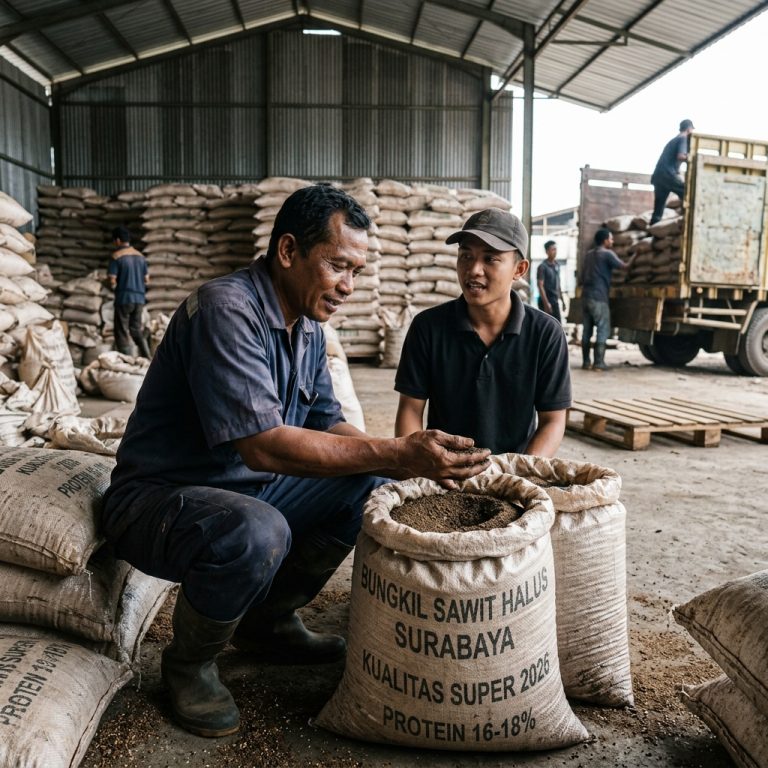
Quality variations in origin markets can impact animal performance. Reliable export partners enforce strict batch-sampling protocols aligned with ISO and GAFTA (Grain and Feed Trade Association) benchmarks.
Prior to vessel loading in Sumatra or Kalimantan ports, independent inspection agencies (such as Sucofindo, SGS, or Surveyor Indonesia) test composite samples. Key release criteria include guaranteeing moisture below 10.5% to prevent self-heating during the 18 to 25-day sea transit through the Indian Ocean and Red Sea.
Bulk Shipments vs. Containerized Freight
Egyptian buyers choose shipping methods based on processing capacity, working capital, and logistical infrastructure:
- Handysize / Supramax Bulk Vessels (10,000 to 30,000 MT): Delivers the lowest bulk palm kernel expeller price per ton in ocean freight. This format suits large animal feed conglomerates and trading houses operating dedicated port silos.
- Containerized Shipments (20ft FCL): 20-foot dry sea containers packed with 21 to 24 metric tons in bulk with liner bags, or 50 kg polypropylene bags. This option offers medium-sized feedlots and regional distributors lower inventory holding costs and flexible delivery schedules.

Reliable Indonesian Palm Product Sourcing
Makmur Amanah Sejahtera Menyediakan produk-produk kelapa sawit berkualitas tinggi seperti bungkil inti kelapa sawit, cangkang inti kelapa sawit, minyak kelapa sawit mentah, minyak inti kelapa sawit, dll. Silakan hubungi kami melalui WhatsApp. +6282140002198 atau kirim email kepada kami di admin@makmuramanah.co.id.
Pertanyaan yang Sering Diajukan Tentang Mesin Pengekstrak Inti Sawit
What is the crude protein content of Palm Kernel Expeller?
Palm Kernel Expeller contains between 14.5% and 18.0% crude protein on a dry matter basis. This profile establishes it as an economical medium-protein feed ingredient for ruminant rations, bridging the nutritional gap between starchy cereal grains and expensive oilseed meals like soybean meal.
How does Palm Kernel Expeller differ from solvent-extracted palm kernel meal?
The distinction centers on extraction methodology and fat retention. Mechanical expeller pressing leaves 6.5% to 10% residual oil, delivering superior metabolizable energy for ruminants. Solvent extraction strips residual fat down to 1% to 2%, reducing the caloric density and overall energetic contribution of the meal.
Why are Egyptian livestock operations increasing PKE inclusion in 2026?
Egyptian producers face escalating prices for imported corn and soybean meal. Incorporating Palm Kernel Expeller cuts total ration costs by 15% to 25% while maintaining rumen stability, mitigating heat stress risks, and enhancing milk butterfat percentages throughout warm summer lactation cycles.
What import clearances are required to enter Egyptian ports?
Importers must generate an ACID number via Egypt’s Nafeza Single Window system before vessel loading. Mandatory documentation includes a Phytosanitary Certificate from Indonesian quarantine, an accredited Certificate of Analysis showing safe aflatoxin and moisture levels, legalized commercial invoices, and GOEIC import authorization.
How should Palm Kernel Expeller be stored in hot, dry climates?
PKE requires storage inside well-ventilated, waterproof warehouses with concrete flooring. Moisture levels must stay strictly under 11% to prevent fungal proliferation or self-heating. Maintain adequate circulation around bulk piles and utilize first-in, first-out inventory handling to safeguard nutritional freshness.
Conclusion: Maximizing Livestock Productivity with Palm Kernel Expeller
Navigating global livestock feed markets demands innovative ration strategies that balance cost efficiency with reliable animal performance. Incorporating fibrous, energy-dense agro-industrial co-products protects farming operations from commodity price volatility while maintaining digestive health and herd productivity.
By understanding international feed specifications, tailoring inclusion levels to specific livestock classes, and partnering with verified Indonesian exporters, agricultural businesses across Egypt can establish secure, resilient supply chains. High-grade Mesin Pengekstrak Inti Sawit remains an indispensable tool for forward-thinking livestock enterprises seeking sustained operational profitability in 2026 and beyond.
 Indonesian
 English
 Chinese
 Arabic
