
Empty Palm Fruit Bunch (EFB): 5 Ultimate Uses & Benefits
目录
- 什么是空棕榈果串?
- Top 5 Uses for Empty Palm Fruit Bunch
- Environmental and Economic Benefits of Utilizing EFB
- Challenges in Processing EFB
- Maximizing Value: Beyond the Empty Palm Fruit Bunch
- The Future of EFB in the Circular Economy
- 您可持续棕榈产品的来源
- 结论:变废为宝
The palm oil industry, while vital for global supply chains, generates significant biomass waste. One of the most abundant is the lignocellulosic material known as the 空棕榈果串(EFB), a byproduct left over after the fruitlets are stripped away. For decades, this material was often discarded, posing environmental challenges. Today, however, innovation has transformed this waste into a valuable resource with a surprising number of applications.
This comprehensive guide explores the incredible potential of EFB, detailing its journey from a problematic waste product to a cornerstone of the circular economy. We will delve into its primary uses, environmental benefits, and the future it holds for sustainable industries.
什么是空棕榈果串?
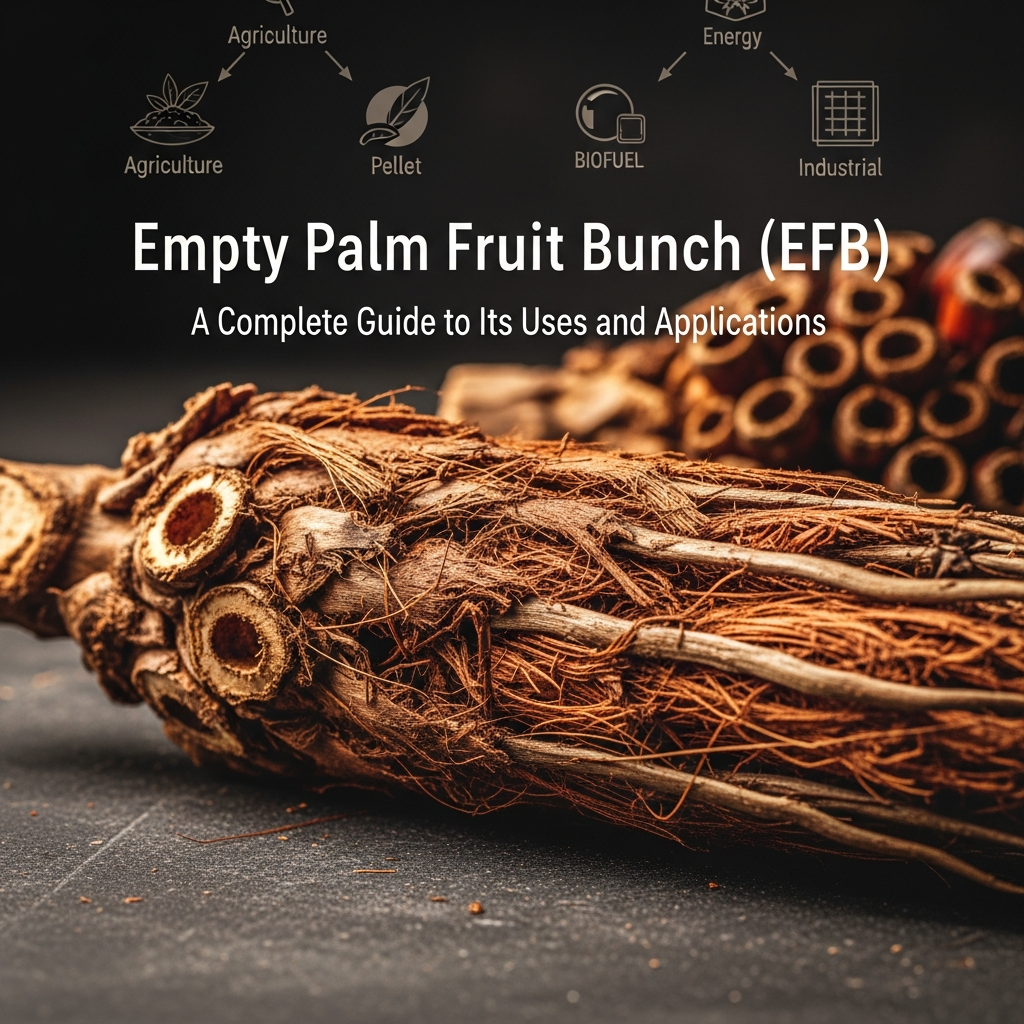
An Empty Palm Fruit Bunch is the fibrous stalk that remains after the palm fruits, which grow in an 油棕果串, have been removed for oil extraction. These bunches are composed of cellulose, hemicellulose, and lignin, making them a rich source of organic material. A typical palm oil mill can generate thousands of tons of this byproduct annually, creating a substantial disposal challenge but also a massive opportunity.
Initially, the high moisture content (around 60-70%) and tough texture of EFB made it difficult to manage. However, with advancements in processing technology, industries have developed effective methods to shred, press, and refine EFB for various value-added applications, turning an environmental liability into a profitable asset.
[Image suggestion: A large, fresh pile of Empty Palm Fruit Bunch (EFB) at a palm oil mill, showcasing its fibrous texture. Alt Text: A fresh pile of Empty Palm Fruit Bunch (EFB) ready for processing at a sustainable facility.]
Top 5 Uses for Empty Palm Fruit Bunch
The versatility of EFB has unlocked numerous applications across different sectors. Its fibrous nature and energy potential make it a key player in the shift towards greener technologies and materials. Here are some of the most significant uses.
1. Renewable Energy and Biofuel
One of the most prominent uses for EFB is as a solid biofuel. The bunches can be burned directly in boilers to generate steam and electricity, often powering the palm oil mills themselves and reducing their reliance on fossil fuels. Similar to other byproducts like the hardy 棕榈仁壳, EFB provides a reliable energy source. According to the 国际可再生能源机构(IRENA), biomass like EFB is crucial for global decarbonization efforts.
2. Composting and Organic Fertilizer
The high potassium content and organic matter in this palm fruit biomass make it an excellent raw material for compost. When shredded and composted, it decomposes into a nutrient-rich humus that improves soil structure, water retention, and fertility. This EFB compost is often used back in the palm plantations, reducing the need for chemical fertilizers and promoting more sustainable agriculture.
3. 纸浆和造纸生产
The global demand for paper continues to rise, putting pressure on forest resources. The fibrous byproduct from palm offers a promising alternative for pulp and paper manufacturing. Its long fibers are suitable for producing various paper products, from writing paper to cardboard. Utilizing EFB reduces deforestation and provides a more sustainable lifecycle for paper products.
4. Bio-Based Materials and Composites
EFB fibers can be used to manufacture medium-density fiberboard (MDF), particleboard, and other composite materials. These bio-based boards serve as sustainable alternatives to traditional wood-based products in furniture and construction. Additionally, EFB fibers are being explored as reinforcement in bioplastics, helping to create lighter and more environmentally friendly products.
[Image suggestion: Finished products made from EFB, such as fiberboard, compost bags, and paper. Alt Text: Various eco-friendly products derived from Empty Palm Fruit Bunch processing.]
5. Animal Bedding and Feedstock
After being properly treated and shredded, EFB can serve as comfortable and absorbent bedding for livestock. Its absorbent properties help maintain clean and dry conditions in barns. Furthermore, through processes like fermentation, it can be converted into a digestible animal feedstock, providing a low-cost, supplementary source of fiber for cattle and other ruminants.
Environmental and Economic Benefits of Utilizing EFB
The adoption of EFB applications brings a cascade of positive impacts. Environmentally, it mitigates the need for landfilling or open burning, which releases harmful greenhouse gases. By replacing fossil fuels, it contributes to a lower carbon footprint. Economically, it creates new revenue streams for palm oil producers and fosters innovation in green technology, embodying a true “waste-to-wealth” model.
Challenges in Processing EFB
Despite its vast potential, working with EFB is not without its challenges. Its high moisture content makes transportation inefficient and requires significant energy for drying. The tough, abrasive nature of the fibers can also cause wear and tear on processing machinery. However, ongoing research and technological advancements in shredding, pressing, and drying are continuously improving the efficiency and cost-effectiveness of EFB utilization.
Maximizing Value: Beyond the Empty Palm Fruit Bunch
While the Empty Palm Fruit Bunch represents a significant part of palm biomass, a truly sustainable operation utilizes every part of the palm harvest. After the oil is extracted from the fruit, the 棕榈仁 is processed to produce valuable goods. This includes high-protein 棕榈仁压榨机, a key ingredient in animal feed. Furthermore, the process yields two distinct types of oil: the primary 粗棕榈油 from the fruit’s flesh and the versatile 棕榈仁油 from the kernel itself. This holistic approach ensures that nothing goes to waste.
The Future of EFB in the Circular Economy
The future for EFB looks incredibly bright. Innovations in biorefinery concepts aim to extract even more value from this biomass. Scientists are exploring ways to produce high-value biochemicals, biofuels like bioethanol, and advanced nanomaterials from EFB fibers. As the world pushes for more sustainable solutions, this humble byproduct is poised to become an even more critical component of a global bio-based economy.
您可持续棕榈产品的来源
正在寻找高品质的棕榈产品?
Makmur Amanah Sejahtera 提供高品质的棕榈产品,例如棕榈仁压榨料、棕榈仁壳、原棕榈油、棕榈仁油等。请通过 WhatsApp +6282140002198 或发送电子邮件至 admin@makmuramanah.co.id 与我们联系。.
结论:变废为宝
The Empty Palm Fruit Bunch is a powerful testament to the potential hidden within industrial byproducts. Once considered a cumbersome waste, it is now a sought-after resource that fuels power plants, enriches soil, and provides raw materials for a new generation of eco-friendly products. Its journey from a plantation leftover to a valuable commodity underscores the importance of innovation in building a truly sustainable and circular economy.

 Chinese
  English
  Indonesian
  Arabic