
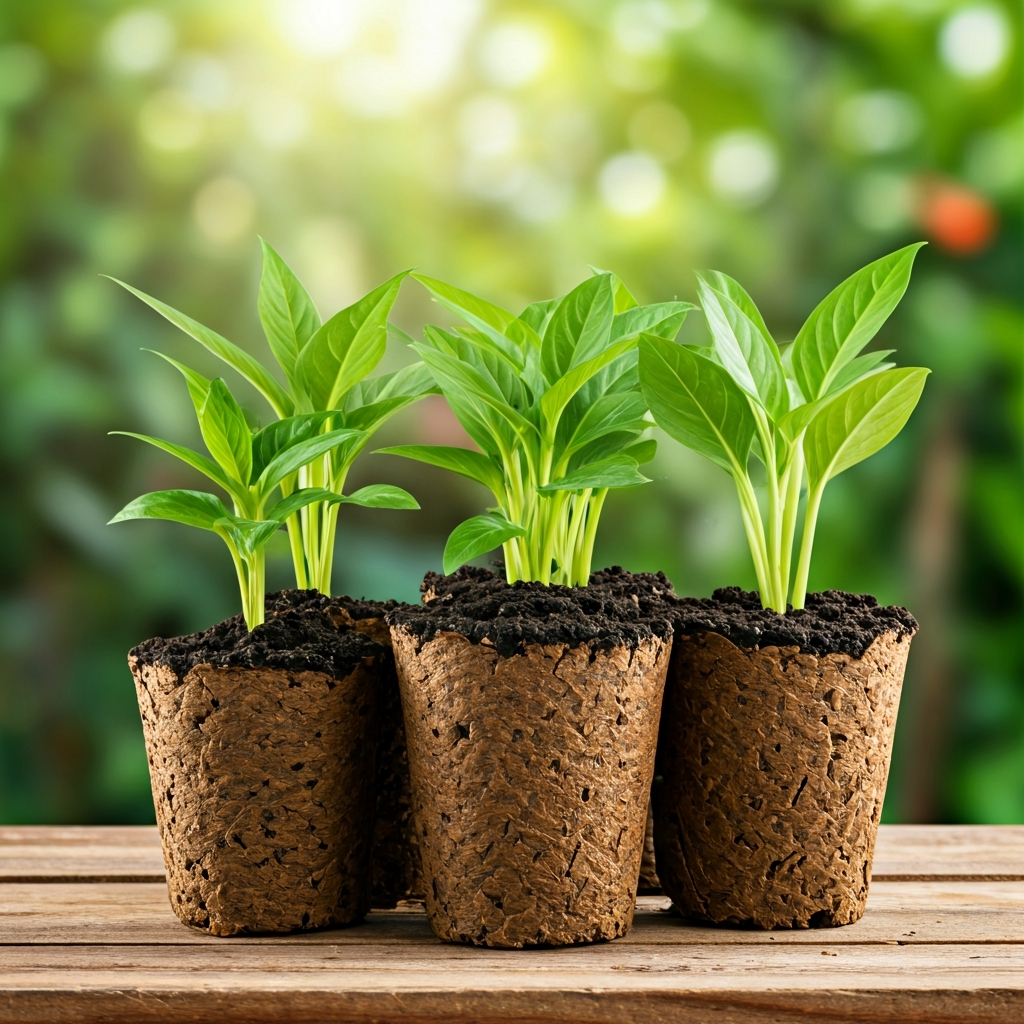
What is Cocopeat? A Complete Guide to Its Uses and Benefits for Your Garden
What is cocopeat and how can it revolutionize your garden in 2026? If you’re searching for a sustainable, highly effective, and versatile growing medium, the answer lies in this incredible natural fiber. It’s the secret weapon savvy gardeners are using for healthier plants and bigger yields.
As traditional gardening resources face sustainability challenges, gardeners and commercial growers are turning to innovative alternatives. The over-harvesting of peat moss, for example, has led to significant environmental concerns, with sources depleting faster than they can regenerate. Cocopeat steps in as a powerful, eco-friendly solution. Derived from the husk of coconuts, it is a 100% natural and renewable resource that transforms a waste product into a gardening powerhouse. This guide will explore everything you need to know about this amazing material.
[Image: A high-quality photo of a compressed cocopeat brick next to a pile of fluffy, expanded cocopeat. Water is being poured on the brick. | Alt: What is cocopeat brick being hydrated into expanded coco coir. | Title: Preparing Cocopeat for Garden Use]
What is Cocopeat Exactly? From Husk to Horticulture
At its core, cocopeat is a soilless growing medium made from the fibrous pith found between the outer shell and the inner hard shell of a coconut. For decades, this material was simply considered a waste product of the coconut industry. Now, it’s recognized for its remarkable properties as a substrate for growing plants, both in traditional gardening and advanced hydroponics.
Unlike soil, it is a sterile medium, which means it’s free from harmful pathogens, bacteria, and weed seeds. This provides a clean start for your plants, reducing the risk of disease. Furthermore, its unique physical structure offers a perfect balance of water retention and aeration, two of the most critical factors for robust root development.
The Three Types of Cocopeat: Pith, Fiber, and Chips
Cocopeat isn’t a one-size-fits-all product. It is processed into three main grades, each with unique properties:
- Coco Pith (or Coco Dust): This has a fine, soil-like texture. It boasts the highest water retention capacity, making it ideal for seed starting and as a moisture-retaining amendment to sandy soils.
- 椰纤维: These are longer fibers that improve aeration. While they retain less water than pith, they create air pockets in the growing medium, allowing roots to breathe and preventing compaction.
- 椰子片: These are small chunks of the coconut husk, similar to wood chips. They provide the best drainage and aeration, functioning much like perlite or expanded clay pebbles in a potting mix.
Often, you’ll find products that are a blend of these three types, engineered to provide a balanced medium. For those seeking premium quality, options like our high-quality cocopeat offer a perfectly balanced mix for optimal growth.
How Cocopeat is Made: A Sustainable Process
The journey from a coconut to a bag of cocopeat is a fantastic example of upcycling. After coconuts are harvested for their oil, milk, and meat, the husks are collected. These husks are soaked to soften them, then shredded by machines. The resulting material is sorted into pith, fiber, and chips, then dried and compressed—often into blocks for easy shipping and storage. High-quality cocopeat is also washed to remove excess natural salts, a critical step for sensitive plants.
What are the 7 Key Benefits of Using Cocopeat?
The rising popularity of cocopeat in horticulture is no accident. It offers a stunning array of benefits that address some of the most common gardening challenges.
- Incredible Water Retention: Cocopeat can hold up to 10 times its weight in water. This means you water less frequently, and your plants have a consistent moisture supply, reducing stress from drying out.
- Excellent Aeration for Healthy Roots: Despite holding immense amounts of water, the fibrous structure of cocopeat maintains air pockets. This oxygen in the root zone is vital for preventing root rot and promoting strong, healthy growth.
- Ideal Neutral pH Level: Most cocopeat has a pH range of 5.5 to 6.8, which is ideal for the vast majority of plants. This neutral starting point makes it easy to adjust nutrient solutions without fighting against an overly acidic or alkaline soil.
- 可持续且环保: As a byproduct of the massive coconut industry, it is a truly renewable resource. Using it helps reduce waste and provides a sustainable alternative to peat moss, the harvesting of which can damage fragile peatland ecosystems. Much like how other agricultural byproducts such as 棕榈仁压榨机 和 椰干粉 are utilized, cocopeat turns waste into a valuable resource.
- Natural Anti-Fungal Properties: Cocopeat contains natural compounds that can help suppress and protect plants from root diseases like Pythium and Phytophthora. This makes it a healthier choice, especially for seedlings.
- Easy to Rehydrate and Use: It is typically sold in lightweight, compressed bricks. Simply add water, and a small brick can expand to 5-7 times its volume, creating a large amount of ready-to-use growing medium.
- Slow Decomposition Rate: It breaks down very slowly over several years, meaning it can be reused for multiple growing seasons. This not only makes it economical but also means your container soil structure remains stable for longer.
[Image: An infographic comparing Cocopeat, Peat Moss, and Soil on 5 key metrics: Water Retention, pH Level, Sustainability, Nutrient Content, and Reusability. | Alt: Infographic comparing what is cocopeat vs peat moss vs soil. | Title: Cocopeat vs. Peat Moss vs. Soil Comparison]
Cocopeat vs. Peat Moss vs. Soil: A Head-to-Head Comparison
To truly understand the value of cocopeat, it helps to compare it directly with other common growing mediums. Each has its place, but cocopeat often comes out on top for container gardening and soil amendment.
| 特征 | 椰糠 | 泥炭藓 | 园土 |
|---|---|---|---|
| 可持续性 | 高(可再生副产品) | Low (Non-renewable resource) | Variable (Can be depleted) |
| 水分保留 | 出色的 | 出色的 | Poor to Good (Variable) |
| pH值 | 5.5 – 6.8 (Ideal) | 3.5 – 4.5 (Acidic) | 多变的 |
| Rewettability | Easy | Difficult when dry | Easy to Moderate |
| 营养成分 | Inert (Contains little to no nutrients) | Inert | Contains nutrients |
How to Prepare and Use Cocopeat Like a Pro
Getting started with cocopeat is simple. If you buy it in a compressed brick form, your first step is rehydration. From there, you can use it in a variety of powerful ways to enhance your garden.
Step-by-Step: Rehydrating a Cocopeat Block
- Choose a Container: Place your compressed cocopeat brick in a large container, wheelbarrow, or waterproof tarp. Remember it will expand significantly.
- Add Water: Slowly add the amount of warm water recommended by the manufacturer (it’s often printed on the package). A standard 5kg brick may need around 25 liters of water.
- Wait and Fluff: Allow the brick to sit for 20-30 minutes to absorb the water. It will swell and soften.
- Break it Up: Use a trowel or your hands to break apart the block and fluff the material. It should have a uniform, moist, and spongy texture when you’re done.
Creating the Perfect Potting Mix with Cocopeat
While you can grow plants in 100% cocopeat, it’s often best when mixed with other materials to create a custom potting soil. A popular, simple recipe is:
- 5 parts Cocopeat (for moisture and structure)
- 2 parts Perlite or Pumice (for extra aeration and drainage)
- 1 part Worm Castings or Compost (to add beneficial microbes and slow-release nutrients)
This mix creates a lightweight, well-draining, and moisture-retentive medium perfect for container plants, raised beds, and houseplants.
Advanced Use: Using Cocopeat in Hydroponics
Due to its sterile nature, water-holding capacity, and excellent aeration, cocopeat is a world-class medium for hydroponic systems. It provides a stable anchor for plant roots in various setups. For hydroponics, it’s crucial to use “buffered” cocopeat, which has been treated to stabilize its cation exchange capacity and prevent 营养锁定 of calcium and magnesium.
[Image: Healthy tomato plants thriving in large pots filled with a visible cocopeat and perlite potting mix. | Alt: Healthy plants growing in a potting mix made with what is cocopeat. | Title: Thriving Plants in Cocopeat Mix]
Makmur Amanah Sejahtera 我们提供优质的棕榈产品,例如棕榈仁粕、棕榈仁壳、原棕榈油、棕榈仁油等。请联系我们。 WhatsApp +6282140002198 或发送电子邮件至 admin@makmuramanah.co.id.
关于椰糠的常见问题
What are the main disadvantages of cocopeat?
The primary disadvantages are its inert nature (it contains no nutrients, so you must fertilize), potential for high salt content in low-quality brands (always buy washed cocopeat), and its tendency to compact if not mixed with an aeration amendment like perlite.
Can I mix cocopeat with garden soil?
Absolutely! Adding cocopeat to heavy clay soil improves drainage and aeration. Mixing it into sandy soil dramatically improves water retention. A 25/75 mix of cocopeat to soil is a great starting point for improving garden beds, much like using 棕榈仁壳 in industrial processes.
How long does cocopeat last before it needs replacing?
Cocopeat decomposes very slowly. In a typical potting mix, it can maintain its structure and effectiveness for 2-4 years. This makes it a very cost-effective and durable growing medium compared to others that break down in a single season.
椰糠适合所有类型的植物吗?
It is excellent for most plants, including vegetables, herbs, flowers, and houseplants. However, succulents and cacti, which require very dry conditions, might need a mix with much higher drainage, using only a small amount of cocopeat for structure.
Do I need to add fertilizer to cocopeat?
Yes. Because cocopeat is an inert medium, you must provide all the nutrients your plants need. You can do this by mixing in compost and worm castings for a slow-release organic approach or by using a balanced liquid fertilizer regularly.
Conclusion: The Future of Gardening is Here
So, what is cocopeat? It’s far more than just a byproduct; it’s a horticultural game-changer. It provides a sustainable, reliable, and incredibly effective foundation for growing healthier, more resilient plants. By offering superior water retention, excellent aeration, and an ideal pH, cocopeat solves many common gardening problems in one simple package.
As we look for more eco-conscious ways to cultivate our gardens and produce our food, the value of a renewable and versatile resource like cocopeat cannot be overstated. Whether you are a beginner gardener or a commercial grower, incorporating cocopeat into your practice is a smart move for your plants and the planet. Embrace this amazing medium and watch your garden thrive in 2026 and beyond.
[Image: An embedded YouTube video titled ‘How to Rehydrate a Cocopeat Block in Under 3 Minutes’. The video would be a time-lapse showing the brick expanding in a tub of water. | Alt: Video demonstrating how to prepare what is cocopeat. | Title: Quick Guide: Rehydrating Cocopeat]
 Chinese
  English
  Indonesian
  Arabic