
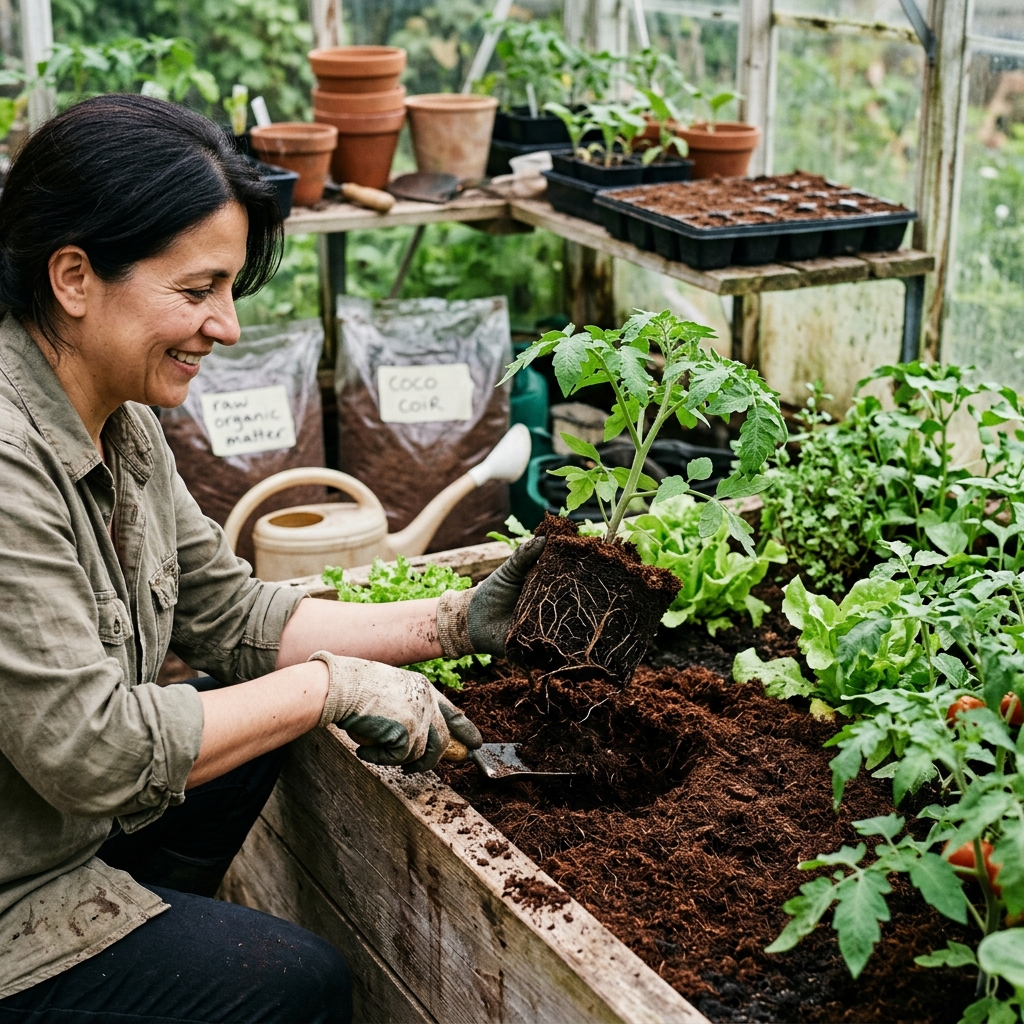
Cocopeat: 7 Proven Benefits for Amazing Growth (2026)
理解 椰糠 and its revolutionary role in modern agriculture can completely transform how your crops and house plants develop. If you have ever struggled with root rot, severe soil compaction, or poor water retention, you are not alone. Professional growers worldwide are rapidly transitioning toward high-performance, sustainable substrates.
In this ultimate 2026 guide, you will explore why coconut coir dust has become the gold standard for horticultural success. We will analyze how it compares directly to topsoil, examine key industrial applications, and detail exact buffering protocols to maximize plant yield.
定义: 椰糠 is a 100% natural, eco-friendly soilless growing medium processed from coconut husk mesocarp. Also known as coco coir dust, it features exceptional water retention, high root aeration porosity, and a stable neutral pH range (5.8–6.5), making it an ideal substrate for container gardening, seed germination, and hydroponics.
What is Cocopeat and How Is It Produced?
椰糠 is an organic, fully biodegradable horticultural substrate derived during the industrial processing of coconut outer husks. Historically discarded as an agricultural byproduct, coir fiber dust is now recognized globally as a premium soil amendment and grow medium.
The manufacturing process requires strict technical controls, including washing raw husks, heat treating, sifting out short fibers, and grading particle sizes. Raw coconut husks naturally absorb high amounts of sodium and potassium from coastal environments. Therefore, reputable suppliers thoroughly wash raw husks with freshwater to lower electrical conductivity (EC) to safe thresholds for delicate roots.
According to extensive agricultural data maintained by the 联合国粮食及农业组织(粮农组织), utilizing coir byproducts fosters a zero-waste circular bio-economy. It provides commercial greenhouse operations with a renewable alternative that reduces reliance on non-renewable soil resources.
Raw Processing and Fiber Separation
During processing, coconut husks undergo mechanical decortication to separate long structural coir fibers from fine pith material. The remaining pith material—rich in spongy cellular structures—is aged, dried, and screened to remove excess sand and fine residual dust.
Electrical Conductivity (EC) and Salt Washing Protocols
Unwashed coir contains elevated sodium and chloride ions that can burn tender seedlings. High-grade horticultural substrates undergo extensive double-washing cycles to achieve low EC ratings below 0.5 mS/cm. This ensures that root zones absorb added nutrients efficiently without experiencing salt stress.
[Image: High-resolution close-up of light brown processed cocopeat texture showcasing fine fibrous structure | Alt: Dry expanded cocopeat substrate for plant roots | Title: High-grade horticultural cocopeat substrate]
Cocopeat vs Traditional Soil: The Ultimate Comparison
Growers often evaluate whether replacing mineral topsoil with a dedicated soilless growing medium is economically and biologically justified. Traditional garden soil compacts after frequent irrigation cycles, depleting air space and encouraging anaerobic bacterial pathogens.
By contrast, high-quality coco coir maintains its spongy structural matrix for multiple growing seasons without shrinking or forming dry surface crusts. Furthermore, scientific research documented by the 美国农业部(USDA) demonstrates that managed soilless media allow growers to optimize nutrient delivery with minimal waste runoff.
| Feature / Attribute | Cocopeat Substrate | Traditional Topsoil |
|---|---|---|
| 水分保留 | Holds 800%–1000% of dry weight | Low to Moderate (20%–40%) |
| Root Aeration Porosity | High air-filled porosity (30% air space) | Low air space; highly prone to compaction |
| Pathogen Risk | Naturally sterile and weed-free | High risk of weed seeds, insect larvae, & fungi |
| pH Stability Range | Slightly acidic to neutral (5.8–6.5) | Unpredictable (4.5–8.5 depending on origin) |
| Cation Exchange Capacity (CEC) | High (60–130 meq/100g) | Variable (10–40 meq/100g) |
| Reusability Span | Reusable for 3 to 5 years | Depletes organically within 1 season |
| Weight Profile | Extremely lightweight when dry | Heavy, dense, and costly to transport |
In addition, peer-reviewed agronomic analyses on 科学直接 confirm that porous coconut coir substrates drastically reduce root rot caused by 腐霉 和 疫霉属 species compared to heavy clay soils.
7 Powerful Uses of Cocopeat in Modern Gardening
理解 cocopeat benefits for gardening helps growers apply this material effectively across diverse agricultural scenarios. Here are seven high-impact applications:
- Seedling Starter & Germination Trays: Fine mesh coir holds steady moisture around seed coats, supporting uniform seed germination and fast root emergence.
- Potting Mix Base: Combining coir dust with pumice, perlite, and organic compost creates a balanced blend perfect for indoor potted foliage.
- 水培基质: Inert coir serves as a clean root anchor in drip-irrigation hydroponic systems and run-to-waste commercial setups.
- Mulching & Moisture Conservation: Spreading a thick top layer over outdoor garden beds lowers surface evaporation and suppresses weed growth.
- Orchid & Epiphyte Medium: Mixing chunk coir chips with coir fiber promotes air circulation around sensitive epiphytic roots.
- Microgreen Farming: Pathogen-free coir mats give commercial microgreen farmers a clean, disease-free bed for quick crop turns.
- Worm Bedding (Vermicomposting): Neutral pH coir creates optimal moisture retention inside vermicomposting bins without irritating earthworms.
[Image: Step-by-step graphic illustrating how to expand brick cocopeat in water | Alt: Hydrating compressed cocopeat brick for garden potting mix | Title: Preparing compressed cocopeat blocks]
Key Benefits of Using Cocopeat for Plant Growth
Switching to coconut substrate delivers distinct physiological advantages for plant health in both residential gardens and commercial agricultural setups.
Why Cocopeat Superiority Matters for Root Health
Roots require continuous oxygen exchange to maintain respiration and nutrient uptake. In waterlogged soils, pore spaces fill entirely with water, starving roots of oxygen. Coir maintains structural macro-pores even when saturated, supplying adequate oxygen to feeder roots.
Water Retention and Aeration Balance
Unlike traditional peat moss, which becomes hydrophobic and repels liquid when dry, hydrated coir re-absorbs water quickly. This high re-wetting ability protects potted indoor plants during warm periods when irrigation might be delayed.
Sustainable Alternative to Peat Moss
Peat moss extraction depletes ancient peat bogs that lock away billions of tons of atmospheric carbon. Conservation policies from the 英国皇家园艺学会(RHS) urge growers to shift toward renewable peat moss alternatives like coir to protect fragile wetland ecosystems.
Cation Exchange Capacity (CEC) and Nutrient Retention
Coir possesses a high cation exchange capacity, allowing it to hold cationic nutrients like calcium, magnesium, and potassium. This nutrient buffer prevents vital elements from leaching away during frequent watering cycles.
How to Properly Prepare, Buffer, and Use Coco Peat Blocks
Learning how to use cocopeat for indoor plants begins with proper hydration and chemical buffering. Most commercial coir is distributed in compressed block formats for efficient shipping.
- Step 1: Hydration: Submerge your compressed block in a large container with warm water (roughly 4–5 liters per 1kg brick). Allow 15 minutes for complete expansion.
- Step 2: Rinsing: Flush the loose material with clean water to clear out residual surface salts if using unwashed raw coir.
- Step 3: Calcium Nitrate Buffering: Soak hydrated coir in a dedicated calcium nitrate and magnesium sulfate solution for 24 hours. This exchanges naturally occurring sodium ions with essential plant nutrients.
- Step 4: Mixing: Combine buffered coir with perlite, vermiculite, and rich organic compost to build your custom potting soil mix.
[Video Embed Suggestion: YouTube instructional video demonstrating how to properly wash and calcium-buffer compressed coco coir blocks for indoor container gardens]
Integrating Sustainable Agricultural Inputs into Modern Farming
Modern commercial operations balance soil quality with eco-conscious resource management. Progressive agricultural enterprises often combine sustainable crop growing media with high-value agricultural byproducts to optimize production efficiency.
For example, integrated agricultural operations recycle crop outputs into balanced animal nutrition and land enrichment solutions. Utilizing high-protein feed components like 棕榈仁压榨机 and nutrient-rich 椰干粉 supports livestock health, while processing byproducts such as 棕榈仁壳 supplies green biomass energy. Modern farms also utilize specialized energy supplements like 棕榈油脂肪酸钙盐 for livestock dietary needs.
If you are scaling up commercial horticultural operations, sourcing premium material from a dependable partner is essential. You can procure top-grade substrate directly from an established bulk cocopeat product supplier to guarantee consistent EC quality and low salt content for your farm.
[Image: Infographic comparing root system depth in traditional soil versus cocopeat substrate mix | Alt: Root development comparison in soil vs cocopeat media | Title: Root expansion performance chart]
Makmur Amanah Sejahtera 提供高质量的棕榈产品,例如: 棕榈仁压榨机, 棕榈仁壳, Crude Palm Oil, Palm Kernel Oil, etc. Kindly contact us at WhatsApp +6282140002198 或发送电子邮件至 admin@makmuramanah.co.id.
常见问题解答
Is cocopeat better than soil for growing houseplants?
Many growers ask: is cocopeat better than soil? For indoor container plants, coir substrate offers superior drainage, prevents soil compaction, and drastically reduces fungus gnat infestations commonly triggered by damp topsoil.
Does cocopeat contain natural plant nutrients?
No, pure expanded coir is an inert growing substrate with minimal nitrogen, phosphorus, or calcium. You must incorporate organic compost or complete liquid fertilizers to provide essential nutrients to your growing plants.
Can you grow potted plants in 100% cocopeat?
You can grow crops in 100% coir if you deliver water-soluble hydroponic nutrients continuously. However, combining 60% coir with 20% compost and 20% perlite creates a more forgiving potted mix for home gardening.
How long does cocopeat last before degrading?
Due to its tough lignin content, coir decomposes very slowly over 3 to 5 years. It significantly outlasts traditional sphagnum peat moss and topsoil blends in structural durability.
Why is calcium buffering necessary for coconut coir blocks?
Unbuffered coir naturally binds to calcium and magnesium ions while releasing sodium and potassium. Pre-buffering coir with calcium nitrate saturates cation exchange sites, keeping vital minerals accessible to plant root systems.
[Image: Beautiful healthy monstera indoor houseplant growing in a decorative pot containing a cocopeat potting mix | Alt: Potted houseplant thriving in cocopeat growing media | Title: Indoor gardening success with cocopeat]
Final Verdict: Should You Switch to Cocopeat in 2026?
In summary, incorporating 椰糠 into your container soil mixes, seedling trays, or hydroponic systems gives roots the ideal balance of moisture retention and oxygenation. By making the switch to this renewable soilless growing medium, you prevent root suffocation, eliminate compaction, and support sustainable farming practices.
Whether you manage an urban houseplant collection or oversee commercial farm production, using clean, high-grade coir builds a stronger foundation for plant health. Upgrade your growing media today and experience remarkable yield improvements across every season!

 Chinese
  English
  Indonesian
  Arabic