
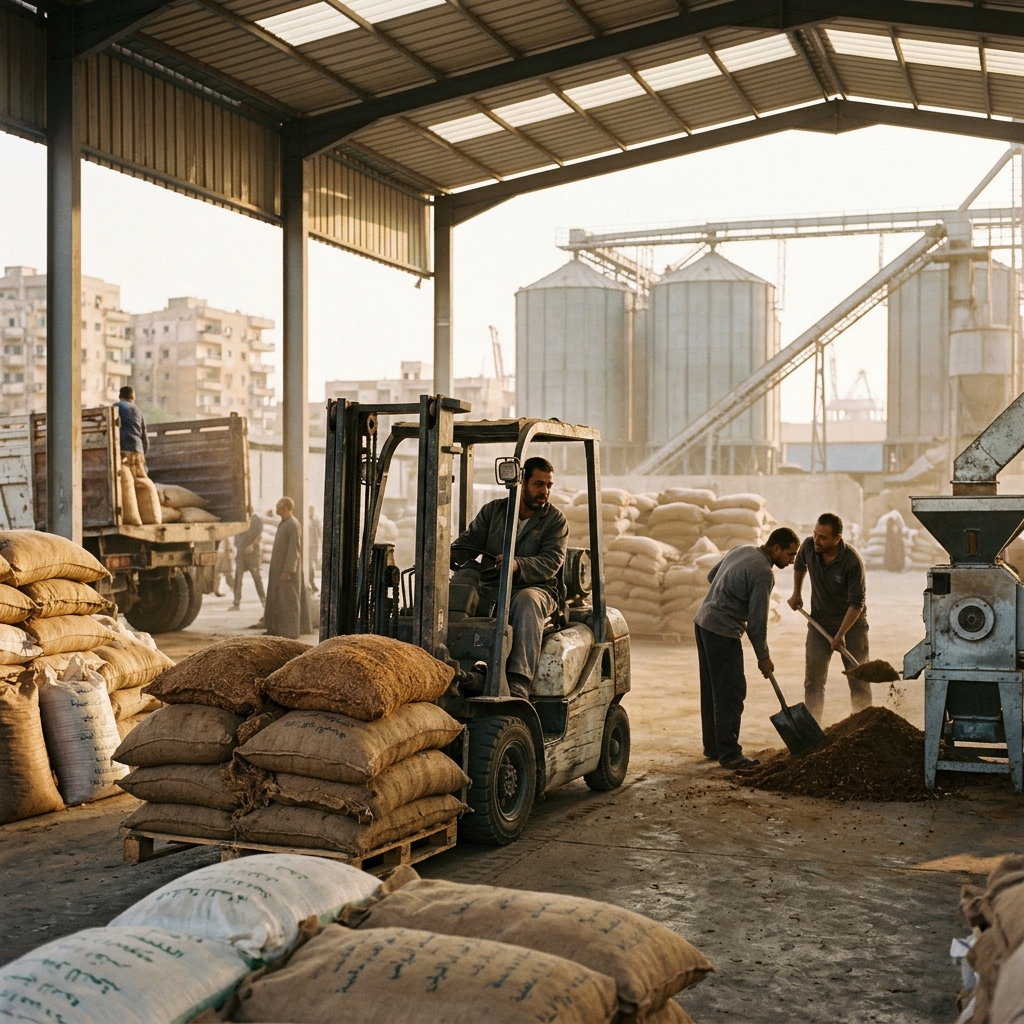
Fastest-Growing Industry in Egypt: 5 Powerful 2026 Trends
Identifying the fastest-growing industry in Egypt reveals a dramatic economic transformation currently led by agribusiness and intensive commercial animal feed production. As domestic demand for meat, poultry, and dairy surges, Egyptian livestock enterprises face unprecedented pressure to secure cost-effective feedstocks. This shift has unlocked massive commercial demand for high-performance alternative feed ingredients.
Egypt’s population surpassed 114 million citizens in early 2026, accelerating urban food demand and straining traditional grain import pipelines. According to recent macroeconomic data published by the 世界银行, the Egyptian agricultural value chain represents one of the nation’s most resilient economic engines, expanding at an annual rate exceeding 8.4%.
To overcome escalating import costs for traditional corn and soybean meal, feed manufacturers are transforming their formulations. At the forefront of this industrial transition stands Palm Kernel Expeller (PKE), a nutrient-rich, fiber-dense coproduct that has become indispensable across commercial mills and modern feedlots.
Defining Egypt’s Economic Pivot: Agribusiness and Feed Production
这 fastest-growing industry in Egypt is undeniably modern agribusiness, with the commercial animal feed sector serving as its operational backbone. While financial technology and renewable energy command significant media attention, livestock nutrition sustains national food security and anchors daily domestic commerce.
Feed represents between 65% and 75% of the variable costs in commercial dairy, beef, and poultry production. Consequently, any efficiency gained in raw ingredient procurement immediately amplifies profitability for producers across the Nile Delta and Upper Egypt.

这 联合国粮食及农业组织(粮农组织) emphasizes that optimizing animal feed formulation through non-traditional protein and fiber inputs is essential for Middle Eastern livestock viability. Egyptian feed producers now actively substitute expensive grain components with proven tropical coproducts to stabilize operating margins.
Analysts examining the broader Egyptian agribusiness market note that private equity investment into modern feed production compounds has quadrupled over the past thirty-six months. This capital inflow highlights why market observers prioritize livestock nutrition as a prime driver of long-term economic resilience.
The Animal Feed Crisis: Why Traditional Grains Are Losing Ground
Historically, Egyptian feed mills relied heavily on imported yellow maize and solvent-extracted soybean meal from South and North America. However, multiple macroeconomic shifts have challenged this conventional formulation model:
- Foreign Exchange Volatility: Persistent pressure on hard currency reserves has increased landed costs for imported grains across Alexandria and Damietta.
- Global Supply Chain Disruptions: Black Sea logistics and shipping corridor vulnerabilities have introduced significant supply unpredictability for grain buyers.
- Rumen Health Deficits: High-starch grain diets create chronic subacute ruminal acidosis (SARA) in feedlot cattle under hot Egyptian climatic conditions.
- Rising Domestic Protein Deficits: Domestic forage production remains severely restricted by land and irrigation water constraints, spurring interest in sustainable feed alternatives.
Consequently, procurement directors within the animal feed sector Egypt are diversifying inventories toward dependable, fiber-dense palm byproducts. Industry leaders are researching why livestock feed is the fastest-growing industry in Egypt as regional integrators transition to sustainable, stable feed commodities.
Forward-thinking feed millers realize that relying solely on conventional grain imports leaves production lines vulnerable to sudden price spikes. Sourcing feed mill raw materials Egypt requires predictable pricing, low mycotoxin incidence, and long storage stability under semi-arid storage conditions.
Inside the Booming Demand for Palm Kernel Expeller
Palm Kernel Expeller (PKE), also designated as palm kernel meal, is the mechanical byproduct extracted from the crushed kernel of the oil palm tree (油棕). As industrial feed millers rebalance rations, PKE has emerged as the premier medium-protein, high-energy fiber supplement.
Demand for PKE throughout Alexandria and Port Said has surged by more than 38% year-over-year. Large-scale livestock operators utilize this ingredient to provide stable bypass protein and highly digestible neutral detergent fiber (NDF) directly to ruminants.
Securing a reliable fastest-growing industry in Egypt procurement pipeline has become an operational priority for operations targeting cost-effective dairy cattle feed in Egypt. Consistent import allocations ensure smooth production throughout challenging summer feed transitions.
Nutritional Profile and Biochemical Advantages
Palm Kernel Expeller offers a distinct biochemical composition that fits the operational realities of intensive Egyptian ruminant feeding. Unlike solvent-extracted meals, high-grade mechanical expeller retains valuable residual oils that deliver dense caloric energy without disrupting rumen microbial ecology.
Published peer-reviewed research on 科学直接 confirms that the non-starch polysaccharides in PKE ferment gradually into volatile fatty acids (VFAs). This steady pathway provides sustained energy for dairy cows while mitigating heat stress during peak summer temperatures.

- Crude Protein (14%–18%): Supplies essential amino acids suitable for growing beef steers and mid-lactation dairy herds.
- Residual Ether Extract (6%–10%): Delivers dense, slow-release dietary lipids that boost caloric concentration without provoking acidosis.
- High Neutral Detergent Fiber (~55%–70%): Stimulates chewing, salivary buffering, and continuous rumination in intensive feedlots.
- Phosphorus and Trace Minerals: Delivers bioavailable macro-minerals essential for reproductive health and cellular growth.
Biological Advantages in the Fastest-Growing Industry in Egypt
Commercial livestock enterprises within the fastest-growing industry in Egypt demand consistent raw materials that streamline formulation costs. Feeding trials across commercial Egyptian dairies demonstrate that replacing 15% to 25% of commercial grain concentrates with PKE yields consistent butterfat percentages while reducing overall daily feeding overhead.
Furthermore, producers often combine PKE with other cost-effective inputs such as 椰干粉 and rumen-bypass supplements like 棕榈油脂肪酸钙盐 to optimize daily milk yields and carcass weights.
Ruminant nutritionists formulating dairy cattle feed ration models highlight that the unique crude protein feed fraction in PKE resists rapid microbial breakdown in the rumen. This bypass quality delivers amino acids straight to the lower intestine, elevating total nitrogen absorption efficiency.
Comparative Analysis: Raw Feed Ingredients in Egypt
The strategic value of PKE becomes evident when evaluating its nutritional and economic balance against traditional feed ingredients utilized across Egyptian commercial mills.
| 饲料原料 | Crude Protein (%) | Crude Fat (%) | Crude Fiber (%) | Primary Application in Egypt |
|---|---|---|---|---|
| 棕榈仁压榨机(PKE) | 14.5% – 18.0% | 6.5% – 10.0% | 15.0% – 18.0% | Dairy, beef feedlot, camel rations |
| Yellow Corn (Maize) | 8.0% – 9.5% | 3.5% – 4.0% | 2.0% – 2.5% | Energy base across all livestock species |
| Soybean Meal (44%) | 44.0% – 48.0% | 1.0% – 2.0% | 6.0% – 7.0% | High-protein poultry and young calf rations |
| Wheat Bran | 14.0% – 16.0% | 3.5% – 4.5% | 9.5% – 11.0% | Ruminant bulk fiber and digestible carrier |
As documented in the comparison above, PKE acts as a versatile dual-purpose input. It delivers respectable crude protein while supplying significantly higher residual fat than solvent soybean meal or traditional wheat bran, providing feed compounders with maximum formulation flexibility.
By capitalizing on verified palm kernel expeller benefits, livestock feed producers lower overall batch costs while sustaining balanced nutritional integrity. These technical dynamics clarify how commercial feed formulation trends Egypt 2026 continue to transform traditional grain-mixing conventions.
Economic Drivers Fueling the Fastest-Growing Industry in Egypt
Strategic government directives are catalyzing expansion across the agribusiness ecosystem. The official State Information Service of Egypt outlines comprehensive national initiatives designed to increase self-sufficiency in red meat and dairy output.
Several underlying macroeconomic forces explain why commercial livestock feeding has cemented its status as the fastest-growing industry in Egypt:
- Mega Agricultural Land Reclamation: Landmark developments such as the New Delta Project and Toshka Lakes are expanding cultivated land, driving regional demand for concentrated animal feeds.
- Consolidation of Smallholders: Traditional backyard raising is giving way to vertically integrated commercial feedlots requiring standardized total mixed rations (TMR).
- Export Opportunities in Food Processing: Modern Egyptian dairy and meat processors are expanding export channels into neighboring North African and GCC markets.
- Logistical Connectivity: Modernized Mediterranean and Red Sea ports facilitate efficient, bulk discharge of imported raw ingredients directly into processing facilities.
Moreover, large agricultural complexes increasingly incorporate secondary co-products such as 椰糠 for desert soil amendment, while using 棕榈仁壳 for industrial thermal biomass.

How Egyptian Feed Mills Formulate with Palm Kernel Expeller
Integrating PKE into automated feed milling lines requires precise nutritional calibration. Technical formulation teams rely on mechanical expeller’s uniform bulk density to stabilize pellet durability indices (PDI) while reducing reliance on synthetic binders.
In beef cattle fattening rations, nutritionist protocols routinely substitute 20% to 30% of high-priced corn and bran with PKE. The high fiber content buffers the rumen, enabling animals to sustain high average daily gain (ADG) figures without liver abscesses or digestive crashes.
In commercial dairy cattle herds, nutritionists limit inclusion to 15% to 20% of dry matter intake (DMI). This precise inclusion rate safeguards essential amino acid balances while leveraging the residual lauric and palmitic fatty acids to enhance milk fat yields.
Feed mill operators can review optimal compounding procedures in modern industrial facilities by observing modern processing equipment handling bulk tropical meal fractions:
Sourcing Feed Ingredients for the Fastest-Growing Industry in Egypt
Procuring raw ingredients within the fastest-growing industry in Egypt requires selecting reliable overseas suppliers with rigorous quality control. Substandard PKE containing excessive shell fragments or elevated moisture levels can induce fungal mycotoxin proliferation during maritime storage.
To avoid these quality hazards, Egyptian feed compounders prioritize suppliers capable of certifying minimal shell content, moisture levels below 10%, and guaranteed minimum crude fat percentages. Identifying a dedicated palm kernel expeller supplier Egypt import partner protects commercial mills from costly downtime and degraded feed conversion ratios.
Makmur Amanah Sejahtera 我们提供高品质的棕榈产品,例如棕榈仁粕、棕榈仁壳、原棕榈油、棕榈仁油等。请通过 WhatsApp 联系我们。 +6282140002198 或发送电子邮件至 admin@makmuramanah.co.id.
常见问题解答
What makes livestock feed the fastest-growing industry in Egypt?
The livestock feed sector is the fastest-growing industry in Egypt due to a population surpassing 114 million, surging domestic protein consumption, and national food security initiatives that encourage modern commercial feedlots over traditional backyard animal farming methods.
What is Palm Kernel Expeller and why is it imported into Egypt?
Palm Kernel Expeller is an energy-rich byproduct produced through mechanical palm kernel oil extraction. Egyptian millers import it as a cost-effective alternative providing crude protein, digestible neutral detergent fiber, and healthy lipids for commercial dairy, beef, and sheep operations.
How does Palm Kernel Expeller compare to soybean meal?
Soybean meal contains higher protein (44%–48%) with low fiber, while Palm Kernel Expeller supplies 14.5%–18% protein, 15%–18% fiber, and 6.5%–10% residual fat. PKE costs significantly less, making it an ideal economical energy and fiber buffer for commercial ruminant rations.
What is the recommended inclusion rate of PKE in cattle rations?
Nutritionists typically incorporate 15% to 25% Palm Kernel Expeller into total mixed rations for beef cattle and dairy cows. This inclusion level supports optimal rumen buffering, increases milk butterfat percentages, and lowers total daily feed overhead without impairing ration palatability.
How can Egyptian buyers guarantee the quality of imported palm products?
Egyptian buyers should partner directly with vetted overseas suppliers who guarantee strict pre-shipment laboratory inspections. Essential quality parameters include moisture content below 10%, low residual shell fragments, and absolute absence of sand, silica, or fungal mycotoxin contamination.
Strategic Outlook: Capitalizing on Egypt’s Feed Sector Growth
Navigating the rapid expansion of modern commercial agribusiness requires innovative raw ingredient procurement and forward-thinking nutritional strategies. As national development projects scale, feed millers and livestock integrators that adopt efficient alternative inputs like Palm Kernel Expeller will secure enduring competitive advantages.
By shifting away from volatile traditional grains toward proven, cost-effective agricultural coproducts, industry leaders can maintain healthy margins while safeguarding national food supplies. Commercial agribusiness will remain the indisputable fastest-growing industry in Egypt as long as proactive millers embrace sustainable, high-performance feed ingredients to power future growth.
 Chinese
 English
 Indonesian
 Arabic
