
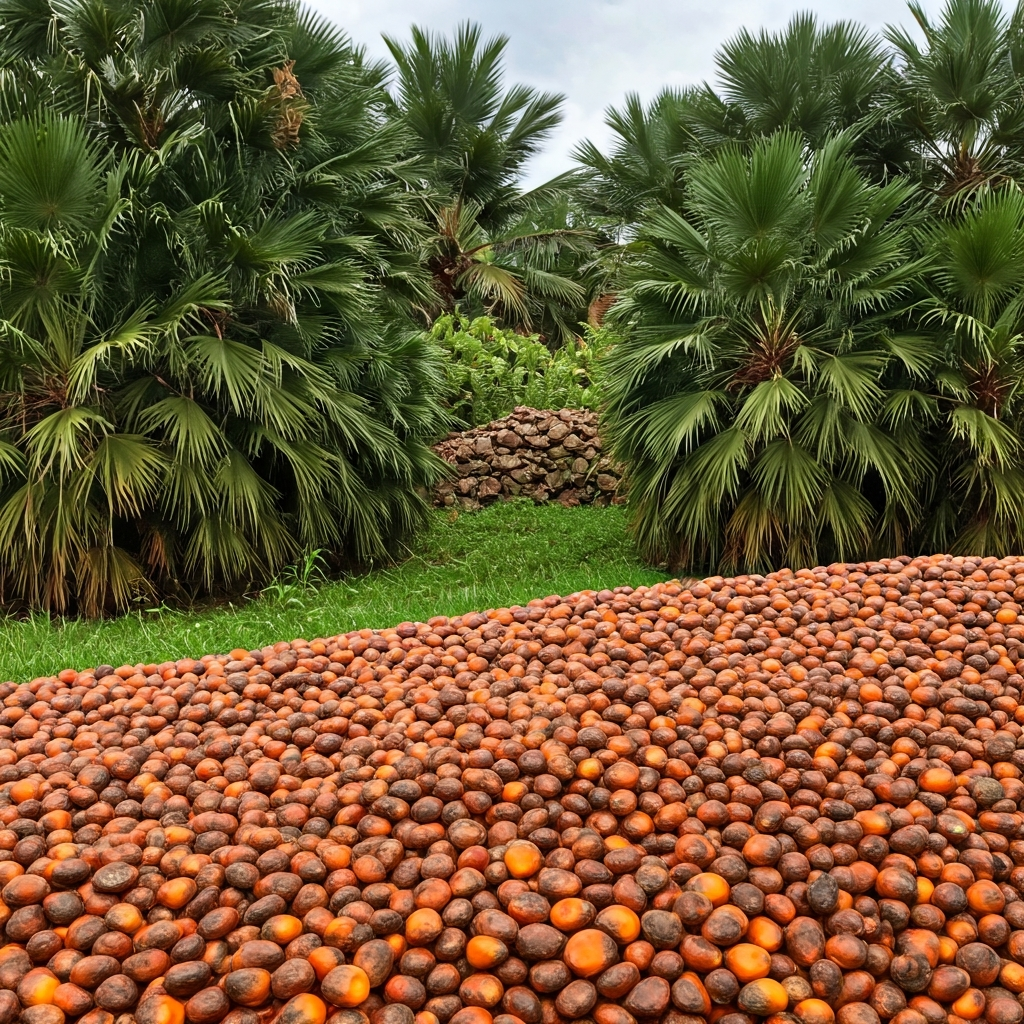
Palm Kernel Expeller vs Meal: #1 Complete Guide (2026)
The Palm Kernel Expeller vs Meal debate is a critical one for any animal feed buyer aiming to optimize nutritional content and manage costs effectively. Making the wrong choice can impact animal health, growth rates, and your bottom line.
As by-products of the palm oil industry, both PKE and PKM are valuable sources of protein and energy in livestock diets. However, their subtle but significant differences, stemming from their production processes, are not widely understood. This guide provides the clarity you need to make an informed purchasing decision.
What is Palm Kernel Expeller (PKE)?
Palm Kernel Expeller (PKE) is a high-quality feed ingredient produced after the mechanical extraction of oil from the kernel of the oil palm fruit. It is one of the most popular and cost-effective feed ingredients in the world due to its balanced nutritional profile.
The global trade in palm kernel cake, a category including PKE, is substantial. The Food and Agriculture Organization (FAO) tracks its widespread use in animal nutrition, highlighting its economic importance.
The Mechanical Extraction Process
PKE is produced using a screw press to physically squeeze oil out of the palm kernels. This process is purely mechanical and involves no chemical solvents.
This method leaves a higher percentage of residual oil in the final product compared to solvent extraction. This residual oil is a key factor in PKE’s higher energy value, making it a crucial element in the Palm Kernel Expeller vs Meal comparison.
Nutritional Profile of PKE
High-quality Palm Kernel Expeller is characterized by its balanced nutritional content:
- Crude Protein: Typically 14-17%
- Residual Oil (Ether Extract): 8-12%
- Crude Fiber: Approximately 16-18%
- Metabolizable Energy: Higher due to the oil content, making it excellent for energy-intensive applications.
[Image: A close-up shot showing the coarse, fibrous texture of high-quality Palm Kernel Expeller. | alt=”A pile of high-quality Palm Kernel Expeller, a key component in the Palm Kernel Expeller vs Meal analysis.” | title=”Palm Kernel Expeller (PKE)”]
What is Palm Kernel Meal (PKM)?
Palm Kernel Meal (PKM) is the other major by-product, but its production and, therefore, its nutritional profile, differ significantly. The key to the Palm Kernel Expeller vs Meal distinction lies in the oil extraction method.
While often used interchangeably in casual conversation, PKM is a distinct product. It’s crucial for buyers to understand this to avoid costly formulation errors and to accurately assess its value.
The Solvent Extraction Process
PKM is what remains after oil is extracted from palm kernels using a solvent, typically hexane. This chemical process is highly efficient at removing almost all the oil.
This efficiency results in a meal with very low residual oil content. Consequently, the concentration of other nutrients, like protein and fiber, is slightly higher per kilogram of the product.
Nutritional Profile of PKM
Palm Kernel Meal’s profile reflects the solvent extraction method:
- Crude Protein: Slightly higher, 15-18%
- Residual Oil (Ether Extract): Very low, typically 1-3%
- Crude Fiber: Can be higher, up to 21%
- Metabolizable Energy: Lower than PKE due to the minimal oil content.
Palm Kernel Expeller vs Meal: A Head-to-Head Comparison
To make the best decision for your feed program, a direct comparison is essential. This table breaks down the crucial differences between PKE and PKM, which is the core of the Palm Kernel Expeller vs Meal topic.
| Feature | Palm Kernel Expeller (PKE) | Palm Kernel Meal (PKM) |
|---|---|---|
| Extraction Method | Mechanical (Screw Press) | Solvent (e.g., Hexane) |
| Residual Oil Content | 8-12% | 1-3% |
| Crude Protein | 14-17% | 15-18% |
| Crude Fiber | ~16-18% | ~18-21% |
| Energy Value | Higher (more energy-dense) | Lower |
| Best For | Energy supplementation, Ruminants | Protein supplementation where fat is limited |
[Image: Infographic showing a side-by-side comparison of PKE and PKM. Left side shows a screw press and PKE’s stats (higher oil, lower protein). Right side shows a solvent tank and PKM’s stats (lower oil, higher protein). | alt=”Infographic comparing the key differences in the Palm Kernel Expeller vs Meal debate.” | title=”Palm Kernel Expeller vs Meal Comparison”]
Palm Kernel Expeller vs Meal: Which is Better for Your Livestock?
The “better” option is entirely dependent on the species you are feeding, their life stage, your performance goals, and your budget. The Palm Kernel Expeller vs Meal choice isn’t one-size-fits-all.
Beyond the table, the choice depends on the specific animal. For example, research published in animal science journals, like this study on ruminant nutrition, highlights PKE’s benefits for cattle due to its bypass protein and high energy, which can improve milk fat.
In contrast, for monogastric animals like poultry, the high fiber in both can be a limiting factor. The lower fat in PKM might be preferable in certain feed formulations to avoid overly rich diets, a key point in the Palm Kernel Expeller vs Meal decision for poultry producers.
1. Ruminants (Cattle, Goats)
PKE is often the preferred choice for ruminants. Its high fiber content is easily digested by their complex stomach systems, and the high residual oil provides a concentrated source of energy. This is particularly beneficial for dairy cattle to boost milk fat content and improve body condition.
For high-producing dairy cows, the energy from PKE can be supplemented with bypass fats like Calcium Salts of Palm Oil Fatty Acids to meet extreme energy demands without causing digestive upset. This integrated approach shows a sophisticated understanding of feed formulation.
2. Poultry (Broilers, Layers)
For poultry, the decision is more nuanced, as confirmed by insights from publications like Poultry World. While both can be used, inclusion rates are generally lower (typically under 10%) due to the high fiber content, which poultry cannot digest efficiently.
The choice between PKE and PKM often comes down to the price and the specific need for either protein or energy in the overall diet mix. Nutritionists must carefully balance these factors for optimal growth and egg production.
3. Swine
Similar to poultry, swine are monogastric animals and have a limited capacity to digest fiber. Therefore, PKE or PKM is used in smaller quantities. The higher energy from PKE can be beneficial for growing pigs, but nutritionists must balance the ration carefully to avoid digestive issues.
The decision in the Palm Kernel Expeller vs Meal debate for swine often depends on the cost relative to other energy sources like corn or soy oil.
4. Other Feed Alternatives
It’s also useful to compare these ingredients with others on the market. For instance, Copra Meal, derived from coconuts, offers a different nutritional profile and can be another cost-effective choice depending on regional availability. A thorough analysis always considers multiple options.
Key Factors in the Palm Kernel Expeller vs Meal Decision
Beyond the nutritional numbers, several practical factors influence the best choice for your operation. A comprehensive Palm Kernel Expeller vs Meal analysis must consider economics and logistics.
Cost and Availability
Price is a major driver. The cost difference often reflects market supply, demand, and processing complexity. While PKE has a higher energy value, PKM’s more intensive processing can sometimes influence its price. Local availability and shipping costs also play a major role in the final price for the buyer.
Supplier Reliability
The quality of both PKE and PKM can vary. Partnering with a trusted supplier who provides consistent quality and transparent data is crucial. Inconsistent products can disrupt animal performance and health. This is a vital consideration when weighing Palm Kernel Expeller vs Meal.
Long-Term Storage
PKE, with its higher oil content, has a shorter shelf life and is more prone to rancidity if not stored properly in a cool, dry place. PKM’s lower oil content gives it greater stability in storage, which can be a significant advantage in certain climates or logistical situations.
[Image: A large, clean warehouse with neatly stacked bags of animal feed, illustrating proper storage. | alt=”Bags of animal feed, such as PKE or PKM, stored properly in a warehouse.” | title=”Proper Storage of Animal Feed”]
Makmur Amanah Sejahtera provides high-quality palm products such as Palm Kernel Expeller, Palm Kernel Shell, Crude Palm Oil, Palm Kernel Oil, etc. Kindly contact us at WhatsApp +6282140002198 or email us at admin@makmuramanah.co.id.
[Image: A healthy herd of dairy cows feeding at a trough, illustrating the end-use application of animal feed. | alt=”Cattle feeding on a ration that can include products from the Palm Kernel Expeller vs Meal analysis.” | title=”Livestock Benefitting from Quality Feed”]
Frequently Asked Questions (FAQ)
What is the primary difference between palm kernel expeller and meal?
The main difference is the oil extraction method. Palm Kernel Expeller (PKE) uses a mechanical press, leaving 8-12% residual oil. Palm Kernel Meal (PKM) uses a solvent process, resulting in a much lower oil content of 1-3%, impacting its energy value.
Is palm kernel good for cattle feed?
Yes, particularly PKE. Its blend of protein, digestible fiber, and high energy from residual oil makes it an excellent, cost-effective ingredient for ruminants like cattle. It often improves milk fat and body condition, a key outcome in the Palm Kernel Expeller vs Meal evaluation.
Can you use Palm Kernel Expeller for chickens?
Yes, but in limited quantities. The high fiber in PKE can be hard for chickens to digest. It is typically included at low percentages (5-10%) as a supplemental source of protein and energy, as advised by animal nutrition experts and organizations like the American Feed Industry Association.
Why is there a cost difference in the Palm Kernel Expeller vs Meal choice?
Cost reflects market supply, demand, processing methods, and logistics. PKE’s higher energy might command a premium, while PKM’s processing costs can also affect price. Local availability and shipping are major factors in the final price you pay.
What does PKE stand for in animal feed?
PKE stands for Palm Kernel Expeller. It is the solid residue left after oil is mechanically extracted from the kernel of the oil palm fruit. It’s a widely recognized commodity in the global animal feed industry, valued for its nutritional content.
Which has a longer shelf life, PKE or PKM?
Palm Kernel Meal (PKM) generally has a longer shelf life. Its very low residual oil content (1-3%) makes it less prone to becoming rancid compared to Palm Kernel Expeller (PKE), which contains 8-12% oil and requires more careful storage.
Conclusion: Making the Right Choice in the Palm Kernel Expeller vs Meal Debate
Ultimately, the discussion of Palm Kernel Expeller vs Meal is about matching the right tool for the job. If your formulation requires a higher energy density and you’re primarily feeding ruminants, Palm Kernel Expeller is likely the superior and more economical choice.
If you need a slightly higher protein concentration and are formulating a diet where fat content must be strictly controlled or long-term storage is a concern, Palm Kernel Meal may be more suitable. Understanding this distinction is the hallmark of a savvy feed buyer.
By analyzing the nutritional data, considering the species, weighing economic factors, and partnering with a reliable supplier, you can leverage these valuable palm by-products to create effective and profitable feed solutions. Making the correct choice in the Palm Kernel Expeller vs Meal equation is a key step toward optimizing your livestock operation for success in 2026 and beyond.

 English
  Indonesian
  Chinese
  Arabic