
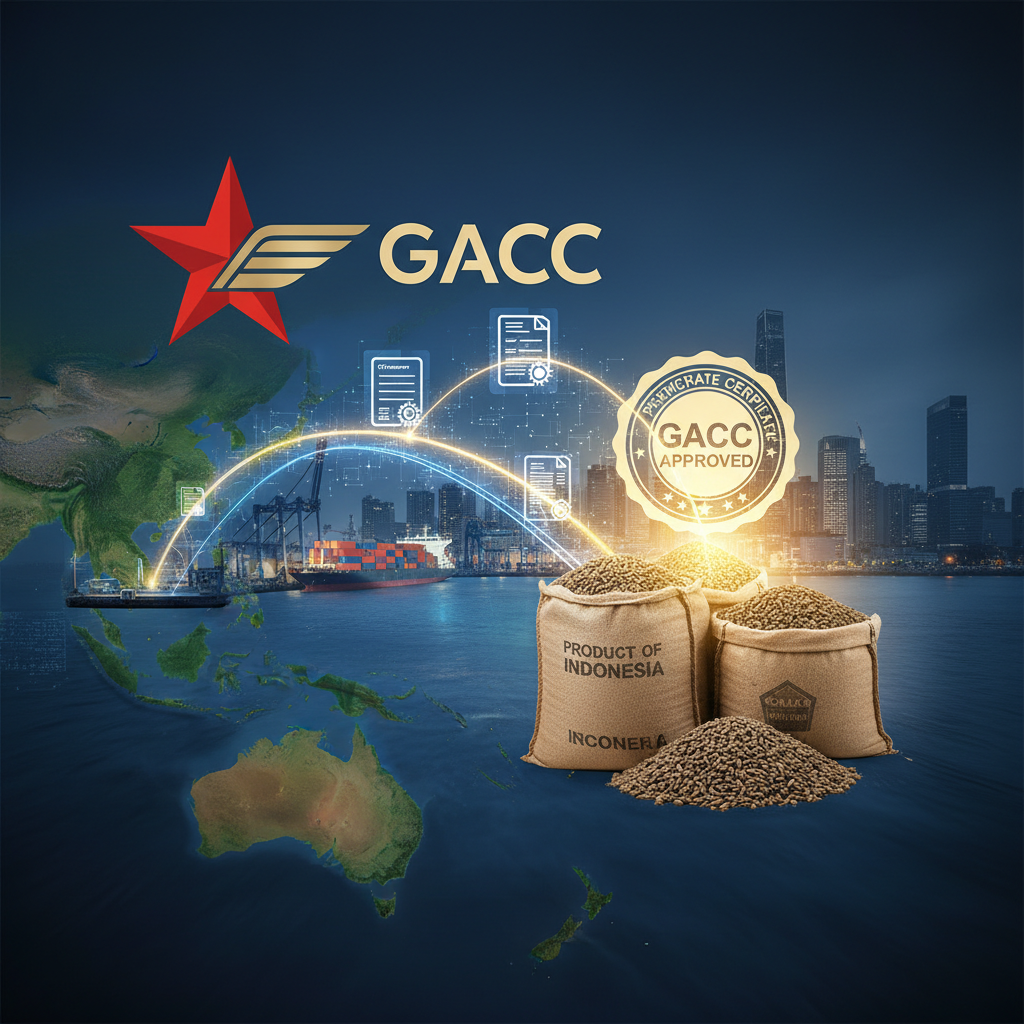
GACC Approved Palm Kernel Expeller: The Complete Guide to Exporting to China
Securing a foothold for your GACC Approved Palm Kernel Expeller in the lucrative Chinese market is a primary objective for global exporters. Yet, the regulatory landscape can be a formidable maze. Navigating China’s stringent import protocols is the single biggest challenge standing between your high-quality product and the world’s largest animal feed market. This guide provides the definitive 2026 roadmap to ensure your palm kernel expeller meets every compliance checkpoint for successful, uninterrupted trade.
The introduction of GACC (General Administration of Customs of the People’s Republic of China) has fundamentally transformed the export process. It replaced the former AQSIQ system with a more integrated and rigorous framework. For context, China’s demand for animal feed ingredients is projected to exceed 200 million metric tons by 2026, a trend confirmed by industry analysis. Failing to secure GACC registration means being locked out of this massive opportunity. This comprehensive article is your key to unlocking that door, ensuring every shipment is compliant, approved, and profitable.
What is GACC and Why is it Crucial for PKE Exports?
GACC, or the General Administration of Customs of the People’s Republic of China, is the unified governmental body responsible for all import and export supervision, including quarantine and inspection. For feed ingredient exporters, GACC approval is not just a recommendation; it’s a mandatory prerequisite. A GACC Approved Palm Kernel Expeller is one that originates from a facility that has been officially registered and verified by Chinese authorities, guaranteeing its safety and quality for their domestic livestock industry.
The Chinese government consolidated this system under GACC Decree 248, which came into effect on January 1, 2022. It requires all overseas manufacturers of food and feed products to register with GACC to be eligible for export to China. This move aims to enhance food safety traceability and place greater responsibility on producers. Without this registration, your product will be rejected at the port, leading to catastrophic financial losses.

From AQSIQ to GACC: Understanding the Transition
Previously, exporters dealt with AQSIQ (General Administration of Quality Supervision, Inspection and Quarantine). In 2018, AQSIQ’s functions were merged into the newly formed GACC and the State Administration for Market Regulation (SAMR). This consolidation was designed to streamline bureaucracy but also tightened control over imports.
This transition marks a key shift towards a more proactive and preventative management system. GACC places a heavy emphasis on the producer’s own quality control systems rather than relying solely on port-of-entry inspections, a principle that aligns with global standards like the WTO’s SPS Agreement. Therefore, demonstrating robust internal processes is now more critical than ever for any exporter.
The Critical Role of GACC Decree 248 and 249
Decree 248 (Regulations on the Registration and Administration of Overseas Manufacturers of Imported Food) is the foundational rule. It mandates that all foreign production, processing, and storage facilities for food and feed ingredients must be registered with GACC to produce GACC Approved Palm Kernel Expeller.
Furthermore, Decree 249 (Administrative Measures on Import and Export Food Safety) outlines the specific operational details. These include labeling, inspection protocols, and the responsibilities of importers. Understanding both decrees is essential for a comprehensive compliance strategy. Essentially, Decree 248 gets your facility on the approved list, and Decree 249 ensures your product and its packaging meet the standards for every single shipment.
The Step-by-Step GACC Registration Process for GACC Approved Palm Kernel Expeller
Achieving the status for a GACC Approved Palm Kernel Expeller requires a systematic approach. The process can be complex, but breaking it down into manageable steps makes it achievable. Below is the proven pathway to successful registration.
- Competent Authority Recommendation: First, your facility must be vetted and recommended by the competent authority in your own country (e.g., the Ministry of Agriculture). GACC will not accept direct applications from manufacturers for products in this risk category.
- Application Submission via CIFER System: Once recommended, the application is submitted through GACC’s China Import Food Enterprise Registration (CIFER) system. This involves extensive information about your company, production facility, and quality control processes.
- Comprehensive Documentation Review: GACC officials will meticulously review your submitted documents. This includes HACCP plans, recall procedures, traceability systems, and detailed production flowcharts. Any inconsistency or missing information will lead to delays or rejection.
- Potential for Video or On-Site Inspection: GACC reserves the right to conduct a remote video inspection or an on-site physical audit of your facility. They will verify that the practices described in your application are being implemented effectively in the real world.
- Approval and Registration Number Issuance: Upon successful review and inspection, GACC will grant approval and issue a unique registration number. This number must be clearly marked on all packaging for products shipped to China.
- Listing on GACC Database: Your facility will be publicly listed on the GACC website, providing official verification to importers in China that you are an approved supplier of GACC Approved Palm Kernel Expeller.
Visual Guide: The PKE Export Process
To supplement this guide, watch this video overview of the logistics and quality control involved in preparing palm kernel expeller for the demanding Chinese market.
(Suggestion: Embed a relevant YouTube or Vimeo video here)
Key Quality Specifications for a GACC Approved Palm Kernel Expeller
GACC approval is contingent on your product consistently meeting specific quality and safety benchmarks. While standards can be updated, the core requirements for a GACC Approved Palm Kernel Expeller focus on nutritional value, contaminants, and proper handling. High-quality GACC Approved Palm Kernel Expeller is the baseline for consideration.
Furthermore, these specifications ensure that the product is not only safe but also effective as a key ingredient in animal feed formulations. Adherence to these standards is monitored through both pre-shipment testing and port-of-entry inspections.

Essential PKE Nutritional Values
While GACC doesn’t publish a single, rigid specification sheet, Chinese importers expect PKE to meet generally accepted industry standards. Consistent delivery of these specs is a mark of a reliable supplier of GACC Approved Palm Kernel Expeller.
- Crude Protein: Typically 14-17%
- Crude Fat: Typically 8-12%
- Crude Fibre: Typically 15-18%
- Moisture: Maximum 12%
- Ash Content: Maximum 6%
Contaminant and Toxin Limits
This is a major focus for GACC, as contaminant control is vital for feed safety. Your product must be well within the acceptable limits for heavy metals and mycotoxins. Aflatoxin, in particular, is heavily scrutinized.
According to research published in the Toxins journal, controlling Aflatoxin B1 is paramount. Exporters must have a robust testing protocol for their GACC Approved Palm Kernel Expeller to ensure levels are consistently below China’s maximum residue limit (MRL), which is among the strictest in the world.
Packaging and Labeling Requirements for GACC Approved Palm Kernel Expeller
Compliance doesn’t end with the product itself. For a GACC Approved Palm Kernel Expeller, packaging and labeling must be perfect. Labels must be in simplified Chinese and include:
- Product Name (Palm Kernel Expeller)
- Specifications (e.g., Protein, Fat content)
- Net Weight
- Name and address of the manufacturer
- The GACC registration number
- Country of Origin
- Production Date and Batch Number

Common Mistakes to Avoid When Exporting GACC Approved Palm Kernel Expeller
Many export attempts fail due to avoidable errors. Awareness of these common pitfalls is your first line of defense in ensuring a smooth registration and export process for your GACC Approved Palm Kernel Expeller.
- Incomplete or Inconsistent Paperwork: The single most common reason for delay. Ensure every field in the CIFER application aligns with your supporting documents.
- Ignoring a GACC Query: GACC may send a “Request for Correction” notice. A timely, thorough, and accurate response is critical. Ignoring it or providing a poor answer is a fast track to rejection.
- Poor Translation: Using automated translation for technical documents or labels is a huge risk. Invest in professional translation services familiar with GACC terminology.
- Failing to Prepare for Inspection: If an inspection is requested, your facility must be “audit-ready” at all times. This means all staff are trained, and all processes are running exactly as described in your application.
- Assuming Old AQSIQ approval is sufficient: All previous AQSIQ registrations needed to be transitioned. If you haven’t re-registered your facility under GACC, you are not compliant.
Comparing PKE with Other Animal Feed Alternatives
In the Chinese market, a GACC Approved Palm Kernel Expeller competes with other feed ingredients. Understanding its position helps in marketing and pricing strategy. PKE offers a balanced profile of protein, fiber, and energy, making it a cost-effective component in feed rations for ruminants.
| Feature | Palm Kernel Expeller (PKE) | Copra Meal | Soybean Meal |
|---|---|---|---|
| Crude Protein | 14-17% | 20-22% | 44-48% |
| Crude Fiber | 15-18% | 10-13% | 3-5% |
| Primary Use | Ruminant feed (Cattle) | Ruminant & Equine feed | Monogastric feed (Poultry, Swine) |
| Key Advantage | High fiber, cost-effective | Higher protein than PKE | High protein, high digestibility |
As the table shows, while soybean meal offers higher protein, PKE’s value proposition lies in its cost-effectiveness and high fiber content, which is beneficial for dairy cattle. It’s often used with other materials like Palm Kernel Shell for biomass energy. This contrasts with products like Cocopeat, which is primarily used as a growing medium rather than a feed ingredient, showcasing the diverse applications of palm derivatives.

Makmur Amanah Sejahtera provides high-quality palm products such as Palm Kernel Expeller, Palm Kernel Shell, Crude Palm Oil, Palm Kernel Oil, etc. Kindly contact us at WhatsApp +6282140002198 or email us at admin@makmuramanah.co.id.
Frequently Asked Questions (FAQs)
How long does the GACC registration process take?
The timeline can vary. With perfect documentation, it might take 3-6 months. However, if GACC requests additional information or an inspection, the process can extend to 12-18 months. It is crucial to start well in advance of your planned first shipment.
What is the difference between GACC and MOA registration?
GACC registration pertains to the manufacturing facility’s hygiene and safety standards (Decree 248). MOA (Ministry of Agriculture and Rural Affairs) registration, on the other hand, is an administrative license for the feed ingredient itself. Both are required for market access.
Can I export Palm Kernel Expeller to China without GACC approval?
No. As of January 1, 2022, it is impossible to legally export PKE to China without the manufacturing facility being registered with GACC. Any product arriving from an unregistered facility will be rejected, returned, or destroyed at the importer’s expense.
How often do I need to renew my GACC registration?
GACC registration is valid for five years. Exporters must submit a renewal application well before the expiration date to ensure there is no lapse in their approved status. The renewal process is typically less arduous than the initial application, provided no major compliance issues.
What are the costs associated with GACC registration?
GACC itself does not charge an application fee. However, you should budget for associated costs like fees for your home country’s competent authority, professional consulting fees (highly recommended), translation services, and potential travel expenses if an on-site audit is required.
Your Partner in Navigating the Chinese Market
The journey to becoming a supplier of GACC Approved Palm Kernel Expeller is a marathon, not a sprint. It demands meticulous preparation, unwavering attention to detail, and a deep commitment to quality control. From understanding Decree 248 to ensuring every label is perfect, each step is critical to your success.
By following this guide, leveraging expert resources, and partnering with experienced providers, you can successfully navigate GACC’s complexities. This will not only open the door to the vast Chinese market but also solidify your reputation as a world-class producer. The ultimate goal is to ensure your high-quality GACC Approved Palm Kernel Expeller consistently and reliably reaches the customers who depend on it.

 English
  Indonesian
  Chinese
  Arabic