
Palm Kernel Shell: 7 Ultimate Benefits You Must Know (2026)
الطلب العالمي على قشرة نواة النخيل is rapidly skyrocketing as industries seek eco-friendly, reliable energy alternatives in 2026. As traditional fossil fuels face severe regulatory scrutiny and skyrocketing costs, multinational companies urgently need sustainable replacements. By utilizing high-quality agricultural byproducts, industrial facilities can dramatically reduce their carbon footprint without sacrificing thermal efficiency or profit margins.
Did you know that this remarkable biomass boasts a gross calorific value (GCV) averaging around 4,000 kcal/kg? This incredible thermal capacity rivals certain grades of low-rank coal. Furthermore, making the switch to sustainable biomass fuels provides unmatched cost-effectiveness for heavy power generation and manufacturing operations worldwide.
Energy procurement managers and facility operators are quickly realizing that optimizing their supply chains with renewable energy is no longer optional. The transition to biomass is a strategic necessity for future-proofing operations against volatile global energy markets.

ما هي قشرة نواة النخيل (PKS)؟
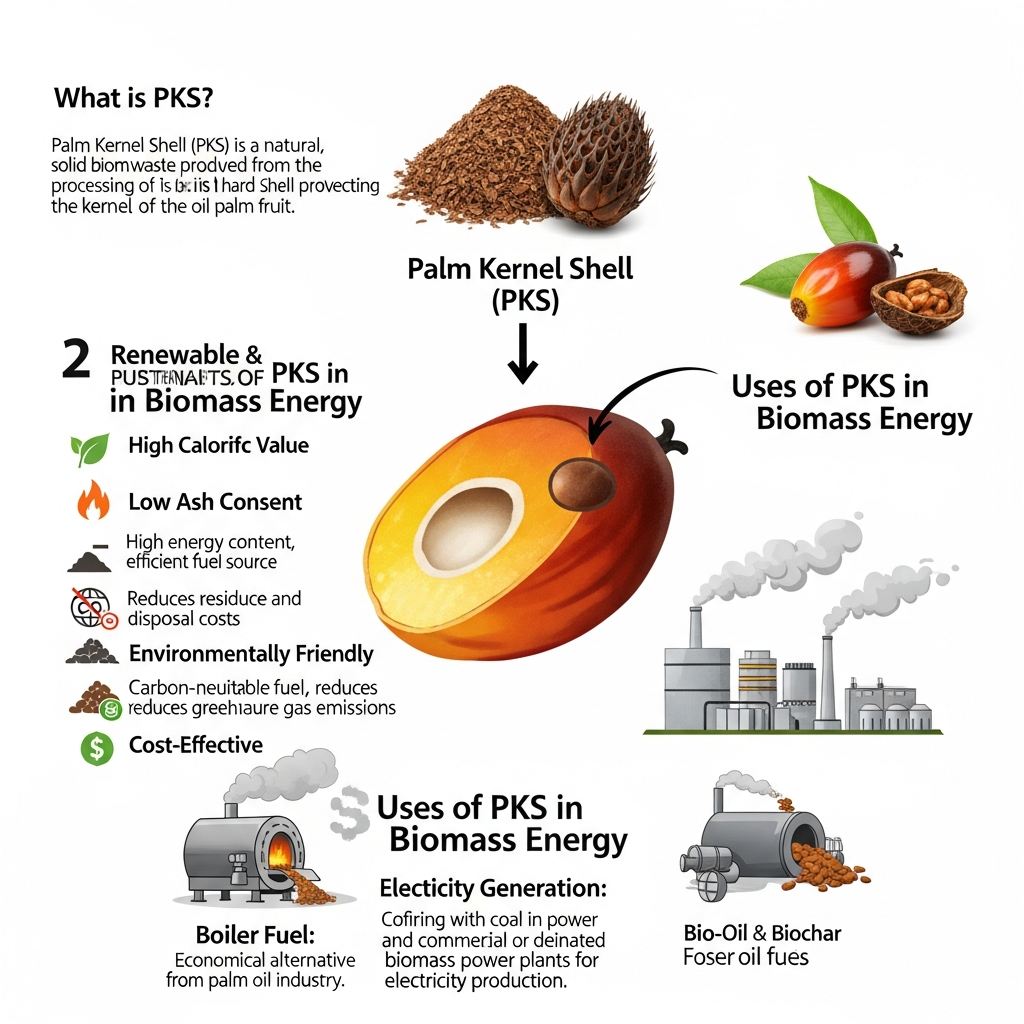
قشرة نواة النخيل (PKS) is a highly efficient, sustainable biomass fuel consisting of the rigid, fibrous fractions left over after palm oil extraction. Offering an impressive calorific value and extremely low moisture content, this eco-friendly byproduct serves as an ideal replacement for industrial coal and traditional fossil fuels.
Historically viewed as agricultural waste, PKS biomass has evolved into an internationally traded renewable energy fuel. After the palm fruit undergoes crushing to extract crude palm oil and palm kernel oil, these rigid shell fragments remain as a highly valuable residue. Rather than being discarded, these shells offer exceptional density, remarkably low moisture, and superior energy yields.
Companies sourcing this material often look for top-tier قشرة نواة النخيل suppliers to guarantee optimal combustion performance and minimal boiler fouling. The intrinsic properties of the shell make it naturally resistant to rapid decomposition, which greatly simplifies long-term bulk storage.
According to a comprehensive study published by ساينس دايركت, utilizing agricultural biomass residues plays a vital role in advancing global circular economy models. By capturing energy from what was once waste, industries are actively participating in sustainable, closed-loop production cycles.
The Extraction and Production Process
The journey of this biomass begins at the palm oil mill. Once fresh fruit bunches (FFB) arrive from the plantations, they are sterilized and threshed to separate the fruit from the bunch. The extracted fruits are then pressed to yield crude palm oil, leaving behind a mixture of fiber and palm nuts.
These nuts are subsequently cracked to retrieve the valuable palm kernel inside. The shattered outer casings that remain are the actual shells. Because this separation process uses purely mechanical crushing and high-pressure steam, the resulting biomass is completely free of harmful chemical additives.
This natural, chemical-free processing ensures that when the biomass is eventually burned for energy, it does not release synthetic toxins into the atmosphere, further solidifying its status as a premium green energy source.
Why Palm Kernel Shell is a Powerful Biomass Energy Source
High Calorific Value and Thermal Efficiency
When it comes to raw energy output, قشرة نواة النخيل delivers an outstanding energy-to-weight ratio. The high heating value ensures that industrial boilers reach optimal operating temperatures quickly and maintain them consistently. This predictability is crucial for facilities running continuous 24/7 manufacturing processes.
Unlike loose agricultural waste, such as straw or husks, the natural density of these shells translates to significantly longer burn times. Consequently, facilities require less physical volume of fuel to achieve their target energy output, ultimately reducing storage footprint and feeding rates.
Exceptionally Low Ash and Moisture Content
Excessive moisture is the absolute enemy of combustion efficiency. Fortunately, this shell material naturally contains low moisture levels, typically ranging between 15% and 20% when properly processed. This guarantees a higher net calorific value during active burning, meaning more heat is generated per ton of fuel.
Additionally, the minimal ash content—usually remaining under 3%—significantly reduces maintenance downtime. Plant operators spend less time cleaning boiler grates and handling hazardous ash disposal, allowing for continuous, profitable energy generation with fewer operational interruptions.
7 Key Benefits of Using Palm Kernel Shell
Transitioning to biomass fuel requires careful consideration, but the advantages are undeniable. Here are seven undeniable benefits of integrating this powerful fuel into your operations:
- High Calorific Yield: Offers up to 4,200 kcal/kg, competing directly with fossil fuels and easily meeting stringent industrial heating requirements.
- Cost-Effective Energy: Drastically lowers fuel procurement costs compared to imported coal, natural gas, or refined diesel fuels.
- Eco-Friendly and Renewable: Utilizes organic palm oil waste, keeping it out of landfills while significantly reducing net greenhouse gas emissions.
- Low Sulfur Content: Emits negligible sulfur dioxide (SO2), helping facilities easily meet and exceed strict 2026 environmental regulations.
- Easy Handling and Storage: The dense, uniform nature of the shells prevents rapid decomposition, minimizes dust, and simplifies complex logistics.
- Minimal Boiler Maintenance: Low ash and alkali generation preserves boiler health, preventing slagging and extending the operational lifespan of industrial equipment.
- Readily Available Supply: With massive palm oil industries centered in Southeast Asia, the global supply chain remains highly robust, scalable, and dependable year-round.

Common Industrial Uses of Palm Kernel Shells
Fueling Modern Biomass Power Plants with Palm Kernel Shell
Dedicated power generation facilities are currently the largest consumers of this sustainable fuel. Co-firing قشرة نواة النخيل with traditional fuels allows older coal plants to instantly improve their environmental compliance without requiring complete infrastructure overhauls. This hybrid approach is a literal game-changer for energy producers.
ال وزارة الطاقة الأمريكية heavily promotes the rapid transition to sustainable biomass feedstocks to ensure long-term grid stability. Utilizing proven biomass options ensures that baseline power loads are met even when intermittent solar and wind generation fluctuate.
Cement Kilns and Industrial Boilers
Cement manufacturing requires immense, sustained, and extreme heat. By replacing standard fossil fuels with premium shell biomass, kilns maintain critical temperatures while slashing expensive carbon taxes. This strategy directly improves the profitability of heavily regulated construction material manufacturers.
Moreover, textile mills, large-scale food processing plants, and paper factories heavily utilize these shells in their steam boilers. The versatility of this fuel source makes it a universal solution for almost any industry requiring reliable, large-scale thermal energy generation.
Palm Kernel Shell vs. Other Biomass Fuels
To truly understand the value of this resource, we must compare it to alternative energy sources. The following table highlights why PKS consistently outperforms competing fuels in the current market landscape.
| Fuel Type | Gross Calorific Value (kcal/kg) | Moisture Content (%) | Ash Content (%) |
|---|---|---|---|
| قشرة نواة النخيل | 3,800 – 4,200 | 15 – 20 | 1 – 3 |
| حبيبات الخشب | 4,000 – 4,600 | 8 – 12 | 1 – 2 |
| Sub-bituminous Coal | 4,500 – 5,500 | 20 – 30 | 5 – 15 |
| Rice Husks | 3,000 – 3,500 | 10 – 15 | 15 – 20 |
This empirical data proves that قشرة نواة النخيل strikes the perfect, highly profitable balance. It provides high heat output akin to wood pellets but generally at a much lower market procurement price, while successfully avoiding the massive ash generation typically associated with coal and rice husks.
Global Market Trends and Shipping Logistics for 2026
The Shift from Fossil Fuels in Europe and Asia
As we navigate through 2026, the global energy paradigm has drastically shifted. Countries across the European Union and industrialized Asian nations like Japan and South Korea are aggressively phasing out coal. They are eagerly importing massive tonnages of renewable energy fuel to meet their stringent national climate pledges.
ال الوكالة الدولية للطاقة (IEA) consistently reports that solid biofuels are leading the industrial decarbonization charge. PKS calorific value metrics make it highly attractive for these nations, as it fits seamlessly into existing logistical frameworks originally designed for coal transportation.
Regulatory Support for Renewable Energy
Governments are no longer just encouraging green energy; they are actively and financially incentivizing it. Tax credits, carbon offset programs, and strict emission penalties have made burning fossil fuels a massive financial liability. Utilizing palm kernel shell pellets or raw shells helps corporations avoid massive regulatory fines.
Consequently, long-term procurement contracts for high-grade biomass are becoming highly competitive. Savvy facility managers are securing their supply chains now to guarantee stable, low-cost energy for the next decade.
International Shipping and Bulk Logistics
Moving millions of tons of biomass across the globe requires highly sophisticated maritime logistics. Fortunately, the infrastructure for exporting palm byproducts from Southeast Asia is incredibly mature and reliable. Bulk carrier vessels transport these shells efficiently across major shipping lanes.
Upon arrival at destination ports, the material is easily offloaded using standard grab cranes and conveyors. This logistical compatibility means importing nations do not need to invest millions in specialized, proprietary unloading equipment, further reducing the overall cost of energy transition.

Best Practices for Storage and Handling
Preventing Moisture Absorption
To fully maximize the Palm Kernel Shell calorific value, proper storage is absolutely mandatory. Although these shells are naturally dense and highly water-resistant compared to other biomass, prolonged exposure to heavy rain will degrade their combustion efficiency. Facilities must utilize covered stockpiles or completely enclosed silos.
Furthermore, rigorously managing the stockpile rotation ensures that older inventory is consumed first. This first-in, first-out (FIFO) inventory method guarantees that the biomass fuel remains fresh, perfectly dry, and ready for optimal firing at all times.
Mitigating Fire Hazards in Storage Silos
Safety should always be the absolute priority when handling large volumes of organic material. While قشرة نواة النخيل is far less prone to spontaneous combustion than highly volatile coal dust or fine wood dust, appropriate ventilation is still strictly required. Storing biomass in well-ventilated areas expertly prevents the dangerous buildup of heat from natural microbial activity.
Operators should routinely monitor internal stockpile temperatures using specialized thermal probes. Implementing these simple yet highly effective safety protocols protects both the expensive facility infrastructure and the structural integrity of the fuel itself.
The Environmental Impact and Sustainability Profile
Slashing the Global Carbon Footprint
Transitioning away from fossil fuels is no longer an optional corporate initiative; it is an urgent global mandate. Burning these agricultural shells is widely recognized and internationally certified as a strictly carbon-neutral process. This is a fundamental pillar of modern sustainable energy policy.
The carbon dioxide released during combustion precisely equals the exact amount actively absorbed by the palm tree during its natural growth cycle. As highlighted by the الرابطة العالمية للطاقة الحيوية, utilizing agricultural residues is essential for successfully meeting international climate targets.
Promoting a Circular Agricultural Economy
Zero-waste agriculture represents the absolute future of sustainable farming. By effectively monetizing palm waste, the global agricultural industry creates vital economic value from materials that were historically discarded or irresponsibly burned openly in fields.
This holistic philosophy extends far beyond just energy. In the broader palm oil ecosystem, refined products like RBD CP8 (used widely in premium cooking oil) and specialized nutritional supplements such as أملاح الكالسيوم للأحماض الدهنية لزيت النخيل for dairy cattle highlight the incredible versatility of the palm industry.
Additionally, for modern animal feed operations, many agricultural facilities pair shell biomass procurement with highly nutritious معصرة نواة النخيل أو وجبة جوز الهند. Farms focusing on sustainable horticulture often source جوز الهند. Every single element of the harvest is strategically utilized, powerfully promoting ecological balance and thriving rural economic development.
How to Source Premium Grade Palm Biomass
Quality control is absolutely paramount when you decide to buy palm kernel shell in massive bulk quantities. Discerning commercial buyers must rigorously verify the exact moisture levels, foreign matter content, and precise particle size before ever securing long-term contracts. Poor quality fuel inevitably leads to immediate operational headaches.
Highly reputable, industry-leading suppliers meticulously screen their raw materials to completely remove detrimental impurities like stones, residual fibers, and dangerous metal debris. Always exclusively partner with internationally certified distributors who actively prioritize sustainable harvesting, highly ethical labor practices, and fully transparent supply chains.

الأسئلة الشائعة (FAQ)
What is the average calorific value of Palm Kernel Shell?
The average calorific value strictly ranges from 3,800 to 4,200 kcal/kg, depending heavily on the precise moisture content. This impressively high thermal capacity makes it an excellent, highly energy-dense alternative to sub-bituminous coal for modern industrial boilers and global power plants.
Is burning palm shells bad for the environment?
No, burning these completely natural shells is widely considered a strictly carbon-neutral process. The CO2 emitted during active combustion is perfectly offset by the exact CO2 absorbed by the palm trees during their growth phase, significantly reducing overall atmospheric greenhouse gas emissions.
How does moisture content affect PKS performance?
High moisture content drastically reduces the overall combustion efficiency and net calorific value of any biomass. Premium grade shells maintain a moisture level strictly below 20%, ensuring rapid ignition, sustained high operating temperatures, and flawlessly optimal boiler performance.
Can these shells be co-fired with traditional coal?
Yes, co-firing is an incredibly effective industrial transition strategy. Many massive power plants intelligently blend this specific biomass with coal to immediately reduce their carbon footprint, dramatically lower toxic sulfur emissions, and transition toward greener operations without requiring entirely new infrastructure.
Where can I buy high-quality PKS in bulk?
You can seamlessly source premium grade shells directly from established, heavily vetted Southeast Asian suppliers like Makmur Amanah Sejahtera. They ensure rigorous laboratory quality control, exceptionally low impurity levels, and highly reliable international shipping for demanding industrial-scale energy requirements.
خاتمة
In summary, transitioning to renewable energy has absolutely never been more critical for long-term corporate success and vital environmental preservation. By intelligently integrating قشرة نواة النخيل into your primary fuel procurement strategy, you instantly unlock unparalleled thermal efficiency, significantly lower daily operating costs, and champion true global environmental sustainability.
Whether you are rapidly upgrading a massive national power plant or strictly optimizing an industrial cement kiln, this dynamic biomass fuel is undeniably the ultimate energy solution for 2026. Stop relying on outdated, incredibly expensive fossil fuels and make the highly profitable, definitively eco-friendly switch to قشرة نواة النخيل اليوم.
Recommended Schema Markup
To maximize search engine visibility, comprehensively implement the following schema types on this page:
- Article Schema: To establish authorship authority and display rich informative snippets.
- FAQ Schema: To dominate the People Also Ask (PAA) boxes on Google SERPs using the provided Q&A section.
- Product Schema: To explicitly highlight the specific biomass offerings if linked directly to a WooCommerce or catalog product.
- Breadcrumb Schema: To massively improve site navigation indexing and click-through rates.
 Arabic
  English
  Indonesian
  Chinese