
Cocopeat: 10 Ultimate Secrets for Amazing Plants (2026)
جوز الهند is rapidly becoming the gold standard for gardeners and commercial growers seeking superior plant yields in 2026. If you are struggling with poor soil drainage, compacted roots, or inconsistent moisture levels, this incredible coconut byproduct offers the perfect solution. In this comprehensive guide, we will reveal the ultimate strategies to prepare, use, and master this highly sustainable growing medium.
Did you know that high-quality coconut coir dust can hold up to ten times its weight in water? This remarkable natural sponge ensures your plants stay deeply hydrated even during severe droughts or missed watering cycles. Furthermore, utilizing this renewable agricultural resource significantly reduces the severe environmental impact associated with traditional peat mining practices.
Whether you are a commercial greenhouse professional or an enthusiastic backyard hobbyist, integrating this medium into your workflow guarantees healthier, more resilient crops. By the end of this definitive article, you will understand exactly how to transform your growing operations safely, efficiently, and profitably.
What is Cocopeat? The Ultimate Growing Medium Defined
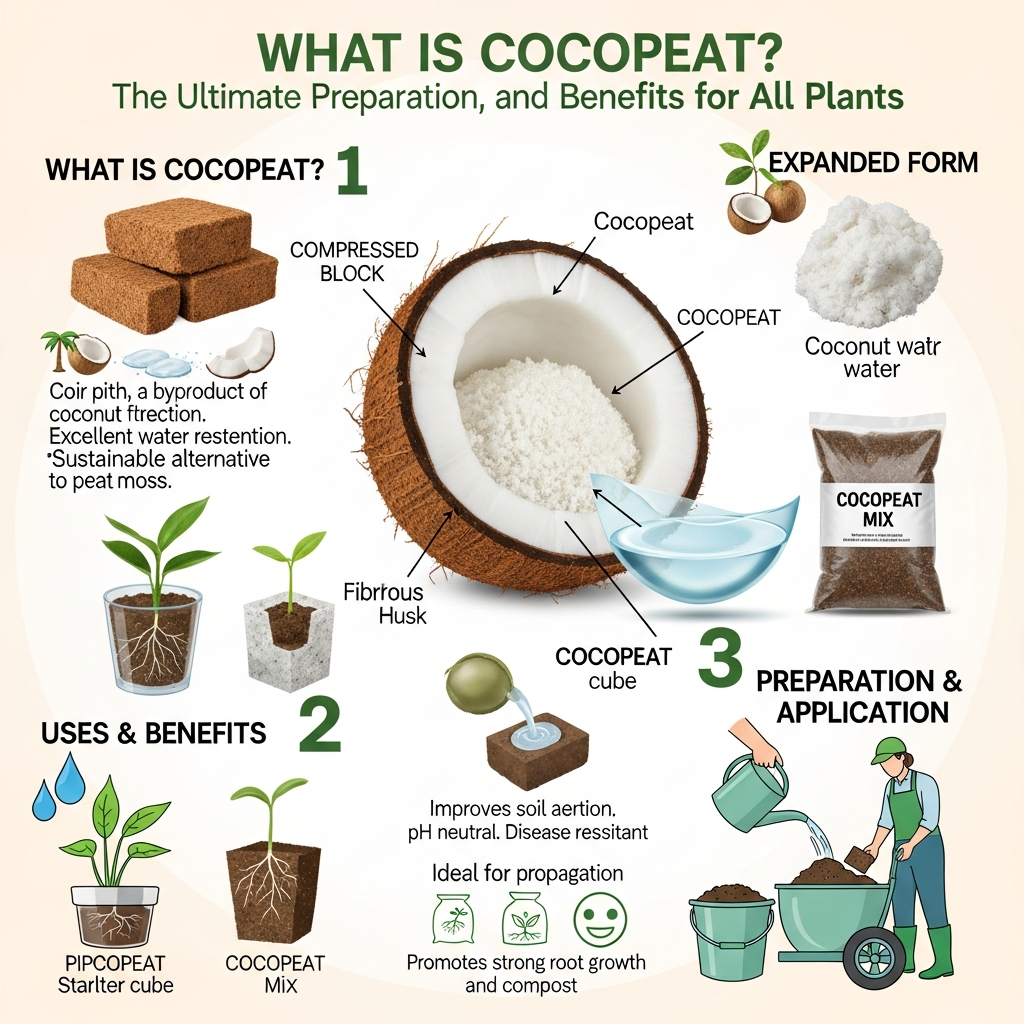
جوز الهند, also known widely as coir pith, is a 100% natural, organic growing medium extracted directly from coconut husks. It offers exceptional water retention, optimal root aeration, and a beautifully neutral pH, making it the perfect sustainable alternative to peat moss for hydroponics and precise seed starting.
Understanding what makes this specialized substrate so incredibly effective requires a brief look at its unique physical properties. This spongy material acts as a flawless environmental buffer, actively protecting fragile root systems from extreme daily temperature fluctuations. Additionally, its incredibly high porosity allows for vigorous oxygen exchange directly at the critical root zone.
بحسب منظمة الأغذية والزراعة (الفاو), sustainable agricultural practices utilizing organic substrates are absolutely vital for future global food security. This is exactly where premium coconut-derived agricultural products truly shine on the modern global stage.
10 Ultimate Secrets and Benefits of Cocopeat in Gardening
The outstanding benefits of this remarkable organic substance extend far beyond simple hydration and basic aeration. It naturally resists aggressive bacterial and fungal growth, drastically reducing the ongoing need for harmful, expensive chemical treatments. Moreover, it is completely free from annoying weed seeds and dangerous soil-borne pathogens upon proper processing.
- Exceptional Water Retention: Unlike heavy clay soils that drown roots or sandy soils that drain too quickly, this fibrous medium strikes the perfect moisture balance. It absorbs liquid moisture instantly and distributes it evenly.
- تهوية فائقة للجذور: Even when fully saturated with heavy water, cocopeat retains microscopic air pockets essential for robust root respiration. This significantly reduces physical stress on the plant.
- Optimal pH Level: Ranging cleanly between 5.5 and 6.8, this medium provides the ideal slightly acidic to neutral environment preferred by the vast majority of commercial plant species.
- قدرة عالية على تبادل الكاتيونات (CEC): It actively holds onto vital liquid nutrients and releases them exactly as demanding plant roots require them for peak development, effectively acting as a nutrient battery.
- Rich Lignin Content: It actively encourages the rapid proliferation of beneficial symbiotic bacteria while fiercely resisting rapid physical decomposition, ensuring it lasts multiple growing seasons.
For comprehensive agricultural setups aiming for maximum holistic efficiency, combining high-quality coir substrates with قشرة نواة النخيل for reliable biomass energy creates a perfectly circular, deeply sustainable farm system. This powerful industrial synergy is actively revolutionizing commercial farming operations worldwide.
Step-by-Step: How to Prepare Cocopeat Bricks Properly
Properly preparing your heavily compressed blocks is arguably the most crucial step for ensuring robust, uninterrupted plant health. Raw, unwashed coir often contains naturally high levels of sodium and potassium salts heavily absorbed from coastal tropical growing environments. Therefore, thorough deep washing and chemical buffering are absolutely mandatory before any planting occurs.
Hydrating and Deep Washing Compressed Blocks
Compressed agricultural blocks are incredibly dense and strictly require substantial water volume to physically expand correctly. Simply place your hard block in a large, sanitized container and slowly add warm, fresh water. A standard 5-kilogram block typically absorbs up to five gallons of water, instantly expanding up to six times its original compressed volume.
Once fully expanded and loose, flush the damp material thoroughly with clean, filtered water. This critical initial washing process significantly lowers the Electrical Conductivity (EC), safely washing away free-floating sea salts that could otherwise aggressively burn tender seedling roots and severely stunt early vegetative growth.
The Crucial Chemical Buffering Process
Deep washing alone is simply not enough; chemical buffering is strictly required to permanently stabilize the CEC. Using a specialized, high-quality calcium-magnesium liquid solution safely displaces the deeply bound excess sodium ions rigidly attached to the microscopic coir fibers.
A recent comprehensive study published prominently on ساينس دايركت confirms that proper calcium-buffered coir increases active calcium uptake in complex hydroponic crops by an astonishing 25%. Without adequate buffering, the demanding substrate will aggressively absorb any calcium fertilizers you apply, locking them entirely away from your vulnerable plants.
Comparing Cocopeat vs. Peat Moss vs. Soil
To truly understand exactly why the global commercial horticultural industry is shifting so incredibly rapidly, let us compare cocopeat directly against traditional harvested peat moss. The profound, measurable differences in long-term root performance and global environmental impact are truly staggering.
| Key Feature | جوز الهند (ألياف جوز الهند) | Traditional Peat Moss |
|---|---|---|
| Sustainability Profile | 100% Renewable & Eco-Friendly | Aggressively depletes ancient bogs |
| Natural pH Level | 5.5 – 6.8 (Neutral to acidic) | 3.5 – 4.5 (Highly Acidic) |
| Water Absorption | Excellent, immediate absorption | Repels water aggressively when dry |
| Lifespan & Durability | 3 – 4 years before breaking down | 1 – 2 years before severely compacting |
| Pathogen Resistance | Naturally resistant to root diseases | Can harbor harmful fungi untreated |
As detailed clearly on Wikipedia’s comprehensive coir overview, the highly modern industrial extraction process has been refined significantly. This ongoing technological advancement consistently yields cleaner, dramatically more reliable agricultural grades than ever previously possible in history.
Top Agricultural Uses for Coconut Coir Dust
The vast, proven versatility of specialized coconut coir dust makes it absolutely indispensable across numerous highly competitive agricultural sectors. From high-tech indoor vertical farms to traditional outdoor market gardens, its brilliant practical applications are practically limitless.
Advanced Hydroponic Substrate Applications
This ultra-sterile substrate thoroughly dominates the global hydroponic industry due to its naturally neutral nature and incredible structural stability under intense pressure. It provides an absolutely flawless physical anchor for heavy, demanding root systems while allowing complex liquid nutrient solutions to flow freely and evenly.
Commercial greenhouse growers overwhelmingly prefer it for cultivating premium vine tomatoes, heavy cucumbers, and massive bell peppers. When actively managing large-scale livestock alongside integrated agriculture, utilizing coconut byproducts alongside وجبة جوز الهند as high-protein animal feed ensures every single part of the seasonal harvest is efficiently monetized.
Soil Amendment for Potted Plants
For high-end, luxury container gardening, expertly blending this magical medium with traditional potting soil totally prevents severe, root-crushing compaction over extended time. It effectively serves as an impeccable, long-lasting soil amendment for heavy clay soils in deep outdoor raised beds, dramatically improving necessary drainage and friability.
In complex commercial setups, utilizing advanced botanical extracts and highly refined oils like RBD CP8 within your broader agricultural operations creates massive secondary revenue streams. Simply mix your coir cleanly at a strict ratio of one part coir to two parts native soil for truly optimal, long-lasting growing results.
Advanced Tips for Maximizing Yields with Cocopeat
To explicitly maximize your lucrative harvest yields with this specific medium, never mistakenly treat it as a standalone organic fertilizer. While it holds and beautifully distributes liquid nutrients brilliantly, it strictly contains virtually negligible inherent nutritional value out of the bag. Always pair it deliberately with a precisely balanced liquid fertilizer regimen.
Furthermore, totally mastering your daily greenhouse watering schedule is critically essential for peak operational success. Because the very top visible layer of coir often deceptively appears completely dry even when the deeper bottom remains fully saturated, growers should actively lift their pots to accurately judge physical weight before adding water.
This incredibly simple, old-school technique completely prevents accidental, yield-destroying overwatering. For advanced, highly technical hydroponic nutrient strategies specifically tailored to coir, authoritative industry publications like Maximum Yield offer exceptional, field-proven expert guidance.
For exceptionally large, high-volume commercial nurseries, consistently sourcing premium agricultural grade جوز الهند directly from trusted, verified international manufacturers strictly guarantees vital structural consistency across thousands of subsequent, high-stakes crop cycles.
Environmental Impact: Why Cocopeat is Crucial in 2026
As the fragile global climate rapidly shifts, strict regional water conservation has forcefully become the primary operational focus for modern sustainable agriculture. Traditional farming methods sadly lose millions of gallons of precious water annually to rapid solar evaporation and exceptionally poor soil retention.
This functional, natural moisture reservoir acts specifically to drastically reduce toxic agricultural runoff and passionately preserve delicate localized water tables. Furthermore, intentionally repurposing the entire coconut husk actively prevents millions of tons of heavy agricultural waste from being burned or left to rot in massive, polluting coastal landfills.
When modern farming operations intelligently integrate this medium alongside advanced organic feeds like معصرة نواة النخيل for their demanding livestock, they achieve a beautifully balanced, ultra-low-emission ecosystem. When combined with high-energy livestock nutrition protocols using أملاح الكالسيوم للأحماض الدهنية لزيت النخيل, farmers achieve unprecedented operational efficiency and carbon reduction.
الأسئلة الشائعة (FAQ)
What are the main disadvantages of cocopeat?
The primary disadvantage of unwashed coir is its naturally high salt content resulting directly from its coastal origins. If not properly washed and chemically buffered with calcium and magnesium, it can trigger severe nutrient lockout. Serious growers must properly prepare it before planting to ensure complete safety.
Can I safely use 100% pure coir for my plants?
Yes, you can absolutely use 100% pure cocopeat for growing plants, particularly within highly controlled hydroponic drip systems. However, for traditional outdoor container gardening, experts highly recommend blending it with rich compost and porous perlite to provide long-term nutrition and greatly enhanced structural root support.
Does coconut coir naturally contain fertilizer nutrients?
No, it contains strictly negligible, trace amounts of essential macronutrients like nitrogen, phosphorus, and vital potassium. It must be viewed purely as an exceptional structural growing medium and brilliant moisture manager. Serious growers must always meticulously supplement with targeted, high-quality liquid or granular plant nutrition.
How long does a prepared coir block last in the garden?
A high-quality cocopeat substrate predictably degrades very slowly due to its exceptionally high natural structural lignin content. It can typically be aggressively reused effectively for three to four years in a standard garden or hydroponic setup before it eventually begins to break down and lose critical aeration properties.
Is it completely safe for starting highly delicate seeds?
Absolutely. Fine-grade coconut pith is widely considered by top horticultural professionals as one of the safest, most highly effective mediums for crucial seed starting. Its naturally sterile, anti-fungal properties strongly prevent devastating damping-off diseases, allowing delicate new roots to quickly penetrate without dangerous resistance.
Conclusion: Transforming Your Garden with Cocopeat
In conclusion, transitioning smoothly to high-quality جوز الهند is undoubtedly one of the most highly impactful, forward-thinking decisions you can safely make for your dedicated agricultural or home gardening endeavors in 2026. From its completely unparalleled water retention capabilities to its incredibly eco-friendly, industry-leading sustainability profile, it effortlessly outperforms outdated traditional soil.
It effectively renders environmentally damaging harvested peat moss entirely obsolete across absolutely every measurable modern performance metric. By strictly following the professional preparation, deep washing, and chemical buffering techniques clearly outlined in this definitive guide, you will safely unlock explosively fast plant growth and massively healthier root systems.
Embrace the incredibly exciting future of truly sustainable, high-performance modern farming today. Let premium cocopeat elevate your seasonal harvests, dramatically increase your overall crop yields, and help build a greener, more sustainable planet for future agricultural generations to thoroughly enjoy.
 Arabic
  English
  Indonesian
  Chinese