
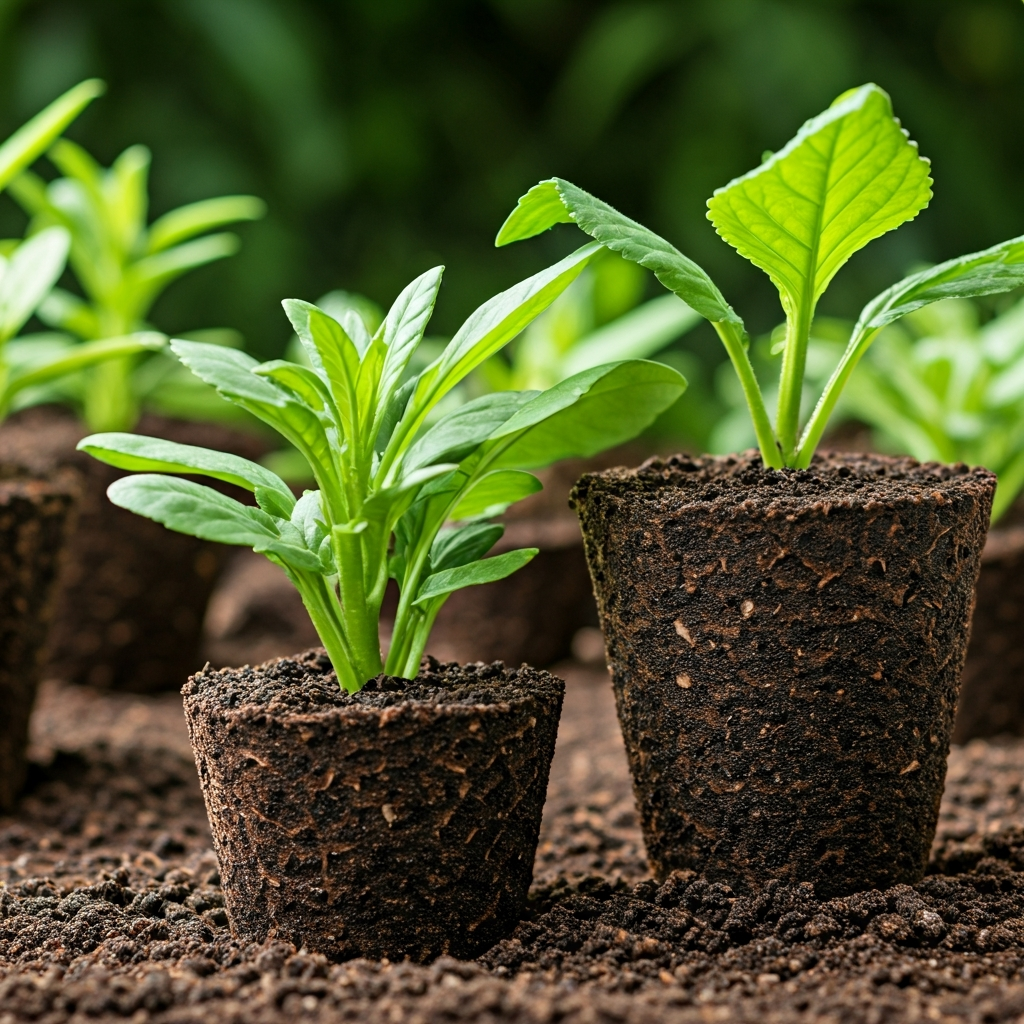
How to Prepare and Use Cocopeat: The Complete Guide for Thriving Plants
Learning how to prepare and use cocopeat correctly is the single most important step to unlocking explosive root growth and vibrant, healthy plants. Far too many gardeners use it straight from the block, leading to stunted growth and nutrient deficiencies. This definitive 2026 guide provides the exact method for turning a simple coconut brick into a powerhouse growing medium.
What is Cocopeat and Why is Preparation So Critical?
Cocopeat, also known as coco coir, is a 100% natural growing medium made from the fibrous husk of coconuts. It’s a sustainable byproduct of the coconut industry and a popular environmentally friendly alternative to peat moss. Its ability to hold up to 10 times its weight in water makes it a superior choice for everything from seed starting to hydroponics.
However, raw cocopeat is not ready for your plants. It naturally contains high levels of salts (sodium and potassium). If you plant directly into un-prepped cocopeat, these salts can lock out essential nutrients like calcium and magnesium, starving your plants. Proper preparation is the non-negotiable secret to success with this versatile medium.
How to Prepare Cocopeat From a Brick: A 3-Step Guide
Transforming a dense, dry brick into a ready-to-use substrate is a straightforward process. Following these steps ensures your plants get the best possible start. This section explains the fundamental method of how to prepare cocopeat for any gardening application.
Step 1: Rehydrating the Compressed Block
Your cocopeat will arrive as a highly compressed, dehydrated brick. The first task is to restore it to its fluffy, soil-like state.
- Place the Brick: Put your cocopeat brick in a large container, like a wheelbarrow or large bucket. Ensure the container is at least 5-7 times the volume of the brick.
- Add Water: Slowly add warm water, which speeds up the expansion process. A standard 5 kg (11 lb) brick generally requires 25-30 liters (6-8 gallons) of water.
- Wait and Fluff: Let the block soak for 20-30 minutes as it expands and breaks apart. Use a trowel or your hands to fluff the material, breaking up clumps until it has a uniform, moist consistency.
Step 2: Washing and Rinsing to Remove Excess Salts
This is a vital step to flush out the naturally occurring sodium that can harm your plants. Even cocopeat labeled as “washed” benefits from a rinse, so don’t skip this part of learning how to prepare and use cocopeat.
- Fill your container with the expanded cocopeat and add fresh water until it is fully saturated.
- Stir the mixture thoroughly, allowing the salts to dissolve into the water.
- Let it sit for 5-10 minutes, then drain the brownish water completely. A fabric pot with drainage is ideal for this.
- Repeat this rinsing process 2-3 times, or until the water runs mostly clear.
Step 3: Buffering Cocopeat (The Most Critical Step)
Buffering is the most crucial, and most often skipped, step. Scientific studies on cation exchange show that unbuffered coir has negatively charged sites that are naturally full of sodium and potassium.
Think of these sites as tiny magnets. If they remain full of sodium, they will grab any available calcium and magnesium you add later, starving your plants. Buffering uses a calcium-magnesium solution to knock the sodium off and pre-load the cocopeat with the good stuff. This is the key to mastering how to prepare and use cocopeat.
A Deeper Dive: How to Buffer Cocopeat Correctly
Do not skip this step, especially if you plan to use liquid fertilizers. It is the difference between thriving plants and struggling ones. Properly buffering is essential for anyone serious about using cocopeat for plants.
The Calcium-Magnesium Solution
To buffer, you need a Cal-Mag supplement, which is available at any garden store. If you don’t have one, you can use calcium nitrate and magnesium sulfate (Epsom salts).
- Standard Recipe: Mix 5 ml (1 teaspoon) of a commercial Cal-Mag supplement per gallon of water.
- DIY Recipe: Mix 5 grams of Calcium Nitrate and 3 grams of Epsom salt per gallon of water.
- Soaking: Saturate your rinsed cocopeat with this solution. Ensure every part of the medium is fully soaked.
- Waiting: Let the cocopeat soak in the solution for a minimum of 8 hours, or overnight for best results.
- Final Rinse (Optional): After buffering, some growers give the cocopeat one final rinse with pH-balanced water. For most applications, this is not necessary. The cocopeat is now charged and ready.
Creating Your Perfect Potting Mix with Cocopeat
While buffered cocopeat is an excellent standalone medium, it performs even better when mixed with other amendments to improve aeration and add nutrients. This knowledge is a core part of understanding how to prepare and use cocopeat effectively.
Amending for Optimal Aeration and Drainage
Cocopeat holds a lot of water, so amending it is key to prevent waterlogging and provide oxygen to the roots. As explained by university extension programs, the physical properties of a mix are critical for root health.
- Perlite: The most common amendment. It is a lightweight volcanic glass that dramatically improves aeration and drainage. A typical ratio is 70% cocopeat to 30% perlite.
- Vermiculite: Holds more water than perlite while still adding some aeration. A 70/15/15 mix of cocopeat, perlite, and vermiculite is great for moisture-loving plants.
- Pumice: A heavier alternative to perlite that provides excellent, long-lasting structure and aeration.
- Organic Matter: For a nutrient-rich blend, consider adding worm castings or high-quality compost. Other inputs like وجبة جوز الهند أو معصرة نواة النخيل can also be incorporated as part of a soil-building strategy.
After you have perfected your soil mix, ensure you are starting with a reliable base product. Many gardeners who master this process get consistent results by using high-grade جوز الهند for their projects.
Cocopeat vs. Peat Moss vs. Soil: A Head-to-Head Comparison
Understanding the differences between these media helps you make the best choice for your garden. While traditional soil has its place, soilless media offer unique advantages in controlled environments. Many growers now know how to prepare cocopeat to replace peat moss entirely.
| ميزة | جوز الهند | الخث | Topsoil |
|---|---|---|---|
| الاستدامة | عالي (منتج ثانوي متجدد) | Low (Harvested from bogs) | عامل |
| احتباس الماء | ممتاز | ممتاز | Good (Varies by type) |
| مستوى الرقم الهيدروجيني | 5.8 – 6.8 (Ideal for most plants) | 3.5 – 4.5 (Highly acidic) | 6.0 – 7.5 (Variable) |
| قابلية التبلل | Hydrophilic (Re-wets easily) | Hydrophobic (Hard to re-wet when dry) | Hydrophilic |
| المحتوى الغذائي | Inert (Requires Fertilizing) | Inert (Requires Fertilizing) | Contains some nutrients |
Common Mistakes When Learning How to Prepare and Use Cocopeat
Even experienced gardeners can make errors. Avoiding these common pitfalls is just as important as knowing the right steps for preparing and using cocopeat.
- Skipping the Buffering Step: As emphasized, this is the #1 mistake. It almost certainly leads to Calcium and Magnesium deficiencies, manifesting as yellowing leaves (chlorosis) and stunted growth.
- Overwatering: Because cocopeat holds so much water, it is easy to overdo it. Always check the moisture level before watering by feeling the weight of the pot. Ensure your pots have excellent drainage.
- Forgetting to Fertilize: Cocopeat is inert and has no nutritional value. You must provide 100% of the plant’s needs via a proper fertilizing schedule. This can be through liquid fertilizers or pre-amending the mix with nutrient sources like high-quality compost.
- Using the Wrong Cocopeat Type: Using coarse coco chips for seed starting will cause poor germination. Using fine coco pith in certain hydroponic systems can clog pumps. Always match the grade of coir to your specific application.
مكمور أمانة سجيتيرا provides high-quality palm products such as Palm Kernel Expeller, قشرة نواة النخيل, Crude Palm Oil, Palm Kernel Oil, etc. Kindly contact us at WhatsApp +6282140002198 أو راسلنا عبر البريد الإلكتروني على admin@makmuramanah.co.id.
الأسئلة الشائعة حول جوز الهند
هل جوز الهند مفيد لجميع النباتات؟
Cocopeat is excellent for most plants, from vegetables to houseplants, due to its neutral pH and superior aeration. However, succulents and cacti that need very dry conditions may prefer a grittier, less water-retentive mix with more sand or pumice.
How long does it take to prepare cocopeat?
Active preparation time is short. Rehydrating takes about 30 minutes, and rinsing another 20 minutes. The longest part is the passive soaking time for buffering, which should be at least 8 hours. Plan to start preparing cocopeat the day before you need it.
Do you really need to wash and buffer cocopeat?
Yes, absolutely. While pre-washed and buffered cocopeat is available at a premium, it is essential if you start with a raw brick. Washing removes harmful salts, and buffering prevents the nutrient lockout that can kill or stunt your plants. These are non-negotiable steps.
What are the main disadvantages of using cocopeat?
The main drawbacks are its inert nature, requiring you to provide all nutrients, and the necessary prep work (rinsing, buffering). Compared to potting soil, it’s more hands-on. Also, its high water retention can lead to root rot if not amended for better drainage.
Can I reuse my cocopeat?
Yes, cocopeat is reusable for 2-3 growing cycles. To reuse it, first remove all old roots and plant debris. Then, it is essential to wash it thoroughly to flush out any built-up salts from fertilizing. Finally, you must re-buffer it with a Cal-Mag solution.
Your Key to Cocopeat Success in 2026
You now have the complete blueprint to transform a block of coconut husk into a high-performance growing medium. By following these steps—rehydrating, washing, and especially buffering—you will avoid common gardening problems and unlock incredible growth. This process is the cornerstone of how to prepare and use cocopeat successfully.
Mastering this technique is a game-changer, giving you total control over your plant’s environment and nutrition. It’s a sustainable, reliable, and incredibly effective tool for any modern gardener. Embrace this method, and your thriving plants will reward you for it.
 Arabic
  English
  Indonesian
  Chinese