
Approved GACC Palm Kernel Expeller: High-Quality Indonesian PKE Exporter & Price Guide for the China Market
Approved GACC Palm Kernel Expeller serves as a vital dietary component for modern dairy and beef cattle production systems across Mainland China. As global demand for sustainable ruminant feed escalates in 2026, securing certified plant-based protein sources has become an operational imperative for agricultural feed importers.
Navigating customs clearance processes under the General Administration of Customs of the People’s Republic of China requires strict regulatory compliance. Importers must align with registered Indonesian processing facilities to ensure uninterrupted port entry, consistent feed quality, and competitive bulk pricing.
This comprehensive guide details technical specifications, market pricing trends, quarantine regulations, and procurement strategies necessary to source high-grade palm by-products directly from verified Indonesian manufacturers.
What Is Approved GACC Palm Kernel Expeller?
Approved GACC Palm Kernel Expeller is a high-protein ruminant feed ingredient produced in Indonesia via mechanical extraction of crude palm kernel oil and registered under China’s General Administration of Customs (GACC). It meets strict biosecurity standards, offering 15–17% crude protein and low moisture content for safe import clearance.
According to research published by ساينس دايركت, this plant protein source features a unique fiber profile that promotes optimal rumen digestion in livestock. The mechanical pressing process leaves valuable residual lipids that increase overall caloric density.
To qualify for entry into Chinese ports, shipments must meet stringent physical and chemical standards established under GACC Decree 248 and Decree 249. Quality parameter testing occurs prior to vessel loading at Indonesian export terminals.
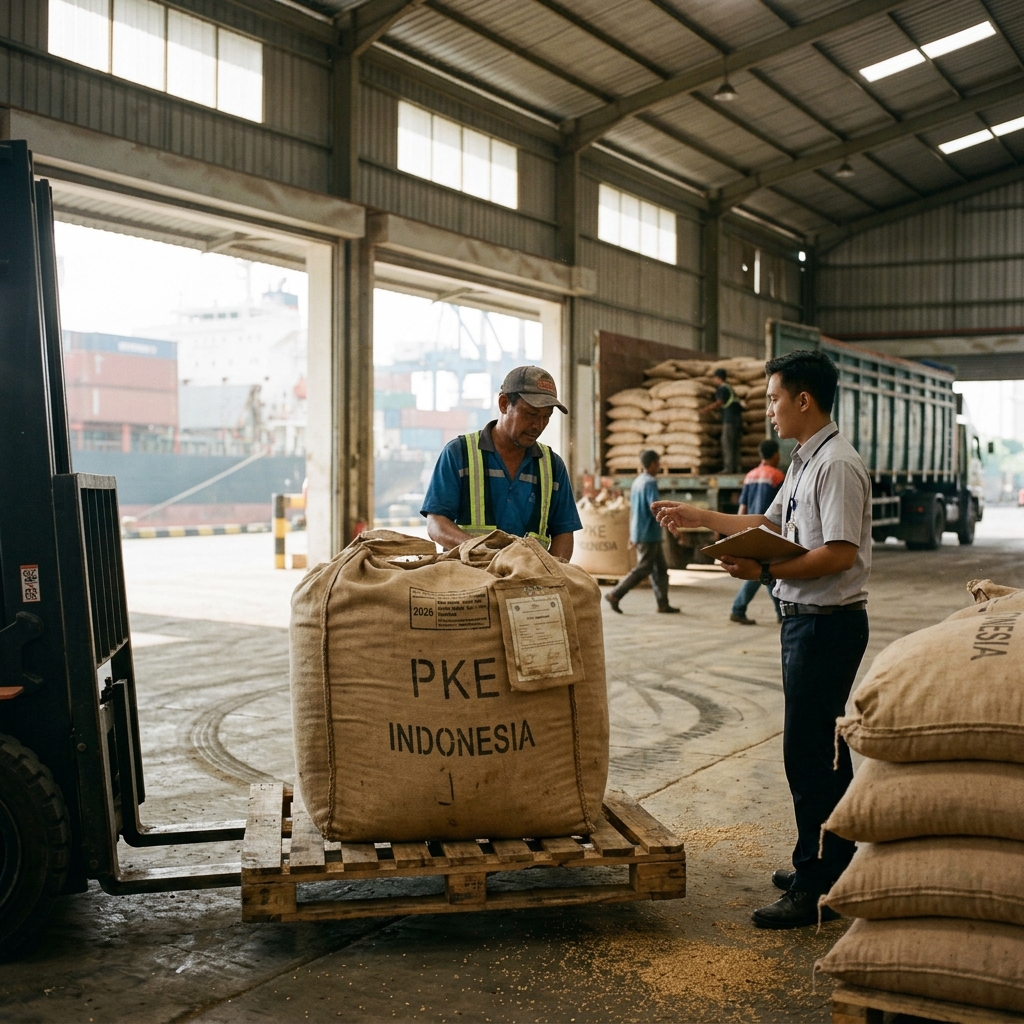
[Image: High-grade pelletized palm kernel expeller stored in clean bulk warehouse ready for export shipment]
Physical and Chemical Specifications for Approved GACC Palm Kernel Expeller
The standard chemical breakdown for premium export-grade material includes verifiable metrics designed to comply with standard import quotas. Sourcing crude protein animal feed with low ash content ensures maximum metabolic performance for commercial livestock operations.
The standard chemical breakdown for premium export-grade material includes the following verifiable metrics:
| المعلمة | درجة تصدير قياسية | GACC Threshold (China) |
|---|---|---|
| البروتين الخام (CP) | 15.0% – 17.5% | الحد الأدنى 15.0% |
| الألياف الخام (CF) | 16.0% – 18.0% | Max 18.0% |
| Fat / Crude Oil Content | 6.0% – 8.0% | الحد الأقصى 10.0% |
| محتوى الرطوبة | 8.0% – 10.0% | الحد الأقصى 12.0% |
| Aflatoxin B1 | < 10 ppb | Max 20 ppb |
| Total Ash | 3.5% – 5.0% | Max 6.0% |
Furthermore, maintaining moisture levels below 10% prevents mold growth during maritime transport across South China Sea shipping lanes. Low moisture content extends product stability during storage at bulk port terminals in Ningbo, Qingdao, and Tianjin.
Ruminant Nutritional Profile and Digestibility
Formulators rely on Approved GACC Palm Kernel Expeller due to its balanced combination of neutral detergent fiber (NDF) and residual lipids. Nutritionists categorize PKE as an intermediate feed ingredient that safely bridges energy and protein requirements without triggering ruminal acidosis.
Additionally, the gradual fermentation rate of its hemicellulose fraction provides sustained energy release for high-yielding dairy cows. The منظمة الأغذية والزراعة (الفاو) highlights PKE as an effective substitute for costlier grain ingredients like maize and soybean meal.
When reviewing product options, buyers should consider exploring our verified Approved GACC Palm Kernel Expeller product page to inspect full factory certification parameters and technical datasheets.
China Import Regulations and GACC Registration Protocol for 2026
ال General Administration of Customs mandates that all foreign processing plants obtain explicit approval prior to shipping feed ingredients into China. Importers cannot clear shipments originating from unlisted processing units.
Adhering to the formal GACC registration protocol requires absolute traceability across the entire agricultural manufacturing chain. Indonesian processors undergo routine facility inspections by national quarantine agencies to retain their valid GACC registration numbers.
To successfully pass border quarantine inspections in 2026, every consignment must present exact documentation:
- شهادة الصحة النباتية: Issued by the Indonesian Agricultural Quarantine Agency (Barantan).
- Certificate of Origin (Form E): Enables preferential tariff treatment under ASEAN-China trade agreements.
- شهادة التحليل (COA): Validating protein, heavy metals, and micro-toxin limits.
- رقم تسجيل GACC: Printed clearly on all bills of lading, packaging tags, and customs entry declarations.
Heat Treatment and Biosecurity Compliance
In contrast to uncertified suppliers, an Approved GACC Palm Kernel Expeller manufacturer guarantees that shipments undergo heat processing to eradicate pathogenic microorganisms before export packaging.
Biosecurity protocols at certified facilities eliminate risks associated with Salmonella, Enterobacteriaceae, and fungal spores. This rigorous thermal processing maintains feed integrity while complying with Chinese biosecurity requirements.
Why Indonesian PKE Exporters Lead the Global Feed Market
Indonesia remains the world’s primary origin for palm-based feed commodities. Partnering with a reliable Indonesian PKE exporter allows overseas buyers to secure continuous supply commitments backed by robust manufacturing infrastructure.
Moreover, strategic port placement near major sea lanes minimizes transit times to key ocean destinations in East Asia. Modern loading ports in Sumatra and Kalimantan handle large bulk carriers efficiently, reducing demurrage risks for overseas buyers.
Indonesian exporters also process complementary feed components that help feed mills optimize custom ration formulas. Importers frequently combine PKE purchases with orders for وجبة جوز الهند to create balanced ruminant diets.
Additionally, agricultural operations sourcing horticultural substrates can integrate bulk shipments of جوز الهند into their ocean freight container logistics to streamline overall procurement costs.
[Image: Large ocean vessel loading agricultural feed products at an Indonesian seaport loading terminal]
Production Capacity and Supply Chain Security
Indonesian processing mills generate millions of metric tons of palm kernel co-products annually. This massive output safeguards international buyers against supply interruptions caused by localized regional weather variations.
Furthermore, integrated supply chains from palm plantations straight to coastal export terminals prevent cross-contamination with heavy metals or unauthorized animal by-products.
Advanced Quality Control Protocols and Energy Additives
Leading exporters utilize automated pelleting systems, magnetic separators, and multi-stage screening technology to remove foreign materials. Premium processors maintain continuous quality monitoring protocols verified by third-party inspection firms like SGS or Intertek.
Besides feed meal, industrial livestock operators rely on specialized dietary fats such as أملاح الكالسيوم للأحماض الدهنية لزيت النخيل to boost energy density during peak lactation cycles.
[Video Embed Suggestion: Automated quality inspection and bulk loading of Approved GACC Palm Kernel Expeller in Sumatra, Indonesia]
2026 Price Guide and Market Dynamics for Approved GACC Palm Kernel Expeller
Understanding market pricing structures helps purchasing managers optimize procurement timing. The overall palm kernel meal price fluctuates based on crude palm oil (CPO) production rates, ocean freight trends, and global substitute protein prices.
Industry updates monitored by FeedNavigator indicate that global feed commodity valuations in 2026 remain responsive to energy cost shifts and trans-regional freight capacity.
Evaluating the high quality palm kernel expeller bulk price 2026 benchmarks across various delivery terms allows buyers to choose the most cost-effective option:
- FOB (Free on Board): Covers product cost plus loading onto buyer-designated vessels at Indonesian ports ($180 – $220 / MT average range).
- CFR (Cost and Freight): Includes sea transportation cost to Chinese destination ports such as Qingdao or Nantong ($215 – $255 / MT).
- CIF (Cost, Insurance, and Freight): Offers full coverage including marine cargo insurance through final discharge port clearance ($220 – $260 / MT).
However, spot market purchasing often yields higher per-ton costs than long-term annual supply contracts. Securing multi-month delivery schedules with established exporters remains the most effective strategy to lock in stable feed pricing.
[Image: Financial price trend chart displaying market pricing for global feed ingredients and palm co-products in 2026]
Step-by-Step Guide for Importing Indonesian PKE to China Market
Successfully importing Indonesian PKE to China market locations requires systematic execution to prevent customs holds and unexpected port demurrage fees. Buyers should adhere to a structured procurement workflow:
- Verify Manufacturer GACC Clearance: Confirm that the exporter’s facility code appears on the official Chinese customs registry portal to identify a legitimate GACC certified palm kernel expeller supplier Indonesia entity.
- Contract Formalization: Draft sales contracts specifying moisture limits, minimum protein percentage, maximum ash content, and strict delivery timelines.
- الفحص قبل الشحن: Require an independent lab test report covering microbial counts, heavy metals, and pesticide residues prior to vessel departure.
- Customs Clearance Preparation: Ensure all original documents, including the phytosanitary certificate and ASEAN-China Form E, match manifest details precisely.
- Port Discharge & Sampling: Prepare domestic logistics for immediate transport from port storage silos to regional feed compounding plants.
Additionally, industrial energy facilities located near agricultural processing zones often procure biomass energy materials like قشرة نواة النخيل alongside animal feed shipments to consolidate sea freight costs.
Food processing complexes may also import refined vegetable oils such as RBD CP8 to maximize total cargo capacity when shipping multi-product consignments.
مكمور أمانة سجيتيرا نُقدّم منتجات نخيل عالية الجودة مثل عصارة نواة النخيل، وقشرة نواة النخيل، وزيت النخيل الخام، وزيت نواة النخيل، وغيرها. يُرجى التواصل معنا عبر واتساب. +6282140002198 أو راسلنا عبر البريد الإلكتروني على admin@makmuramanah.co.id.
الأسئلة الشائعة
What is Approved GACC Palm Kernel Expeller?
Approved GACC Palm Kernel Expeller is high-protein ruminant feed produced in Indonesia from oil palm kernels by factories officially registered with China’s General Administration of Customs. It complies with strict import safety standards regarding protein content, low moisture, and absence of chemical contaminants.
How to import PKE from Indonesia to China?
To import PKE into China, secure a contract with a GACC-certified Indonesian exporter, ensure compliance with GACC Decree 248/249, obtain a Phytosanitary Certificate and Form E Certificate of Origin, and complete quarantine sampling upon arrival at designated Chinese bulk ports.
What is the current market price of Indonesian PKE?
In 2026, FOB prices for Indonesian Palm Kernel Expeller generally range between $180 and $220 per metric ton. CFR/CIF prices to major Chinese ports range from $215 to $260 per metric ton depending on shipping freight rates, order volume, and packaging format (bulk vs. jumbo bags).
Why is GACC registration required for importing feed to China?
GACC registration ensures that overseas feed processing facilities adhere to Chinese food safety standards, preventing biosecurity risks, heavy metal contamination, and pathogenic outbreaks. Unregistered facilities cannot pass Chinese customs clearance.
What are the nutritional benefits of PKE for livestock?
Palm Kernel Expeller offers high fiber digestible energy, 15-17% crude protein, and essential fatty acids. It aids ruminal health in dairy and beef cattle while serving as a cost-effective alternative to corn and soybean meal rations.
[Image: Diagram outlining the complete export supply chain for GACC certified palm feed products]
Conclusion: Securing Your Supply of Approved GACC Palm Kernel Expeller
Sourcing high-grade ruminant feed ingredients requires transparent operational protocols, strict regulatory alignment, and efficient logistics execution. Partnering with qualified processing partners guarantees that your business maintains compliant cross-border supply chains throughout 2026.
By establishing long-term procurement structures for Approved GACC Palm Kernel Expeller, livestock producers and commercial feed mills across China can effectively hedge against market volatility while optimizing animal nutrition performance.
 Arabic
  English
  Indonesian
  Chinese