
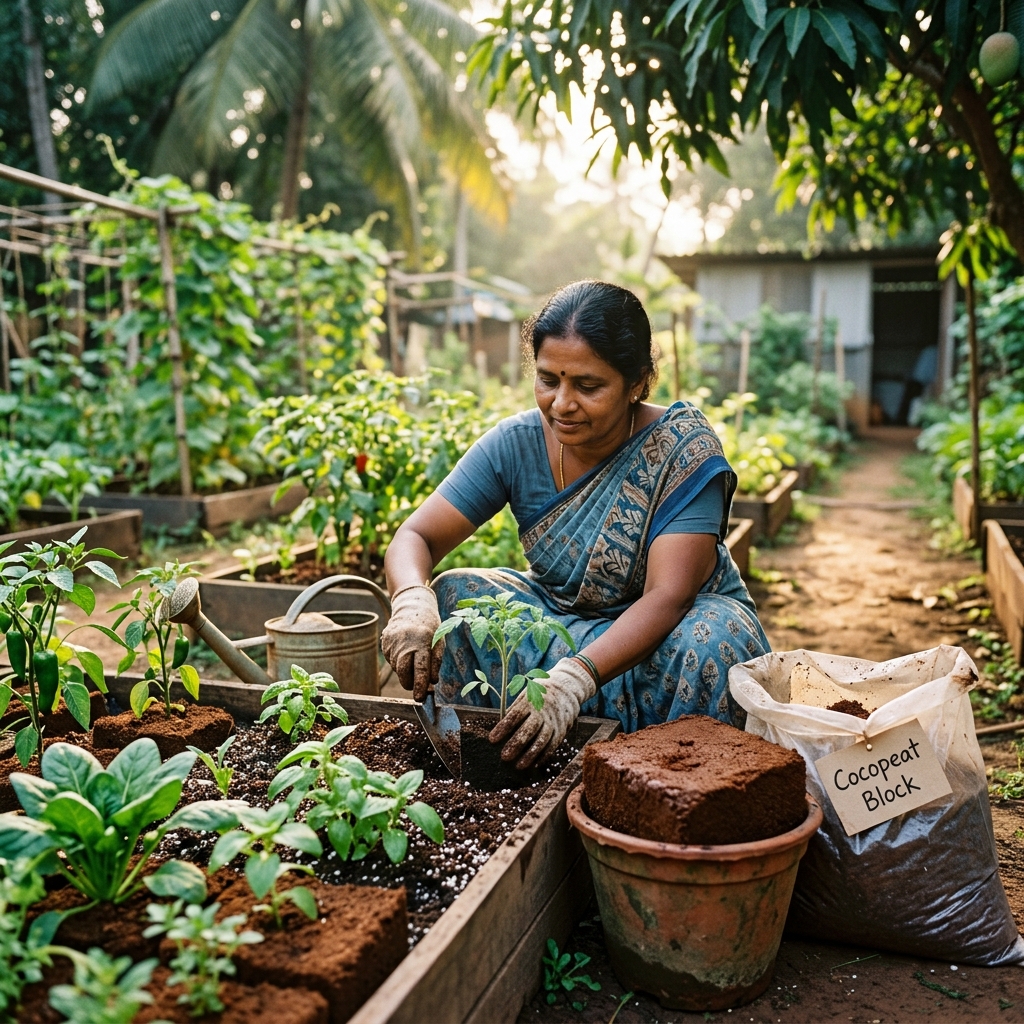
Unlocking healthy root growth begins when you choose جوز الهند for your indoor and outdoor gardening systems. Modern horticulturists, commercial greenhouses, and urban gardeners are shifting away from traditional dirt in favor of eco-friendly growing media. As global agricultural practices prioritize sustainability and resource efficiency in 2026, understanding how to utilize coconut coir derivatives effectively is critical for maximizing foliage vitality and crop yields.
Traditional topsoil frequently suffers from compaction, poor drainage, unpredictable pH fluctuations, and soil-borne pathogens. According to research from the منظمة الأغذية والزراعة (الفاو), soil degradation impacts over 30% of global arable land, forcing growers to look for resilient, renewable growing substrates. Soil amendments derived from natural agricultural byproducts provide an ideal environment for roots to thrive without depleting vulnerable natural ecosystems like peat bogs.
What is Cocopeat and How Is It Produced?
جوز الهند is an organic, biodegradable material extracted during the industrial processing of coconut husks. Historically treated as an agricultural waste product, this soft dust component is cleaned, dried, processed, and compressed into various formats such as bricks, blocks, and loose bags. Its unique structural matrix gives it remarkable physical qualities that outperform conventional growing substrates.
As commercial interest in sustainable agriculture grows, growers rely heavily on standardized coir coir substrate production to maintain uniform moisture levels and crop quality. Raw husks undergo rigorous refining processes before becoming ready for indoor or field use.
The Manufacturing Process of Coconut Coir Substrates
The manufacturing process begins by soaking raw coconut husks in water to soften the tough outer fibers. Once separated, the coarse long fibers are harvested for industrial uses like ropes and mats, leaving behind the fine cellular dust known as coir pith. This material undergoes thorough washing to leach out high levels of natural sodium and potassium salts.
After washing, the coir dust is sun-dried until moisture levels drop below 18%. Quality manufacturers perform a crucial stage known as buffering, where calcium nitrate treats the substrate to balance electrical conductivity (EC). Finally, the material is compressed at high pressure into lightweight blocks, making transportation efficient and cost-effective across global markets.
Key Physical Properties of Coconut Media
The physical composition of coconut coir substrates offers distinct advantages for plant establishment. Its cellular structure functions like a micro-sponge, absorbing liquids quickly while maintaining interstitial air spaces necessary for gas exchange around delicate roots.
- High Porosity: Provides air-filled porosity between 10% and 22% even when fully saturated.
- pH Neutrality: Maintains a naturally stable pH range between 5.8 and 6.5, ideal for plant nutrient uptake.
- Expansion Rate: Hydrated blocks exhibit a cocopeat block expansion ratio of 5 to 7 times dry volume.
- Cation Exchange Capacity (CEC): Exhibits a high CEC rating of 40 to 100 meq/100g, holding essential cations securely.
7 Ultimate Benefits of Using Cocopeat in Modern Gardening
Modern growers rely on natural coconut fiber substrates to optimize environmental control and root health. Below are the seven key benefits of incorporating this natural substrate into your regular garden routine.
- Exceptional Water Retention Capacity: Holds up to 8 to 10 times its own dry weight in water, retaining moisture evenly across root zones without creating waterlogged conditions.
- تهوية فائقة للجذور: Prevents soil compaction by preserving capillary pore spaces, delivering oxygen directly to delicate root tips to accelerate plant growth.
- Eco-Friendly Peat Moss Alternative: Unlike peat moss harvested from carbon-rich peat bogs that take centuries to recover, coconut coir is a rapidly renewable agricultural byproduct. A study published in ساينس دايركت highlights coir substrates as one of the most sustainable alternatives for global horticulture.
- Naturally Pathogen and Weed Free: Properly processed material contains zero weed seeds, parasitic nematodes, or soil-borne pathogens like بيثيوم و الفيوزاريوم.
- Reusable and Durable Structure: High lignin content slows down biological decomposition, allowing growers to wash, sterilize, and reuse the medium for up to 4 to 5 years.
- Neutral and Stable pH Range: Requires fewer lime or sulfur additions compared to naturally acidic sphagnum peat moss.
- Excellent Buffer Against Thermal Stress: Insulates subterranean root systems against extreme outdoor temperature shifts during intense summer heatwaves.
Cocopeat vs Soil: Is Cocopeat Better Than Soil?
Determining whether a specialized growing medium surpasses native topsoil depends on your growing environment, climate, and crop requirements. Native topsoil contains natural minerals and microbial biomes, but it easily compacts in pots, drains unpredictably, and harbors pests or weed seeds. In contrast, processed coconut dust provides an engineered growing environment with complete moisture and root control.
When considering is cocopeat better than soil, horticultural researchers from امتداد جامعة ولاية بنسلفانيا note that root growth accelerates when oxygen availability in the root zone remains consistently above 12%. Standard topsoil drops below this threshold when overwatered, whereas coconut pith retains optimal air pockets even at maximum hydration.
Furthermore, guidelines from the وزارة الزراعة الأمريكية (USDA) emphasize the importance of non-compacted growing substrates for reducing nursery runoff and optimizing fertilizer efficiency.
| Property / Metric | Processed Cocopeat Medium | Traditional Garden Topsoil |
|---|---|---|
| احتباس الماء | Very High (800-1000% dry weight) | Low to Moderate (20-40%) |
| Aeration & Drainage | Excellent (Resists compaction) | Poor to Moderate (Prone to compaction) |
| Natural Nutrient Content | Inert / Minimal (Requires fertilization) | Variable (Contains natural minerals) |
| pH Balance Stability | Naturally Stable (5.8 – 6.5) | Unpredictable (5.0 – 8.5) |
| Risk of Pests/Weeds | Zero (Sterilized processing) | High (Weed seeds, fungi, larvae) |
| Reusability Potential | High (3 to 5 growing seasons) | Low (Requires tilling & resting) |
| الأثر البيئي | Sustainable Agricultural Byproduct | Topsoil erosion & mining risks |
While native topsoil naturally contains macro and micronutrients, its unpredictable physical properties make container gardening challenging. Incorporating processed coconut medium creates an optimized root zone where nutrients can be delivered precisely via water-soluble fertilizers or hydroponic substrate systems.
How to Use Cocopeat Effectively for Maximum Plant Yields
Learning how to use cocopeat for plants effectively requires proper hydration, nutrient management, and blending techniques. Follow these proven steps to maximize your plant growth outcomes across container beds and greenhouse systems.
Rehydrating Compressed Cocopeat Blocks
Compressed bricks are compact and easy to store, but they must be hydrated before use. Place a 5 kg block in a large container and add approximately 25 to 30 liters of warm water. Warm water speeds up expansion, allowing the fibers to break apart smoothly within 15 to 20 minutes. Fluff the hydrated medium with a hand trowel or gloved hands to ensure complete saturation.
Preparing a Custom Cocopeat Potting Mix Recipe
Using 100% coconut coir works well in hydroponics, but potted plants thrive best when combined with balanced soil amendments. Here is a commercial-grade cocopeat potting mix recipe ideal for container gardening:
- 40% Hydrated Base: Use high-grade commercial جوز الهند for moisture retention and structural base volume.
- 30% Organic Compost: Provides long-term natural microbial activity and steady nitrogen release.
- 20% Perlite or Drainage Media: Enhances drainage channels and prevents settling; layered bottom drainage can utilize porous coarse amendments like قشرة نواة النخيل.
- 10% Agricultural Byproducts: Incorporate natural soil conditioners or organic protein meals like وجبة جوز الهند to build persistent slow-release nitrogen reserves.
Common Mistakes to Avoid When Growing with Cocopeat Substrates
Despite its user-friendly nature, beginners often make key mistakes when switching to coconut coir substrates. Avoid these common operational issues to protect your crops from unintended stress:
- Failing to Rinse Unbuffered Blocks: Low-grade, unwashed coir contains high sodium and chloride levels that cause severe root burn. Always purchase pre-buffered products or rinse cheap blocks thoroughly until drainage water measures below 0.5 mS/cm EC.
- Assuming It Contains Built-in Nutrients: Pure coconut pith is an inert growing substrate. Failing to supply nitrogen, phosphorus, potassium, calcium, and magnesium immediately after transplanting leads to leaf yellowing and stunted development. Organic growers often blend nitrogen-rich amendments such as معصرة نواة النخيل into compost mixes to sustain long-term fertility.
- Neglecting Calcium and Magnesium (Cal-Mag) Needs: Coconut fibers naturally bind to calcium and magnesium cations while releasing potassium. Counteract this cation exchange dynamics by adding liquid Cal-Mag supplements regularly when watering.
- Overwatering Due to Surface Appearance: The top layer of coconut coir turns light brown when dry, even while deeper root zones remain moist. Always check lower moisture levels before adding water.
مكمور أمانة سجيتيرا توفر منتجات زيت النخيل عالية الجودة مثل معصرة نواة النخيل, قشرة نواة النخيل, Crude Palm Oil, Palm Kernel Oil, etc. Kindly contact us at WhatsApp +6282140002198 أو راسلنا عبر البريد الإلكتروني على admin@makmuramanah.co.id.
الأسئلة الشائعة حول جوز الهند
Is cocopeat better than soil for indoor plants?
Yes, it is often superior for indoor houseplants because it provides excellent root aeration, prevents moisture stagnation, resists compaction, and eliminates soil-borne indoor pests like fungus gnats.
Do you mix cocopeat with regular soil?
Yes, blending 30% to 50% coconut coir into dense clay or heavy garden soil improves aeration, loosens hard dirt, and boosts water retention capacity significantly.
Does cocopeat have natural plant nutrients?
No, pure coconut coir is an inert growing medium with virtually zero plant nutrients. You must feed your plants regularly with balanced water-soluble fertilizers or organic compost mixtures.
Can plants grow in 100% cocopeat media?
Plants can thrive in 100% pure coir media if liquid hydroponic substrate nutrients are supplied with every watering. For standard soil gardening, mixing in compost yields more forgiving results.
How long does coconut coir substrate last in garden beds?
Due to its high lignin composition, coconut coir degrades very slowly and lasts between 3 to 5 years before breaking down, making it far more durable than traditional peat moss.
Conclusion: Making the Right Choice for Your Garden
Transitioning to coconut coir substrates is one of the most effective ways to optimize plant development, conserve water resources, and support sustainable gardening practices. By delivering unmatched aeration, reliable moisture management, and a pest-free growing environment, this renewable resource outperforms traditional soil in container applications.
Incorporating premium جوز الهند into your routine builds a solid foundation for healthier root systems and higher crop yields across every growing season.
 Arabic
  English
  Indonesian
  Chinese