
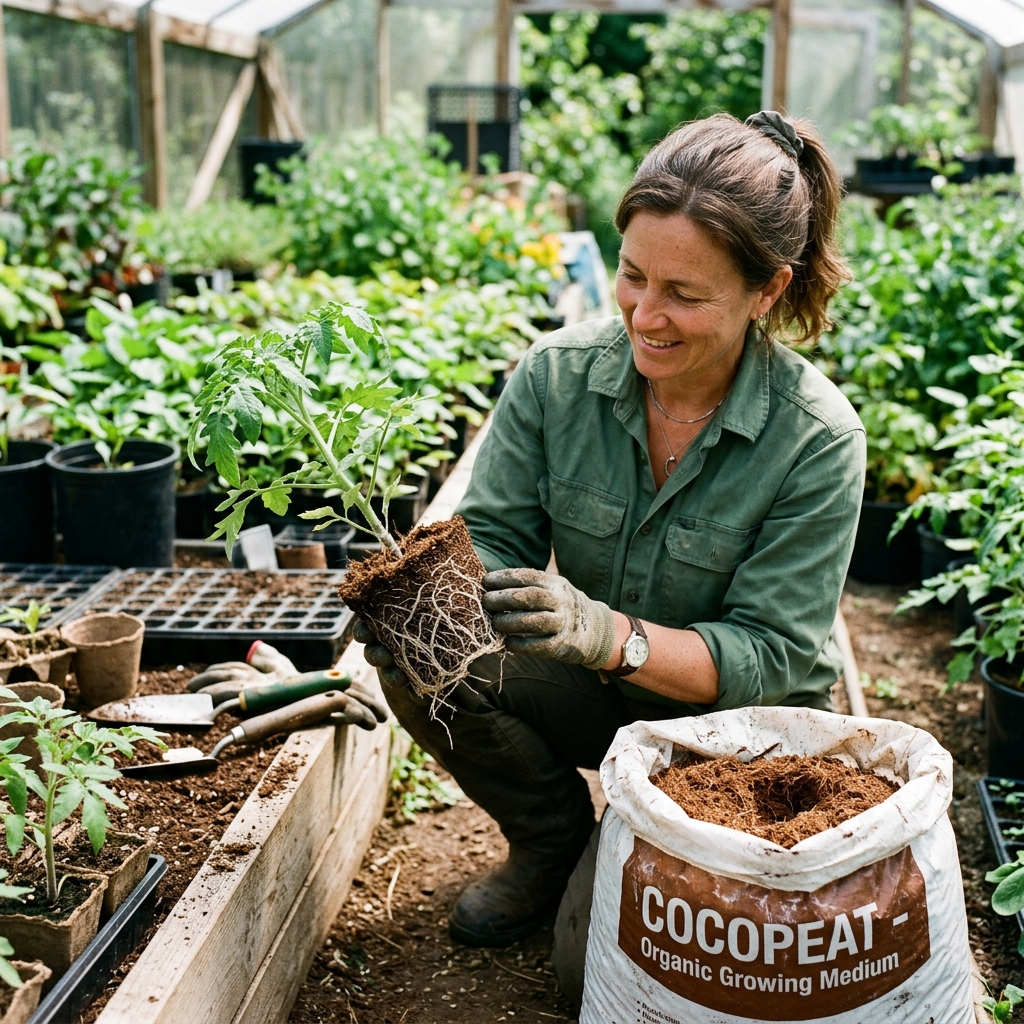
Cocopeat: 7 Essential Plant Tips for Incredible Growth (2026)
جوز الهند has revolutionized modern horticulture by providing commercial growers and home gardeners with an eco-friendly, highly porous growing substrate. If your container garden suffers from compacted soil, poor root oxygenation, or rapid water loss, switching to this organic medium provides the ultimate solution.
In this comprehensive guide, you will master everything about utilizing processed coconut coir dust as a high-performing soilless growing medium. Adopting this renewable substrate maximizes plant health, speeds up root development, and dramatically enhances overall crop yields.
Traditional soil mixes frequently compact over time, choking delicate root systems and causing moisture stress in container plants. According to research from the منظمة الأغذية والزراعة (الفاو), soil degradation and improper substrate aeration account for over 35% of premature container plant mortality globally.
As urban farming and hydroponics expand in 2026, horticulturalists increasingly rely on coconut byproducts to establish resilient root structures. Furthermore, adopting organic substrates reduces dependence on harvested peat bogs, aligning your gardening practices with global environmental sustainability efforts.

What Is Cocopeat and How Is It Produced?
جوز الهند, commonly referred to in global agricultural markets as coconut coir pith or coir dust, is the natural cellular binder that holds together the outer husk of a coconut (كوكوس نوسيفيرا).
While long coarse fibers are extracted for industrial ropes and mats, the spongy residual material is collected, aged, washed, and compressed into versatile blocks. This processing transforms agricultural byproducts into premium horticultural growing media suitable for diverse crops.
The manufacturing process involves rigorous washing to leach out naturally occurring sodium and potassium salts. Raw coconut husks harbor elevated salinity because coconut palms thrive in tropical coastal zones.
Leading producers submerge raw fibers in fresh water reservoirs for several months to lower the electrical conductivity (EC) to safe levels. Studies published in Frontiers in Plant Science highlight that maintaining low EC in root zone media accelerates delicate root hair elongation.
After salt reduction, processing facilities dry the material to precise moisture levels around 15% to 20% before compressing it under intense hydraulic pressure. This industrial processing reduces volume by up to 5:1, creating compact bricks that are economical to ship globally.
When growers add water, these dense blocks expand up to six times their original compressed volume into a fluffy, dark brown growing medium.
Essential Benefits of Using Cocopeat for Plant Growth
Integrating organic coconut coir dust into your agricultural regimen unlocks several physiological advantages for container crops, indoor foliage, and field vegetables.
1. Cocopeat Water Retention Capacity and Moisture Control
One of the primary attributes of high-grade coconut coir pith is its extraordinary water retention capacity. Highly porous cellular structures allow the substrate to absorb and hold up to 8 to 10 times its dry weight in moisture.
Unlike traditional potting soils that dry out unevenly and form hydrophobic crusts, hydrated coir retains uniform moisture across the root zone. Additionally, the material releases stored water gradually to plant roots via capillary action.
This balanced release mechanism drastically reduces irrigation frequency. It shields crops against drought shock during hot summer months while conserving valuable water resources in sustainable farm setups.
2. Superior Aeration and Root Oxygenation
While moisture retention is critical, plant roots also require a continuous supply of atmospheric oxygen for cellular respiration and nutrient uptake. Compacted potting soils frequently drown root zones, creating anaerobic conditions that foster pathogens like بيثيوم و فيتوفثورا.
Coir dust inherently retains approximately 30% air porosity even when fully saturated with water. Scientific research indexed on ساينس دايركت demonstrates that maintaining air-filled porosity above 20% accelerates lateral root branching and increases nutrient absorption efficiency by up to 300%.
Consequently, plants established in coconut substrates develop robust, fibrous root systems that anchor plants firmly and maximize growth velocity.
3. Sustainable and Eco-Friendly Peat Moss Alternative
Historically, commercial potting mixes relied heavily on sphagnum peat moss mined from ancient wetland ecosystems. Harvesting peat moss depletes delicate bog environments and releases massive amounts of sequestered carbon dioxide into the atmosphere.
In contrast, coconut coir represents a 100% renewable agricultural byproduct harvested from existing coconut palms every 45 to 60 days. Utilizing coir repurposes waste into valuable agricultural media without disturbing pristine natural habitats.

Pros and Cons of Using Cocopeat in Gardening
Evaluating the trade-offs of any growing substrate ensures you make informed choices tailored to your specific garden setup and crop species.
- Pro — Neutral to Slightly Acidic pH: Naturally maintains an ideal pH range of 5.5 to 6.8, perfectly matching most horticultural crops without aggressive lime adjustments.
- Pro — High Cation Exchange Capacity (CEC): Readily absorbs essential nutrients and releases them slowly as root networks demand feeding.
- Pro — Reusable Physical Structure: Resists structural breakdown and fungal decay, allowing growers to sterilize and reuse the substrate across multiple growing seasons.
- Con — Low Native Nutrient Content: Serves as an inert medium with virtually zero inherent nitrogen, phosphorus, or calcium. Growers must supply full-spectrum plant fertilizers.
- Con — Potential Salt Accumulation: Low-quality, unwashed coir products can harbor residual sodium chloride, requiring thorough rinsing prior to planting.
- Con — Calcium and Magnesium Binding: Naturally releases potassium while binding calcium and magnesium ions, necessitating tailored buffering protocols.
How to Prepare and Use Cocopeat for Plants (Step-by-Step)
Proper preparation is crucial to transforming dry, compressed coir bricks into a thriving environment for root growth. Follow these expert steps for flawless preparation.
Step 1: Hydrate the Compressed Block
Place your compressed block inside a large bucket or clean storage tub. Add warm water at a ratio of approximately 4 to 5 liters per 1-kilogram block.
Warm water breaks down compressed binders rapidly, allowing the organic fibers to absorb moisture uniformly within 15 to 20 minutes.
Step 2: How to Buffer Cocopeat Blocks at Home
Because coir naturally contains sodium and potassium bound to its cation exchange sites, unbuffered medium will lock up available calcium and magnesium. Learning how to buffer coir blocks prevents early plant nutrient deficiencies.
Soak the expanded substrate in a nutrient solution containing 3 to 5 grams of calcium nitrate and magnesium sulfate per liter of water for 24 hours. Rinse thoroughly with clean fresh water afterward to flush displaced sodium ions.
📹 Video Tutorial Suggestion:
“How to Rinse, Buffer, and Prepare Compressed Cocopeat Blocks for Maximum Root Health” (Embed target: 3-5 minute step-by-step instructional video).
Step 3: Mix with Soil Conditioners and Organic Fertilizers
Avoid planting directly into 100% raw coir unless operating an automated hydroponic drip system. Blend the hydrated material with structural amendments to construct a balanced potting substrate.
For superior container garden performance, combine expanded coir with high-protein organic additives. Integrating bio-rich organic meals such as وجبة جوز الهند enhances beneficial soil microbial activity in the root zone.
Similarly, mixing in balanced agricultural amendments like معصرة نواة النخيل improves long-term organic matter breakdown and nitrogen synthesis within custom soil mixes.
Step 4: How to Use Cocopeat for Indoor Plants
When potting houseplants, blend 60% hydrated coir with 20% perlite and 20% organic compost. This combination prevents potting soil compaction while protecting delicate houseplant roots from overwatering and root rot.
Cocopeat vs Peat Moss Comparison: Comparative Analysis
Selecting the ideal growing medium requires comparing physical attributes across standard soil additives. The structural data below highlights key operational differences between popular substrates.
| ملكية | Cocopeat (Coir Pith) | طحلب الخث السفاجنوم | Perlite (Volcanic Glass) |
|---|---|---|---|
| احتباس الماء | Very High (8-10x weight) | High (10-12x weight) | Very Low (Surface moisture only) |
| مسامية الهواء | Excellent (~30%) | Moderate (15-20%) | Exceptional (>50%) |
| pH Range | 5.5 – 6.8 (Neutral) | 3.5 – 4.5 (Highly Acidic) | 7.0 – 7.5 (Neutral) |
| الاستدامة | 100% Renewable Byproduct | Non-renewable (Mined Bogs) | Mined Non-renewable Mineral |
| إمكانية إعادة الاستخدام | High (3-5 seasons) | Low (Breaks down rapidly) | High (Indefinite structural stability) |
| Re-wetting Ability | Re-hydrates instantly | Hydrophobic when fully dry | Re-hydrates instantly |
Combining coir with coarse perlite in a 70:30 ratio creates an optimal hydroponic substrate that balances high water retention with rapid drainage, engineered to support accelerated root development.

Advanced Hydroponic Applications and Soil Conditioning
In modern high-tech greenhouses, coconut substrates have rapidly superseded traditional rockwool and peat mixtures. Commercial tomato, pepper, and berry producers employ continuous coir slabs fed by automated fertigation systems to maximize crop yield per square meter.
Because the material is inert regarding macronutrients, fertigation systems provide complete control over electrical conductivity (EC) and nutrient ratios. Extension guidelines published by the University of Minnesota Extension emphasize that precise substrate testing prevents toxic salt accumulation while ensuring optimal nitrogen delivery during peak vegetative growth phases.
Furthermore, outdoor field growers frequently blend processed coir into heavy clay soils. Adding coarse coir breaks up dense clay clusters, immediately improving drainage performance and preventing surface crusting during heavy rainfall events.
مكمور أمانة سجيتيرا توفر منتجات زيت النخيل عالية الجودة مثل معصرة نواة النخيل, قشرة نواة النخيل, Crude Palm Oil, Palm Kernel Oil, etc. Kindly contact us at WhatsApp +6282140002198 أو راسلنا عبر البريد الإلكتروني على admin@makmuramanah.co.id.
الأسئلة الشائعة
Can plants grow in 100% cocopeat alone?
While plants can sprout in pure coir, the substrate contains no native plant nutrients. You must supply complete hydroponic liquid fertilizers or blend the material with organic compost and slow-release minerals to ensure long-term plant health and prevent nutrient starvation.
How often should you water plants growing in cocopeat?
Watering frequency depends on ambient temperature, humidity, and plant container size. Because coir holds moisture exceptionally well, you typically water 30% to 50% less frequently than in soil. Water only when the top inch of substrate feels dry to touch.
Why is buffering cocopeat with Calcium Nitrate necessary?
Raw coconut coir naturally naturally binds calcium and magnesium ions while releasing sodium and potassium into root zones. Pre-buffering saturates exchange sites with calcium, preventing severe leaf yellowing and stunted structural growth later in the development cycle.
Does cocopeat attract garden pests or fungus gnats?
High-quality coir is naturally sterile and inert, meaning it does not harbor fungus gnat larvae or weed seeds. However, severe over-watering can encourage surface algae growth, so proper drainage and moisture management remain essential for pest prevention.
Can you reuse cocopeat across multiple growing seasons?
Yes, high-grade coir can be reused for 3 to 5 growing seasons. Remove old root debris, flush the medium with clean water to clear accumulated salts, re-buffer with calcium nitrate, and sterilize using solarization before replanting new crops.
خاتمة

Incorporating high-grade جوز الهند into your agricultural system establishes the ideal foundation for vibrant root development, optimal water efficiency, and superior crop yields.
By buffering your substrate properly and balancing it with nutrient-dense soil amendments, you create a sustainable, disease-resistant root zone environment.
Explore our premium cocopeat substrate solutions today to upgrade your horticultural productivity and achieve extraordinary plant growth in 2026!

 Arabic
  English
  Indonesian
  Chinese