
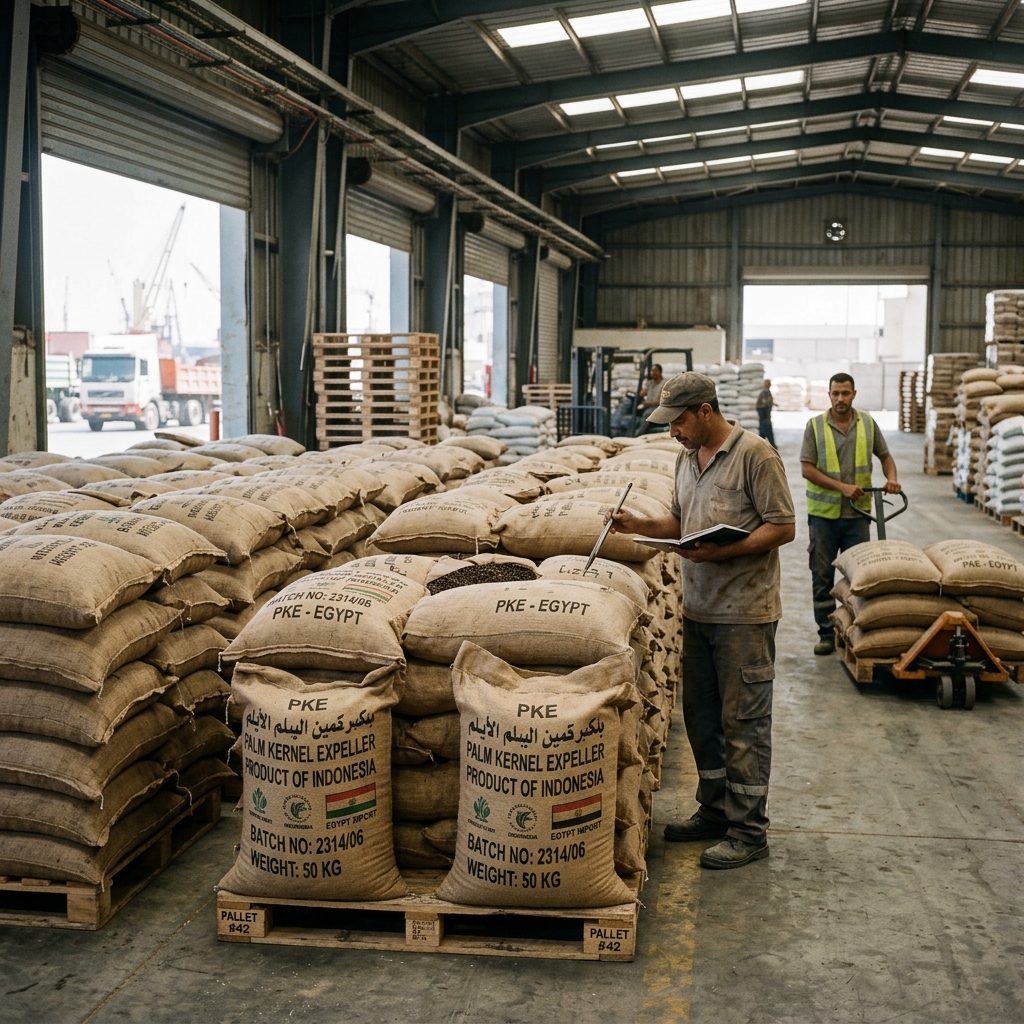
Securing high-quality Palm Kernel Expeller Egypt imports requires an in-depth understanding of quality specifications, customs codes, and global pricing dynamics in 2026. As Egypt’s livestock and commercial feed manufacturing sectors expand rapidly across the Nile Delta and Upper Egypt, commercial animal feed producers increasingly rely on cost-effective, energy-rich feed ingredients to optimize rations.
Palm Kernel Expeller (PKE)—also commonly referred to as وجبة نواة النخيل—has established itself as a cornerstone ruminant feed ingredient for dairy cattle, beef cattle, and small ruminants across North Africa. According to international trade data from the دائرة الزراعة الخارجية التابعة لوزارة الزراعة الأمريكية, Egypt’s demand for high-fiber, medium-protein feed additives has grown significantly to offset local forage shortages and rising grain costs.
This definitive 2026 buyer’s guide equips feed millers Egypt, procurement officers, and agricultural enterprise owners with technical knowledge on PKE specifications, pricing metrics, regulatory frameworks, and import logistics to streamline purchasing operations.
What is Palm Kernel Expeller and Why is Egypt Importing It?
Palm Kernel Expeller (PKE) is a nutrient-dense byproduct obtained during the mechanical extraction of oil from the crushed nut (kernel) of the oil palm tree (Elaeis guineensis). It provides a balanced combination of digestible energy livestock nutrition, medium crude protein content, and high neutral detergent fiber (NDF), making it an ideal feed component for ruminants.
Egypt’s domestic livestock production faces continuous structural challenges. These include limited freshwater availability, scarce arable land for green fodder production like berseem clover, and fluctuating international market prices for traditional raw feeds such as yellow corn and soybean meal. Consequently, Egyptian commercial feed mills utilize bulk imported alternative energy and protein sources to manage ration costs while maintaining daily weight gain and milk yield.
بحث منشور في ScienceDirect agricultural studies highlights that substituting up to 20–30% of conventional grain feeds with quality PKE maintains milk yield in dairy cows while significantly enhancing ruminal health due to its slow-fermenting dietary fiber structure.
For commercial livestock managers seeking to buy palm kernel expeller in Egypt, understanding how PKE interacts with localized feeding systems is critical for maximum return on investment.
[Image: High-grade palm kernel expeller pellets loaded for bulk export to Alexandria, Egypt | Alt text: High quality bulk Palm Kernel Expeller Egypt shipment | Title: Palm Kernel Expeller Bulk Export Egypt]
Nutritional Specifications & Quality Standards for Palm Kernel Expeller Egypt
When evaluating Palm Kernel Expeller Egypt consignments, procurement teams must inspect key chemical parameters to guarantee feed conversion efficiency and long shelf life during sea transit and local warehousing.
Commercial PKE is generally supplied in pelletized form or crushed expeller cake. Pellets are strongly preferred for Middle Eastern sea logistics because they reduce dust loss, improve flowability in automatic discharge systems, and minimize bulk density variations during ocean transit.
Standard Chemical Profile of Export-Grade Palm Kernel Expeller Egypt
| معلمات العناصر الغذائية | Typical Premium Value | Acceptable Standard Range | Significance to Livestock |
|---|---|---|---|
| البروتين الخام (CP) | 16.5% – 18.0% | الحد الأدنى 15.0% | Supports muscle development & milk synthesis |
| Crude Fat / Residual Oil | 7.0% – 9.5% | 6.0% – 10.0% | Provides concentrated dietary energy |
| الألياف الخام (CF) | 14.0% – 17.0% | Max 18.0% | Promotes healthy rumen motility and acetate production |
| محتوى الرطوبة | 8.0% – 10.0% | الحد الأقصى 12.0% | Prevents mold, heating, and mycotoxin growth |
| Total Ash Content | 3.5% – 5.0% | Max 6.5% | Measures mineral purity and low silica/sand levels |
| Aflatoxin Level | < 10 ppb | Max 20 ppb | Mandatory parameter for Egyptian quarantine clearance |
Quality control begins at the palm oil mill. Importers should mandate third-party inspection certificates (such as SGS, Sucofindo, or Intertek) prior to vessel loading to verify moisture levels remain strictly under 12% to prevent heating during passage through warm tropical shipping routes and the Suez Canal.
Furthermore, commercial dairy producers seeking high-fat dietary supplementation to increase milk fat percentages can blend PKE rations with specialized bypass fats like أملاح الكالسيوم للأحماض الدهنية لزيت النخيل to maximize energy density without impairing fiber digestion in the rumen.
Feed millers expanding into energy supplementation or vegetable oil refining can also source RBD CP8 palm olein products to refine overall feed caloric concentration.
[Infographic: Visual breakdown comparing PKE digestibility, protein content, and crude fat against standard animal feed ingredients in Egypt | Alt text: Infographic on Palm Kernel Expeller Egypt nutritional profile | Title: PKE Nutritional Comparison Chart]
HS Code, Customs Clearance, and Regulatory Compliance in Egypt
Navigating Egyptian port customs efficiently requires precise product classification, proper documentation, and compliance with the General Organization for Export and Import Control (GOEIC).
Errors in paperwork at primary ports such as Alexandria, Damietta, or Port Said can cause delayed port clearance and substantial demurrage charges.
HS Code Classification for Palm Kernel Expeller Egypt Imports
Under the international Harmonized System maintained by the منظمة الجمارك العالمية, PKE is designated under the following tariff classification:
- Harmonized System Code:
2306.60.00 - Tariff Description: كعكة الزيت وغيرها من المخلفات الصلبة، سواء كانت مطحونة أو على شكل حبيبات، والناتجة عن استخراج جوز النخيل أو النوى.
- Trade Term Keyword: palm kernel expeller HS code 230660
Required Customs & Quarantine Documentation for Egyptian Ports
- Commercial Invoice & Packing List: Legalized by origin chambers of commerce and consular authorities.
- بوليصة الشحن (B/L): Specifying vessel name, container/bulk weight, and designated entry port (e.g., Dekheila Port, Alexandria).
- شهادة الصحة النباتية: Issued by the government agricultural authority of the exporting nation (e.g., Indonesia or Malaysia).
- شهادة المنشأ: Form A or General Certificate verifying production in authorized palm processing facilities.
- شهادة التحليل (COA): Comprehensive laboratory test reporting moisture, protein, fat, ash, and heavy metal limits.
- Non-GMO & Radiation Clearance Certificates: Required by Egyptian agricultural quarantine agencies to verify safety standards.
Collaborating with experienced customs brokers ensures compliance with regulations from the Ministry of Agriculture and Land Reclamation (MALR) and prevents unexpected clearance holds upon arrival.
Palm Kernel Expeller Price Factors & Market Dynamics in 2026
Understanding the pricing variables of Palm Kernel Expeller Egypt imports enables commercial buyers to establish cost-effective procurement strategies and secure competitive CIF rates.
PKE is priced primarily per metric ton (MT), quoted on a Free on Board (FOB) origin basis or Cost and Freight (CFR) / Cost, Insurance, and Freight (CIF) basis at Egyptian ports. Checking the current palm kernel expeller price per ton Egypt market rate helps feed mill buyers schedule timely seasonal contract locks.
Key Drivers of Global PKE Market Prices in 2026
- Crude Palm Oil (CPO) Production Seasons: Peak crushing seasons in Southeast Asia increase raw palm kernel availability, driving favorable export pricing for expeller meal.
- Ocean Freight & Bunker Fuel Costs: Global shipping rates, vessel charter costs, and Red Sea transit routes heavily influence final landed CFR Alexandria pricing.
- Prices of Competing Feedstuffs: The market valuation of alternative commodities—such as وجبة جوز الهند, wheat bran, and corn gluten feed—establishes a relative price ceiling for PKE in regional feed formulations.
- Foreign Exchange Rate Dynamics: Currency movements between the US Dollar (USD), Egyptian Pound (EGP), and origin currencies affect net landed costs for local animal feed import Egypt العمليات.
To optimize freight economics, large feed manufacturers in Egypt import via bulk PKE shipment charters (5,000 MT to 15,000 MT). Small-to-medium enterprises generally import via 20-foot sea containers using heavy-duty 50kg woven polypropylene bags or 1-ton jumbo bags.
Comparing Palm Kernel Expeller with Alternative Feed Ingredients
Evaluating PKE against alternative feedstuffs enables nutritionists to build least-cost formulas without compromising daily metabolic requirements. Global research from the منظمة الأغذية والزراعة (الفاو) emphasizes utilizing agro-industrial coproducts to ensure sustainable livestock nutrition.
| مكونات العلف | البروتين الخام | Fiber (NDF/CF) | Primary Livestock Target | Relative Cost per MT |
|---|---|---|---|---|
| معصرة نواة النخيل | 15% – 18% | High (16-18%) | Dairy & Beef Cattle, Sheep, Goats | Economical / Low – Medium |
| وجبة فول الصويا | 44% – 48% | Low (3-6%) | Poultry, Swine, High-Yield Dairy | عالي |
| وجبة جوز الهند | 18% – 22% | Medium (10-12%) | Cattle, Small Ruminants, Aquaculture | واسطة |
| Yellow Corn | 8% – 9% | Very Low (2-3%) | Poultry, Ruminants, Monogastrics | Medium – High |
While soybean meal provides concentrated protein, PKE delivers a dual metabolic advantage: energy from residual lipids and highly digestible structural fiber that reduces subacute ruminal acidosis (SARA) in high-producing dairy cows.
Additionally, agricultural operations managing industrial energy facilities alongside feed production often source قشرة نواة النخيل biomass for solid-fuel boiler systems due to its high calorific output.
Furthermore, livestock enterprises using organic bedding or soil conditioning materials in agricultural operations can integrate جوز الهند products for moisture management in farm infrastructure.
Step-by-Step Guide to Importing Palm Kernel Expeller Egypt Consignments
Executing a successful Palm Kernel Expeller Egypt procurement program requires systematic execution across procurement phases:
- Determine Product Form & Physical Characteristics: Select pelletized PKE or expeller cake based on your feed facility’s intake systems, grinding machinery, and silo capabilities.
- Verify Exporter Quality Certifications: Audit origin suppliers for ISO 9001, GMP+, or RSPO certification to ensure consistent processing and loading quality.
- Request Pre-Shipment Certificates & Lab Samples: Perform independent testing for moisture, crude protein, residual fat, and sand/silica content prior to contract signing.
- Establish Clear Incoterms & Payment Guarantees: Secure shipments under standard GAFTA contract structures utilizing Irrevocable Letters of Credit (LC at sight).
- Coordinate Port Clearance & Quarantine Testing: Retain experienced custom agents at destination ports to complete GOEIC and MALR inspections efficiently upon vessel discharge.
[Embedded Video: Overview of Palm Kernel Expeller production, quality testing, and vessel cargo shipping to Middle East markets | Title: How Palm Kernel Expeller is Exported to Egypt]
مكمور أمانة سجيتيرا نُقدّم منتجات نخيل عالية الجودة مثل عصارة نواة النخيل، وقشرة نواة النخيل، وزيت النخيل الخام، وزيت نواة النخيل، وغيرها. يُرجى التواصل معنا عبر واتساب. +6282140002198 أو راسلنا عبر البريد الإلكتروني على admin@makmuramanah.co.id.
الأسئلة الشائعة
What is the HS Code for Palm Kernel Expeller in Egypt?
The global HS Code for Palm Kernel Expeller (PKE) imported into Egypt is 2306.60.00. This tariff classification covers solid residues and oil-cake resulting from the extraction of palm nut or kernel oils under Egyptian customs rules.
Why is Palm Kernel Expeller ideal for livestock in Egypt?
PKE offers a highly digestible, cost-effective blend of crude protein (16–18%), energy, and neutral detergent fiber. It helps Egyptian feed millers reduce reliance on expensive imported grains while protecting ruminants against rumen acidosis.
What is the shelf life of imported Palm Kernel Expeller?
When stored in dry, well-ventilated conditions with moisture kept under 12%, quality pelletized Palm Kernel Expeller has a shelf life of 6 to 9 months without significant nutrient degradation or mycotoxin risk.
How are PKE shipments typically delivered to Egyptian ports?
PKE is typically shipped in bulk cargo vessels (5,000 to 15,000 metric tons) or 20-foot ocean containers packed in jumbo bags. Deliveries enter Egypt primarily via Alexandria, Damietta, and Port Said entry hubs.
Can poultry or swine consume Palm Kernel Expeller?
PKE contains high fiber levels and non-starch polysaccharides, which limits its inclusion in poultry and swine diets to 3–5%. However, it remains an excellent primary feed ingredient for cattle, sheep, and goats.
[Image: Quality testing of PKE pellets in Egyptian laboratory | Alt text: Inspection of Palm Kernel Expeller Egypt delivery samples | Title: Quality Control Palm Kernel Expeller Egypt]
Conclusion & Strategic Takeaways for Importers
As Egypt’s livestock industry modernizes, securing a stable supply line of premium Palm Kernel Expeller Egypt feeds is a strategic priority for commercial livestock enterprises. Selecting certified exporters who maintain moisture controls and offer competitive CFR pricing ensures maximum return on feed investments in 2026.
By leveraging accurate chemical specifications, verifying HS Code 230660 documentation, and partnering with verified origin suppliers, feed manufacturers across Egypt can optimize ration performance and lower operational costs. Contact direct suppliers today to schedule your bulk PKE imports.
 Arabic
  English
  Indonesian
  Chinese