
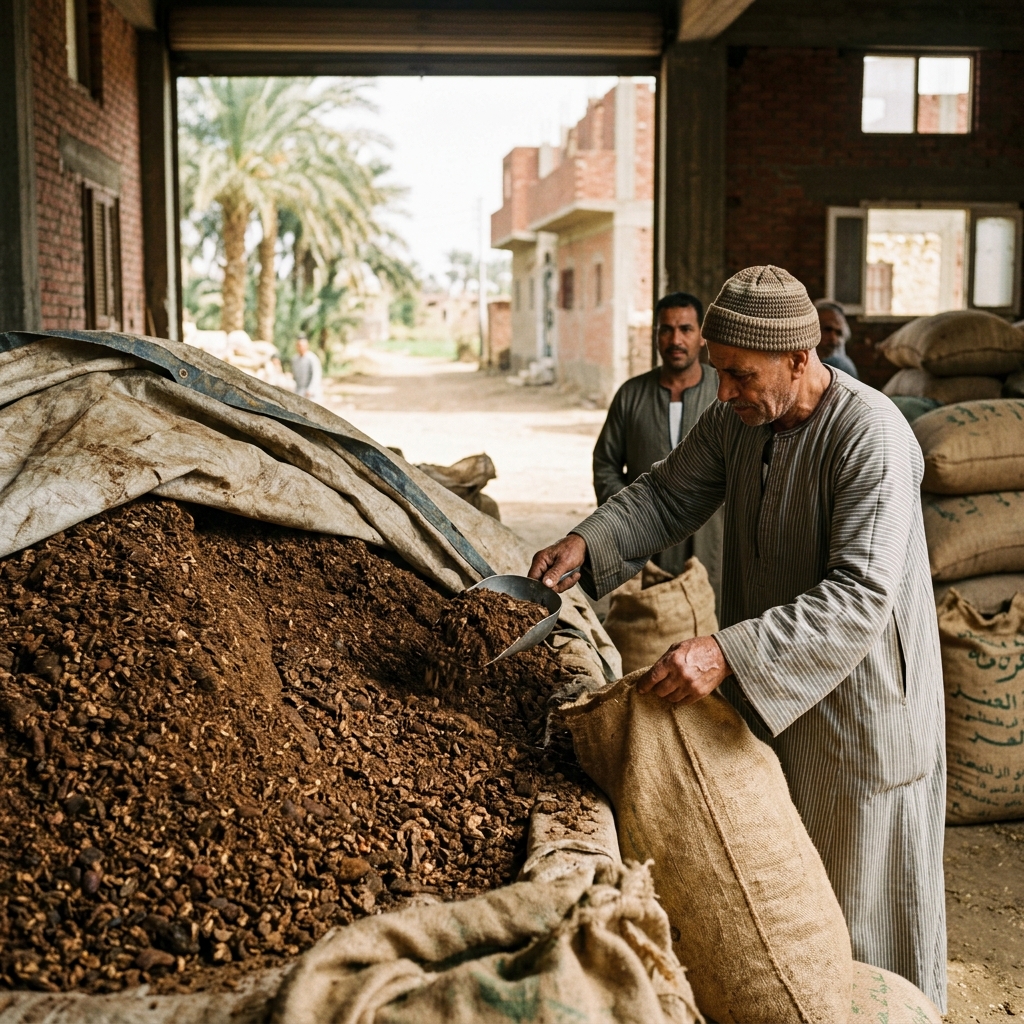
Securing high-grade Palm Kernel Expeller for Egypt has become an urgent commercial imperative for feed millers and commercial livestock enterprises nationwide. Escalating global grain prices and foreign exchange fluctuations make identifying cost-effective protein alternatives essential. This technical briefing delivers actionable import guidelines, nutritional specifications, ration strategies, and procurement intelligence for agribusinesses importing PKE animal feed.
Egypt’s livestock sector consumes over 12 million metric tons of commercial concentrates each year, according to market reports from the دائرة الزراعة الخارجية التابعة لوزارة الزراعة الأمريكية. However, severe currency devaluations have pushed traditional yellow corn and soybean meal rations to historic price highs. Consequently, nutritionists across the Nile Delta and Upper Egypt rely on Palm Kernel Expeller for Egypt to lower ration costs without undermining animal yield.
What Is Palm Kernel Expeller for Egypt Feed Mills?
Palm Kernel Expeller for Egypt (commonly abbreviated as PKE) is an energy-dense, fiber-rich co-product derived from the mechanical screw-pressing of oil palm nuts (Elaeis guineensis). Unlike solvent-extracted meals, the mechanical expeller process leaves a residual oil fraction that delivers superior dietary energy, digestible amino acids, and balanced rumen fermentation for beef cattle, dairy herds, and water buffalo.

Mechanical screw extraction yields an expeller meal containing between 6.5% and 9.5% residual lipids. For Egyptian feed compounders, this residual fat supplies metabolizable energy without introducing excess starch. Replacing excessive cereal starch with digestible lipids significantly mitigates the risk of ruminal acidosis, a persistent challenge in hot Mediterranean and sub-tropical desert climates.
Furthermore, the physical fibrous matrix of Palm Kernel Expeller for Egypt contains high concentrations of neutral detergent fiber (NDF). This structural fiber stabilizes rumen pH, encourages cud-chewing, and promotes milk fat synthesis in lactating dairy cows and native Egyptian water buffalo.
Technical Specifications: Palm Kernel Expeller for Egypt Standards
Procuring raw feed ingredients requires strict chemical compliance to satisfy livestock nutritional needs and clear rigorous Egyptian quarantine checkpoints. The Feedipedia Animal Feed Resources Information System categorizes expeller meal as a safe, mid-protein, energy-yielding feedstuff. Below are export-grade chemical specifications required when buying Palm Kernel Expeller for Egypt:
- البروتين الخام (CP): 14.5% – 18.0% (dry matter basis)
- Ether Extract (Crude Fat): 6.5% – 9.5%
- الألياف الخام (CF): 15.0% – 19.0%
- نسبة الرطوبة: 8.0% – 10.0% maximum
- Total Ash: 3.5% – 5.5%
- الطاقة القابلة للاستقلاب (المجترات): 10.5 – 11.5 MJ/kg DM
- الأفلاتوكسين ب1: < 20 ppb (strict Egyptian port statutory threshold)
- Sand & Silica: < 2.0% maximum
Importers must also monitor oxidative stability during long ocean transits. Free fatty acid (FFA) levels in the residual oil must remain below 10% to prevent rancidity while traversing tropical equatorial waters toward the Red Sea and Mediterranean Sea.
Feed Comparison: PKE vs. Traditional Egyptian Feed Ingredients
Evaluating the economic replacement value of Palm Kernel Expeller for Egypt requires a nutritional comparison against common domestic feed components. The table below outlines key parameters across standard livestock feedstuffs:
| Nutritional Parameter | مستخلص نواة النخيل (PKE) | Yellow Corn (Imported) | Soybean Meal (44% CP) | Wheat Bran (Choker) |
|---|---|---|---|---|
| Crude Protein (% DM) | 15.5 – 17.0% | 8.5 – 9.0% | 44.0 – 46.0% | 14.0 – 15.5% |
| Crude Fat (% DM) | 7.0 – 9.0% | 3.5 – 4.0% | 1.2 – 2.0% | 3.0 – 4.0% |
| Crude Fiber (% DM) | 16.0 – 18.0% | 2.2 – 2.8% | 6.0 – 7.0% | 9.0 – 11.0% |
| Starch Content (%) | < 3.0% | 65.0 – 72.0% | 5.0 – 7.0% | 18.0 – 22.0% |
| ألياف المنظفات المحايدة (NDF) | 55.0 – 65.0% | 9.0 – 12.0% | 13.0 – 15.0% | 38.0 – 45.0% |
| Relative Feed Cost Index | Economical / Competitive | Volatile / Expensive | High / Premium | Moderate / Fluctuating |
While soybean meal remains vital for monogastric poultry formulations, its steep cost makes it inefficient as a bulk ruminant filler. Formulating with high-grade Palm Kernel Expeller for Egypt allows feed mills to partially replace costly imported protein meals and volatile grain concentrates simultaneously.

Benefits of Palm Kernel Expeller for Egypt Livestock Farming
Livestock farming across Egypt faces distinct environmental challenges, including prolonged summer heat waves and high input expenses. Integrating Indonesian palm kernel expeller into total mixed rations (TMR) delivers physiological and financial improvements for local livestock herds.
1. Feed Cost Reduction and Grain Replacement
Feed expenses account for 70% to 75% of operational budgets on Egyptian commercial farms. Replacing portions of imported yellow corn and local wheat bran with Palm Kernel Expeller for Egypt cuts feed manufacturing expenses by 15% to 22% per metric ton. This cost reduction helps commercial operations protect operating margins during market downswings.
2. Stable Rumen Fermentation and Acidosis Control
Egyptian intensive beef feedlots often supply heavy starch rations to accelerate fattening rates, which frequently leads to subacute ruminal acidosis (SARA), liver abscesses, and laminitis. Because PKE derives energy from digestible fiber (hemicellulose) and lipids rather than rapid-fermenting starch, it maintains a healthy rumen pH between 6.2 and 6.8.
3. Heat Stress Alleviation in Summer Climates
Summer temperatures in governorates like Sharkia, Beheira, Ismailia, and Fayoum frequently exceed 40°C. High heat stresses ruminants, causing internal fermentation heat and reducing dry matter intake. The fatty acids in Palm Kernel Expeller for Egypt generate lower heat increments during digestion compared to cereal starches, helping cattle maintain steady feed consumption during peak summer temperatures.
4. Enhanced Milk Fat Production
بحث منشور في مجلة علوم الألبان confirms that digestible fiber fractions in palm co-products increase rumen acetate production. Acetate serves as the direct physiological building block for mammary butterfat synthesis, helping commercial dairy producers maximize premiums on fat-adjusted milk payments.
For high-producing herds with elevated energy demands, pairing PKE with rumen-protected fats like أملاح الكالسيوم للأحماض الدهنية لزيت النخيل provides high caloric density without upsetting rumen microbial stability.
Inclusion Rates: Formulating Palm Kernel Expeller for Egypt Rations
Achieving superior livestock performance requires practical, species-specific feed formulations. Introduce Palm Kernel Expeller for Egypt gradually over a 10-to-14-day transition period to prevent feed sorting and allow rumen microbes to adapt.
- Commercial Dairy Herds (Holstein & Crossbreds): Formulate at 15% to 25% of total concentrate dry matter. This level supports milk output above 32 liters per head while lifting milk fat percentages.
- Egyptian Water Buffalo (Bubalus bubalis): Formulate at 20% to 35% of concentrate. Buffaloes exhibit high cellulolytic rumen activity, converting PKE fiber into energy to produce rich milk fat for premium artisanal cheeses.
- Beef Cattle & Fattening Calves: Include at 20% to 30% of total mixed rations. Blending PKE with high-protein meals such as جوز الهند yields consistent daily weight gains exceeding 1.35 kg per head.
- Sheep & Meat Goats: Limit inclusion to 10% to 15% of concentrate. Because small ruminants are sensitive to dietary copper, nutritionists must review copper assays prior to feed compounding.
- Poultry & Aquaculture Diets: Restrict usage to 3% to 5% in commercial layer and Nile tilapia diets due to non-starch polysaccharides (mannans), unless feed rations include exogenous mannanase enzyme additives.
Large-scale dairy and poultry operations running integrated agronomic divisions can also utilize agricultural co-products like جوز الهند for moisture-retentive greenhouse substrates and soil conditioning across reclaimed desert acreage.
Video Guide: Comprehensive overview of mechanical screw-pressing methods, feed testing, and PKE nutritional quality control.
Regulations and Clearance: Palm Kernel Expeller for Egypt Customs
Importing agricultural commodities into Egypt requires compliance with strict animal health and phytosanitary mandates. Egyptian customs authorities work closely with quarantine agencies to maintain domestic biosecurity standards.
ال منظمة الأغذية والزراعة (الفاو) emphasizes the importance of clear biosecurity standards in international feed trade. Consignments of Palm Kernel Expeller for Egypt are monitored by the Ministry of Agriculture and Land Reclamation (MALR) and the General Organization for Export and Import Control (GOEIC).
Mandatory Customs Documentation Checklist
Before cargo vessels arrive at Egyptian seaports, importers must verify that their overseas supplier provides a complete, authenticated clearance documentation package:
- Ocean Bill of Lading (Clean On-Board): Demonstrating direct ocean routing.
- Commercial Invoice & Packing List: Authenticated by relevant commercial chambers.
- شهادة الصحة النباتية: Issued by the origin country’s national quarantine authority (such as the Indonesian Quarantine Agency).
- شهادة المنشأ: Proving production origin in Southeast Asia.
- Accredited Surveyor Analysis Certificate (SGS, Intertek, or Sucofindo): Confirming moisture, protein, fat, ash, and freedom from live insects.
- Aflatoxin Analysis Certificate: Proving aflatoxin B1 levels remain strictly below the statutory limit of 20 ppb.
- Non-Radiation & Dioxin-Free Declarations: Obligatory under current Egyptian veterinary medicine import regulations.
Maritime Logistics: Shipping Palm Kernel Expeller for Egypt
Indonesia is the world’s leading producer and exporter of quality palm oil co-products. Shipping Palm Kernel Expeller for Egypt involves coordinated ocean freight logistics from primary Indonesian deep-water loading terminals like Belawan, Dumai, or Panjang directly to Egyptian Mediterranean and Red Sea ports.

Egyptian Discharge Port Selection
Selecting the right entry terminal depends on mill location and distribution logistics across Egypt’s agricultural hubs:
- Alexandria and El-Dekheila Ports: Handle over 60% of national bulk grain imports. Best positioned for feed compounding facilities across Alexandria, Beheira, Gharbia, and Kafr El Sheikh governorates.
- Damietta Port: Features automated bulk discharge handling conveyors, providing rapid transit to the eastern Nile Delta, Dakahlia, and Sharkia milling hubs.
- Port Said (East & West): Offers streamlined logistics for regional distributors serving the Suez Canal Economic Zone and Sinai development projects.
- Ain Sokhna Port: Strategically situated on the Red Sea, making it the preferred entry point for Upper Egypt and desert agricultural corridors along the Cairo-Suez highway.
Agribusinesses can import via two packaging modalities: Breakbulk Dry Vessels (15,000 to 25,000 MT shipments for large mill consortia) or 20ft/40ft Dry Container Loads (packed in 50-kg woven polypropylene bags or bulk container liners carrying 21 to 24 MT per container). Containerized shipments offer accessible inventory and cash flow flexibility for growing mid-sized enterprises.
Industrial manufacturing plants operating on-site biomass boilers can also import alternative clean-burning biofuel products like قشرة نواة النخيل in shared maritime shipments to lower overall factory energy costs.
Warehouse Storage Guidelines for Egypt’s Arid Climate
Once raw ingredients clear quarantine and reach domestic warehousing, maintaining product quality requires structured on-site handling. Summer heat in Egyptian agricultural regions regularly surpasses 40°C, which can accelerate lipid oxidation if meal is stored incorrectly.
Keep storage sheds well-ventilated to prevent moisture build-up and interior condensation. Stack bagged feed upon wooden pallets at least 30 centimeters away from concrete flooring and warehouse walls. Run strict First-In, First-Out (FIFO) stock rotation cycles, utilizing expeller stocks within 90 to 120 days of discharge. Finally, conduct routine moisture testing; keeping moisture levels below 10% prevents internal heating, mold growth, and mycotoxin formation.
مكمور أمانة سجيتيرا provides high-quality palm products such as Palm Kernel Expeller, قشرة نواة النخيل, Crude Palm Oil, Palm Kernel Oil, etc. Kindly contact us at WhatsApp +6282140002198 أو راسلنا عبر البريد الإلكتروني على admin@makmuramanah.co.id.
الأسئلة الشائعة
What makes Palm Kernel Expeller for Egypt an ideal feed replacement?
Palm Kernel Expeller for Egypt acts as an energy-dense, mid-protein feedstuff that replaces expensive corn and wheat bran. It supplies 14% to 18% crude protein, digestible residual fat, and neutral detergent fiber that protects ruminants from acidotic digestive disorders while lowering overall feeding expenses.
What is Egypt’s official aflatoxin threshold for imported PKE?
Egyptian quarantine standards enforced by GOEIC require that aflatoxin B1 in imported palm kernel expeller cannot exceed 20 parts per billion (ppb). Every commercial vessel consignment must present verified pre-shipment laboratory analysis from accredited surveyors like SGS, Sucofindo, or Intertek before customs clearance.
Can PKE be fed to dairy buffaloes in the Nile Delta?
Yes, Egyptian water buffaloes adapt exceptionally well to PKE rations. Formulations can safely integrate between 20% and 35% in concentrated rations. The natural fiber and fatty acid profile supports rumen acetate production, improving milk butterfat yields for high-value mozzarella and traditional dairy goods.
How long does shipping Palm Kernel Expeller from Indonesia to Egypt take?
Maritime ocean transit from Indonesian departure ports such as Belawan, Panjang, or Dumai to Egyptian discharge hubs like Damietta, Alexandria, or Ain Sokhna typically takes 18 to 28 sailing days, depending on carrier schedules and transit conditions across the Red Sea.
Is solvent-extracted palm kernel meal different from palm kernel expeller?
Yes, production methods differ significantly. Palm kernel expeller (PKE) is mechanically screw-pressed, retaining 6.5% to 9.5% residual oil for higher metabolizable energy. Solvent-extracted meal relies on chemical recovery, leaving under 2% fat and yielding substantially lower digestible caloric energy for ruminants.
Conclusion: Securing Your 2026 Feed Supply Chain
Managing agricultural feed costs requires proactive procurement strategies. Procuring certified Palm Kernel Expeller for Egypt enables feed millers, beef feedlots, and dairy cooperatives to insulate themselves against global grain market volatility while upholding peak animal health.
By demanding stringent nutritional parameters, verifying pre-shipment lab assays, and partnering directly with reliable Indonesian suppliers, Egyptian agricultural businesses can optimize feed efficiency. Finalize your import schedule for Palm Kernel Expeller for Egypt in 2026 to ensure dependable feed quality, lower ration expenses, and sustained commercial profitability.

 Arabic
 English
 Indonesian
 Chinese
