جدول المحتويات
As the global demand for sustainable and cost-effective animal feed grows, industries are turning to innovative by-products. One such resource is palm kernel expeller (PKE). But what is the القيمة الغذائية لإكسبيلر نواة النخيل, and how does it fit into modern agriculture? This guide provides a comprehensive look at this vital feed ingredient.
Palm kernel expeller is a significant by-product of the palm oil industry, prized for its potential to supplement animal diets. Understanding its composition is key for farmers and nutritionists aiming to optimize livestock health and productivity while managing costs.
ما هو كسب نخيل الزيت (PKE)؟
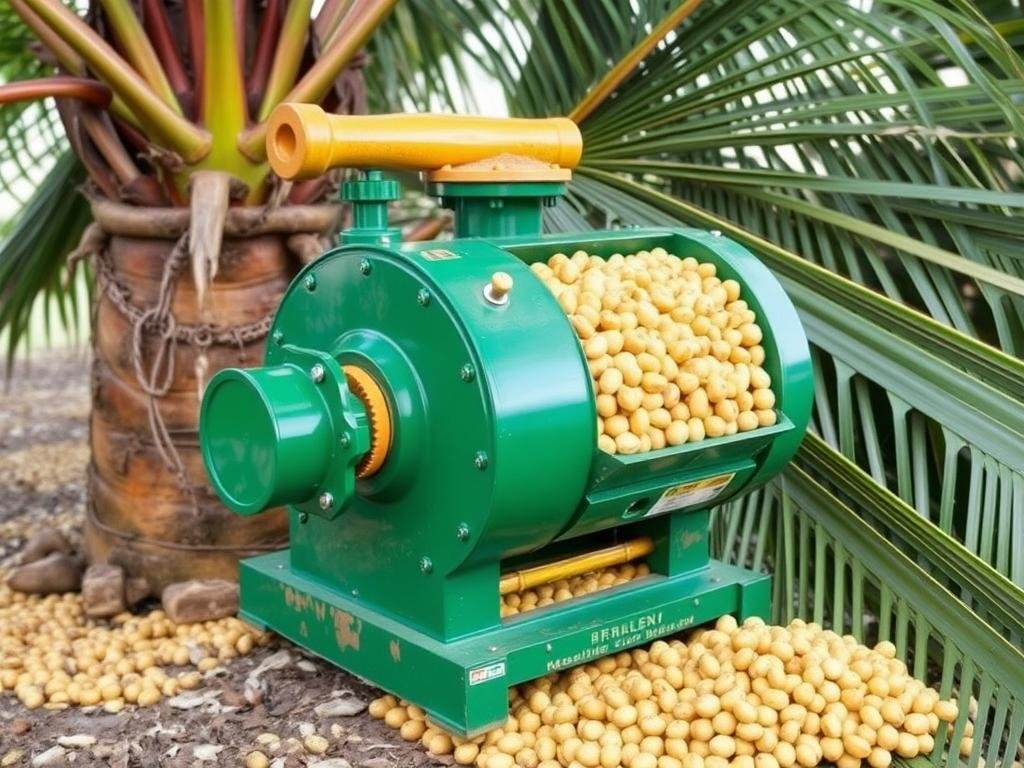
عالية الجودة معصرة نواة النخيل (PKE) is the nutrient-rich material that remains after زيت نواة النخيل has been mechanically extracted from the نواة النخيل. The kernel itself is derived from the عناقيد ثمار نخيل الزيت. This extraction process, which uses a high-pressure screw press (or ‘expeller’), leaves behind a protein-rich, fibrous material. It’s distinct from Palm Kernel Cake (PKC), which often undergoes solvent extraction for maximum oil removal.
Primarily produced in Southeast Asia, PKE has become a globally traded commodity for the animal feed industry. Its affordability and availability make it an attractive alternative to more expensive feedstuffs like soybean meal or corn. Alongside other valuable materials like قشرة نواة النخيل, PKE is a key component of the ecosystem surrounding زيت النخيل الخام production. Continuous research aims to maximize its use in various animal feeds.

A Deep Dive into the PKE Nutritional Profile
The utility of PKE in animal feed hinges entirely on its composition. While it offers significant benefits, it’s not a perfect feed ingredient. PKE’s overall nutritional profile is a balance of valuable macronutrients, essential minerals, and certain limiting factors.
Macronutrients: Protein, Fiber, and Fat
The core energy and building blocks in PKE come from its protein, fiber, and residual fat content. These levels can vary based on the oil extraction efficiency and the source of the palm kernels.
- البروتين: PKE contains a moderate amount of crude protein, typically ranging from 14% to 21%. However, it is deficient in key essential amino acids like lysine, methionine, and tryptophan, which are crucial for monogastric animals like poultry and pigs.
- الألياف: This is the most defining characteristic of PKE. It is high in crude fiber (12-20%), primarily composed of non-starch polysaccharides (NSPs). While this high fiber content is a digestive challenge for some animals, it is a key benefit for ruminants.
- الدهون: The residual oil content after mechanical expulsion is a significant energy source, usually falling between 5% and 12%. This fat contributes substantially to the metabolizable energy of the feed.
Micronutrients: Essential Minerals in PKE
Beyond the macronutrients, the mineral profile is a critical aspect of PKE’s nutritional value. It is known to be a rich source of certain minerals, but imbalances can pose risks if not properly managed in a formulated diet.
PKE has high levels of phosphorus and potassium. However, its calcium content is low, leading to an imbalanced Calcium-to-Phosphorus (Ca:P) ratio that must be corrected. According to a study published by the منظمة الأغذية والزراعة (الفاو), PKE is also a good source of magnesium, iron, zinc, and manganese. A significant concern, especially for sheep, is its high copper concentration, which can lead to toxicity.
Understanding Anti-Nutritional Factors
No analysis is complete without discussing the factors that can limit its use. The high content of NSPs (mannan-based) in PKE’s fiber can increase gut viscosity and hinder nutrient absorption in monogastric animals. Furthermore, its gritty texture and distinct taste can sometimes lead to lower palatability and reduced feed intake if introduced too quickly or at very high levels.
The Role of Palm Kernel Expeller in Animal Diets
The specific القيمة الغذائية لإكسبيلر نواة النخيل makes it highly suitable for some animals but less so for others. Its application is a science of balancing nutrition, cost, and animal physiology.

How Ruminants (Cattle, Sheep, Goats) Benefit
Ruminants are the primary consumers of PKE. Their unique digestive system, featuring a four-compartment stomach, allows them to efficiently ferment and utilize high-fiber materials. For dairy and beef cattle, PKE serves as an excellent source of energy and protein, often partially replacing more expensive grains.
However, caution is paramount for sheep. As noted by the دليل MSD البيطري, sheep are highly susceptible to copper toxicity. Since PKE is naturally high in copper, its inclusion in sheep diets must be minimal and carefully calculated to prevent fatal poisoning.
Can Poultry and Pigs Benefit from PKE?
For monogastric animals like chickens and pigs, the story is different. The high fiber content and poor amino acid profile limit its use. The gritty NSPs can impair digestion and nutrient uptake. This is why PKE is typically included at low levels (under 10%) in their diets.
Research published in journals like Poultry Science explores using enzyme supplementation (e.g., mannanase) to break down the problematic fibers, improving PKE’s nutritional value and allowing for higher inclusion rates in poultry feed.
PKE in Modern Aquaculture Feeds
PKE is also finding a place in aquaculture as a plant-based protein source in fish feed. It can partially replace fishmeal, contributing to more sustainable aquaculture practices. As with other animals, its use is determined by the specific fish species’ dietary needs and the feed formulation’s overall balance. Understanding its true nutritional profile is vital for success in this area.
The 5 Ultimate Benefits and Drawbacks of Using PKE
To summarize, here are the key pros and cons of incorporating PKE into animal nutrition.
- Benefit: Cost-Effectiveness. PKE is generally cheaper than mainstream feed ingredients like soybean meal, making it an economically attractive option.
- Benefit: Good Energy Source. Its residual fat content provides a high level of metabolizable energy for livestock.
- Benefit: High Availability. As a major by-product of a massive industry, PKE is widely and consistently available.
- Drawback: Variable Nutritional Quality. Its composition can fluctuate based on the processing method, leading to inconsistencies that require careful quality control.
- Drawback: High Fiber & Low Palatability. The high fiber limits its use in monogastrics, and its taste can reduce feed intake if not managed properly. This is a crucial factor when evaluating its overall value.
الأسئلة الشائعة (FAQ)
What is the main nutritional component of palm kernel expeller?
The main components are high crude fiber (12-20%), moderate crude protein (14-21%), and a valuable amount of residual fat (5-12%). Its high fiber content is its most defining characteristic.
هل يعتبر كسب نواتج عصر نواة النخيل مفيداً للأبقار الحلوب؟
Yes, the القيمة الغذائية لإكسبيلر نواة النخيل is highly suitable for dairy cows and other ruminants. Their digestive systems can effectively break down the fiber to extract energy, making PKE a cost-effective part of a balanced diet.
Why is PKE not ideal for chickens?
PKE is not ideal for chickens (and other poultry) due to its high fiber content, which they cannot digest well, and its deficiency in essential amino acids like lysine and methionine, which are vital for their growth.
Conclusion: The Final Verdict on PKE
The nutritional profile of palm kernel expeller is complex and multifaceted. It is far from a “perfect” feed, but it stands as a tremendously valuable resource in global animal nutrition. Its high fiber and energy content make it a staple for ruminants, while its cost-effectiveness drives continuous innovation for its use in other species.
Ultimately, successfully using PKE requires a deep understanding of its properties, careful diet formulation to balance its shortcomings, and a commitment to quality control. When managed correctly, it plays a crucial role in creating sustainable and affordable feed solutions for a growing world.
توفر Makmur Amanah Sejahtera منتجات نخيل عالية الجودة مثل Palm Kernel Expeller وPalm Kernel Shell وCrude Palm Oil وPalm Kernel Oil وغيرها. يرجى التواصل معنا عبر WhatsApp على الرقم +6282140002198 أو مراسلتنا عبر البريد الإلكتروني admin@makmuramanah.co.id.هل تبحث عن منتجات النخيل عالية الجودة؟