
You’ve likely seen “palm oil” on countless ingredient lists, from your morning toast to your evening soap. But did you know that not all palm oil is the same? The oil palm fruit gives us two distinctly different types of oil. Understanding the difference between crude palm oil and palm kernel oil is crucial, as they come from different parts of the same fruit and have vastly different properties and uses. This guide will explore their origins, compositions, and applications.
محتويات
What is Crude Palm Oil (CPO)?
زيت النخيل الخام (CPO) is the primary oil extracted from the oil palm fruit (Elaeis guineensis). It is derived specifically from the reddish, fleshy pulp of the fruit, known as the mesocarp. This part of the fruit is rich in oil, giving the palm oil industry its incredible efficiency.
The “crude” in its name refers to its unprocessed, raw state after extraction. A defining characteristic of CPO is its deep reddish-orange hue. This color comes from a high concentration of beta-carotene, the same antioxidant pigment that gives carrots and sweet potatoes their vibrant color. This carotene content also makes it a valuable source of Vitamin A.
The extraction process involves sterilizing the عناقيد ثمار نخيل الزيت with steam, separating the fruit from the bunches (threshing), and then pressing the fruit to squeeze out the oil. This initial, unrefined oil is CPO. Beyond carotenes, it is also a rich source of Vitamin E, particularly tocotrienols, which are powerful antioxidants. For more details on the process, the منظمة الأغذية والزراعة (الفاو) يوفر موارد واسعة النطاق.
Understanding this origin is the first step in appreciating the contrast between CPO and PKO.
What is Palm Kernel Oil (PKO)?
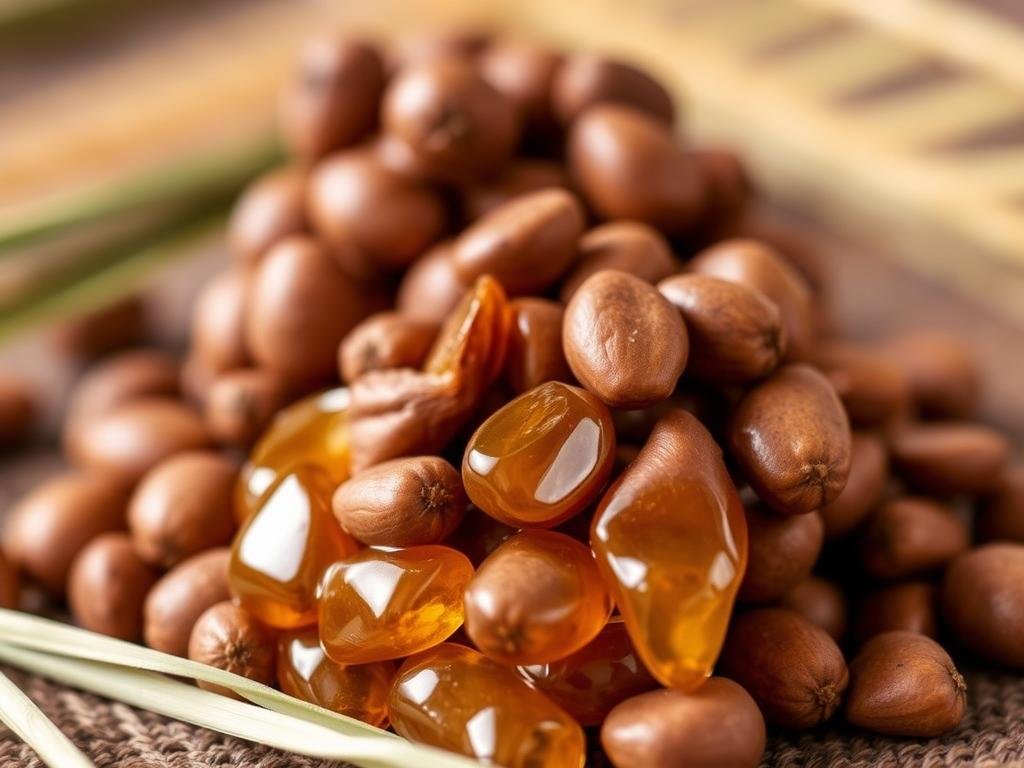
After the fleshy mesocarp is pressed to produce crude palm oil, a nut containing the kernel is left behind. زيت نواة النخيل (PKO) is extracted from this inner نواة النخيل, or seed, of the oil palm fruit. This distinction in source is the most significant factor separating it from CPO.
Unlike the reddish CPO, Palm Kernel Oil is pale yellow or nearly colorless in its raw form. It has a distinctly different chemical composition. PKO is very high in saturated fats, particularly the medium-chain fatty acid called lauric acid (around 48%). This makes its fatty acid profile remarkably similar to that of coconut oil.
The extraction of PKO is a separate, more intensive process. The hard nuts are first cracked, separating the valuable kernels from the fibrous قشرة نواة النخيل, which itself is a useful biofuel. The kernels are then crushed and pressed to extract the oil, leaving behind a protein-rich mash that becomes معصرة نواة النخيل, a key ingredient in animal feed. This dual-oil capability is what makes the oil palm tree such a high-yielding crop.

The Ultimate Showdown: CPO vs. PKO
While they both originate from the same fruit, their distinct sources lead to major differences in their chemical makeup, physical properties, and, consequently, their uses in global industries. Here is a breakdown of the difference between crude palm oil and palm kernel oil.
Source and Extraction: The Core Distinction
To recap, the core distinction lies in their origin:
- Crude Palm Oil (CPO): Extracted from the fleshy, fibrous pulp (mesocarp) of the fruit.
- Palm Kernel Oil (PKO): Extracted from the kernel, or seed, inside the fruit’s nut.
This fundamental variance dictates every other property that follows.
Nutritional Profile and Composition
Their nutritional profiles are worlds apart. A study highlighted in the مجلة كيمياء الأغذية details these differences in their fatty acid composition:
- Crude Palm Oil (CPO): Has a balanced profile of saturated and unsaturated fats. It’s roughly 50% saturated (mainly palmitic acid) and 50% unsaturated (mainly oleic acid, the primary fat in olive oil). It is also rich in beta-carotene and Vitamin E (tocotrienols).
- Palm Kernel Oil (PKO): Is over 80% saturated fat, dominated by lauric acid. It lacks the beta-carotene found in CPO and has a different type of Vitamin E profile.
Color, Taste, and Smell: Sensory Distinctions
In their raw forms, you could never mistake one for the other:
- CPO: Deep red-orange color with a distinct, somewhat savory flavor and smell.
- PKO: Pale yellow or clear with a very neutral, light flavor and aroma.
Most commercial palm oil is refined, bleached, and deodorized (RBD), which removes the color and flavor from CPO. However, PKO’s naturally neutral profile and sharp melting point make it uniquely suited for specific applications.

Industrial Applications: A World of Uses
The different chemical structures dictate where these oils are used. This is perhaps the most important practical distinction for consumers.
- Crude Palm Oil (and its refined version, RBD Palm Oil): Is the world’s most consumed vegetable oil. It is a workhorse in the food industry for frying, baking, and as an ingredient in margarine, confectionery, and pre-packaged foods. It is also a leading feedstock for biodiesel production.
- Palm Kernel Oil: Its high lauric acid content makes it an excellent oil for soap making, as it creates a hard bar with a rich, cleansing lather. It’s also a staple in the cosmetic and detergent industries. In food, its sharp melting point at just above room temperature makes it ideal for chocolate-like coatings, ice cream coatings, and some types of confectionery that need to “melt in your mouth.”
Sustainability and Environmental Impact: A Shared Story
When discussing palm oil, it’s impossible to ignore the environmental concerns associated with its cultivation, such as deforestation and loss of biodiversity. It’s important to note that these issues are tied to the oil palm tree itself, not one specific type of oil.
Therefore, the drive for sustainability applies to the entire palm complex. Organizations like the المائدة المستديرة حول زيت النخيل المستدام (RSPO) work to certify palm oil that is produced without causing harm to ecosystems. When you see “Certified Sustainable Palm Oil” on a product, it refers to practices governing the entire plantation, which produces both the fruit pulp and the kernel.
ال الصندوق العالمي للطبيعة (WWF) emphasizes that boycotting palm oil isn’t the solution, as alternative crops often require much more land to produce the same amount of oil. Instead, the focus should be on demanding and supporting sustainable sourcing practices.
الأسئلة الشائعة (FAQ)
Is palm kernel oil healthier than crude palm oil?
“Healthier” is subjective. Crude palm oil is a great source of Vitamins A and E. Palm kernel oil is very high in saturated fat, similar to coconut oil, which some dietary approaches favor while others advise against. The key is understanding their different nutritional makeups.
Can I substitute one for the other in cooking?
Generally, no. Refined palm oil (from CPO) has a high smoke point and is excellent for frying. PKO has a much lower smoke point and a very different texture, making it unsuitable for high-heat cooking but great for coatings.
Why is this distinction so important?
For formulators, chefs, and manufacturers, their properties are not interchangeable. For consumers, it helps in understanding ingredient labels and making informed choices about the products they buy and the type of fats they consume.
خاتمة
The distinction between CPO and PKO is stark, despite their shared origin from a single fruit. CPO is the reddish, vitamin-rich oil from the fleshy pulp, used widely in food and energy. PKO is the pale, lauric acid-rich oil from the inner kernel, prized in soaps, cosmetics, and confectionery.
Both oils are pillars of the global supply chain, and both are linked by a shared need for sustainable cultivation practices. By understanding their unique identities, we can better appreciate their distinct roles in the products we use every day.
تقدم شركة ماكمور أمانة سجاهتيرا منتجات نخيل عالية الجودة مثل عصارة نواة النخيل، وقشرة نواة النخيل، وزيت النخيل الخام، وزيت نواة النخيل، وغيرها. يرجى التواصل معنا عبر واتساب على الرقم +6282140002198 أو عبر البريد الإلكتروني على admin@makmuramanah.co.id.هل تبحث عن منتجات النخيل عالية الجودة؟
 Arabic
  English
  Indonesian
  Chinese