
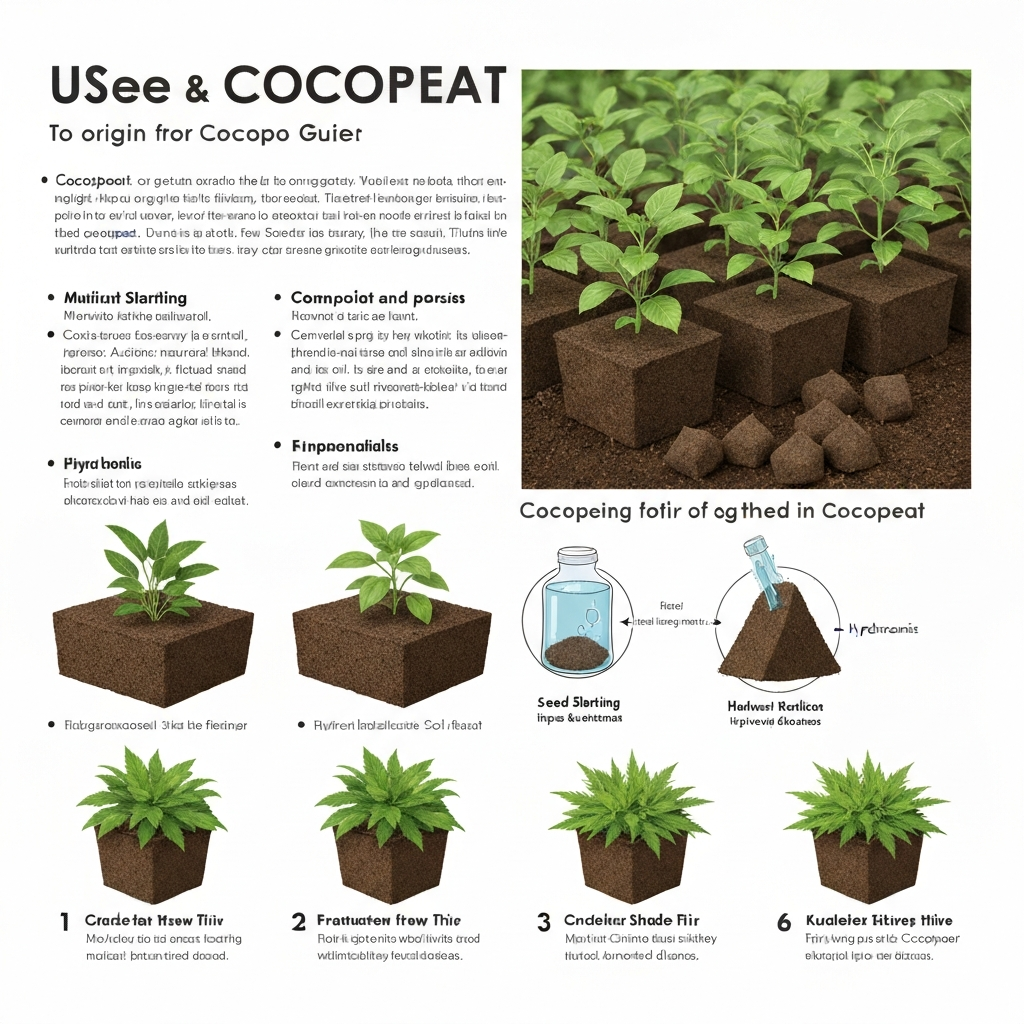
Cocopeat: 7 Ultimate Uses & Incredible Plant Pros (2026)
جوز الهند has entirely revolutionized modern horticulture, offering an incredible, natural solution to struggling plant growth and poor soil aeration. If your precious indoor plants or outdoor crops are currently suffering from waterlogged roots or severe nutrient deficiencies, replacing traditional dirt mediums with this substrate might be your absolute best move in 2026.
Historically, commercial growers relied heavily on environmentally taxing peat moss. However, recent agricultural studies indicate that shifting to sustainable alternatives can reduce greenhouse gas emissions by up to 30%. This comprehensive guide reveals exactly how this sustainable coconut byproduct can dramatically transform your garden and maximize greenhouse yields.
Furthermore, this versatile growing medium retains up to 10 times its weight in water while maintaining excellent oxygenation. Let us explore exactly what this material entails, its primary applications, and how understanding how to use cocopeat for plants effectively can guarantee maximum plant vitality.
What Exactly is Cocopeat?
جوز الهند is a natural, 100% organic growing medium extracted directly from the fibrous husk of coconuts. Often referred to as coir pith or coir dust, it serves as an eco-friendly soil amendment that provides exceptional water retention, optimal root aeration, and a naturally antifungal environment for superior root development in various plant species.
How Coconut Coir is Manufactured
The production of this remarkable substrate begins with harvesting mature coconut husks. First, the husks undergo a rigorous curing process that can take several months. This curing naturally softens the tough fibers and prepares them for further extraction.
Consequently, agricultural manufacturers wash, thoroughly dry, and tightly compress the remaining coir dust into manageable blocks. If you are actively sourcing materials for a large-scale agricultural operation, exploring high-quality products like our جوز الهند ensures you consistently receive premium-grade, adequately buffered supplies.
Chemical Composition and pH Levels
Unlike highly acidic peat moss, this unique medium boasts a near-neutral pH naturally ranging from 5.5 to 6.8. This optimal pH allows for immediate nutrient uptake without ever requiring heavy, complicated lime applications that alter soil chemistry.
According to a comprehensive study published by the Journal of Agricultural Science, coconut coir dust significantly improves cation exchange capacity in sandy soils. This brilliantly prevents vital nutrients from washing away during heavy rainfall or aggressive irrigation schedules.
[Image: Close-up of organic coconut coir fibers in a garden trowel]

7 Ultimate Uses of Cocopeat in Modern Gardening
Whether you operate a massive commercial farm or a small backyard greenhouse, this substrate offers incredible versatility. Here are the top seven ultimate applications for integrating this organic material into your agricultural setups:
- Hydroponic Farming: It acts as a flawless, inert base for advanced drip irrigation systems.
- Seed Germination: The fine, airy texture ensures delicate seedlings can push through effortlessly.
- Potting Mixes: Blending it with perlite creates a lightweight, highly moisture-retentive indoor plant mix.
- Soil Amendment: Tilling it into compacted clay soils drastically improves deep drainage and oxygen flow.
- Worm Composting: It provides excellent, pH-neutral bedding material for vermiculture setups.
- فرش الزواحف: Beyond plants, its massive absorbency makes it perfect for terrariums and vivariums.
- Mushroom Cultivation: The inherently sterile nature heavily prevents competitor fungi from overtaking spores.
Advanced Hydroponic Growing Systems
Commercial hydroponics heavily rely on perfectly inert substrates to deliver highly precise nutrient formulations to crops. Coir excels brilliantly here because it anchors roots securely without interfering with the delicate chemical balance of liquid fertilizers.
Moreover, pairing it with other highly effective organic filtration materials like قشرة نواة النخيل can significantly enhance baseline drainage in larger agricultural setups. Because it is extremely lightweight when completely dry, commercial shipping and handling logistics become incredibly cost-effective.
Seed Starting Excellence with Cocopeat
Seedlings absolutely require a delicate balance of consistent moisture and oxygen to thrive during early growth stages. By utilizing a جوز الهند base, progressive growers eliminate the terrifying risk of damping-off disease, a common lethal fungal infection frequently found in traditional potting soils.
Additionally, it provides a fluffy, unstructured texture that actively encourages rapid, vigorous root expansion right from germination. This translates directly into stronger, hardier plants when they are finally transplanted into larger permanent garden beds.
Incredible Pros of Using Cocopeat for Plants
Evaluating the cocopeat pros and cons ensures you make highly informed horticultural decisions. Switching to this coconut-derived medium offers unparalleled, scientifically proven advantages for both amateur and professional horticulturists looking to strictly optimize their crop yields in 2026.
Superior Water Retention & Aeration
The sponge-like cellular structure absorbs water incredibly rapidly and releases it slowly to the plant’s delicate root zone. This specifically means you need to water significantly less frequently while actively preventing the roots from suffocating in standing liquid.
In sharp contrast to standard garden dirt, a specialized coir mixture beautifully retains tiny air pockets even when fully saturated. This unique dual-action mechanism completely eliminates common root rot risks associated with chronic overwatering.
Naturally Antifungal and Pest Resistant
Traditional topsoil often harbors harmful pathogenic fungi, microscopic nematodes, and ravenous pests that can easily decimate young plants. In wonderful contrast, this natural substrate effectively resists bacterial and fungal growth due to its highly sterile processing and inherent biochemical properties.
Consequently, using it drastically reduces the tedious need for harsh, toxic chemical pesticides in your indoor greenhouse. This ultimately creates a vastly safer environment for your family, pets, and local native wildlife populations.
Eco-Friendly and 100% Sustainable
Environmental conservation remains a crucial, non-negotiable consideration in modern agriculture. Natural peat bogs unfortunately take many centuries to form, and their aggressive industrial extraction heavily releases trapped, ancient carbon directly into the atmosphere.
ال وكالة حماية البيئة (EPA) frequently advocates for highly sustainable farming practices. Utilizing recycled coconut husks perfectly aligns with these global green initiatives without sacrificing agricultural performance.
[Image: A thriving hydroponic lettuce farm utilizing coconut coir substrate]

Potential Cons and How to Mitigate Them
Despite the immense plant pros heavily leaning toward the positive spectrum, you absolutely must be aware of a few minor drawbacks before seamlessly implementing it extensively into your professional garden.
High Salinity Levels in Unwashed Coir
Because resilient coconuts naturally grow near the salty ocean, the outer husks inherently absorb noticeably high amounts of sodium and chloride. If you carelessly purchase unwashed or inferior grades, these lingering salts can severely stunt early plant growth.
Therefore, you must always intelligently source triple-washed, premium coir to actively avoid highly toxic salt accumulation in your expensive pots. Rinsing the substrate yourself is also a viable secondary mitigation strategy.
Navigating Nutrient Lockout (Calcium & Magnesium)
Coir possesses an extremely high cation exchange capacity that is naturally heavily loaded with potassium ions. Unfortunately, this unique trait can easily bind up available calcium, aggressively rendering it completely unavailable to your growing plants.
To safely fix this, savvy growers must proactively pre-treat the medium using a specialized buffering solution. For robust livestock and advanced plant nutrition solutions, intelligently exploring أملاح الكالسيوم للأحماض الدهنية لزيت النخيل provides brilliant insight into advanced agricultural calcium applications.
جوز الهند مقابل طحالب الخث: المقارنة النهائية
Many passionate gardeners constantly debate the ultimate choice between these two distinct soil amendments. When looking at a direct cocopeat vs peat moss comparison, the winner becomes increasingly clear for environmentally conscious growers everywhere.
| ميزة | جوز الهند | الخث |
|---|---|---|
| الاستدامة | Highly sustainable byproduct | Non-renewable, destroys natural bogs |
| مستوى الرقم الهيدروجيني | Neutral (5.5 – 6.8) | Highly Acidic (3.5 – 4.5) |
| Water Absorption | Absorbs water instantly | Repels water when completely dry |
| عمر | Lasts 3-4 years before breaking down | Breaks down rapidly in 1-2 years |
Making the Right Choice for 2026
The extensive scientific data heavily favors the renewable coconut alternative for modern indoor cultivation. The prominent الجمعية الملكية للبستنة has proudly pledged to definitively phase out peat entirely due to massive ecological concerns.
Consequently, effectively mastering how to optimally use coconut coir for plants is absolutely no longer just an optional hobby; it is an incredibly essential skill for ensuring robust, future-proof agricultural farming.
How to Prepare and Buffer Cocopeat Blocks
Most commercial coir is economically shipped in highly compressed bricks to safely save on international freight costs. You absolutely must thoroughly rehydrate and heavily prepare these dense blocks correctly before allowing your precious plants to interact with them.
Buffering Cocopeat: The Step-by-Step Process
First, carefully place the dense, compressed block directly into a massive, waterproof container. Gently add warm water highly gradually, explicitly allowing the tight fibers to magically expand naturally over time.
A standard commercial 5kg block typically absolutely requires about 20 to 25 liters of fresh water and will eventually yield approximately 70 liters of incredibly fluffy growing medium. Avoid heavily using forceful water streams, as this aggressive action can permanently damage the extremely delicate fibrous structure.
Crucial Tools Needed for Buffering:
- A massive 20-gallon mixing tub for adequate, unrestricted expansion.
- Warm, filtered water to significantly speed up the natural hydration process.
- Commercial Cal-Mag buffering liquid to systematically replace bound sodium ions.
- A highly durable fine mesh screen or fabric pot for the final, thorough freshwater rinse.
[Image: Infographic showing the step-by-step rehydration and buffering process of compressed coir blocks]

Creating the Perfect Coir Soil Blend
Creating the definitive, ultimate potting mix absolutely requires brilliantly balancing immense moisture retention with rapid, effective drainage. For standard tropical houseplants, beautifully combine 40% washed coir, 30% perlite, 20% premium orchid bark, and 10% rich worm castings.
Furthermore, intentionally mixing in rich, natural agricultural byproducts such as وجبة جوز الهند and highly nutritious معصرة نواة النخيل can act as an exceptionally potent, organic slow-release fertilizer complex.
Future Trends in Agricultural Mediums
As the massive global population rapidly increases, brilliantly maximizing crop yields strictly within limited geographic spaces undeniably becomes paramount. Dedicated agricultural researchers continuously aggressively test innovative, highly advanced soil amendments to combat worsening climate volatility.
A highly respected recent publication by ساينس دايركت beautifully highlights the dramatically escalating role of advanced bio-substrates in ultra-modern vertical farming ecosystems. Seamlessly combining this phenomenal medium with highly advanced hydroponic nutrients will easily be the definitive global standard for high-efficiency food production strictly moving forward.
[Embedded Video Suggestion: “Step-by-Step: How to Buffer and Prepare Compressed Coir Blocks for Hydroponics”]
Before enthusiastically transitioning entirely to a brand new hydroponic substrate, strictly ensure you systematically monitor your plant’s sensitive response over a few critical weeks. The massive, glaring signs your struggling plants desperately need a noticeably better medium clearly include:
- Aggressive yellowing leaves strictly due to severe root suffocation.
- Stagnant water visibly pooling persistently on the dense soil surface heavily after routine watering.
- Unexplained, highly persistent fungal gnats infestations aggressively thriving in damp, rotting topsoil.
- Severely stunted overall growth drastically despite strictly following a highly regular fertilization schedule.
مكمور أمانة سجيتيرا نُقدّم منتجات نخيل عالية الجودة مثل مُستخلص نواة النخيل، وقشور نواة النخيل، وزيت النخيل الخام، وزيت نواة النخيل، وغيرها. يُرجى التواصل معنا على واتساب +6282140002198 أو راسلنا عبر البريد الإلكتروني على admin@makmuramanah.co.id.
الأسئلة الشائعة (FAQ)
Is cocopeat good for all indoor plants?
Yes, high-quality جوز الهند is an incredibly excellent base for almost all delicate indoor plants. Because of its superb root aeration and balanced moisture retention, it heavily prevents fatal root rot. Simply add balanced liquid fertilizer for sustained growth.
How long does cocopeat last before degrading?
Thanks directly to its exceptionally high inherent lignin content, this remarkably robust medium safely breaks down incredibly slowly. It typically reliably lasts between three to four years in a standard potting mix before requiring any physical replacement.
Does cocopeat contain natural nutrients?
No, جوز الهند is highly considered a mostly inert hydroponic substrate. While it naturally safely holds incredibly small amounts of potassium, it completely lacks essential nitrogen. Growers must proactively supply a highly comprehensive fertilizer schedule for maximum health.
Can I mix it directly with normal garden soil?
Absolutely. Actively mixing it deeply into dense, heavy clay soil dramatically massively improves crucial drainage and deep soil aeration. A highly standard, globally proven agricultural ratio of one part coir to two parts native soil reliably works perfectly.
What is the difference between coir pith and coir chips?
Coir pith is the finely ground dust heavily resembling normal topsoil, making it exceptionally ideal for fragile seeds. In stark contrast, massive coir chips provide exceptionally massive air pockets and extremely rapid drainage naturally suited for tropical orchids.
[Image: Side-by-side comparison of a healthy root system in coir versus compacted soil]

Conclusion: Elevating Your Gardening Game
Intelligently upgrading your entire soil matrix is absolutely the fastest, most effective way to effortlessly achieve incredibly robust, totally disease-free plants in 2026. By actively utilizing this highly sustainable, incredibly absorbent substrate, you significantly sustainably reduce watering frequencies while promoting explosive root growth.
Whether you are rapidly transitioning away from highly environmentally damaging peat moss or aggressively setting up a massive high-tech indoor hydroponic facility, integrating this organic agricultural byproduct is a proven strategy. Remember to always strictly source premium-grade materials.
If you are entirely ready to completely rapidly revolutionize your massive agricultural yields and global environmental footprint simultaneously, intentionally investing in high-quality جوز الهند is undoubtedly the definitive, unparalleled choice for incredibly modern, eco-conscious cultivation.
 Arabic
  English
  Indonesian
  Chinese