
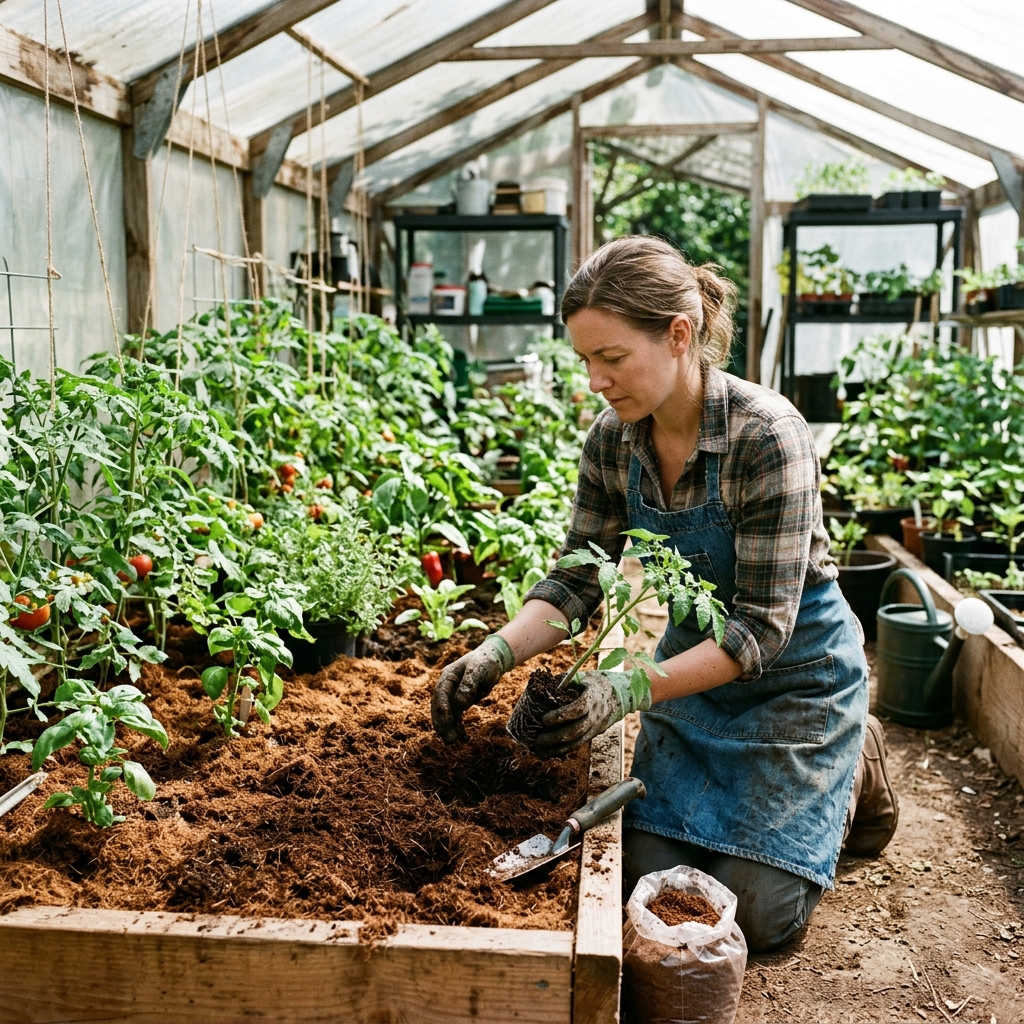
您可以 直接在椰糠中种植植物,但要维持植物的长期健康,必须掌握其独特的化学结构。许多园艺从业者错误地认为椰糠的作用与传统泥炭藓或肥沃的园土相同。然而,如果直接在未经处理改良的生椰糠粉中种植,往往会导致顽固的矿物质锁死和叶片黄化。
现代农业科学研究表明,椰糠是一种优质、可持续的 无土栽培介质 用于商业农业。根据国际统计数据整理由 联合国粮食及农业组织(粮农组织),椰子加工每年产生数百万吨天然椰壳纤维。全球前瞻性种植者已采用这种可再生基质取代开采的泥炭藓,以减少生态足迹。
运行纯椰壳栽培系统的本质类似于被动式 椰糠水培。椰糠本身不含天然肥料,并具有捕获微量元素的天然电荷。只要正确管理这些电化学特性,就能促进根系快速分枝,实现最佳基质透气性,并对营养供应方案获得前所未有的控制力。
植物可以直接在椰糠中种植吗?科学原理解析
是的,你可以 直接在椰糠中种植植物 无需将其与田园土、堆肥、珍珠岩或蛭石混合。在标准园艺系统中,纯椰糠充当无菌、惰性的物理基质,在固定根系结构的同时保持水分。由于椰糠内含的原生矿物质微乎其微,您必须通过均衡的液体水肥一体化方案精准提供植物所需的每一毫克养分。
商业温室设施通常会在独立的椰糠容器中种植高需肥作物,例如藤蔓番茄、脆甜椒和草莓。粉碎椰壳的海绵状微观结构具有极高的孔隙度,可防止脆弱的主根窒息。然而,在纯椰糠中种植作物需要准确理解两个关键化学因素:惰性基础肥力和活性阳离子交换化学特性。
深入了解作为惰性基质的椰糠
未经处理的椰尘在机械性能上更像多孔海绵,而非具有生物活性的表土。天然花园土壤含有丰富的有机质、蚯蚓粪和本土微生物,能在数月内持续稳定地释放微量元素。截然相反的是,加工后的椰糠完全不含基础氮、磷、钾储备。
因此,种植者在进行容器栽培时,必须建立明确的水培思维模式,无论何时他们 直接在椰糠中种植植物 用于容器生产。您可以通过校准的灌溉水精确把控作物的矿物质吸收。这种惰性物理结构为经验丰富的园艺师提供了绝对的精准度,但对施肥配方的误差容忍度极低。
阳离子交换量(CEC)的化学原理
加工椰糠表现出较强的 椰糠阳离子交换量 种植者必须对其进行调控,通常介于40至100 meq/100g之间。椰壳纤维上复杂的有机木质素带有负静电荷。在热带沿海环境中,这些结合位点会天然吸引并锁定单价钠离子(Na+)和钾离子(K+)。
一项关于园艺基质的基准研究来自 佛罗里达大学 IFAS 推广中心 (University of Florida IFAS Extension) 表明,未处理的椰糠会强烈螯合溶解的钙和镁。与此同时,未经洗涤的纤维会将储存的钠和钾直接置换至根际中。这种化学置换会导致严重的 椰糠钙镁缺乏症 毒性,除非种植者通过科学的缓冲处理对介质进行预处理。

使用纯椰糠基质种植的优缺点
从传统土壤混合物转向纯椰糠介质,既展现出显著的结构优势,也伴随着明显的营养调控挑战。评估 使用纯椰糠种植的优缺点 有助于种植者针对其特定的容器种植系统设计最佳的肥水管理方案。
纯椰糠的优势
- 卓越的透气孔隙度: 纯椰糠即使在达到完全持水能力时,仍能保持约 15% 至 25% 的空气孔隙空间,有效减少根腐病病原体的滋生。
- 超强的保水能力: 椰糠可吸收高达自身干重十倍的水分,在高温时期有效保护根系。
- 天然温和的 pH 范围: 优质椰糠的基础 pH 值介于 5.8 至 6.5 之间,正是主要营养元素吸收的最佳范围。
- 可持续且可重复使用: 提取自可再生的椰子收成,经清洗的椰糠能保持其物理形态,可跨多个种植周期循环利用。
可持续的加工生态系统还会产出互补的植物副产品,赋能全球农业。例如,农业加工企业对资源进行精炼,例如 棕榈仁压榨机 和 椰干粉 以供应牲畜饲料并增强循环生物经济价值链。
缺点与生理风险
- 完全缺乏营养元素: 椰糠本身不提供任何基础氮、磷或微量元素,需要持续补充肥料。
- Cation Nutrient Starvation: Unbuffered fibers bind vital calcium cations, triggering terminal blossom-end rot and marginal leaf curl.
- Elevated Electrical Conductivity (EC): Low-grade coir holds residual coastal salt crusts that raise substrate EC and cause severe osmotic root burn.
According to research published by 科学直接, managing substrate electrical conductivity cocopeat profiles within conservative thresholds is critical to prevent plant dehydration caused by osmotic pressure.

Cocopeat vs. Traditional Potting Soil: Detailed Comparison
Selecting between raw coconut fiber and an enriched coco peat potting mix depends upon your irrigation equipment and technical expertise. The table below details the functional differences between both cultivation options.
| Functional Metric | 100% Pure Cocopeat Substrate | Traditional Soil / Potting Blend |
|---|---|---|
| Initial Fertility | Completely inert (zero baseline N-P-K) | Moderate to rich (organic compost reserves) |
| 通气与排水 | Exceptional (resists settling and compaction) | Moderate (prone to compaction over time) |
| Rehydration Ability | Instant moisture uptake when fully dry | Poor (often hydrophobic when dehydrated) |
| Substrate pH Level | Predictable (stable 5.8 – 6.5 range) | Variable (6.0 – 7.5 depending on compost) |
| Insect Pest Risk | Minimal (naturally pathogen-free) | Moderate (frequently hosts fungus gnats) |
| Feeding Management | Strict liquid nutrient delivery required | Forgiving (retains native soil buffer) |
Step-by-Step Guide: How to Grow Plants Directly in Cocopeat
Executing an orderly preparation routine guarantees your transplants develop without mineral deficiencies or physical shock. Follow this proven protocol to prep, condition, and manage coir like a commercial professional.
Step 1: Hydrate and Wash Compressed Coir Bricks
Place your dense dehydrated coir brick into a broad tub and douse it with generous amounts of lukewarm water. Allow twenty minutes for the fibers to expand to their full physical volume. Thoroughly stir and wash the coir, draining the dark runoff through fine netting to strip out loose sand and fine dust.
Step 2: Complete the Buffering Process
Never skip buffering cocopeat prior to your initial potting cycle. Dissolve 7 grams of agricultural-grade calcium nitrate and 3 grams of magnesium sulfate (Epsom salts) per gallon of freshwater. Submerge the washed fibers completely in this cal-mag wash for 24 continuous hours, allowing calcium ions to saturate the negative exchange sites.
Step 3: Flush and Check Runoff Electrical Conductivity
Drain the chemical buffering solution and flush the coir repeatedly with clean tap or reverse osmosis water. Measure your drainage water using a calibrated handheld digital EC meter. Continue rinsing until your drainage electrical conductivity registers below 0.5 mS/cm, guaranteeing low baseline salinity for young root caps.
Step 4: How to Grow Plants Directly in Cocopeat Containers
Transfer the conditioned coir gently into fabric pots, nursery containers, or planting troughs without pressing the medium down aggressively. Preserving loose structural porosity ensures healthy oxygen exchange. Position your rooted seedling or rooted cutting into the core, stabilizing the base with damp coir.
Step 5: Master Fertilizing Plants Grown in 100 Cocopeat
Properly fertilizing plants grown in 100 cocopeat requires applying a complete hydroponic fertilizer solution with every irrigation cycle. Research from 宾夕法尼亚州立大学推广部 emphasizes that soilless fertigation solutions must supply balanced nitrate, potassium, phosphate, and chelated trace iron at an input pH of 5.8 to 6.2.
Industrial processing facilities also convert hard natural byproducts such as 棕榈仁壳 into clean biomass fuel and renewable energy products. Similarly, utilizing refined energy solutions like RBD CP8 and nutritional feed enhancements like 棕榈油脂肪酸钙盐 mirrors the resource efficiency modern agricultural industries demand.

Can You Grow Vegetables Directly in Cocopeat? Best Crops Ranked
Gardeners regularly ask: can you grow vegetables directly in cocopeat without losing flavor or yield? The answer is an enthusiastic yes. In fact, specific crop families perform far better in high-oxygen coir than in heavy backyard clay.
Heavy-Feeding Vine Vegetables
Indeterminate tomatoes, cucumbers, and sweet bell peppers thrive remarkably well in standalone coir systems. Because you feed these heavy consumers via precision nutrient solutions, they build extensive root balls that resist common soil blights. Delivering a 10% to 20% drainage runoff with every watering prevents toxic salt accumulation around lower root nodes.
Fast-Turn Leafy Salad Greens
Salad crops like loose-leaf lettuce, wild arugula, spinach, and Swiss chard adapt seamlessly to pure coconut pith. Because leafy greens possess shallow root networks and brief production windows, they benefit immensely from constant hydration. Furthermore, the absence of soil grit makes washing and packaging harvested leaves exceptionally fast.
Aromatic Culinary Herbs
Culinary favorites including sweet basil, spearmint, oregano, and rosemary produce robust foliage when grown directly in unblended coir. Simply monitor moisture dry-back rates carefully to avoid waterlogging mediterranean herb species that favor well-drained roots.
Educational Resource: Coir Buffering Video Guide
[Video Embed Suggestion: "Step-by-Step Cocopeat Buffering and EC Testing for Hydroponic Growers" — URL: https://www.youtube.com/watch?v=example-cocopeat-buffering (Duration: 8:45)]
Makmur Amanah Sejahtera 我们提供高品质的棕榈产品,例如棕榈仁粕、棕榈仁壳、原棕榈油、棕榈仁油等。请通过 WhatsApp 联系我们。 +6282140002198 或发送电子邮件至 admin@makmuramanah.co.id.

常见问题解答
Do you need to mix regular potting soil with cocopeat?
No, blending soil with cocopeat is not necessary for plant growth. Unblended, properly buffered coir functions as an outstanding standalone soilless hydroponic substrate. However, you must apply balanced liquid hydroponic fertilizer with every irrigation event since pure coir contains zero natural nutrients.
How often should you water plants in pure cocopeat?
Water plants whenever the top half-inch of coir feels dry to the touch. Because coir holds exceptional moisture while retaining aeration, large greenhouse crops require daily fertigation with 10% to 20% runoff, whereas indoor houseplants typically need water every three to five days.
Can seeds germinate successfully directly in raw cocopeat?
Yes, seeds germinate quickly in fine cocopeat because it maintains steady moisture and loose structure. Seedlings require no supplemental fertilizer until their first set of true leaves emerge, at which point you must supply a gentle, diluted liquid hydroponic fertilizer solution.
Why do leaves turn pale yellow in unbuffered cocopeat?
Yellowing leaves indicate calcium or nitrogen lockout caused by raw coir’s cation exchange properties. Unbuffered fibers seize calcium and magnesium ions while releasing high amounts of sodium and potassium, starving your crop’s root systems and triggering severe interveinal leaf chlorosis.
Can you clean and reuse cocopeat after harvesting?
Yes, cocopeat is structurally durable and reusable for three to five years. Remove spent root clumps, wash the fibers with clean water to flush excess accumulated fertilizer salts, treat the medium with calcium nitrate buffering solution, and sterilize before replanting.
Final Verdict: Should You Grow Plants Directly in Cocopeat?
Choosing to 直接在椰糠中种植植物 gives you complete control over root zone nutrition and aeration. By eliminating soil-borne insect pathogens, preventing root compaction, and dramatically reducing water waste, pure coir empowers gardeners to achieve commercial-grade harvest weights. Diligent mineral buffering and consistent liquid fertigation remain non-negotiable fundamentals for lasting success.
Whether you manage commercial greenhouse rows or cultivate potted patio vegetables, premium coconut coir delivers dependable, repeatable vigor. Wash away raw processing salts, condition your fibers with calcium nitrate, and manage your solution EC on every feed. When managed with proper technique, learning how to 直接在椰糠中种植植物 will unlock vibrant, high-yielding crops throughout 2026 and beyond.



