
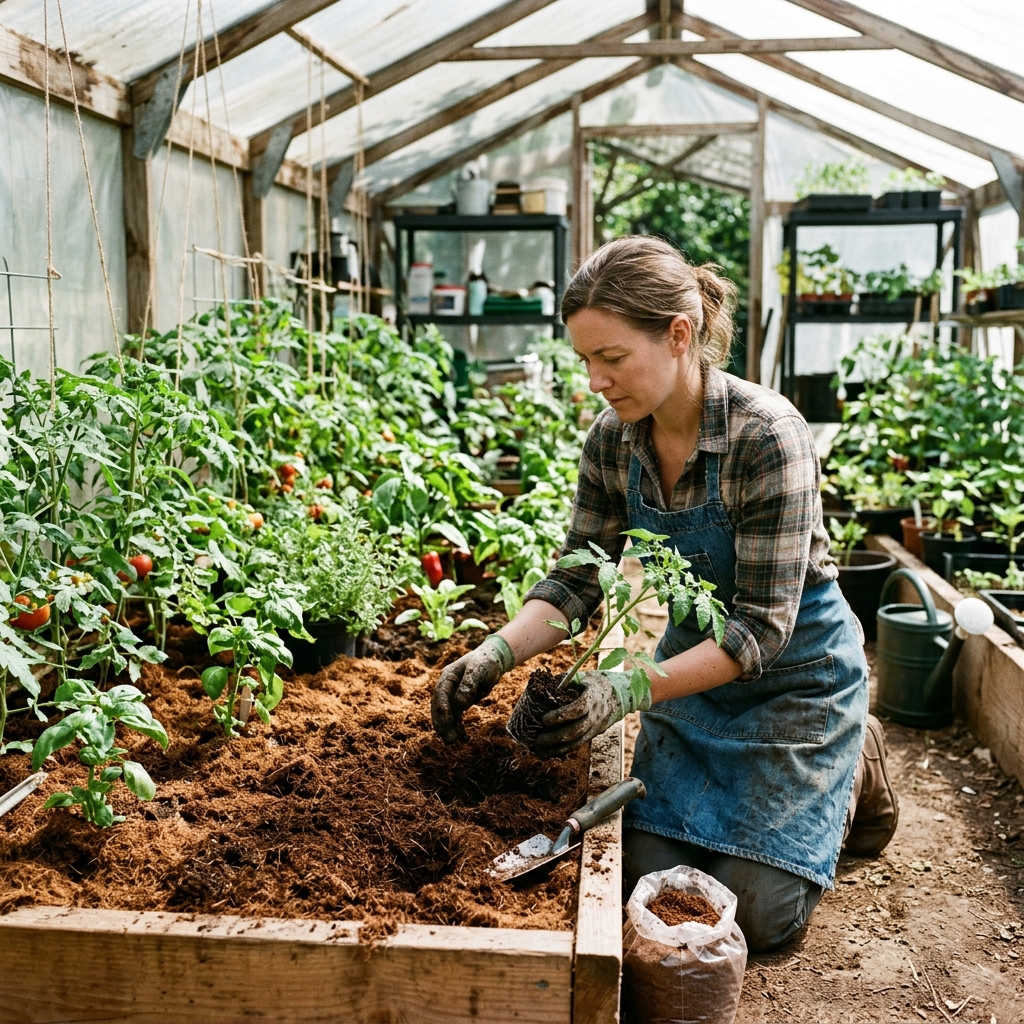
You can grow plants directly in cocopeat, but sustaining long-term plant health requires mastering its unique chemical structure. Many horticulturalists mistakenly assume coconut coir functions just like traditional peat moss or fertile garden loam. However, planting in raw, unamended coir pith frequently induces stubborn mineral lockouts and chlorotic leaves.
Modern agronomic research demonstrates that coir serves as a premier, sustainable soilless growing medium for commercial farming. According to international statistics compiled by the Food and Agriculture Organization (FAO), coconut processing yields millions of tons of natural coir husk fiber annually. Progressive growers worldwide have replaced mined sphagnum moss with this renewable substrate to reduce ecological footprints.
Operating a pure coir setup functions essentially like passive coco coir hydroponics. Coconut coir contains zero native fertilizers and possesses natural electrical charges that capture trace elements. When you manage these electrochemical properties correctly, you establish rapid root branching, optimal substrate oxygenation, and unprecedented control over your feeding regime.
Can You Grow Plants Directly in Cocopeat? The Science Explained
Yes, you can grow plants directly in cocopeat without blending it with field dirt, compost, perlite, or vermiculite. In standard horticultural systems, pure coir behaves as a sterile, inert physical matrix that anchors root structures while holding moisture. Because coir contains negligible intrinsic minerals, you must deliver every single milligram of plant nutrition through a balanced liquid fertigation regimen.
Commercial greenhouse facilities routinely grow heavy-feeding crops such as vine tomatoes, crisp bell peppers, and strawberries in standalone coir containers. The spongy microstructure of pulverized coconut husks provides incredible porosity, protecting delicate taproots against suffocation. Nonetheless, producing crops in pure coir demands an accurate understanding of two primary chemical factors: inert baseline fertility and active cation exchange chemistry.
Understanding Cocopeat as an Inert Substrate
Raw coconut dust behaves mechanically like a cellular sponge rather than biologically active topsoil. Natural garden beds host rich organic matter, worm castings, and native microbes that release micronutrients steadily over months. In stark contrast, processed coconut coir arrives completely free of foundational nitrogen, phosphorus, and potassium reserves.
Consequently, growers must adopt an intentional hydroponic mindset whenever they grow plants directly in cocopeat for container production. You determine the exact mineral uptake of your garden through calibrated irrigation water. This inert physical framework grants absolute precision to experienced horticulturists, yet leaves little margin for inaccurate fertilizing formulations.
The Chemistry of Cation Exchange Capacity (CEC)
Processed coir exhibits a vigorous cation exchange capacity coco growers must regulate, typically spanning 40 to 100 meq/100g. The complex organic lignins on coir fibers display negative electrostatic charges. In coastal tropical environments, these binding sites naturally attract and lock mono-valent sodium (Na+) and potassium (K+) ions.
A benchmark study on horticultural substrates from the University of Florida IFAS Extension demonstrates that raw coir aggressively sequesters dissolved calcium and magnesium. Concurrently, unwashed fibers displace stored sodium and potassium straight into the rhizosphere. This chemical displacement causes acute calcium magnesium deficiency coir toxicity unless growers pretreat the medium through scientific buffering.

Pros and Cons of Planting in Pure Cocopeat Substrates
Transitioning away from conventional soil mixtures toward unblended coconut pith presents notable structural strengths alongside distinct nutritional hurdles. Evaluating the pros and cons of planting in pure cocopeat allows growers to design optimal fertigation programs for their specific container garden.
Advantages of Pure Cocopeat
- Unbeatable Air Porosity: Pure coir maintains roughly 15% to 25% air pore space even at total moisture capacity, mitigating root rot organisms.
- Massive Water Retention: Coir absorbs up to ten times its dry mass in water, protecting root systems during warm periods.
- Naturally Mild pH Range: Premium coir delivers a baseline pH between 5.8 and 6.5, providing the sweet spot for primary nutrient assimilation.
- Sustainable and Reusable: Derived from renewable coconut harvests, washed coir holds its physical shape and can be recycled across multiple planting cycles.
Sustainable processing ecosystems also yield complementary botanical byproducts that strengthen global agriculture. For instance, agricultural processors refine resources such as Palm Kernel Expeller and Copra Meal to supply livestock feeds and enhance circular bio-economy value chains.
Disadvantages and Physiological Hazards
- Total Nutrient Absence: Coir provides no baseline nitrogen, phosphate, or trace elements, requiring constant supplemental feeding.
- Cation Nutrient Starvation: Unbuffered fibers bind vital calcium cations, triggering terminal blossom-end rot and marginal leaf curl.
- Elevated Electrical Conductivity (EC): Low-grade coir holds residual coastal salt crusts that raise substrate EC and cause severe osmotic root burn.
According to research published by ScienceDirect, managing substrate electrical conductivity cocopeat profiles within conservative thresholds is critical to prevent plant dehydration caused by osmotic pressure.

Cocopeat vs. Traditional Potting Soil: Detailed Comparison
Selecting between raw coconut fiber and an enriched coco peat potting mix depends upon your irrigation equipment and technical expertise. The table below details the functional differences between both cultivation options.
| Functional Metric | 100% Pure Cocopeat Substrate | Traditional Soil / Potting Blend |
|---|---|---|
| Initial Fertility | Completely inert (zero baseline N-P-K) | Moderate to rich (organic compost reserves) |
| Aeration & Drainage | Exceptional (resists settling and compaction) | Moderate (prone to compaction over time) |
| Rehydration Ability | Instant moisture uptake when fully dry | Poor (often hydrophobic when dehydrated) |
| Substrate pH Level | Predictable (stable 5.8 – 6.5 range) | Variable (6.0 – 7.5 depending on compost) |
| Insect Pest Risk | Minimal (naturally pathogen-free) | Moderate (frequently hosts fungus gnats) |
| Feeding Management | Strict liquid nutrient delivery required | Forgiving (retains native soil buffer) |
Step-by-Step Guide: How to Grow Plants Directly in Cocopeat
Executing an orderly preparation routine guarantees your transplants develop without mineral deficiencies or physical shock. Follow this proven protocol to prep, condition, and manage coir like a commercial professional.
Step 1: Hydrate and Wash Compressed Coir Bricks
Place your dense dehydrated coir brick into a broad tub and douse it with generous amounts of lukewarm water. Allow twenty minutes for the fibers to expand to their full physical volume. Thoroughly stir and wash the coir, draining the dark runoff through fine netting to strip out loose sand and fine dust.
Step 2: Complete the Buffering Process
Never skip buffering cocopeat prior to your initial potting cycle. Dissolve 7 grams of agricultural-grade calcium nitrate and 3 grams of magnesium sulfate (Epsom salts) per gallon of freshwater. Submerge the washed fibers completely in this cal-mag wash for 24 continuous hours, allowing calcium ions to saturate the negative exchange sites.
Step 3: Flush and Check Runoff Electrical Conductivity
Drain the chemical buffering solution and flush the coir repeatedly with clean tap or reverse osmosis water. Measure your drainage water using a calibrated handheld digital EC meter. Continue rinsing until your drainage electrical conductivity registers below 0.5 mS/cm, guaranteeing low baseline salinity for young root caps.
Step 4: How to Grow Plants Directly in Cocopeat Containers
Transfer the conditioned coir gently into fabric pots, nursery containers, or planting troughs without pressing the medium down aggressively. Preserving loose structural porosity ensures healthy oxygen exchange. Position your rooted seedling or rooted cutting into the core, stabilizing the base with damp coir.
Step 5: Master Fertilizing Plants Grown in 100 Cocopeat
Properly fertilizing plants grown in 100 cocopeat requires applying a complete hydroponic fertilizer solution with every irrigation cycle. Research from Penn State Extension emphasizes that soilless fertigation solutions must supply balanced nitrate, potassium, phosphate, and chelated trace iron at an input pH of 5.8 to 6.2.
Industrial processing facilities also convert hard natural byproducts such as Palm Kernel Shell into clean biomass fuel and renewable energy products. Similarly, utilizing refined energy solutions like RBD CP8 and nutritional feed enhancements like Calcium Salts of Palm Oil Fatty Acids mirrors the resource efficiency modern agricultural industries demand.

Can You Grow Vegetables Directly in Cocopeat? Best Crops Ranked
Gardeners regularly ask: can you grow vegetables directly in cocopeat without losing flavor or yield? The answer is an enthusiastic yes. In fact, specific crop families perform far better in high-oxygen coir than in heavy backyard clay.
Heavy-Feeding Vine Vegetables
Indeterminate tomatoes, cucumbers, and sweet bell peppers thrive remarkably well in standalone coir systems. Because you feed these heavy consumers via precision nutrient solutions, they build extensive root balls that resist common soil blights. Delivering a 10% to 20% drainage runoff with every watering prevents toxic salt accumulation around lower root nodes.
Fast-Turn Leafy Salad Greens
Salad crops like loose-leaf lettuce, wild arugula, spinach, and Swiss chard adapt seamlessly to pure coconut pith. Because leafy greens possess shallow root networks and brief production windows, they benefit immensely from constant hydration. Furthermore, the absence of soil grit makes washing and packaging harvested leaves exceptionally fast.
Aromatic Culinary Herbs
Culinary favorites including sweet basil, spearmint, oregano, and rosemary produce robust foliage when grown directly in unblended coir. Simply monitor moisture dry-back rates carefully to avoid waterlogging mediterranean herb species that favor well-drained roots.
Educational Resource: Coir Buffering Video Guide
[Video Embed Suggestion: "Step-by-Step Cocopeat Buffering and EC Testing for Hydroponic Growers" — URL: https://www.youtube.com/watch?v=example-cocopeat-buffering (Duration: 8:45)]
Makmur Amanah Sejahtera provides high-quality palm products such as Palm Kernel Expeller, Palm Kernel Shell, Crude Palm Oil, Palm Kernel Oil, etc. Kindly contact us at WhatsApp +6282140002198 or email us at admin@makmuramanah.co.id.

Frequently Asked Questions
Do you need to mix regular potting soil with cocopeat?
No, blending soil with cocopeat is not necessary for plant growth. Unblended, properly buffered coir functions as an outstanding standalone soilless hydroponic substrate. However, you must apply balanced liquid hydroponic fertilizer with every irrigation event since pure coir contains zero natural nutrients.
How often should you water plants in pure cocopeat?
Water plants whenever the top half-inch of coir feels dry to the touch. Because coir holds exceptional moisture while retaining aeration, large greenhouse crops require daily fertigation with 10% to 20% runoff, whereas indoor houseplants typically need water every three to five days.
Can seeds germinate successfully directly in raw cocopeat?
Yes, seeds germinate quickly in fine cocopeat because it maintains steady moisture and loose structure. Seedlings require no supplemental fertilizer until their first set of true leaves emerge, at which point you must supply a gentle, diluted liquid hydroponic fertilizer solution.
Why do leaves turn pale yellow in unbuffered cocopeat?
Yellowing leaves indicate calcium or nitrogen lockout caused by raw coir’s cation exchange properties. Unbuffered fibers seize calcium and magnesium ions while releasing high amounts of sodium and potassium, starving your crop’s root systems and triggering severe interveinal leaf chlorosis.
Can you clean and reuse cocopeat after harvesting?
Yes, cocopeat is structurally durable and reusable for three to five years. Remove spent root clumps, wash the fibers with clean water to flush excess accumulated fertilizer salts, treat the medium with calcium nitrate buffering solution, and sterilize before replanting.
Final Verdict: Should You Grow Plants Directly in Cocopeat?
Choosing to grow plants directly in cocopeat gives you complete control over root zone nutrition and aeration. By eliminating soil-borne insect pathogens, preventing root compaction, and dramatically reducing water waste, pure coir empowers gardeners to achieve commercial-grade harvest weights. Diligent mineral buffering and consistent liquid fertigation remain non-negotiable fundamentals for lasting success.
Whether you manage commercial greenhouse rows or cultivate potted patio vegetables, premium coconut coir delivers dependable, repeatable vigor. Wash away raw processing salts, condition your fibers with calcium nitrate, and manage your solution EC on every feed. When managed with proper technique, learning how to grow plants directly in cocopeat will unlock vibrant, high-yielding crops throughout 2026 and beyond.

 English
 Indonesian
 Chinese
 Arabic
