Securing a verified GACC approved Indonesian palm kernel expeller requires strict compliance with Chinese customs standards, direct origin tracing from certified crushing mills, and pre-shipment lab verification under HS code 2306.60.90. Importers, livestock feed compounders, and regional distributors must confirm registered facility numbers, monitor moisture and free fatty acid thresholds, and align container payloads before issuing commercial letters of credit.
Palm kernel expeller (PKE), known domestically in Indonesia as bungkil sawit, is the fibrous byproduct generated during mechanical oil extraction from the palm kernel. Feed compounders utilize this ingredient widely as an energy-dense, medium-protein feed component for ruminant rations. However, cargo bound for China requires an authentic GACC approved Indonesian palm kernel expeller allocation registered with customs authorities.
This operational procurement guide details export protocols, specifications for coarse and fine grinds, container packaging math, required shipping documentation, and laboratory quality control to ensure smooth clearance at destination ports.
Understanding GACC Approved Indonesian Palm Kernel Expeller Standards
GACC approval designates that an overseas processing facility, warehouse, and exporter meet Chinese biosecurity, sanitary, and quality standards under Decrees 248 and 249. Without active registration within the GACC single-window system, Chinese port authorities (CIQ) will not clear agricultural feedstuffs arriving from foreign origins.
A GACC approved Indonesian palm kernel expeller is an agro-industrial feed ingredient certified by the General Administration of Customs of the People’s Republic of China, confirming the processing facility complies with Chinese biosecurity, sanitary, and quality standards under HS code 2306.60.90 for import.
Registration requires complete supply chain transparency. Processing plants must demonstrate effective pest control, sealed storage facilities, absence of mycotoxin contamination, and systematic heat-treatment protocols to eliminate pathogenic organisms like Salmonella. In Indonesia, crushers and exporters submit dossiers through the Ministry of Agriculture (Kementan) before GACC assigns a unique establishment code.
Buyers should understand that GACC registration attaches directly to specific processing establishments. Trading companies exporting to China must ship cargo sourced exclusively from mills possessing active GACC registrations. Sourcing through unauthorized intermediate consolidation points invalidates the registration chain and triggers automatic border retention.
Specifications for GACC Approved Indonesian Palm Kernel Expeller
Exported palm kernel expeller is supplied in two distinct physical forms: regular coarse meal (kasar) and mechanically ground fine meal (halus). Both variants fall strictly under HS code 2306.60.90.
Selecting between coarse and fine grades depends primarily on the end-user’s feed manufacturing infrastructure and animal feeding regimen. Coarse expeller contains visible fragments of kernel cake and cracked shell particles, providing structural dietary fiber beneficial for dairy cows and beef cattle digestion. Fine expeller undergoes post-extraction mechanical hammer-milling, reducing particle size down to a consistent 1-3 mm grind.
When purchasing a GACC approved Indonesian palm kernel expeller parcel, feed mills must balance particle size against handling qualities. Fine expeller blends uniformly into pelleted rations, compound poultry feeds, and swine concentrates, eliminating secondary pre-mix crushing. However, fine expeller demands strict moisture control due to increased surface area, which absorbs ambient atmospheric humidity during ocean transit.
| Parameter | Coarse Expeller (Kasar) | Fine Ground Expeller (Halus) | Commercial Significance |
|---|---|---|---|
| Particle Size | Unscreened flakes & broken cake (up to 12 mm) | Uniform hammer-milled (1–3 mm) | Determines mixing speed and pelleting energy consumption |
| Bulk Density | Moderate (approx. 0.55–0.60 g/cm³) | High (approx. 0.65–0.72 g/cm³) | Enables maximum payload in 20ft ocean containers |
| Digestive Application | Ruminants (Dairy, Beef Cattle, Sheep) | Pellet mills, Swine, Small Ruminants | Coarse fraction promotes rumen function |
| Moisture Retention Risk | Lower surface area exposure | Higher moisture absorption tendency | Demands secure container lining and desiccant packs |
| Contract Specification | Per shipment COA on request | Per shipment COA on request | Guaranteed against lab certificate issued pre-loading |
Commercial specifications vary slightly based on oil palm fruit seasonal oil extraction yields. Detailed nutritional parameters for regular coarse and fine-ground products are verified directly per Certificate of Analysis (COA) on formal commercial request.
How to Read an Export Certificate of Analysis
A Certificate of Analysis provides the definitive contractual and biochemical baseline for every shipment of animal feed. Evaluating parameter margins protects buyers from paying dry-matter pricing for excess water, oxidized residual oils, or mineral adulterants.
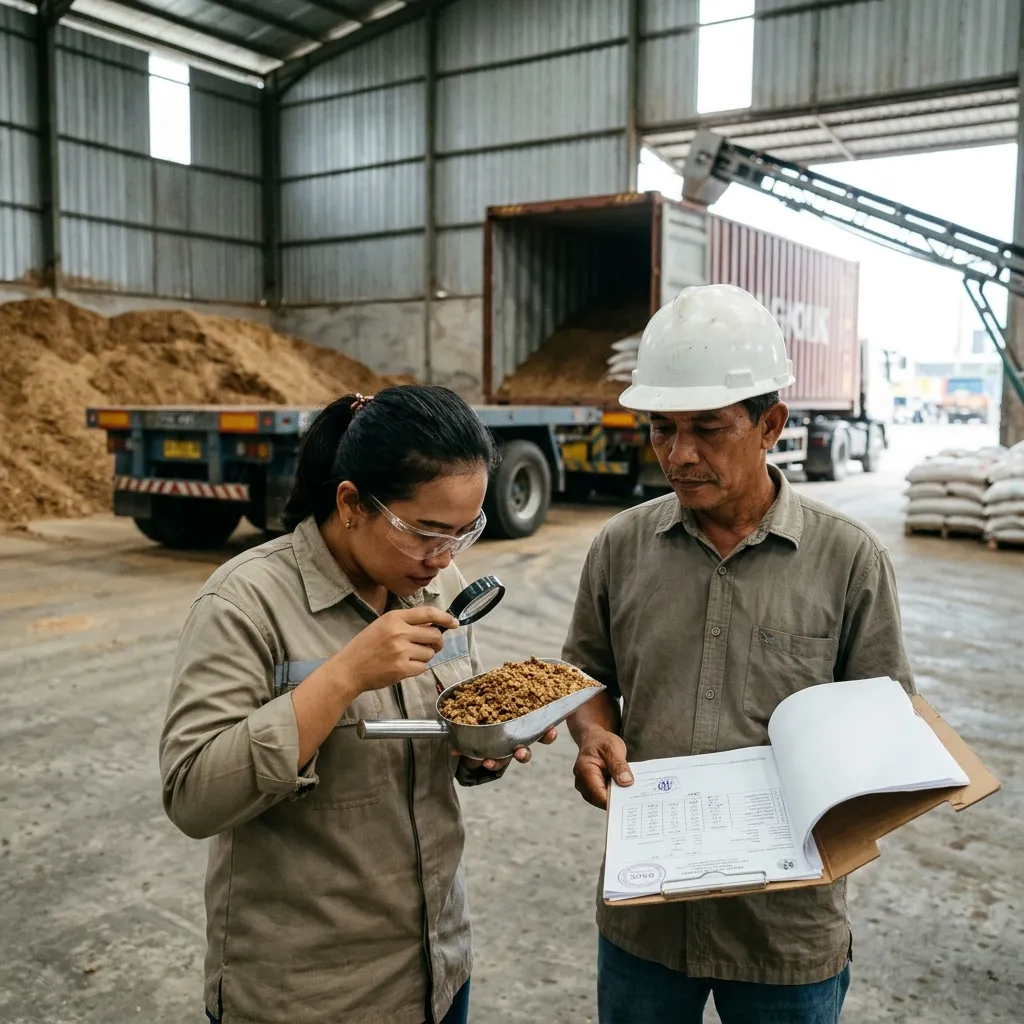
Independent laboratory testing through globally recognized inspection bodies—such as Carsurin or Sucofindo—is standard across Indonesian loading terminals. Sampling occurs directly at the warehouse or dockside immediately before container stuffing. The primary testing markers to analyze include:
- Crude Protein (CP): Typically ranges between 14% and 18% on a dry matter basis in verified Indonesian expeller. Crude protein serves as a standard pricing benchmark. Discrepancies below normal ranges often signal excessive shell content or processing heat damage that denatures amino acids.
- Moisture Content: Industry-acceptable ranges sit between 8% and 12%. Cargo exceeding 12% moisture presents severe mold, clumping, and heating hazards during extended maritime voyages across equatorial trade lanes.
- Crude Fat / Residual Oil: Mechanical screw-press extraction leaves an oil fraction typically between 6% and 10%. This residual oil represents valuable metabolizable energy for livestock, but high levels elevate the risk of rancidity if Free Fatty Acid (FFA) values escalate.
- Crude Fiber (CF): Generally measured between 13% and 18%. High fiber derives naturally from the inner seed wall. Significant spikes above industry baselines indicate inadequate separation of palm kernel shell during seed preparation.
- Total Ash and Sand/Silica: Normal mineral ash ranges from 3% to 6%, with insoluble silica (sand) kept strictly under 1% to 2%. Excessive sand values indicate poor yard hygiene, improper pavement scraping, or soil contamination at the collection mill.
- Aflatoxins (B1, B2, G1, G2): For compliance with global feed standards and strict Chinese biosecurity thresholds, total aflatoxin levels must consistently register below international maximum residue tolerances (commonly under 20 to 50 ppb depending on specific target species regulations).
Importers should reference guidance from international organizations like the Food and Agriculture Organization (FAO) regarding acceptable animal dietary safety thresholds for oilseed byproducts.
7-Step Pre-Order Audit Checklist for Procurement Buyers
A rigorous audit routine prevents port rejections, demurrage penalties, and cargo abandonment. Buyers sourcing bulk or containerized agro-commodities should systematically execute these seven steps before transferring down payments:
- Validate GACC Establishment Details: Query the exporter’s registered Chinese import code inside the official GACC database to verify the processing unit status is active, valid for HS code 2306.60.90, and not temporarily suspended.
- Clarify Physical Form Requirements: Define whether your feed plant requires coarse flakes (kasar) or pre-milled fine meal (halus 1–3 mm) to avoid secondary processing costs at your domestic facility.
- Mandate Independent Pre-Shipment Inspection: Specify third-party sampling by Carsurin or Sucofindo at the loading port. Note that authentic laboratory testing requires paid sample preparation rather than complimentary commercial trade samples.
- Fix Moisture and FFA Thresholds in Sales Contract: Guard against ocean-transit degradation by establishing strict contractual rejection criteria for moisture content exceeding contractual parameters.
- Confirm Packaging Integrity: Choose between standard 50 kg woven polypropylene bags or unbagged containerized bulk. Ensure bag specifications feature UV stabilization and sufficient weave strength for mechanical forklift handling.
- Audit Port-of-Loading Infrastructure: Confirm the cargo loads from an established commercial logistics terminal, such as the Port of Samarinda (Palaran) in East Kalimantan, which maintains regular container feeder connections to regional transshipment hubs.
- Reconcile Commercial Documentation Alignment: Ensure that consignee names, invoice details, Phytosanitary certificates, Certificates of Origin, and export permits match exact GACC manifest requirements down to the typographical level.
Sourcing GACC Approved Indonesian Palm Kernel Expeller for Export
Validating every GACC approved Indonesian palm kernel expeller consignment requires querying the exporter’s registration before executing binding contracts. Overseas importers must ensure that crushing facilities possess current biosecurity clearance to prevent administrative impoundment at Chinese entry ports.
Container Loading Logistics and Payload Arithmetic
Optimizing container payloads directly reduces freight expense per metric ton of crude protein imported. Indonesian PKE exports ship primarily in standard 20-foot dry containers via FOB, CFR, or CIF Incoterms, with settlement handled under standard international T/T or L/C arrangements.
Cargo originates directly out of East Kalimantan, with primary loading operations centered at the Pelabuhan Samarinda (Palaran). Depending on processing form and milling parameters, shippers offer two packaging configurations:
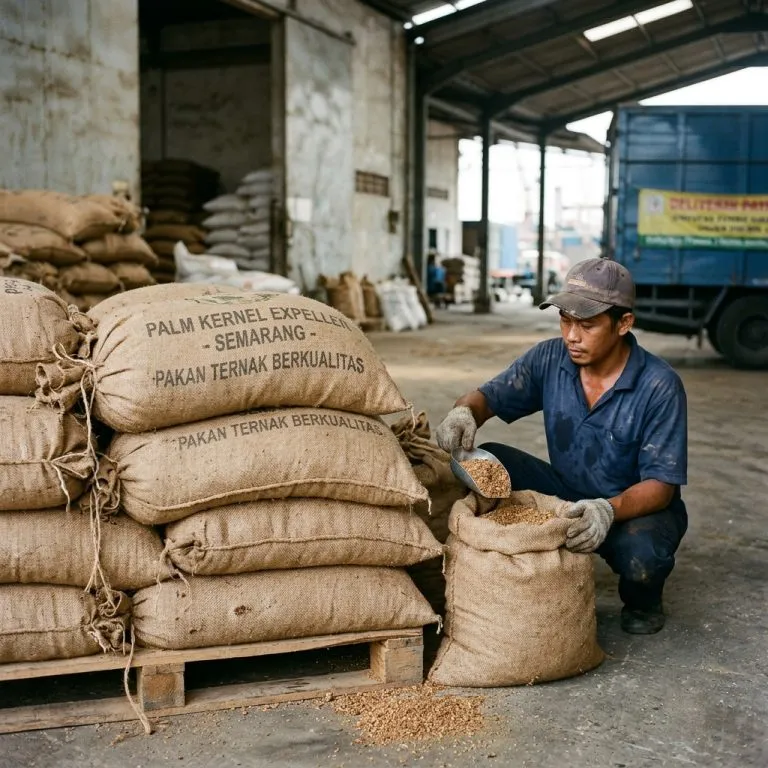
- 50 kg Woven Polypropylene Bags: The standard format for small to mid-sized feed mills lacking bulk container tipping bays.
- Loose Bulk in Container: Cargo loaded directly behind protective bulkheads or inside specialized container liners, maximizing volumetric efficiency.
Payload capacity varies significantly by product density. Standard coarse expeller loads at approximately 20 metric tons per 20ft container. In contrast, high-density expeller (bungkil densitas tinggi) allows shippers to safely maximize payloads up to 23 to 24 metric tons per 20ft container without exceeding maritime road weight limits.
Calculating transport efficiency for a GACC approved Indonesian palm kernel expeller contract ensures optimal freight costs. The practical load difference between regular and densified meal significantly impacts overall container utilization.
Illustrative Container Payload and Unit-Protein Cost Math
The following mathematical calculations demonstrate the real financial impact of container stowage optimization and nutritional cost comparisons. These numbers represent illustrative examples based on typical industry pricing concepts:
Example A: Calculating Bag Count per 20ft Container
Assuming a contract specifies high-density fine expeller packed in 50 kg woven bags with a target payload of 24 metric tons per container:
Formula: Number of Bags = (Target Tonnage in MT × 1,000 kg) ÷ Bag Unit Weight
Calculation: (24 MT × 1,000 kg/MT) ÷ 50 kg/bag = 480 bags per 20ft container.
By contrast, standard coarse expeller loading at 20 metric tons accommodates only 400 bags (20,000 kg ÷ 50 kg = 400 bags), requiring 20% more ocean containers to move identical aggregate product volumes.
Example B: Calculating Delivered Cost per Unit of Crude Protein
Feed nutritionists evaluate competitive oilseed ingredients based on their direct cost per protein percentage point rather than gross delivered metric ton pricing.
Assumed inputs: Quoted CFR destination price = $180.00 per MT; Certified Crude Protein on COA = 15.5% (0.155 dry basis fraction).
Formula: Protein Cost per Unit = Delivered CFR Price per MT ÷ Crude Protein Percentage
Calculation: $180.00 ÷ 15.5 = $11.61 per unit of crude protein per metric ton.
This formula allows procurement teams to benchmark GACC approved Indonesian palm kernel expeller shipments against alternative protein meals, such as imported soybean meal or regional copra meal, adjusting formulas dynamically when commodity spreads widen.
Full Export Documentation and Clearance Sequence
Importing animal feed ingredients into highly regulated territories demands flawless regulatory synchronization. Any clerical variance between commercial invoices, quarantine clearances, and shipping manifests triggers immediate administrative quarantine at customs checkpoints.
Processing documentation for a GACC approved Indonesian palm kernel expeller follows a mandatory sequence designed to maintain traceability from mill gate to destination port:
- Commercial Agreement and Proforma Invoice: Buyer and seller finalize terms (FOB, CFR, or CIF), establish payment structures via Letter of Credit (L/C) or Telegraphic Transfer (T/T), and fix COA specifications.
- Independent Sampling and Laboratory Analysis: Pre-loading cargo inspection is executed by an accredited independent laboratory (such as Carsurin or Sucofindo). Formal paid analysis confirms moisture, protein, ash, and microbiological parameters against contract thresholds.
- Container Stuffing and Weighbridge Verification: Packaging is checked at the port terminal in Samarinda (Palaran), sealed, and weighed via verified terminal weighbridges.
- Export Declaration and Customs Registration: Filing the Indonesian Export Notification (Pemberitahuan Ekspor Barang / PEB) and obtaining the official Export Service Note (Nota Pelayanan Ekspor / NPE) from Indonesian Customs.
- Quarantine Inspection and Phytosanitary Certification: The Indonesian Agricultural Quarantine Agency inspects the lot and issues the official Phytosanitary Certificate validating freedom from regulated plant pests.
- Fumigation Execution: Cargo undergoes professional containerized fumigation (commonly using phosphine gas), accompanied by an accredited Fumigation Certificate documenting gas concentration and dwell exposure times.
- Bill of Lading and Certificate of Origin (COO): Maritime shipping lines issue the verified ocean Bill of Lading (B/L), alongside Form E or standard Certificate of Origin issued by authorized trade departments.
- Final Document Dossier Dispatch: The full document suite—COA, Packing List, Commercial Invoice, B/L, Phytosanitary Certificate, PEB/NPE, COO, and Fumigation Certificate—is transmitted to the opening bank or directly to the buyer for CIQ clearance.
For research on export health certificates and international sanitary declarations, consult resources maintained by the United States Department of Agriculture (USDA) and the World Trade Organization.
Storage Hazards, Pricing Drivers, and Nutritional Limits
Palm kernel expeller exhibits distinct chemical characteristics that necessitate vigilant post-harvest storage management. Because mechanical extraction leaves residual lipid levels between 6% and 10%, improper handling exposes bulk stocks to oxidative heating, free fatty acid escalation, and moisture migration.
Bulk agricultural commodities containing active residual vegetable fats are vulnerable to self-heating. When expeller is stored at moisture levels above 12%, indigenous microbial respiration generates initial localized heat. As internal pile temperatures climb past 50°C, chemical oxidation of the residual palm oil accelerates, generating exothermic reactions that can degrade protein bioavailability, blacken the meal, or create spontaneous combustion hazards in severe conditions.
To control these storage risks, warehouse operators and terminal managers must maintain specific preventative practices:
- Pile Aeration and Height Restrictions: Limit unbagged bulk warehouse storage piles to a maximum height of 4 to 5 meters. Regularly rotate stock using front loaders if temperature sensors register internal heat rising above 45°C.
- Moisture Segregation: Never store fresh expeller directly on unsealed concrete slabs. Hydroscopic moisture migration from ground floors induces rapid mold growth at the bottom layer. Use raised wooden pallets for 50 kg woven bags.
- Ventilated Maritime Transit: For deep-sea container transit, utilize moisture-absorbing desiccant poles suspended inside container corrugated recesses to eliminate condensation caused by temperature swings across changing climate zones.
- First-In, First-Out (FIFO) Inventory Control: Due to continuous atmospheric oxidation of residual fats, PKE should ideally be incorporated into finished compound animal feeds within 60 to 90 days of manufacturing.
Commercial Pricing Drivers and Supply Terms
PKE pricing reflects broader macro-commodity movements across the global vegetable oil and animal feed sectors. Export values move in response to clear supply and demand fundamentals:
- Crude Palm Oil (CPO) Extraction Cycles: Because expeller is a byproduct of palm oil processing, nationwide Indonesian CPO milling rates dictate raw kernel availability. Seasonal weather disruptions directly affect total expeller volumes.
- Comparative Global Protein Meal Spreads: When global soybean meal or corn prices appreciate, commercial compounders increase PKE usage rates to balance feed formulations cheaply, pushing expeller export premiums upward.
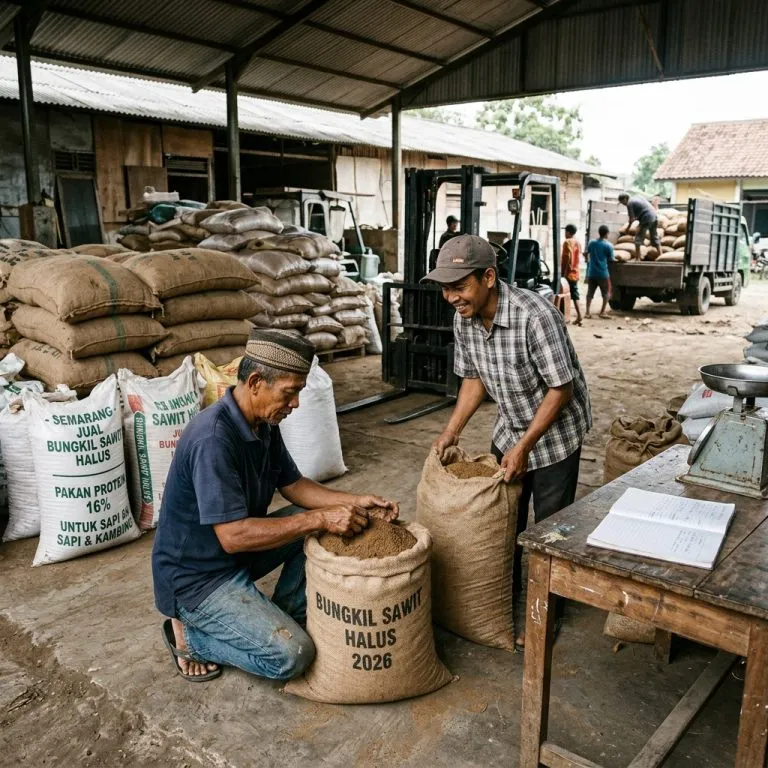
- Regional Domestic Demand: Indonesian domestic livestock markets consume substantial volumes of palm kernel expeller. Active trade for standard meal and fine-ground bungkil sawit occurs continuously across major industrial agricultural hubs including Surabaya, Semarang, and Jakarta, establishing an underlying domestic price floor that export buyers must compete against.
- Bunker Fuel and Container Freight Rates: Feeder vessel logistics connecting Samarinda to regional hubs like Singapore or Port Klang influence final landed CFR pricing.
Reliable procurement relies on consistent monthly allocation and trade execution. Monthly export production capacity reaches up to 3,000 metric tons, supporting recurring container schedules for international buyers under FOB Samarinda, CFR, or CIF terms with payment via sight L/C or T/T.
When Palm Kernel Expeller is NOT the Correct Ingredient
Despite its cost effectiveness, procurement specialists must understand dietary limits. PKE contains significant levels of non-starch polysaccharides (specifically insoluble beta-mannans) and crude fiber, alongside a low concentration of critical essential amino acids like lysine and methionine. Further information regarding oilseed chemistry can be verified through reference databases on palm kernel meal.
PKE is unsuited as a primary energy or protein base for young poultry (broiler starters) and early-weanling pigs, whose monogastric digestive tracts lack endogenous enzymes required to break down high-fiber cell wall structures. Excessive inclusion rates in monogastric diets depress growth conversion ratios and induce loose droppings.
| Feed Ingredient | Typical Crude Protein | Typical Crude Fiber | Primary Dietary Role | Best Animal Target |
|---|---|---|---|---|
| Palm Kernel Expeller (PKE) | 14% – 18% | 13% – 18% | Economical energy + rumen fiber | Beef cattle, dairy cows, sheep, mature sows |
| Copra Meal | 18% – 22% | 11% – 15% | Medium protein + digestible fat | Ruminants, swine grower rations |
| Soybean Meal (SBM) | 44% – 48% | 3% – 6% | High protein + balanced amino acids | All monogastrics, poultry, aquaculture |
| Calcium Salts of Fatty Acids | 0% (Fat supplement) | 0% | Rumen-bypass dense energy | High-yielding lactation dairy cows |
When high lactation dairy cattle require concentrated caloric density without rumen fermentation depression, nutritionists substitute or supplement fiber meals with bypass fats like rumen-protected calcium soaps. Conversely, when formulated feeds demand high protein density with low digestive bulk, compounders utilize copra meal or solvent-extracted oilseed meals.
Makmur Amanah Sejahtera provides high-quality palm products such as Palm Kernel Expeller, Palm Kernel Shell, Crude Palm Oil, Palm Kernel Oil, etc. Kindly contact us at WhatsApp +6282140002198 or email us at admin@makmuramanah.co.id.
Frequently Asked Questions About GACC Indonesian PKE
What is the HS code for GACC approved Indonesian palm kernel expeller?
Indonesian palm kernel expeller is categorized under international Harmonized System code HS 2306.60.90 for worldwide customs clearance. This tariff classification specifically covers solid residues and oilcake resulting from mechanical palm nut oil extraction, whether presented in coarse flake, finely ground meal, or compressed pellet form.
Why is a GACC approved Indonesian palm kernel expeller required for Chinese ports?
Chinese entry ports enforce strict sanitary Decrees 248 and 249 governing agricultural commodities. Sourcing cargo from a certified facility guarantees full compliance with national biosecurity rules. Without verified registration, customs clearance agents cannot lodge import declarations, leading to immediate cargo rejection or confiscation.
How can buyers verify a supplier’s GACC registration status?
Procurement teams can verify facility authenticity directly through the official GACC Single Window query portal. Review the exporter and crushing plant’s establishment identification number under the registered overseas feed enterprises database to ensure active status for HS code 2306.60.90 before signing trade contracts.
What is the container payload for GACC approved Indonesian palm kernel expeller?
Standard coarse expeller loads at approximately 20 metric tons per 20ft ocean container. In contrast, high-density mechanically ground meal allows exporters to load between 23 and 24 metric tons per container, whether packed in 50 kg woven polypropylene bags or containerized loose bulk.
Can buyers obtain free laboratory samples prior to contract signing?
Commercial pre-shipment sampling requires certified independent laboratory collection by surveyor firms such as Carsurin or Sucofindo directly from terminal warehouses. Because official quality analysis involves significant surveying, handling, and laboratory testing expenses, pre-shipment trade samples are supplied exclusively on a formal paid basis.
Final Procurement Considerations for Importers
Successfully importing a GACC approved Indonesian palm kernel expeller parcel requires aligning commercial expectations with verified origin capabilities. By confirming registered facility credentials, selecting between coarse and fine grinds based on livestock requirements, and verifying payloads up to 24 metric tons per container, procurement managers can minimize landed costs while safeguarding feed safety.
Whether procuring containerized volumes for private feed operations or structuring recurring monthly supply lines up to 3,000 MT, sourcing GACC approved Indonesian palm kernel expeller guarantees adherence from Samarinda’s terminal gates directly through destination customs clearance.
Basis of this guide: Specifications come from the company fact sheet, general ranges are indicative, and the buyer should confirm against the COA of the actual shipment.