
Copra Meal: 7 Proven Benefits & Nutrition Secrets (2026)
Copra meal is a powerhouse feed ingredient that is transforming livestock nutrition strategies globally in 2026. As agricultural demands rise and grain markets become increasingly volatile, finding sustainable, high-protein feed alternatives has never been more critical for farmers and feed millers. This byproduct of the coconut oil industry offers a unique blend of energy, digestible fiber, and bypass protein, yet many producers still overlook its full potential.
In this comprehensive guide, we will uncover exactly why this feed is becoming a staple in rations for cattle, horses, and swine. We will break down its nutritional profile, compare it with other oilseed meals, and reveal how to maximize its value in your feeding program while ensuring safety and efficiency.

What Is Copra Meal?
Copra meal, often referred to as coconut meal, is the solid residue remaining after the extraction of oil from dried coconut kernels (copra). It is a valuable byproduct of the coconut oil manufacturing industry. While the oil is extracted for culinary and industrial uses, the remaining meal retains significant nutritional value, making it an excellent animal feed.
The texture, protein quality, and oil content vary depending on the extraction method used. Unlike other protein sources that can be bitter or harsh, copra meal is highly palatable and provides a safe source of energy derived from its residual oil and digestible fiber content. In 2026, with grain prices fluctuating, this ingredient stands out as a cost-effective solution for balancing livestock diets.
Furthermore, it serves as a sustainable link in the agricultural supply chain, utilizing what would otherwise be waste to fuel food production. Its role in the circular economy is supported by organizations like the Food and Agriculture Organization (FAO), which advocates for efficient byproduct utilization to reduce the environmental footprint of livestock farming.
Nutritional Value of Copra Meal
Understanding the nutrient composition is vital for formulating balanced rations. The nutritional profile can vary slightly based on the processing method, but it generally offers a robust package of proteins and energy that complements forage-based diets perfectly.
The protein found in this meal is relatively high in arginine but can be lower in lysine and methionine compared to soy. However, its high fiber content makes it particularly suitable for ruminants. Below is a breakdown of the typical nutritional specifications found in high-quality meal.
Typical Nutritional Composition (2026 Standard)
| Nutrient | Percentage / Value | Function in Livestock |
|---|---|---|
| Crude Protein | 20% – 23% | Muscle growth and milk protein synthesis |
| Crude Fat (Oil) | 8% – 12% | High energy source (Lauric acid rich) |
| Crude Fiber | 12% – 14% | Promotes rumen health and salivation |
| Neutral Detergent Fiber (NDF) | ~50% | Digestible fiber source |
| Metabolizable Energy (Ruminants) | ~2.7 – 3.0 Mcal/kg | Fuels bodily functions and lactation |
| Moisture | Max 12% | Critical for storage stability |
It is important to note that the residual oil is highly saturated, which provides a “cool” energy source. This energy is released slowly, preventing the insulin spikes and hyperactivity often seen with grain-based starches. For more detailed data on feed composition, resources like Feedipedia provide extensive chemical analysis.
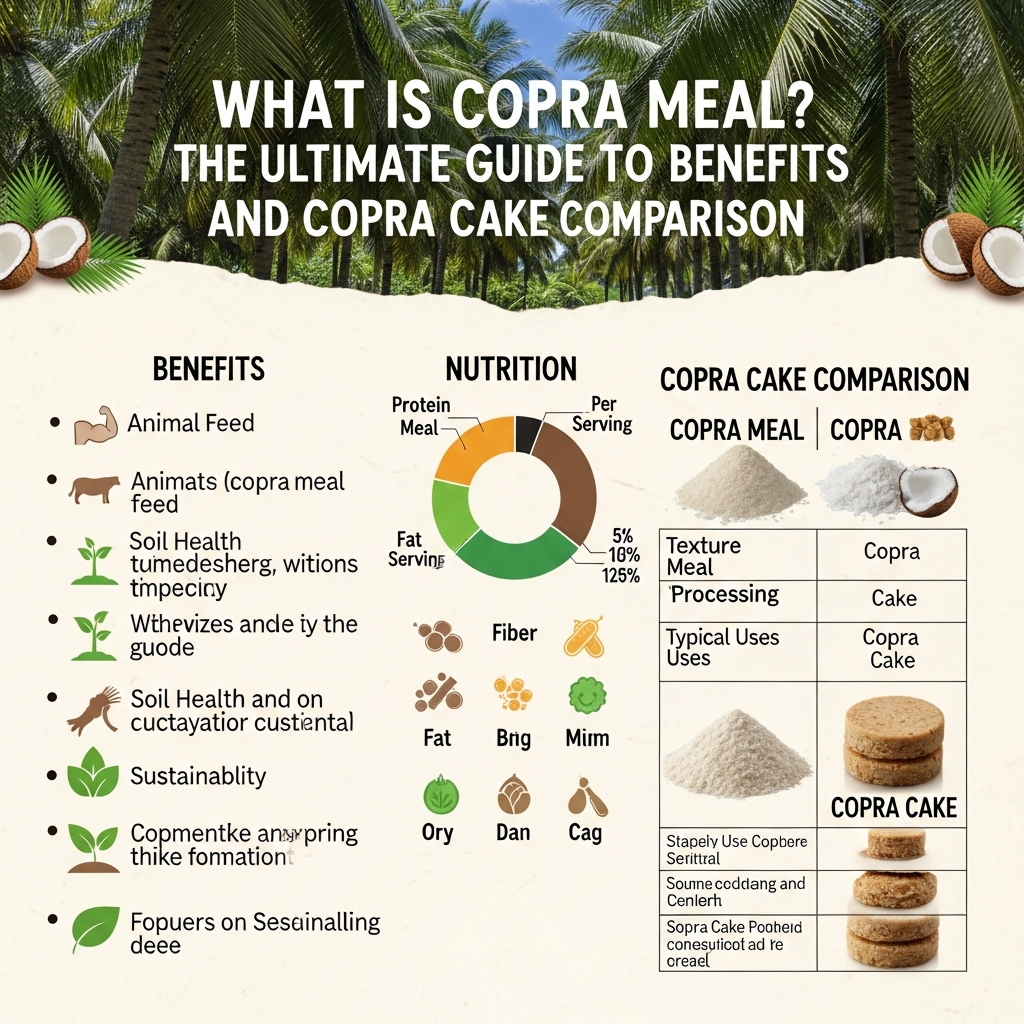
Copra Meal vs. Copra Cake: What’s the Difference?
A common source of confusion in the industry is the distinction between “meal” and “cake.” While often used interchangeably, there is a technical difference based on the extraction method and residual oil content.
- Copra Cake: This is produced via the mechanical expulsion method (expeller pressed). It typically contains a higher residual oil content (up to 12-15%) because mechanical pressing is less efficient at removing all the oil than solvents.
- Copra Meal: This usually refers to the solvent-extracted product. It has a lower oil content (often 1-3%) and slightly higher protein concentration due to the removal of more fat. However, in general trade terms, “copra meal” is often used as the umbrella term for both.
For ruminants requiring high energy, the expeller-pressed cake variant is often preferred. This is similar to the distinction seen in other oilseeds, such as Palm Kernel Expeller, which also retains valuable oils beneficial for dairy cattle creaminess. When formulating high-energy diets, some producers even supplement with RBD CP8 (Refined Palm Oil) to further boost caloric density.

7 Proven Benefits of Copra Meal for Livestock
Integrating this coconut byproduct into your feed strategy offers multifold advantages. Here are the top seven proven benefits backed by modern animal science and field experience.
1. High Bypass Protein for Cattle
For dairy and beef cattle, the protein in copra meal has a high bypass value (escape protein). Approximately 60% of the protein bypasses the rumen and is absorbed directly in the small intestine. This is significantly higher than soybean meal, leading to better muscle accretion and milk production efficiency without overloading the rumen nitrogen balance.
2. Increases Milk Fat in Dairy Cows
The residual coconut oil contains medium-chain fatty acids (MCFAs), specifically lauric and myristic acids. Research from the Journal of Animal Science suggests that these fatty acids can boost milk fat percentage in dairy cows, a crucial metric for milk pricing. This makes it a strategic ingredient for dairy farmers aiming to maximize milk solids.
3. “Cool Energy” for Horses
Horse owners love copra meal because it provides non-structural carbohydrates (low NSC, typically <12%). It offers energy without the “hot” behavior associated with grain-heavy diets, making it ideal for conditioning show horses, eventers, and ponies prone to metabolic disorders like laminitis or tying-up.
4. Cost-Effective Feed Substitute
Comparing price points in 2026, coconut meal often trades at a discount to soybean meal relative to its nutritional value. It allows farmers to reduce dependency on expensive imported proteins without sacrificing animal performance. It serves as an excellent mid-protein filler that lowers the overall cost per ton of TMR.
5. Highly Palatable
Animals love the nutty smell and sweet taste of coconut. Adding it to a Total Mixed Ration (TMR) can mask less palatable ingredients, improving overall feed intake. This is particularly useful when introducing mineral supplements like Calcium Salts of Palm Oil Fatty Acids, which provide essential bypass fats but might otherwise be rejected by picky eaters.
6. Improves Coat Shine
The residual oil content promotes healthy skin and a glossy coat in livestock. The specific fatty acid profile supports sebum production, creating a visible shine that is highly valued in the show animal industry and indicates good overall health.
7. Reduces Methane Emissions
Emerging studies indicate that the medium-chain fatty acids in coconut oil can inhibit methanogens (methane-producing bacteria) in the rumen. This results in reduced methane emissions, aligning your farm with modern sustainability goals and potentially qualifying for carbon credit programs.
Economic Analysis: Copra vs. Soybean Meal
When analyzing the return on investment (ROI) for feed ingredients, copra meal shines in specific scenarios. While Soybean Meal (SBM) is the gold standard for lysine content, it is often priced at a premium. By substituting 20-30% of SBM with coconut meal, producers can maintain protein levels while increasing energy density.
For example, a dairy ration using a blend of copra and Palm Kernel Shell biochar additives (for gut health) can lower daily feed costs by $0.30 – $0.50 per head while maintaining milk yield. Consult with your nutritionist to run a least-cost formulation based on current local prices.
How to Feed Copra Meal Safely
While the benefits are substantial, proper feeding management is essential to prevent digestive upsets. Introduce the feed gradually over 10 to 14 days to allow the gut microbiome to adapt to the new fiber and oil levels.
Recommended Copra Meal Inclusion Rates
- Dairy Cattle: 1.5 kg to 3.0 kg per head per day. Exceeding this may depress milk fat due to high oil load if not balanced.
- Beef Cattle: Up to 20-30% of the total grain ration. Excellent for finishing steers.
- Swine: Up to 10-15% for finishing pigs. Monitor for fat firmness, as high levels can lead to softer pork fat.
- Poultry: Limit to 5-10% due to high fiber content, which monogastrics digest less efficiently.
- Horses: 0.5 kg to 2.0 kg daily. Crucial Tip: Always soak in water (1 part meal to 2 parts water) before feeding to prevent choke, as it swells significantly.
Always ensure fresh water is available. For bedding needs in your stable or barn, consider using sustainable options like Cocopeat to maintain hygiene alongside your nutrition program. Clean bedding reduces disease pressure, allowing your animals to utilize their feed for growth rather than immune defense.

Potential Risks and Mycotoxins
No feed ingredient is without risk. The primary concern with coconut byproducts is susceptibility to mycotoxins, specifically Aflatoxin, if not stored correctly. It is imperative to source from reputable suppliers who adhere to strict moisture control standards.
High moisture leads to mold growth. Ensure your storage facility is dry, well-ventilated, and pest-free. Reputable suppliers like Makmur Amanah Sejahtera ensure their products meet rigorous export quality standards to minimize these risks. For more on safe feed storage practices, refer to guidelines from Penn State Extension.
Conclusion
In the evolving landscape of 2026 agriculture, copra meal remains a top-tier choice for savvy producers. Its unique combination of bypass protein, digestible fiber, and energy-rich oil makes it a versatile ingredient that boosts productivity and animal health. Whether you are looking to increase milk fat, condition horses safely, or lower feed costs, this coconut byproduct delivers proven results.
By understanding the nuances between meal and cake and following proper feeding guidelines, you can unlock the full potential of your livestock. Don’t let rising feed costs cut into your profits—embrace the efficiency of copra meal today.
Makmur Amanah Sejahtera provides high-quality palm products such as Palm Kernel Expeller, Palm Kernel Shell, Crude Palm Oil, Palm Kernel Oil, etc. Kindly contact us at WhatsApp +6282140002198 or email us at admin@makmuramanah.co.id.
Frequently Asked Questions
Is copra meal good for cattle?
Yes, it is excellent for cattle. It provides high-quality bypass protein and energy-dense oil, which helps improve milk production, milk fat content in dairy cows, and muscle growth in beef cattle. It serves as a cost-effective alternative to grain-based feeds.
What is the difference between coconut meal and copra meal?
There is generally no difference; the terms are used interchangeably. Both refer to the byproduct of coconut oil extraction. However, distinctions are sometimes made between “meal” (solvent extracted, lower oil) and “cake” (mechanically pressed, higher oil).
Does copra meal contain protein?
Yes, it typically contains between 20% to 23% crude protein. While it is lower than soybean meal, its protein is highly valuable for ruminants due to its bypass characteristics, meaning it is absorbed effectively in the animal’s digestive system.
Can I feed copra meal to horses?
Absolutely. It is a popular “cool feed” for horses because it provides energy from fats and fiber rather than starch. This helps maintain condition without causing the hyperactivity often associated with grain diets. It should be introduced slowly and MUST be soaked wet to prevent choke.
How should copra meal be stored?
It should be stored in a cool, dry, and well-ventilated area to prevent moisture absorption. High moisture levels (above 12%) can lead to mold growth and Aflatoxin contamination. Using pallets to keep bags off the ground is recommended.
How much copra meal can I feed my dairy cows?
Most nutritionists recommend feeding between 1.5 kg to 3.0 kg per cow per day. Higher amounts can be fed if the overall fat content of the diet is balanced, but excessive feeding may impact fiber digestion.
 English
  Indonesian
  Chinese
  Arabic