
Calcium Salt of Palm Fatty Acids: 5 Powerful Benefits (2026)
Calcium Salt of Palm Fatty Acids is the superior nutritional solution modern dairy farmers rely on to overcome energy deficits and maximize herd productivity. In the competitive agricultural landscape of 2026, maintaining high milk yields while ensuring animal health is not just a goal—it is a necessity. This comprehensive guide explores how rumen-protected fats serve as a critical tool for combating negative energy balance in high-producing cattle.
For decades, nutritionists have struggled to provide sufficient energy to lactating cows without disrupting rumen fermentation. The solution lies in scientifically formulated bypass fats. By incorporating Calcium Salt of Palm Fatty Acids into your feed ration, you can unlock significant improvements in milk production, fertility, and overall body condition scores. As feed costs fluctuate and milk prices remain volatile, efficiency is king. This article details why this specific supplement is the gold standard for dairy nutrition.
What is Calcium Salt of Palm Fatty Acids?
Calcium Salt of Palm Fatty Acids, often referred to as calcium soap, is a rumen-protected fat supplement created through the saponification of palm fatty acids with calcium ions. This sophisticated chemical process transforms unsaturated fatty acids—typically derived from Palm Fatty Acid Distillate (PFAD)—into a solid, granular form.
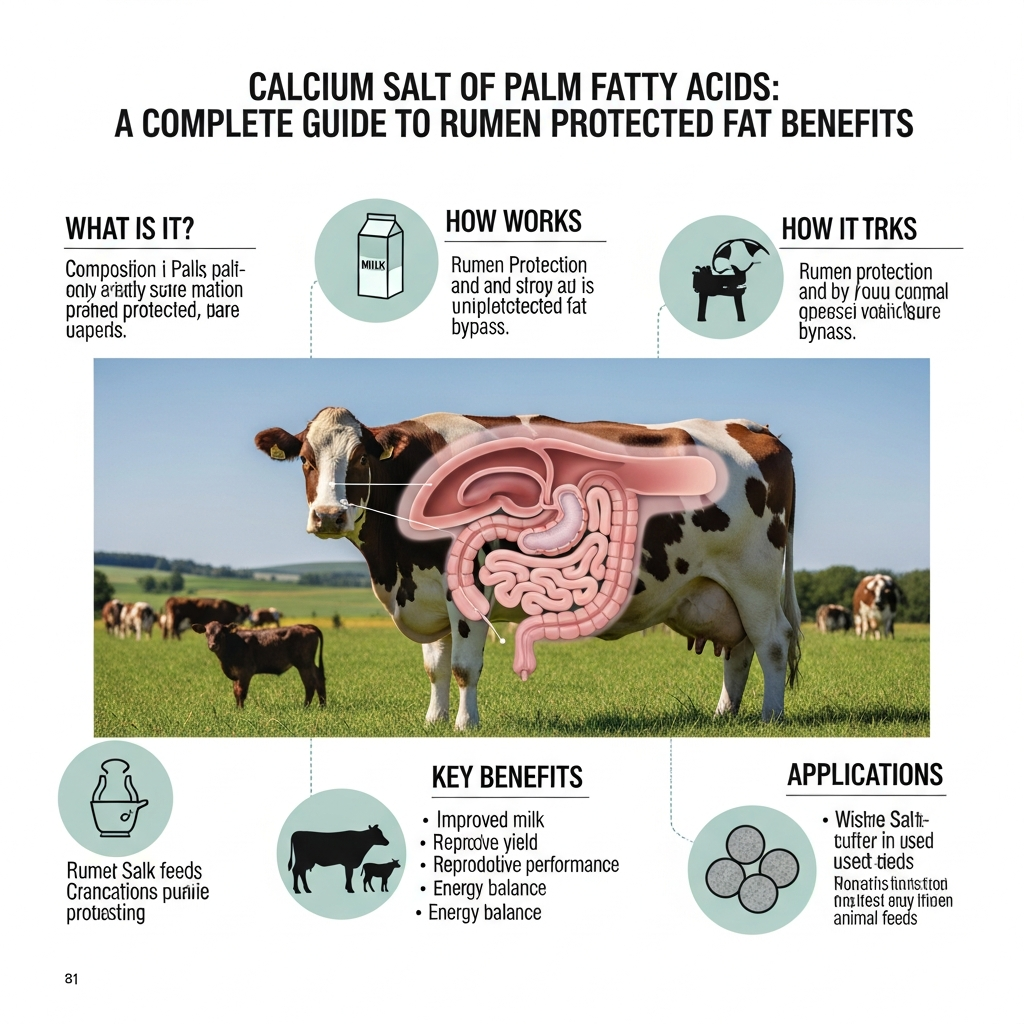
The defining characteristic of this supplement is its solubility profile. It is insoluble in the rumen’s pH environment (typically pH 6.0–6.8). This insolubility is the key to its effectiveness. Because it remains stable in the rumen, it does not coat the fiber particles or inhibit the growth of cellulolytic (fiber-digesting) bacteria. This “bypass” capability ensures that the cow’s rumen health is preserved even when energy density is increased.
Once the supplement passes through the rumen and reaches the acidic environment of the abomasum (where pH drops below 3.0), the calcium bond dissociates. This releases the high-energy fatty acids, which are then efficiently absorbed in the small intestine. This mechanism makes Calcium Salt of Palm Fatty Acids an ideal energy source, providing roughly three times the energy density of carbohydrates (approx. 9.0 Mcal/kg Net Energy for Lactation) without the risk of rumen acidosis.
The Critical Need for Bypass Fat in Dairy Nutrition
High-yielding dairy cows face a significant metabolic challenge, particularly during the transition period and early lactation. The genetic drive to produce milk often outpaces the cow’s physical ability to consume feed. This discrepancy leads to a condition known as Negative Energy Balance (NEB).
When a cow enters NEB, she mobilizes her own body fat reserves to meet the energy demand. While this is a natural short-term adaptation, prolonged or severe NEB leads to:
- Metabolic Disorders: Excessive fat mobilization creates high levels of non-esterified fatty acids (NEFA), leading to ketosis and fatty liver syndrome.
- Reproductive Decline: Energy is diverted away from the reproductive system, causing delayed ovulation and lower conception rates.
- Production Losses: Cows peak lower and drop off faster in their lactation curve.
To mitigate these risks, farmers must increase the energy density of the diet. However, simply adding more grains (starch) or free oils is dangerous. Excess starch leads to acidosis, while free oils are toxic to rumen bacteria. This is where Calcium Salt of Palm Fatty Acids proves essential. According to research published in the Journal of Dairy Science, supplementing with rumen-protected fats can significantly reduce the severity of NEB while maintaining healthy rumen function.
Top 5 Benefits of Calcium Salt of Palm Fatty Acids
Integrating this supplement into your Total Mixed Ration (TMR) offers multifaceted advantages. Here are the top five benefits proven to impact your bottom line in 2026.
1. Significant Increase in Milk Yield
Energy is the primary limiting factor in milk production for high-merit cows. By providing a dense, highly digestible energy source, you allow cows to sustain higher lactation peaks for longer periods. Clinical studies and field trials indicate that supplementing with calcium salts can increase daily milk yield by 1.5 to 2.5 liters per cow, depending on the baseline diet and management practices.
Unlike starch, which stimulates insulin and can partition energy toward body fat, the fatty acids in calcium salts (specifically C16:0 and C18:1) are preferentially utilized by the mammary gland for milk synthesis. This direct energy supply ensures that the genetic potential of the cow is realized.
2. Improved Fertility and Conception Rates
Reproductive performance is closely tied to energy status. Cows suffering from severe weight loss prioritize survival over reproduction. By bridging the energy gap with Calcium Salt of Palm Fatty Acids, you support the endocrine system.
Furthermore, fats are the precursors to cholesterol, which is the building block of progesterone—the “pregnancy hormone.” Adequate progesterone levels are vital for follicle development, successful implantation, and pregnancy maintenance. Farmers utilizing bypass fats often report fewer “open” days and a tighter calving interval, which significantly improves lifetime herd profitability.
3. Enhanced Butterfat Content
In many markets, the value of milk is determined by its solids content, particularly fat. Palm-based calcium salts are naturally rich in palmitic acid (C16:0), a saturated fatty acid known to partition nutrients specifically towards the mammary gland.
This fatty acid directly stimulates the de novo synthesis of milk fat. Supplementation can increase butterfat percentages by 0.2% to 0.4%. For a herd producing thousands of liters daily, this incremental increase in components can result in a substantial boost in the milk check. For more on nutrient requirements, resources from Penn State Extension offer excellent dietary guidelines.
4. Prevention of Heat Stress
As global temperatures rise, heat stress becomes a major concern for dairy operations. Digesting fiber and starch creates a significant amount of metabolic heat, known as the “heat increment” of feeding. This internal heat load exacerbates external heat stress, causing cows to pant and reduce feed intake.
Fats, however, have a very low heat increment. They are “cool” energy. During hot summer months, feeding Calcium Salt of Palm Fatty Acids allows cows to obtain necessary energy without generating excess internal heat. This helps maintain Dry Matter Intake (DMI) even when ambient temperatures rise, preventing the summer production slump.
5. Better Body Condition Score (BCS) Maintenance
Maintaining an optimal BCS is vital for long-term herd health. Cows that lose too much condition in early lactation often struggle to recover and are more susceptible to lameness and immune suppression. Consistent supplementation ensures that cows maintain enough body reserves to support immune function.
By providing energy that doesn’t rely on rumen fermentation, you “spare” the cow’s body reserves. This leads to healthier cows that transition more smoothly between lactations and have greater longevity in the herd.
Comparing Fat Sources: Why Calcium Salts Win
Not all fat sources are created equal. It is crucial to understand the difference between raw ingredients and processed bypass fats when formulating a ration.
| Feature | Calcium Salt of Palm Fatty Acids | Tallow / Animal Fat | Free Vegetable Oils | Fractionated Palm Fat |
|---|---|---|---|---|
| Rumen Inertness | High (Chemical Protection) | Low to Moderate | Low (Active/Toxic) | High (Melting Point) |
| Digestibility | Excellent (90%+) | Moderate (70-80%) | High (if limited qty) | Variable (depends on iodine value) |
| Fiber Digestion Impact | None (Safe) | Can coat fiber | Toxic to rumen bacteria | None (Safe) |
| Essential Fatty Acids | Rich in C18:1 (Oleic) & C16:0 | Variable | High C18:2 (Linoleic) | Mostly C16:0 (Palmitic) |
| Palatability | Good (Characteristic smell) | Variable | High | Neutral |
As shown, free oils can be toxic to rumen bacteria, reducing fiber digestion. Calcium Salt of Palm Fatty Acids avoids this issue entirely. Furthermore, compared to fractionated fats which are typically pure C16:0, calcium salts contain a blend of C16:0 and C18:1 (oleic acid). This blend is often more digestible and helps maintain body condition better than pure palmitic acid products, which drive milk fat but can sometimes exacerbate weight loss.
Feeding Guidelines and Usage Strategies
To maximize the benefits of Calcium Salts of Palm Oil Fatty Acids, correct dosage and application are key. It is generally recommended to introduce the supplement gradually over 3 to 5 days to allow the herd to adjust to the new texture and aroma.
Incorporating Calcium Salt of Palm Fatty Acids into TMR
The most effective method of feeding is mixing the granules directly into the Total Mixed Ration (TMR). This ensures that every bite the cow takes is balanced and prevents sorting. The granular nature of the product mixes well with silages and concentrates.
Recommended Dosage
- Early Lactation Cows: 400g – 800g per head per day. This is the critical window for preventing NEB.
- Mid-Lactation Cows: 300g – 500g per head per day. Focus here is on maintaining persistency and pregnancy.
- Beef Cattle: 150g – 300g per head per day. Used primarily during the finishing phase to improve marbling and daily gain.
It is important to consult with a nutritionist to balance the total fat content of the diet. Generally, total dietary fat should not exceed 6-7% of the Dry Matter Intake (DMI), with supplemental bypass fat contributing 2-3% of that total. Standards from the National Academies (NRC) suggest careful monitoring of the fatty acid profile to optimize absorption.
Integration with Other Feed Ingredients
Calcium salts work best when part of a balanced diet including high-quality fiber and protein sources. For example, combining bypass fat with Palm Kernel Expeller provides a robust nutritional profile. PKE offers a good source of protein and energy, while the calcium salt provides the concentrated calorie boost.
Additionally, balancing the ration with Copra Meal can enhance palatability and provide medium-chain fatty acids. Ensuring adequate effective fiber using sources like Palm Kernel Shell (often utilized in biomass applications but indicative of the broader palm industry’s utility) ensures the rumen mat remains stable, allowing the bypass fat to pass through effectively.
Economic Impact: Is It Worth the Cost?
Farmers often hesitate to add bypass fats due to the upfront cost per ton. However, the Return on Investment (ROI) is typically highly positive. Consider this scenario:
If feeding 0.5kg of calcium salt costs $0.50 per day, but results in 2.0kg of additional milk (valued at roughly $1.00 – $1.20 depending on market prices), the net profit is $0.50 – $0.70 per cow per day. For a 500-head herd, this translates to over $90,000 in additional annual profit, not counting the savings from reduced veterinary bills due to fewer cases of ketosis and improved fertility rates.
Sustainability and Sourcing in 2026
In 2026, sustainability is no longer optional. The palm oil industry has made significant strides in sustainable practices. When purchasing Calcium Salt of Palm Fatty Acids, look for suppliers who adhere to responsible sourcing standards.
High-quality calcium salts are typically derived from Palm Fatty Acid Distillate (PFAD), a byproduct of the edible oil refining process. Utilizing byproducts like PFAD for animal feed is an excellent example of a circular economy. It prevents waste and converts a non-food byproduct into high-value human food (milk and meat).
Furthermore, responsible suppliers often manage a portfolio of palm derivatives, ensuring that every part of the fruit is used efficiently. Whether it is RBD CP8 for cooking oil or palm kernel cake for feed, the goal is total resource utilization. For global food security standards, the Food and Agriculture Organization (FAO) provides extensive guidelines on sustainable animal nutrition.
Frequently Asked Questions
Is Calcium Salt of Palm Fatty Acids safe for all cattle breeds?
Yes, it is safe for all breeds of dairy and beef cattle. It is specifically designed to bypass the rumen, ensuring it does not disturb the sensitive microbial balance. Dosage should be adjusted based on the animal’s weight, stage of lactation, and total diet composition.
How does it differ from hydrogenated fats?
Hydrogenated fats rely on a high melting point to bypass the rumen, whereas calcium salts rely on chemical insolubility at rumen pH. Calcium salts generally have higher intestinal digestibility (coefficient of absorption) compared to highly saturated hydrogenated fats, making them a more efficient energy source.
Can this supplement affect the taste of the milk?
No, when fed at recommended levels (up to 800g/day), Calcium Salt of Palm Fatty Acids does not alter the flavor profile of the milk. The fatty acids are fully metabolized and utilized for energy and milk fat synthesis, not transferred directly as flavor compounds.
What is the shelf life of the product?
Typically, high-quality calcium salts have a shelf life of 12 months when stored in a cool, dry place. The calcium bonding stabilizes the fat, preventing oxidation and rancidity much better than liquid oils or unprotected fats.
Can I feed this to goats or sheep?
Yes, small ruminants like goats and sheep also benefit from bypass fats, especially during late pregnancy (to prevent pregnancy toxemia) and peak lactation. The dosage should be scaled down proportionally to their body weight (typically 50g–100g/day).
Makmur Amanah Sejahtera provides high-quality palm products such as Palm Kernel Expeller, Palm Kernel Shell, Crude Palm Oil, Palm Kernel Oil, etc. Kindly contact us at WhatsApp +6282140002198 or email us at admin@makmuramanah.co.id.
Conclusion
Optimizing dairy herd nutrition requires precision, high-quality ingredients, and a deep understanding of bovine physiology. Calcium Salt of Palm Fatty Acids stands out as a premier solution for farmers aiming to boost milk yield, enhance fertility, and maintain herd health in challenging conditions. By bypassing the rumen and delivering concentrated energy directly where it is needed, this supplement offers a return on investment that raw grains simply cannot match.
As you plan your feed strategy for 2026, consider the science-backed benefits of rumen-protected fats. Whether you are battling heat stress in the summer or pushing for record production numbers in the winter, utilizing high-quality bypass fats is a proven strategy for success. Ensure your herd has the fuel they need to thrive in the modern dairy industry.
 English
  Indonesian
  Chinese
  Arabic