
Indonesian Palm Kernel Expeller: 7 Proven GACC Uses (2026)
Indonesian Palm Kernel Expeller is rapidly becoming the gold standard for global livestock feed and renewable energy solutions. As the demand for sustainable, high-protein animal feed grows in 2026, navigating the complexities of export regulations—specifically GACC (General Administration of Customs China) standards—has never been more critical for buyers and traders. Whether you are a dairy farmer seeking cost-effective nutrition or an importer looking for reliable biomass, understanding the nuances of this commodity is essential.
The export landscape for Indonesian palm products has evolved, requiring stricter adherence to quality protocols and sustainability certifications. This guide provides a definitive roadmap to sourcing top-tier expeller, understanding its technical advantages, and ensuring seamless compliance with international trade laws.
What is Indonesian Palm Kernel Expeller?
Indonesian Palm Kernel Expeller (PKE), often referred to as Palm Kernel Cake (PKC), is a nutrient-dense byproduct obtained from the mechanical extraction of palm oil from the kernel of the oil palm fruit. Unlike solvent-extracted meals, PKE retains a higher residual oil content, making it an energy-rich ingredient ideal for ruminant livestock.
Produced extensively across the Indonesian archipelago, this byproduct is renowned for its fibrous consistency and moderate protein levels. It serves as a cornerstone in the formulation of balanced diets for dairy cattle, beef cattle, and even swine. The mechanical “expeller” process ensures that no harsh chemical solvents are used, resulting in a natural feed ingredient that supports animal health and digestion.
For detailed specifications on sourcing this product, you can view our premium Palm Kernel Expeller page.
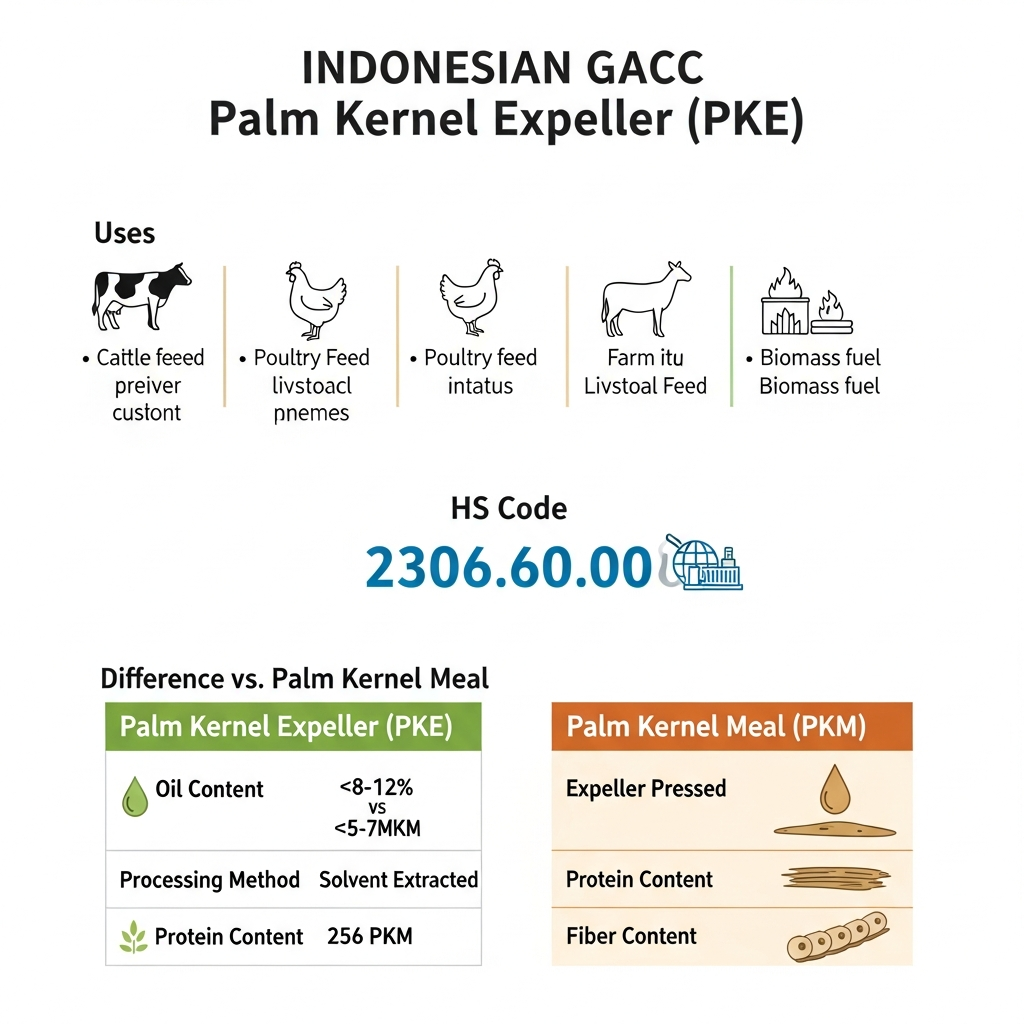
Indonesian Palm Kernel Expeller vs. Palm Kernel Meal (PKM)
A common mistake among buyers is confusing Indonesian Palm Kernel Expeller with Palm Kernel Meal (PKM). While they originate from the same source, the extraction method drastically alters their nutritional profiles and applications. Understanding this distinction is vital for optimizing feed formulation.
The primary difference lies in the oil extraction process. Indonesian Palm Kernel Expeller is produced via mechanical screw press, leaving 6–10% residual oil (fat). In contrast, Palm Kernel Meal is typically the result of solvent extraction (using hexane), which strips the oil content down to 1–2%.
| Feature | Palm Kernel Expeller (PKE) | Palm Kernel Meal (PKM) |
|---|---|---|
| Extraction Method | Mechanical Screw Press | Solvent Extraction (Hexane) |
| Residual Oil (Fat) | High (6% – 12%) | Low (0.5% – 2%) |
| Energy Value | High (Better for fattening/dairy) | Moderate |
| Texture | Coarse, cake-like, fibrous | Fine, flour-like powder |
| Primary Use | Ruminant Feed, Biomass Fuel | Monogastric Feed, Fertilizers |
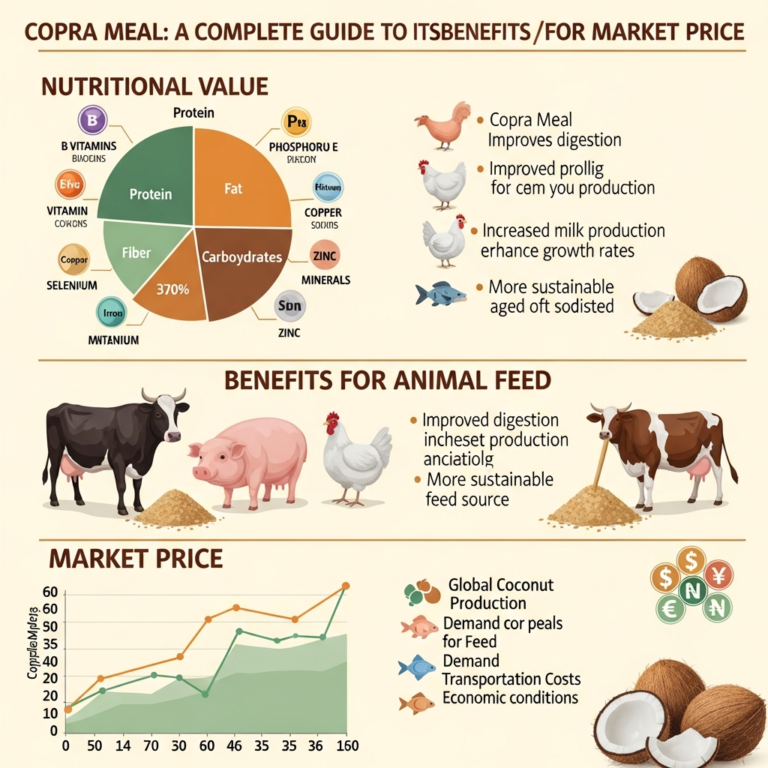
For buyers interested in other byproduct alternatives, comparing PKE with Copra Meal can also provide insights into optimizing protein intake for livestock. Copra meal often offers a different amino acid profile that complements PKE in mixed rations.
Detailed Nutritional Profile of Indonesian PKE
To maximize the benefits of Indonesian Palm Kernel Expeller, nutritionists must understand its chemical composition. The following data represents the typical analysis of export-quality Indonesian PKE in 2026:
- Dry Matter (DM): 88% – 92%
- Crude Protein (CP): 14% – 16%
- Crude Fat (Ether Extract): 8% – 12%
- Neutral Detergent Fiber (NDF): 60% – 70%
- Metabolizable Energy (Ruminants): ~10.5 MJ/kg
- Ash Content: 4% – 6%
- Aflatoxin B1: < 20 ppb (GACC compliant)
This profile highlights why PKE is a superior source of metabolizable energy compared to lower-fat meals.
7 Strategic Uses of Indonesian Palm Kernel Expeller
The versatility of Indonesian Palm Kernel Expeller extends far beyond simple filler feed. Here are the seven most proven applications driving market demand in 2026.
1. High-Energy Dairy Cattle Feed
PKE is a staple in dairy rations due to its balanced ratio of energy and protein. The residual oil provides a concentrated energy source that helps boost milk fat content, which is a key metric for dairy profitability. Research indicates that incorporating PKE can improve milk yield without compromising the cow’s metabolic health.
For lactating cows requiring even higher energy density, producers often supplement PKE with Calcium Salts of Palm Oil Fatty Acids (bypass fats) to maximize production efficiency.
2. Beef Cattle Fattening
For feedlots, rapid weight gain is the goal. The moderate protein (14–16%) and high fiber content of Indonesian Palm Kernel Expeller make it an excellent supplement for beef cattle. It promotes rumen health while providing the necessary calories for consistent growth. The high phosphorus-to-calcium ratio requires balancing, but the energy gains are significant.
3. Swine and Poultry Diets
While primarily a ruminant feed, fermented PKE is increasingly used in swine and poultry diets. Fermentation breaks down the fibrous components, making the nutrients more bioavailable for monogastric animals. This innovation helps reduce feed costs by replacing more expensive grains.
4. Biomass Energy Generation
Beyond nutrition, PKE is gaining traction as a renewable energy source. When co-fired with coal or used in biomass boilers, it burns efficiently with a high calorific value. It complements other biomass products like Palm Kernel Shell (PKS), offering a sustainable alternative to fossil fuels with lower sulfur emissions.
5. Aquafeed Formulations
Recent innovations have allowed processed PKE to be included in fish feed. It serves as a cost-effective plant-based protein substitute, reducing reliance on expensive fishmeal in aquaculture operations, particularly for herbivorous fish species like Tilapia.
6. Soil Conditioner and Fertilizer
Rich in organic matter, PKE residues can be composted to create nutrient-rich fertilizer. This application is particularly popular in organic farming setups where chemical fertilizers are avoided. It functions similarly to Cocopeat in improving soil structure, though with higher nutrient content.
7. Raw Material for Amino Acid Extraction
Advanced biochemical processing can extract specific amino acids from PKE, utilized in industrial and pharmaceutical applications. This marks a shift toward high-value utilization of Indonesian Palm Kernel Expeller in the biotech sector.
Understanding GACC Standards for Export to China
China is one of the largest importers of Indonesian Palm Kernel Expeller, but entry into this market is strictly regulated by the General Administration of Customs China (GACC). Compliance is non-negotiable for exporters and buyers aiming to trade with China.
GACC Registration and Decrees
Under GACC Decree 248 and 249, all overseas food and feed manufacturers must register directly with Chinese customs. This involves a rigorous audit of the production facility to ensure sanitary conditions meet Chinese standards. The facility must demonstrate effective pest control and traceability systems.
Critical Contaminants to Monitor
The strict sanitary and phytosanitary requirements focus heavily on preventing contamination. Key parameters monitored include:
- Quarantine Pests: The shipment must be free from live pests, specifically Trogoderma granarium (Khapra beetle), which is a zero-tolerance pest in China.
- Toxic Substances: Strict limits on heavy metals like lead (Pb) and arsenic (As).
- Aflatoxins: Perhaps the most critical parameter. GACC requires stringent control over fungal toxins, typically requiring Aflatoxin B1 levels to be strictly below 20 ppb (parts per billion).
Importers should always verify that their supplier holds a valid GACC registration number. You can verify trade regulations and standards through resources like the World Trade Organization (WTO) portal.
Export Logistics and Quality Preservation
Successfully exporting Indonesian Palm Kernel Expeller requires mastery of logistics. High moisture and humidity are the enemies of PKE, leading to mold and spontaneous combustion risks.
Moisture Management: Maintaining low moisture content (usually below 10-12%) is essential. Proper storage and handling, similar to the rigorous protocols used for liquid exports like RBD CP8, ensure the product arrives in pristine condition. During bulk shipments, vessel holds must be ventilated to prevent “ship sweat.”
HS Code and Technical Specifications
Correct classification is crucial for customs clearance. The Harmonized System (HS) Code helps customs authorities identify the product and apply the correct tariffs.
- HS Code: 2306.60.00
- Description: Oil-cake and other solid residues, whether or not ground or in the form of pellets, resulting from the extraction of palm nuts or kernels.
Why Choose Indonesian PKE in 2026?
Indonesia is the world’s largest producer of palm oil, ensuring a consistent and abundant supply of PKE throughout the year. Unlike seasonal crops, palm production is continuous, mitigating supply chain risks for major feed mills.
Furthermore, Indonesian producers are increasingly adopting sustainability standards such as ISPO (Indonesian Sustainable Palm Oil) and RSPO (Roundtable on Sustainable Palm Oil). Sourcing from certified suppliers guarantees that the PKE you purchase contributes to environmentally responsible farming practices.
For in-depth scientific analysis on the nutritional value of palm byproducts, you can refer to the Feedipedia Palm Kernel Expeller profile, a joint project by INRAE, CIRAD, AFZ, and FAO.
Frequently Asked Questions
What is the typical shelf life of Indonesian Palm Kernel Expeller?
When stored in a cool, dry place with moisture content below 10%, Indonesian Palm Kernel Expeller typically has a shelf life of 6 to 12 months. High moisture or humidity can lead to mold growth and spoilage, significantly reducing this timeframe.
Can Palm Kernel Expeller be fed to horses?
Yes, PKE can be fed to horses, but it should be introduced gradually. It provides a “cool” energy source (low starch, high fiber/fat) which is beneficial for conditioning without making the horse excitable. Always consult a veterinarian for specific ration formulations.
Is GACC approval mandatory for all countries?
No, GACC approval is specifically for exports to the People’s Republic of China. However, the standards set by GACC are high, so a supplier meeting these standards often indicates high-quality production processes suitable for other markets like Vietnam, South Korea, and New Zealand.
How does PKE compare to Soybean Meal?
Soybean meal is significantly higher in protein (44–48%) compared to PKE (14–16%). However, PKE is often much more affordable and provides higher fiber content. It is best used as a complementary feed or partial substitute rather than a direct 1:1 replacement.
What is the maximum inclusion rate for dairy cows?
Generally, PKE can make up 20–30% of the total dry matter intake for dairy cows. Exceeding this limit might affect palatability or mineral balance, specifically the Copper-to-Molybdenum ratio, which requires monitoring.
Makmur Amanah Sejahtera provides high-quality palm products such as Palm Kernel Expeller, Palm Kernel Shell, Crude Palm Oil, Palm Kernel Oil, etc. Kindly contact us at WhatsApp +6282140002198 or email us at admin@makmuramanah.co.id.
Conclusion
Sourcing the right feed ingredients is a balancing act between cost, nutrition, and compliance. Indonesian Palm Kernel Expeller offers a robust solution for modern agriculture, delivering essential nutrients for livestock and serving as a sustainable biomass option. Whether you are navigating GACC regulations for the Chinese market or optimizing a local dairy ration, the versatility of PKE is undeniable.
By partnering with experienced suppliers who understand the technical specifications and logistics of global trade, you ensure your operations run smoothly in 2026 and beyond. Secure your supply chain today with premium, compliant, and sustainable palm derivatives.
For more information on global agricultural trends, visit the Food and Agriculture Organization (FAO) website or check scientific studies on animal nutrition at ScienceDirect.
 English
  Indonesian
  Chinese
  Arabic