
Palm Kernel Expeller: A Powerful 2026 Guide to Feed Profits
The Palm Kernel Expeller is a powerhouse ingredient revolutionizing livestock feed, yet many farmers are unaware of its full potential. As global demand for affordable, high-quality animal protein rises, the pressure to optimize feed costs without compromising nutrition has never been greater.
This guide provides the definitive solution. We will unlock the complete value of PKE, transforming your feeding strategy for maximum profitability and animal health. According to a recent report from the International Feed Industry Federation (IFIF), sustainable feed ingredients like PKE are projected to grow by 15% in market share by 2030, highlighting their critical importance in modern agriculture.
What is Palm Kernel Expeller (PKE)?
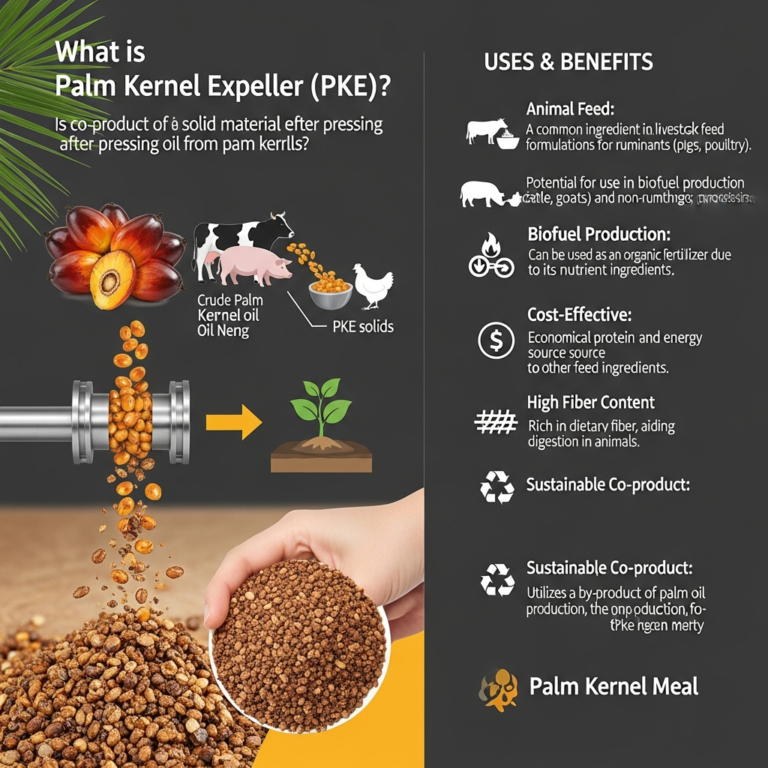
Palm Kernel Expeller (PKE) is a highly nutritious and economically viable feed ingredient derived as a co-product from the palm oil industry. It is the material left over after oil has been mechanically extracted from the kernel of the oil palm fruit. This process, known as mechanical expelling, ensures that a moderate amount of residual oil remains, which contributes to its energy value.
[Image: A close-up shot of high-quality, granular Palm Kernel Expeller, a high-protein animal feed ingredient.]
The Mechanical Extraction Process: From Kernel to Expeller
The journey to creating PKE begins after the palm fruit’s flesh is used for crude palm oil production. The remaining nut is cracked to reveal the kernel. These kernels are then crushed and pressed in a mechanical ‘expeller’ press to extract Palm Kernel Oil. The fibrous, protein-rich solid that remains is the Palm Kernel Expeller, which is then ground into a meal-like consistency suitable for animal consumption.
PKE vs. Palm Kernel Meal (PKM): A Critical Distinction
While often used interchangeably, there is a technical difference. PKE is produced through mechanical pressing, leaving a residual oil content of 5-12%. In contrast, Palm Kernel Meal (PKM) often refers to the product of solvent extraction, which removes more oil. This results in a lower fat content (typically 1-5%) but a higher protein concentration. For most livestock applications, the balanced energy and protein in PKE is highly desirable.
Understanding the ‘Expeller’ in Palm Kernel Expeller
The term ‘expeller’ is crucial as it defines the product’s quality and nutritional characteristics. The mechanical pressing is less harsh than chemical solvent extraction, preserving the integrity of the protein. This ensures a good level of bypass protein, which is particularly beneficial for ruminants, making Palm Kernel Expeller a uniquely valuable resource.
The Nutritional Profile of Palm Kernel Expeller
The value of PKE as a feed ingredient is rooted in its dense nutritional composition. It provides a balanced source of protein, energy, and fiber, making it a versatile component in diets for various types of livestock.
However, its exact composition can vary based on the efficiency of the oil extraction process and the origin of the kernels. It’s a fantastic alternative to more expensive protein sources.
Macronutrient Breakdown: Protein, Fiber, and Fat
PKE is primarily valued for its protein and fiber content. The crude protein level typically ranges from 14% to 18%. Furthermore, its high fiber content (around 16%) aids in digestive health, particularly in ruminants. The residual oil, or crude fat, provides a significant source of metabolic energy.
Here is a comparison of PKE with other common feed ingredients:
| Nutrient | Palm Kernel Expeller | Soybean Meal | Copra Meal |
|---|---|---|---|
| Crude Protein (%) | 14-18 | 44-48 | 20-24 |
| Crude Fiber (%) | 16-20 | 5-7 | 8-12 |
| Crude Fat (%) | 5-12 | 1-2 | 6-10 |
Essential Minerals and Their Role in Animal Health
Beyond the macronutrients, PKE is a rich source of essential minerals. It has a high phosphorus-to-calcium ratio and is abundant in minerals like potassium, magnesium, and zinc. These are vital for bone development, metabolic functions, and overall animal vitality. For example, research published in the Journal of Animal Science shows that a balanced mineral profile in feed directly correlates with improved immune response in cattle.
Core Benefits of Using Palm Kernel Expeller in Animal Feed
Incorporating PKE into livestock rations offers a multitude of advantages, ranging from economic savings to improved animal welfare and sustainability. It’s a strategic choice for forward-thinking farm management.
[Image: Healthy dairy cows eating a feed ration containing Palm Kernel Expeller in a modern barn.]
1. Cost-Effective Nutrition: Reducing Feed Expenses
The most significant benefit of this feed ingredient is its cost-effectiveness. As a co-product, it is typically priced more competitively than primary protein sources like soybean meal. This allows farmers to significantly lower their feed costs—which can account for up to 70% of total production costs—without sacrificing essential nutrients.
2. Enhancing Ruminant Health and Milk Production
For ruminants such as dairy and beef cattle, PKE is particularly beneficial. Its high fiber content promotes healthy rumen function and stimulates cud chewing. Moreover, the bypass protein is digested in the small intestine, providing essential amino acids that can lead to:
- Increased milk yield
- Higher milk fat and protein content
- Improved body condition scores
3. A Sustainable Feed Ingredient
Using PKE is a move towards a more sustainable agricultural system. It represents the “upcycling” of a co-product from the massive palm oil industry, reducing waste and making the entire value chain more efficient. By utilizing this ingredient, farmers contribute to a circular economy, a principle championed by organizations like the Roundtable on Sustainable Palm Oil (RSPO) and the Food and Agriculture Organization of the United Nations.
Key Uses & Applications of Palm Kernel Expeller
The versatility of Palm Kernel Expeller allows it to be used in a wide array of animal diets. Proper formulation is key to unlocking its maximum potential across different species.
PKE in Dairy and Beef Cattle Diets
This is the largest market for PKE. It is an excellent forage supplement and protein extender in cattle rations.
- In Dairy Cows: It is often included at 15-25% of the total ration to support milk production and butterfat levels. Its fibrous nature helps prevent acidosis.
- In Beef Cattle: It can be used in feedlot rations to provide a cost-effective source of energy and protein for fattening, often mixed with molasses to improve palatability.
Formulating Poultry and Swine Feed with PKE
While PKE’s high fiber content can be a limiting factor for monogastric animals like poultry and swine, it can be used effectively at lower inclusion rates (typically 5-10%). It is often used in layer hen diets to maintain egg production and in sow diets to provide bulk and satiety. Newer processing techniques are also improving its digestibility for these species.
Beyond Livestock: PKE in Other Industries
The application of PKE isn’t limited to animal feed. Its high caloric value makes it a viable biomass fuel for industrial boilers, often used as a more sustainable alternative to coal. In some cases, it’s also used as a base for organic fertilizers. This mirrors the “waste-to-value” philosophy seen with other agricultural co-products, such as Cocopeat from the coconut industry, and makes it a sister product to other biomass fuels like Palm Kernel Shell.
Palm Kernel Expeller Specification: A Buyer’s Guide
When sourcing PKE, understanding its key quality parameters is non-negotiable. The specifications directly impact animal performance and the economic viability of your feeding program. As an importer or large-scale buyer, you must be diligent.
[Image: Infographic showing the journey from palm fruit to PKE, highlighting key quality checkpoints.]
Key Quality Specifications for Palm Kernel Expeller
Before finalizing a purchase, demand a Certificate of Analysis (COA) from your supplier and check for these values:
- Crude Protein: Should ideally be >15%. This is the primary indicator of nutritional value.
- Moisture: Must be <12%. Higher moisture levels can lead to mold, mycotoxins, and spoilage during storage.
- Crude Fat/Oil: Typically 5-12%. This level indicates the efficiency of the extraction and the energy content.
- Shell & Dirt Content: Should be <5%. High shell content reduces digestibility and nutritional value. Quality suppliers have robust screening processes.
Understanding International Standards and Grading
While there isn’t a single universal grading system, major exporting countries like Indonesia and Malaysia have established standards. A reputable supplier like Makmur Amanah Sejahtera will provide specifications that align with accepted international trade practices. Always clarify the testing methods used (e.g., AOAC) to ensure you are comparing apples to apples. This is a topic often covered by government trade bodies like the U.S. Department of Agriculture for feed imports.
Makmur Amanah Sejahtera provides high-quality palm products such as Palm Kernel Expeller, Palm Kernel Shell, Crude Palm Oil, Palm Kernel Oil, etc. Kindly contact us at WhatsApp +6282140002198 or email us at admin@makmuramanah.co.id.
[Image: A video thumbnail showing a farmer mixing PKE into a feed ration with text overlay “How to Use PKE for Maximum Profit”.]
Frequently Asked Questions (FAQ)
What is the main use of Palm Kernel Expeller?
The primary use of Palm Kernel Expeller is as a key ingredient in animal feed, particularly for ruminants like dairy cows and beef cattle. Its balanced profile of protein, fiber, and energy makes it a cost-effective way to supplement animal diets and improve productivity.
Is PKE good for all livestock?
While PKE is excellent for ruminants, its use in monogastric animals (poultry, swine) should be more limited. The high fiber content can be difficult for them to digest. Generally, it’s included at lower percentages (5-10%) in their diets compared to cattle (up to 25% or more).
What is the difference between PKE and Palm Kernel Shell?
They are very different products. PKE is the nutritious, protein-rich meal left after oil is pressed from the palm kernel and is used for feed. Palm Kernel Shell is the hard, woody outer covering of the kernel, primarily used as a high-calorific biomass fuel.
How does PKE affect milk quality in dairy cows?
Studies have shown that including this expeller in a balanced dairy ration can positively impact milk quality. Specifically, its unique fatty acid profile can help increase the butterfat content of the milk, a key metric for dairy profitability and product quality.
Why is the protein level in Palm Kernel Expeller variable?
The protein level can fluctuate based on the origin of the palm kernels, the specific variety of oil palm, and, most importantly, the efficiency of the oil extraction process. A more efficient oil extraction will leave slightly less oil and a higher concentration of protein in the final expeller.
Conclusion: The Smart Choice for 2026 and Beyond
In conclusion, the strategic use of Palm Kernel Expeller offers a powerful solution to the challenges of modern animal agriculture. It provides a cost-effective, sustainable, and highly nutritious alternative to traditional feed ingredients. By understanding its benefits, applications, and the key specifications to look for, you can significantly reduce feed costs, improve animal performance, and enhance the overall profitability of your operation.
As we move further into 2026, leveraging efficient and sustainable resources is no longer just an option; it’s a necessity. Making the switch to a feed strategy that includes high-quality PKE is a smart, forward-thinking decision that will yield returns for years to come. Contact a trusted supplier today to explore how this amazing ingredient can work for you.
 English
  Indonesian
  Chinese
  Arabic