
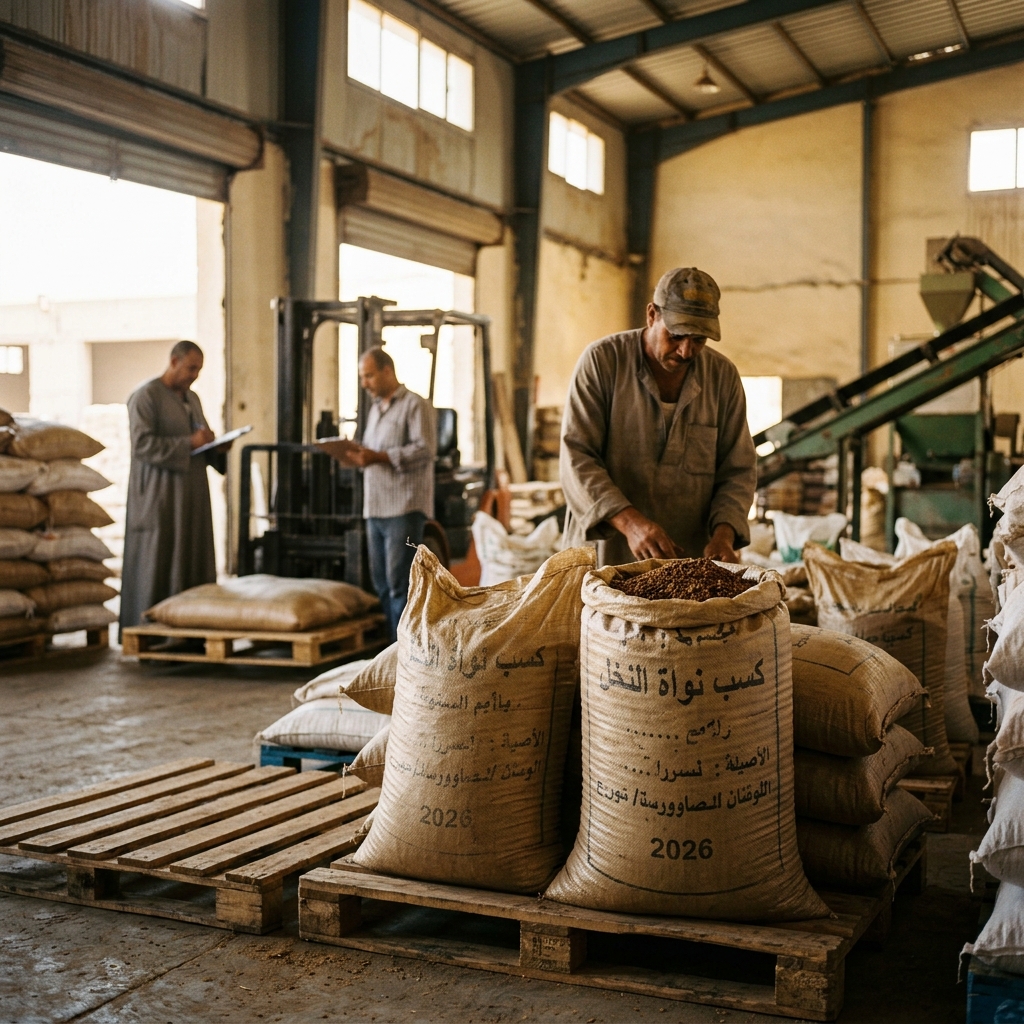
Palm Kernel Expeller Egypt: 7 Essential Buyer Tips (2026 Guide)
Sourcing high-quality Palm Kernel Expeller Egypt feed solutions has become a top strategic priority for commercial livestock producers, dairy farms, and feed mills across North Africa. As global grain markets fluctuate, agricultural operators in Cairo, Alexandria, and the Nile Delta require stable, nutrient-dense feed raw materials to sustain high herd performance without exceeding operational budgets.
Palm Kernel Expeller (PKE)—frequently referenced as palm kernel meal—is a high-value agro-industrial byproduct resulting from the mechanical extraction of crude oil from the nut of the oil palm fruit. Rich in digestible fiber, functional dietary lipids, and crude protein, PKE serves as an economical energy feed meal for beef and dairy production.
In this definitive 2026 procurement guide, we provide an in-depth audit of PKE quality parameters, nutritional benchmarks, import regulations, and step-by-step sourcing channels needed to import palm kernel expeller to Egypt efficiently.
What is Palm Kernel Expeller Egypt Feed Grade?
For commercial animal feed formulators, Palm Kernel Expeller Egypt imports represent a safe, non-pelleted or pelleted energy feed meal derived from the mechanical pressing process of dried palm kernels. Unlike chemically extracted meals, mechanical expeller processing leaves a residual crude oil content of 6% to 10%, giving the ingredient superior metabolizable energy value for ruminant digestion.
With a crude protein content averaging 14% to 18%, PKE acts as a dual-purpose livestock feed ingredient that provides both protein supplementation and fermentable fiber. Its slow rumen degradability makes it ideal for stabilizing cattle feed Egypt formulations while preventing metabolic digestive disorders.
The Growing Demand for Palm Kernel Expeller Egypt Feed Supplies
Egypt’s commercial livestock sector has expanded rapidly to meet regional demands for meat and milk. Data published by the USDA Foreign Agricultural Service indicates that Egypt imports substantial volumes of yellow corn and soybean meal annually. However, relying solely on volatile cereal markets exposes local feed plants to supply disruptions and margin compression.
Integrating bulk palm kernel expeller supplier Egypt shipments into regional feed manufacturing provides a vital economic buffer. PKE supplies consistent bulk fiber and energy at a significantly reduced per-ton baseline compared to traditional yellow corn rations.
[Image: Large commercial dairy cattle herd in Egypt eating structured total mixed ration (TMR) containing Palm Kernel Expeller feed | Alt: High quality Palm Kernel Expeller Egypt livestock feed for dairy cattle | Title: Palm Kernel Expeller Egypt Dairy Nutrition Setup]
Furthermore, palm products are naturally non-GMO, aligning with international safety certifications. For Egyptian meat and dairy producers targeting clean-label domestic retail markets, importing non-GMO Palm Kernel Expeller Egypt volume helps fulfill quality compliance standards.
Why Importing Palm Kernel Expeller Egypt Boosts Livestock Yields
Ruminants feature multi-chambered stomach systems specially designed to ferment digestible plant fiber into short-chain fatty acids. PKE offers substantial dietary hemicellulose, allowing cattle and sheep to extract sustained energy without triggering rapid lactate accumulation in the rumen environment.
Nutritional Breakdown & Feed Value Comparison
Evaluated against conventional feedstuff options, PKE provides an ideal balance between crude protein content, medium-chain fatty acids, and neutral detergent fiber (NDF). Research indexed by the Food and Agriculture Organization (FAO) confirms that medium-chain fatty acids in palm kernel meal enhance dietary energy density without inhibiting cellulolytic microbial flora.
The operational feed parameters below highlight how PKE compares directly against traditional Egyptian feed mill raw materials:
| Nutritional Parameter | Palm Kernel Expeller (PKE) | Yellow Corn (Graded) | Soybean Meal (44%) | Wheat Bran |
|---|---|---|---|---|
| Crude Protein (CP) | 14.0% – 18.0% | 8.5% – 9.0% | 44.0% – 48.0% | 14.5% – 16.0% |
| Crude Fat / Oil | 6.0% – 10.0% | 3.5% – 4.0% | 1.0% – 2.0% | 3.0% – 4.0% |
| Crude Fiber (CF) | 15.0% – 18.0% | 2.0% – 2.5% | 6.0% – 7.0% | 9.0% – 11.0% |
| Neutral Detergent Fiber (NDF) | 55.0% – 65.0% | 9.0% – 11.0% | 14.0% – 15.0% | 35.0% – 42.0% |
| Metabolizable Energy (Ruminants) | 2.6 – 2.9 Mcal/kg | 3.3 – 3.4 Mcal/kg | 3.0 – 3.2 Mcal/kg | 2.3 – 2.5 Mcal/kg |
Key Specifications for Palm Kernel Expeller Egypt Imports
To preserve maximum dietary transformation efficiency, importers must demand strict lab verification before approving overseas vessel loading. Scientific profile databases like Feedipedia highlight how moisture management prevents mold proliferation during extended sea transit to North Africa.
- Moisture Content: Maximum 12.0% (prevents fungal heating during sea transport)
- Crude Protein: Minimum 15.0% (dry matter basis)
- Profat (Protein + Oil combined): Minimum 21.0%
- Dirt & Foreign Shell Fragments: Maximum 5.0%
- Aflatoxin Standard: Maximum 20 ppb (compliant with Egyptian GOVS regulations)
- Physical State: Light brown meal or pellets with a sweet, nutty aroma
7 Essential Tips for Buying Palm Kernel Expeller in Egypt
Managing global agricultural purchases requires strict focus on quality assurance, charter logistics, and customs documentation. Follow these seven field-tested strategies when importing bulk batches into Egyptian maritime hubs.
1. Verify Aflatoxin and Moisture Standards
Warm ambient storage temperatures across Mediterranean ports can cause rapid spoilage if moisture exceeds international safety thresholds. Always demand pre-shipment certificates from accredited independent inspectors like SGS or Intertek. Confirm moisture levels stay under 12% to guarantee long shelf life upon arrival.
2. Source Directly from Established Indonesian Crushers
Direct sourcing from Indonesian crushing mills eliminates costly broker commissions and guarantees uniform product batches. Direct origin suppliers maintain strict expeller press calibration, ensuring high oil retentions and ideal physical pellet integrity. Commercial buyers can source export-grade Palm Kernel Expeller Egypt shipments directly from primary production facilities.
[Image: High-capacity mechanical expeller press extracting oil from palm kernels in an Indonesian processing facility | Alt: Mechanical processing of Palm Kernel Expeller Egypt export material | Title: Indonesian Palm Kernel Expeller Manufacturing Facility]
3. Assess Fiber Digestibility for Ruminant Rations
Fiber digestibility in palm meal depends significantly on mechanical processing thermal history. Peer-reviewed literature in the Journal of Dairy Science demonstrates that controlled expeller processing preserves digestible hemicellulose. This specific fiber structure encourages rumination, boosting milk fat percentage in lactating dairy cow nutrition routines.
4. Evaluate Freight Costs and Incoterms (FOB vs. CFR Alexandria/Damietta)
Freight rates vary based on vessel availability and international bunker fuel prices. When requesting a current PKE price per ton Egypt quotation, compare FOB origin prices against CFR terms for ports such as Alexandria, Damietta, or Port Said. Long-term ocean charter agreements yield predictable landed pricing structures.
5. Balance Rations with Complementary Bypass Fats and Proteins
Optimizing animal productivity requires balancing PKE’s fiber profile with high-density proteins and lipids. For high-yielding dairy cows, combining PKE with high-protein Copra Meal optimizes amino acid delivery. Furthermore, incorporating energy-rich Calcium Salts of Palm Oil Fatty Acids boosts total digestible energy without compromising fiber digestion in the rumen.
6. Ensure Full Regulatory Clearance with Egyptian Authorities
The Egyptian General Organization for Veterinary Services (GOVS) enforces rigorous entry controls on foreign feed raw materials. Importers must ensure all shipments carry phytosanitary origin documentation, non-radiation declarations, and verified vessel fumigation logs prior to port arrival.
7. Select Cargo Packaging Tailored to Storage Systems
PKE can be shipped via breakbulk vessel holds, 1,000kg jumbo bulk bags, or 50kg polypropylene woven sacks. While bulk vessel chartering delivers the lowest cost per metric ton for large feed operations, bulk bags offer superior defense against humidity and simplify handling for medium-scale facilities across Egypt.
How to Integrate PKE into Egyptian Ruminant Diets
Strategic ration balancing allows nutritionists to maximize performance while optimizing total daily feed costs. Because PKE acts as a high-fiber energy source, it serves effectively as a partial substitute for both forage fiber and starch grains.
Recommended Daily Inclusion Levels
- Lactating Dairy Cattle: 15% – 25% of total dry matter intake (DMI). Boosts butterfat production and supplies stable baseline energy.
- Beef Cattle Feedlots: 20% – 35% of total ration intake. Serves as a reliable, cost-effective energy builder that reduces sub-acute ruminal acidosis risks.
- Sheep and Goats: 10% – 20% of concentrate mix. Delivers highly digestible structural fiber for meat production.
- Camels: Up to 30% of concentrate intake, offering exceptional energy maintenance in arid environment conditions.
When introducing PKE into feeding programs, transition animals gradually over a 7-to-10-day period. This adjustment phase enables rumen microflora to adapt efficiently to the new fiber matrix.
Sourcing Palm Kernel Expeller Egypt Direct from Origin
Indonesia remains the world’s leading producer of palm kernel products, making it the primary origin for global importers. Direct procurement guarantees fresh production batches, consistent profat guarantees, and direct maritime logistics access.
Beyond animal feed ingredients, enterprise agricultural buyers often import alternative industrial palm products. Industrial operations frequently source Palm Kernel Shell for biomass boiler heating systems, or procure specialized growing media like Cocopeat for commercial greenhouse farming across Egypt.
[Infographic Suggestion: Step-by-step supply chain flow chart illustrating the process from Indonesian palm crushing mills, maritime transport across the Indian Ocean/Red Sea, port entry at Alexandria, to final mixing on Egyptian dairy farms | Alt: Supply chain flow for Palm Kernel Expeller Egypt import | Title: PKE Supply Chain from Indonesia to Egypt Infographic]
[Video Embed Suggestion: Operational video showing large-scale feed mill automation, mixing Palm Kernel Expeller pellets with mineral supplements into total mixed rations (TMR) for cattle feed Egypt distribution | Alt: Video of automated commercial feed mill processing Palm Kernel Expeller | Title: Feed Mill Production Process Video]
Makmur Amanah Sejahtera provides high-quality palm products such as Palm Kernel Expeller, Palm Kernel Shell, Crude Palm Oil, Palm Kernel Oil, etc. Kindly contact us at WhatsApp +6282140002198 or email us at admin@makmuramanah.co.id.
Frequently Asked Questions
What is the typical crude protein content of Palm Kernel Expeller imported to Egypt?
Export-grade Palm Kernel Expeller contains crude protein levels between 14% and 18% on a dry matter basis. Combined with residual crude oil levels of 6% to 10%, PKE delivers high combined profat energy value for commercial livestock rations.
How does Palm Kernel Expeller help lower feed costs for Egyptian livestock farms?
PKE trades at a lower cost per unit of energy and protein compared to imported yellow corn or soybean meal. Substituting a portion of expensive grains with PKE lowers overall daily feed expenditures while maintaining consistent milk yields and growth rates.
Which Egyptian entry ports typically process bulk shipments of Palm Kernel Expeller?
Major entry ports for bulk agricultural commodities in Egypt include Alexandria, Damietta, and Port Said. These ports feature heavy-duty suction discharge systems, specialized grain silos, and convenient logistics connections to major agricultural regions.
Can Palm Kernel Expeller be incorporated into Egyptian poultry or swine formulations?
Because PKE contains 15% to 18% crude fiber, it is primarily optimized for ruminants. However, low inclusion levels (3% to 5%) can be included in adult poultry or swine diets when supported by appropriate non-starch polysaccharide (NSP) enzyme additions.
What is the typical shelf life of Palm Kernel Expeller in warm climates?
Stored in dry, well-ventilated warehouses with moisture levels maintained below 12%, Palm Kernel Expeller maintains nutritional quality for 6 to 9 months without significant oxidation, lipid degradation, or mold growth.
Conclusion: Elevating Livestock Nutrition Across Egypt
Securing reliable, high-value raw materials is critical to maintaining animal production profitability across North Africa. Establishing a direct procurement stream for Palm Kernel Expeller Egypt supplies enables commercial feed mills and livestock producers to control production costs, preserve ideal rumen digestion, and protect profit margins against international market volatility.
By implementing strict quality verification protocols, optimizing maritime freight choices, and balancing rations for target species, Egyptian agricultural operations can achieve superior herd performance and outstanding financial returns in 2026 and beyond.


 English
  Indonesian
  Chinese
  Arabic