
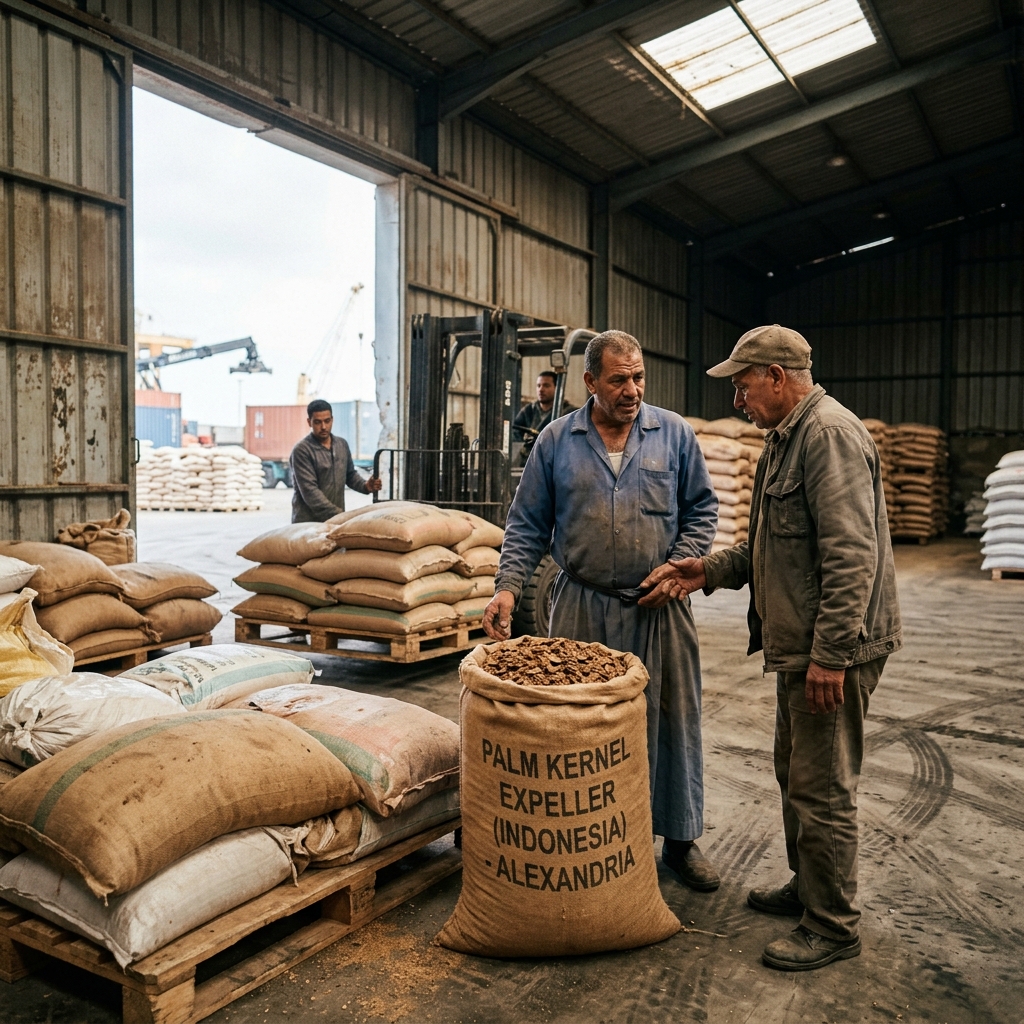
Palm Kernel Expeller Egypt: 5 Proven Import Tips (2026 Guide)
Importing Palm Kernel Expeller Egypt feeds has emerged as a game-changing strategy for Egyptian livestock producers aiming to lower feed overhead while maintaining high yields. As Egypt expands its domestic milk and meat production in 2026, finding reliable, high-energy feed supplements is essential. Palm Kernel Expeller (PKE) offers an ideal blend of digestible fiber, crude protein, and residual palm oil that supports optimal rumen fermentation.
According to reports from the USDA Foreign Agricultural Service, Egypt continues to face volatile prices for traditional feed ingredients like yellow corn and soybean meal. Consequently, commercial feed mills across Alexandria, Cairo, and the Delta region are increasingly turning to tropical palm byproducts. Sourcing high quality palm kernel expeller import Egypt operations allows feed formulators to stabilize input prices while protecting herd growth.
This definitive guide provides actionable insights into technical specifications, Egyptian regulatory clearance, market pricing, and sourcing strategies for commercial buyers seeking reliable livestock feed import Cairo pipelines.
Defining Palm Kernel Expeller: The Ruminant Super-Ingredient
Palm Kernel Expeller (PKE)—also known as palm kernel meal—is the solid byproduct derived from extracting oil from the crushed kernel of the oil palm fruit (Elaeis guineensis). Produced via mechanical screw-pressing, PKE retains a valuable amount of residual crude fat (6% to 10%), making it an exceptional energy-dense feed for ruminants.
Unlike simple fibrous roughage, PKE contains moderate protein levels (14% to 18%) and high Neutral Detergent Fiber (NDF), making it safe against rapid rumen acidification. For Egyptian dairy cattle, water buffalo, and fattening beef bulls, PKE serves as an economical partial dairy cattle feed substitute for costly imported whole grains.
[Image: High-grade mechanical screw-pressed Palm Kernel Expeller pellets prepared for bulk shipment to Alexandria, Egypt. Alt: High quality Palm Kernel Expeller Egypt bulk supply. Title: Palm Kernel Expeller Bulk Export to Egypt]
1. Key Specifications for Palm Kernel Expeller Egypt Buyers
Securing the right feed quality requires strict adherence to international standard palm kernel meal specs. Egyptian importers must ensure shipments comply with Ministry of Agriculture standards to avoid expensive port quarantine holds.
Furthermore, evaluating physical parameters such as moisture content, color, and aroma guarantees that the feed retains its nutritional value throughout maritime transport across the Indian Ocean and Red Sea.
Evaluating Palm Kernel Expeller Egypt Standards for Local Ruminants
When establishing commercial contracts for buying palm kernel expeller bulk Egypt shipping deliveries, buyers should verify the laboratory certificate against regional feed standard thresholds.
The nutritional profile directly impacts daily weight gain and butterfat percentages. Importers must examine palm kernel expeller feed specifications Egypt livestock nutritionists recommend before finalizing purchase orders.
| Parameter | Standard Export Grade | Premium Grade (Mechanical Press) |
|---|---|---|
| Crude Protein Content | 14.0% – 16.0% | 16.5% – 18.0% |
| Crude Fat / Oil Content | 6.0% – 8.0% | 8.5% – 10.5% |
| Crude Fiber (CF) | 15.0% – 18.0% | 14.0% – 16.0% |
| Moisture Content | Max 12.0% | Max 10.0% |
| Profat (Protein + Fat Combined) | Min 21.0% | Min 24.0% |
| Aflatoxin Level | Max 20 ppb | Max 10 ppb |
| Sand / Silica / Foreign Matter | Max 2.5% | Max 1.0% |
When reviewing lab certificates, Egyptian buyers should prioritize low sand and silica content. Excessive sand indicates poor raw material washing or floor drying contamination, which reduces total digestible nutrients (TDN).
2. Why Egyptian Ruminant Farms Prefer Palm Kernel Expeller
Egypt’s livestock sector relies heavily on irrigated crops along the Nile and imported raw ingredients. As currency fluctuations impact feed sourcing, PKE delivers three strategic advantages to Egyptian herd managers seeking reliable ruminant feed Egypt solutions.
Rumen-Friendly Fiber and Energy Balance
High-yield Holstein herds and Egyptian native water buffaloes (Bubalus bubalis) require balanced fiber to maintain healthy rumen pH. PKE offers digestible fiber that ferments slowly, preventing subacute rumen acidosis (SARA)—a common issue when feeding excessive yellow corn.
Studies indexed by ScienceDirect show that integrating PKE into ruminant diets enhances butterfat percentages in dairy cattle while stabilizing acetate-to-propionate ratios in the rumen.
Cost Efficiency Against Expensive Grains
In 2026, feed costs represent up to 70% of total milk and beef production expenses in Egypt. By replacing 15% to 30% of standard corn and barley rations with quality Palm Kernel Expeller products, commercial farms achieve significant cost savings per ton without sacrificing daily live-weight gain.
Additionally, nutritionists often combine PKE with complementary vegetable protein feeds such as Copra Meal or energy-dense bypass fats like Calcium Salts of Palm Oil Fatty Acids to optimize peak lactation energy requirements.
[Image: Detailed comparison diagram illustrating PKE digestability and rumen health benefits for Egyptian dairy cattle. Alt: Digestibility flow chart for Palm Kernel Expeller Egypt livestock. Title: PKE Digestibility Infographic]
3. Understanding Palm Kernel Expeller Egypt Market Prices and Import Costs in 2026
Understanding global market dynamics helps Egyptian buyers negotiate favorable contracts. Prices fluctuate based on global palm oil production cycles in Southeast Asia, ocean freight rates, and international demand for plant-based meal feeds.
Historical trading data from global commodity portals like IndexMundi shows that FOB (Free on Board) prices from Indonesian ports generally range between $120 and $160 per metric ton, depending on seasonal oil press volumes and quality grading.
FOB vs. CIF Alexandria & Port Said Pricing Breakdown
When calculating final landed costs for a Palm Kernel Expeller Egypt shipment, importers must factor in logistics costs to arrive at an accurate PKE price per ton 2026 calculation:
- FOB Price (Origin Port): Base cost of bulk meal loaded onto the vessel in Sumatra or Kalimantan.
- Ocean Freight: Maritime transit fees via dry bulk vessels or 20ft container loads (Jumbo Bags) to Alexandria, Port Said, or Damietta.
- Insurance & Clearance: Marine insurance covering transit risk plus local Egyptian port handling and phytosanitary inspection fees.
- Landed CIF Price: The true cost upon delivery to local feed mills or distribution centers in Egypt.
To reduce ocean freight risks, medium-sized Egyptian feed distributors frequently order PKE packaged in 50kg polypropylene bags or 1-ton jumbo bags inside 20-foot sea containers rather than chartering full break-bulk vessels.
4. Step-by-Step Import Process to Egypt
Navigating Egyptian customs requires strict adherence to trade clearance procedures. Guidelines established by the Food and Agriculture Organization (FAO) emphasize that proper documentation prevents spoilage and moisture accumulation during transit.
- Obtain Import License: Register with the Egyptian Ministry of Agriculture and Land Reclamation to maintain an active animal feed import clearance.
- Select an Origin Supplier: Partner with established byproduct feed export Indonesia suppliers who provide verified laboratory Analysis Certificates (COA).
- Issue an Advance Cargo Information (ACI) Number: Log into the Nafeza single-window system to register shipment details prior to vessel departure.
- Verify Mandatory Shipping Documents: Ensure the exporter provides a Bill of Lading, Commercial Invoice, Certificate of Origin, Phytosanitary Certificate, and Fumigation Certificate.
- Conduct Port Inspection & Quarantine: Upon arrival in Damietta or Alexandria, official inspectors sample bags for moisture levels, aflatoxins, and microbial safety before release.
Buyers looking for eco-friendly biomass fuel alongside animal feed products frequently import Palm Kernel Shell for industrial boiler applications within the same ocean logistics routes.
[Image: Shipping container loading operations of bagged feed ingredients destined for Egyptian ports. Alt: Container shipping of Palm Kernel Expeller Egypt imports. Title: Logistics and Ocean Freight PKE to Egypt]
[Video Embed: Operational guide demonstrating bulk vessel loading and quality testing of Palm Kernel Expeller in Indonesian ports for Middle East export. Title: Palm Kernel Expeller Export Logistics Video]
5. Comparing Palm Kernel Expeller with Other Feed Alternatives
To evaluate the economic value of Palm Kernel Expeller Egypt shipments, commercial feed formulators must compare PKE directly with standard feed ingredients available across North Africa.
| Feed Ingredient | Crude Protein (%) | Crude Fat (%) | Primary Animal Role | Relative Cost per Ton |
|---|---|---|---|---|
| Palm Kernel Expeller (PKE) | 14% – 17% | 7% – 9% | Ruminant energy & digestible fiber | Low to Moderate |
| Yellow Corn | 8% – 9% | 3% – 4% | Starch-based high energy source | High (Subject to market spikes) |
| Soybean Meal (44%) | 44% – 48% | 1% – 2% | High-protein primary ingredient | Very High |
| Wheat Bran | 14% – 15% | 3% – 4% | Fibrous bulk & rumen filler | Moderate |
While soybean meal supplies higher concentrated protein, PKE offers a balanced combination of protein, dietary fat energy, and rumen-safe fiber at a significantly lower total digestible nutrient cost.
6. Practical Inclusion Rates for Egyptian Livestock Rations
Maximizing herd performance requires accurate feed formulation. Incorporating PKE gradually allows rumen microbes to adapt efficiently to complex hemicellulose fiber fractions.
Lactating dairy cattle benefit from inclusion rates between 15% and 25% of total dry matter intake (DMI). This level supports milk fat synthesis without depressing overall dry matter intake.
For beef cattle and fattening bulls, PKE can represent up to 30% to 40% of the concentrate ration, serving as a stable energy anchor that reduces liver abscess risks associated with high-starch feedlot diets.
Small ruminants, including Egyptian Barki sheep and Nubian goats, thrive on 10% to 20% PKE inclusion in their daily concentrate mixes, improving coat quality and body condition scores during dry seasons.
In specialized livestock production systems, producers also utilize high-purity vegetable oils like RBD CP8 for energy enrichment, while leveraging Cocopeat for comfortable, absorbent barn bedding substrates.
Makmur Amanah Sejahtera provides high-quality palm products such as Palm Kernel Expeller, Palm Kernel Shell, Crude Palm Oil, Palm Kernel Oil, etc. Kindly contact us at WhatsApp +6282140002198 or email us at admin@makmuramanah.co.id.
Frequently Asked Questions
What is the typical protein content of Palm Kernel Expeller imported into Egypt?
Standard export-grade Palm Kernel Expeller features a crude protein level ranging between 14% and 18%. Mechanical screw-pressed variants generally deliver higher profat (protein + fat) totals than chemical solvent extraction methods.
Can Palm Kernel Expeller be fed to poultry or aquaculture in Egypt?
PKE is primarily designed for ruminants like dairy cattle, beef cattle, sheep, and goats due to its high crude fiber content (14%–18%). It can only be included in limited percentages (under 5%) in poultry diets unless enzyme additives are used to break down non-starch polysaccharides (NSPs).
How long can imported PKE be stored in Egyptian warehouses?
When stored in a cool, well-ventilated warehouse with moisture levels below 10%, PKE has a stable shelf life of 6 to 9 months. Maintaining proper aeration prevents mold growth and preserves feed freshness.
What is the minimum order quantity (MOQ) for importing PKE to Cairo or Alexandria?
Most Indonesian export suppliers set a minimum order quantity of one 20-foot container, which holds approximately 18 to 20 metric tons in jumbo bags. Bulk vessel shipments typically start at 3,000 to 5,000 metric tons.
How does Nafeza ACI registration work for Egyptian PKE shipments?
Egyptian importers must log into the Nafeza portal before loading to submit supplier invoice data and request an Advance Cargo Information (ACI) number. This 19-digit number must appear on all shipping bills of lading.
Conclusion: Optimize Your Feed Sourcing in 2026
As the livestock industry across North Africa evolves, sourcing high-efficiency ingredients is essential for maintaining farm profitability. Integrating Palm Kernel Expeller Egypt feeds into standard rations allows Egyptian producers to secure high-quality protein and digestible fiber while protecting their operations against global grain price spikes. Partnering with verified suppliers guarantees consistent quality, full regulatory compliance, and dependable ocean deliveries to feed your growing herds.

 English
  Indonesian
  Chinese
  Arabic