
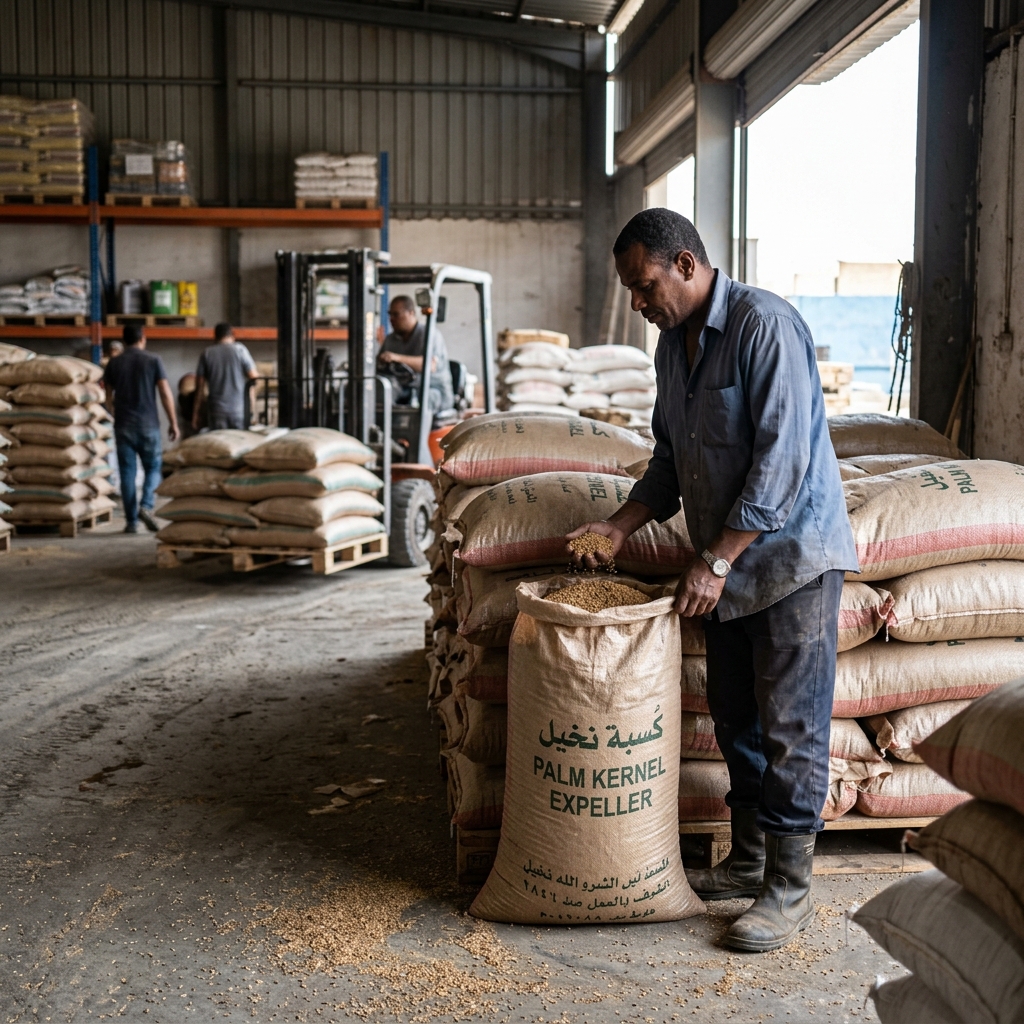
Importing Palm Kernel Expeller for Egypt requires a deep understanding of animal nutrition standards, international freight logistics, and strict regulatory compliance. As Egypt’s livestock sector continues to expand rapidly in 2026, demand for cost-effective, high-protein feed ingredients has reached an all-time peak across the Nile Delta and Upper Egypt regions.
Commercial feed millers and farm owners are actively seeking sustainable alternatives to volatile soybean meal and corn prices. According to recent trade statistics from the USDA Foreign Agricultural Service, Egypt imports over 4 million metric tons of plant-based feed components annually to sustain its national dairy and beef expansion initiatives.
This comprehensive import guide breaks down technical specifications, quarantine protocols, economic advantages, and strategic sourcing tactics. Egyptian buyers can utilize these insights to secure high-grade feed supplements while maximizing commercial profit margins.
What is Palm Kernel Expeller for Egypt Livestock Operations?
Palm Kernel Expeller for Egypt livestock feeding is a premium, nutrient-dense byproduct obtained through the mechanical screw-pressing of oil from the seed kernel of the oil palm tree (Elaeis guineensis). It serves as an exceptional eco-friendly energy and protein source for ruminants, including dairy cows, fattening bulls, sheep, and goats.

Furthermore, PKE delivers a balanced ratio of digestible fiber, residual plant lipids, and medium-chain fatty acids. Egyptian livestock producers value PKE because it minimizes metabolic disorders such as subacute ruminal acidosis (SARA) while significantly enhancing butterfat percentage in commercial dairy herds.
Nutritional Profile of High-Grade Palm Kernel Expeller for Egypt Imports
Understanding the exact biochemical matrix of PKE allows feed formulators in Cairo, Alexandria, and Mansoura to optimize daily feed rations accurately. Sourcing premium feed supplements like certified Palm Kernel Expeller for Egypt ensures consistent key nutritional parameters that drive daily weight gain and milk output:
- Crude Protein (CP): 14.5% – 18.0% (essential crude protein feed source)
- Crude Fat (Residual Oil): 6.0% – 10.0% (rich in energy-dense lauric fatty acids)
- Crude Fiber (CF): 13.0% – 17.5% (high neutral detergent fiber content)
- Moisture Content: Below 10.0% (vital to prevent mold during ocean transit)
- Metabolizable Energy (ME): 2,400 – 2,800 kcal/kg for ruminants
- Aflatoxin B1 Level: Under 20 ppb (strictly compliant with Egyptian import regulations)
Why Import Palm Kernel Expeller for Egypt Feed Mills?
Egypt’s commercial animal feed sector experiences continuous cost volatility due to international grain price fluctuations. Consequently, integrating alternative raw materials into feed formulations yields immediate biological and financial advantages for local livestock producers.
Additionally, peer-reviewed animal science research published on ScienceDirect agricultural studies demonstrates that replacing 15% to 30% of traditional grain concentrates with PKE maintains total digestible nutrient (TDN) intake while drastically reducing operational feed overhead.
1. Cost-Effective Protein and Energy Balance
Compared to expensive imported soybean meal or yellow corn, PKE delivers a lower cost-per-unit of usable protein and dietary energy. Securing an advantageous PKE FOB price per ton from Southeast Asian crushers helps Egyptian millers produce high-margin market feeds.
2. Rumen Health and Acidosis Prevention in Arid Climates
Due to its high digestible NDF content, PKE functions as a natural buffer within the rumen environment. It stimulates rumination, stabilizes pH levels, and prevents digestive stress during hot Egyptian summer months when heat stress depresses dry matter intake.
3. Synergies with Other Palm Products & Feed Ingredients
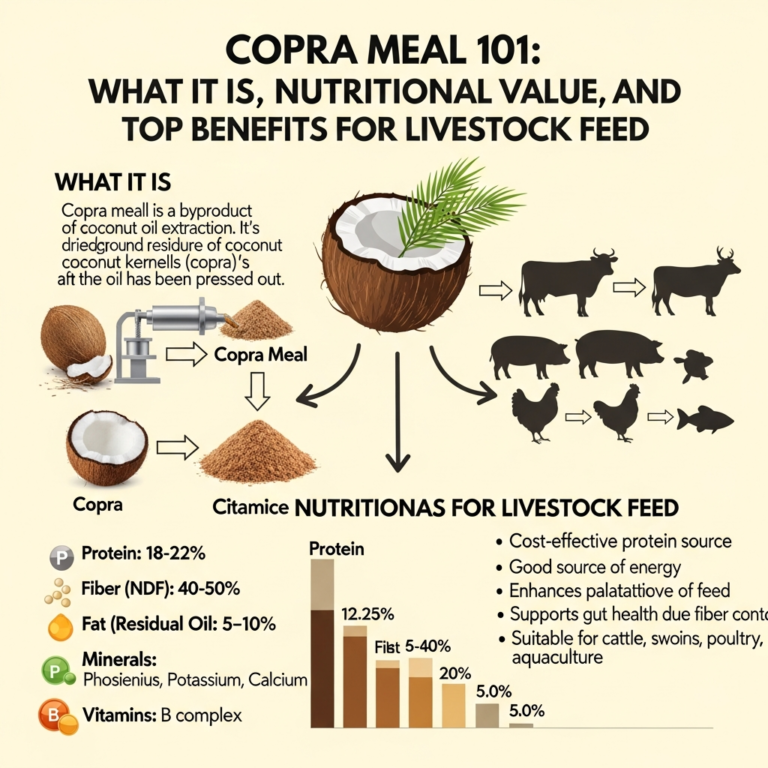
Egyptian animal nutritionists frequently combine PKE with concentrated lipid supplements like RBD CP8 refined palm olein or rumen-bypass fats such as Calcium Salts of Palm Oil Fatty Acids to construct high-energy dairy cattle feed supplement diets. Furthermore, non-ruminant and aquaculture feed plants often blend PKE alongside digestible plant meals like premium Copra Meal.
Quality Specifications: Comparing Feed Ingredients in Egypt
When selecting raw animal feed ingredients Egypt feed plants must systematically evaluate chemical composition, fiber digestibility, and delivered energy. The comparative analysis below outlines how PKE compares to conventional feedstuffs across the Middle East and North Africa (MENA) region.
| Nutritional Parameter | Palm Kernel Expeller (PKE) | Soybean Meal (44%) | Yellow Corn | Wheat Bran |
|---|---|---|---|---|
| Crude Protein | 15.0% – 18.0% | 44.0% – 48.0% | 8.5% – 9.5% | 14.0% – 15.5% |
| Crude Fat | 7.0% – 10.0% | 1.0% – 2.0% | 3.8% – 4.2% | 3.5% – 4.5% |
| Crude Fiber | 13.0% – 16.5% | 6.0% – 7.0% | 2.2% – 2.8% | 9.5% – 11.5% |
| Rumen Buffering Capability | Excellent (High NDF) | Low | Very Low | Moderate |
| Cost Efficiency Index | #1 Top Value Choice | Low (High Volatility) | Moderate | Moderate |
As illustrated above, contracting a palm kernel meal bulk import offers Egyptian buyers a optimal equilibrium of dietary fiber, natural vegetable fat, and digestible protein at a fraction of soybean import prices.

7-Step Guide on How to Import Palm Kernel Expeller to Egypt
Navigating international ocean logistics and border protocols requires precise execution. Below is the essential 7-step blueprint for buying bulk palm kernel cake in Alexandria port or Damietta:
- Supplier Vetting & Audit: Work exclusively with certified high quality PKE animal feed supplier Egypt partners in Indonesia or Malaysia holding ISO 22000, GMP+, or RSPO accreditations.
- Contract Formalization & Incoterms: Agree on explicit FOB or CFR shipping terms to target entry points such as Alexandria, Damietta, Port Said, or El-Sokhna.
- Certificate of Analysis Validation: Require independent lab test results confirming moisture levels below 10%, fat content above 7%, and heavy metal safety limits.
- Egyptian Regulatory Registration: Verify that the importing entity is fully registered with the General Organization for Export and Import Control (GOEIC) and the Ministry of Agriculture and Land Reclamation (MALR).
- Phytosanitary Clearance Acquisition: Secure official Phytosanitary Certificates issued by the exporting country’s government plant inspection agency.
- Vessel Booking & Containerization: Select between 20ft containerized shipments (jumbo tote bags) or break-bulk charter vessels depending on tonnage requirements.
- Customs Clearance & Quarantine Release: Complete port side sampling by the National Food Safety Authority (NFSA) before transferring goods to local feed processing plants.

Key Regulations and Tariff Rates for Palm Kernel Expeller for Egypt Imports
Understanding Egyptian customs duties and border clearance guidelines protects importers from unprojected costs and demurrage fines at sea terminals. The Egyptian Ministry of Agriculture enforces strict biosecurity regulations on all imported agricultural feed products under HS Code 2306.60.
Mandatory Port Documentation for Palm Kernel Expeller for Egypt Consignments
Every commercial shipment of Palm Kernel Expeller for Egypt must present standardized legal documentation upon arrival at Egyptian customs checkpoints:
- Commercial Invoice & Detailed Packing List: Legalized by the Egyptian Embassy or Chamber of Commerce in the origin country.
- Clean Ocean Bill of Lading (B/L): Clearly denoting the Egyptian entry port (e.g., Alexandria Port or Damietta Terminal).
- Official Phytosanitary Certificate: Confirming the cargo is completely free of quarantine pests, weed seeds, and pathogens.
- Certificate of Origin (Form COO): Validating Indonesian or Malaysian manufacturing origin.
- Fumigation Certificate: Documenting professional anti-pest treatment inside vessel holds or containers before departure.
- Aflatoxin & Radiation Clearance Certificates: Issued by accredited independent inspection bodies such as SGS or Intertek.
Furthermore, commercial farming conglomerates operating diversified agricultural ventures across Egypt frequently procure complementary eco-friendly commodities, such as bulk Cocopeat for greenhouse growing media and clean Palm Kernel Shell for industrial biomass fuel.
Feed Formulation Strategies: Incorporating PKE into Egyptian Livestock Rations
Developing balanced feed rations ensures high growth velocity, optimal body condition scores, and maximum milk output. Leading animal nutritionists working with Egyptian feed mill suppliers recommend the following inclusion rates across key livestock species:
- Lactating Dairy Cows: 15% – 25% of total dry matter intake (DMI). Boosts milk fat percentage and supports energy balance during peak lactation.
- Fattening Beef Cattle: 20% – 35% of total concentrate ration. Delivers high daily weight gain without risking bloat or acidosis.
- Sheep and Goats: 10% – 20% of total daily feed. Acts as an excellent palatable energy and crude protein feed source.
- Aquaculture & Poultry Feeds: 3% – 5% inclusion in grower formulations when balanced with synthetic enzymes.
As documented by the Food and Agriculture Organization (FAO), adopting optimized local feed formulas reduces national import dependency and strengthens livestock feed nutrition security across North Africa.
Storage Protocols for Importing Palm Kernel Expeller to Egypt
Maintaining cargo safety during ocean transit across the Indian Ocean and Red Sea requires stringent quality controls. To maintain prime condition, buyers monitoring the palm kernel expeller price per ton Egypt 2026 market must enforce strict storage protocols.
PKE should be stored in dry, well-ventilated flat warehouses or sealed silos. Piles must be kept on wooden pallets away from concrete floors to prevent moisture absorption, self-heating, and subsequent mold growth.
Frequently Asked Questions
What is the protein content of imported Palm Kernel Expeller for Egypt?
High-grade Palm Kernel Expeller features a crude protein content ranging from 14.5% to 18.0%. This profile makes it a highly economical vegetable protein source for commercial dairy cattle, fattening beef, and small ruminants across Egypt.
How is PKE transported to Egyptian maritime ports?
PKE is transported either in 20-foot container loads (FCL) packed in 1,000 kg jumbo bags or in bulk vessel shipments. Most shipments arriving in Egypt discharge at Alexandria Port, Damietta, or Port Said terminals.
Can Palm Kernel Expeller completely replace soybean meal in dairy rations?
No, PKE is designed as a partial replacement (15% to 30%) for high-cost protein meals and grains. It provides an optimal balance between crude protein, digestible neutral detergent fiber, and energy without triggering metabolic acidosis.
What are the maximum allowable moisture levels for PKE imports?
Egyptian agricultural quarantine standards require PKE moisture levels to remain strictly under 10.0%. Low moisture prevents fungal growth, self-heating, and aflatoxin contamination during long ocean ocean transit across humid tropical trade routes.
Why is PKE preferred for dairy farming in the Nile Delta?
PKE contains 6% to 10% residual plant fat alongside high digestible fiber. This specific nutritional synergy enhances butterfat synthesis in dairy milk while maintaining stable pH levels inside the cow’s rumen during hot weather.
Conclusion: Maximizing Returns with Premium Palm Kernel Expeller for Egypt
Adopting structured procurement practices when importing animal feed components delivers a clear competitive edge for feed manufacturers across North Africa. By securing premium quality Palm Kernel Expeller for Egypt, livestock enterprises maintain high dietary standards while cutting feed production overhead in 2026.
Ready to optimize your feed formulations and reduce raw material import costs? Partner with leading international suppliers who guarantee lab-tested quality, continuous supply stability, and full supply chain transparency.

 English
  Indonesian
  Chinese
  Arabic