
جدول المحتويات
- ما هي عنقود ثمار النخيل الفارغ (EFB)؟
- The Journey from Waste to Resource: How EFB is Processed
- Top 7 Astonishing Uses of Empty Palm Fruit Bunch (EFB)
- 1. مركز قوة للوقود الحيوي والطاقة المتجددة
- 2. Revolutionizing Agriculture as Organic Compost
- 3. A Sustainable Source for Pulp and Paper
- 4. Building the Future with Fiberboard and Composites
- 5. Creating Biochar and Activated Carbon
- 6. A Component in Ruminant Animal Feed
- 7. Natural Erosion Control and Mulching
- Environmental and Economic Benefits of Utilizing EFB
- التحديات والتوقعات المستقبلية لـ EFB
- Conclusion: The Future is Sustainable with EFB
- الأسئلة الشائعة (FAQs)
The global palm oil industry is a titan of modern agriculture, but its rapid expansion generates enormous amounts of biomass waste. For decades, the focus was solely on the oil, specifically زيت النخيل الخام و زيت نواة النخيل, leaving behind mountains of byproducts. Among these, the عناقيد ثمار نخيل الزيت (also known as the Empty Palm Fruit Bunch or EFB) stands out, not as waste, but as a profoundly valuable and sustainable resource waiting to be harnessed. This guide explores the incredible journey of EFB from a mill byproduct to a cornerstone of the circular economy.
ما هي عنقود ثمار النخيل الفارغ (EFB)؟
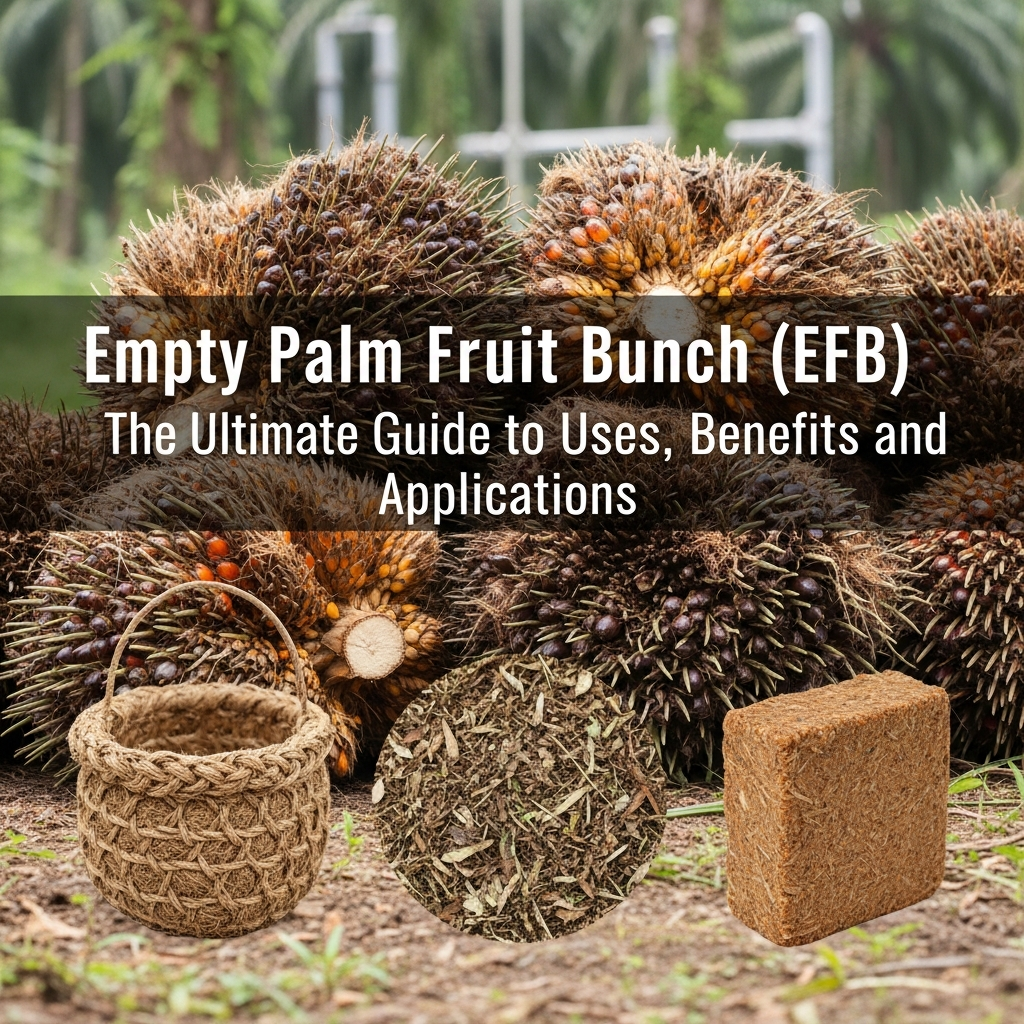
أن عنقود ثمار النخيل الفارغ (EFB) is the fibrous residue left after the fresh palm fruits, which contain the valuable نواة النخيل, have been stripped from the bunch for oil extraction. Imagine a large, woody, and fibrous stalk where the fruit once grew; that is an EFB. Initially, it is bulky, wet (with a moisture content of 60-70%), and challenging to manage.
Composed mainly of cellulose, hemicellulose, and lignin, its properties make it an excellent raw material for a wide range of applications. Instead of being discarded in landfills, where it would release methane—a potent greenhouse gas—this valuable biomass can be transformed, offering both environmental and economic advantages.

The Journey from Waste to Resource: How an Empty Palm Fruit Bunch (EFB) is Processed
Before an عنقود ثمار النخيل الفارغ (EFB) can be used effectively, it must undergo processing to reduce its moisture and size. The raw EFB is too wet and bulky for most applications, making transportation and handling inefficient.
The primary processing steps include:
- تمزيق: The large bunches are fed into a shredder, which breaks them down into a finer, more manageable fiber.
- نزح المياه: The shredded fiber is then pressed to squeeze out excess water, significantly reducing its weight and moisture content.
- تجفيف: In some cases, especially for biofuel production, the fiber is further dried to meet specific moisture level requirements.
This processed fiber is now a stable, consistent raw material ready for its various applications, from generating power to enriching soil.
Top 7 Astonishing Uses of Empty Palm Fruit Bunch (EFB)
تعدد استخدامات عنقود ثمار النخيل الفارغ (EFB) is truly remarkable. Here are seven of its most significant applications that are driving sustainability forward.
1. مركز قوة للوقود الحيوي والطاقة المتجددة
One of the most immediate uses for EFB is as a solid biofuel. Many palm oil mills use shredded EFB directly in their boilers to generate steam and electricity, creating a self-sustaining energy loop. This process, known as co-generation, reduces the mill’s reliance on fossil fuels and lowers operational costs.
Furthermore, EFB can be compressed into high-density pellets or briquettes. These biofuels are easier to transport and can be sold to other industries as a clean, renewable energy source, aligning with global efforts to transition to greener energy as highlighted by the الوكالة الدولية للطاقة المتجددة (IRENA).
2. Revolutionizing Agriculture as Organic Compost
When composted, an عنقود ثمار النخيل الفارغ (EFB) transforms into a nutrient-rich organic fertilizer. The composting process breaks down the tough fibers, creating a dark, earthy material that works wonders for soil health. It improves soil structure, enhances water retention, and returns vital nutrients to the land.
This “black gold” is often reapplied to the palm plantations themselves, reducing the need for chemical fertilizers and creating a closed-loop agricultural system. This practice is a cornerstone of sustainable farming, promoting long-term soil fertility as advocated by the منظمة الأغذية والزراعة (الفاو).

3. A Sustainable Source for Pulp and Paper
The high cellulose content of EFB makes it a viable alternative to wood for producing pulp and paper. As deforestation remains a critical global issue, utilizing agricultural residues like the عنقود ثمار النخيل الفارغ (EFB) helps alleviate pressure on our forests. Though challenges like high silica content exist, modern technology is making EFB-based paper production increasingly feasible and eco-friendly.
4. Building the Future with Fiberboard and Composites
EFB fibers can be blended with resins and pressed under high temperature and pressure to create medium-density fiberboard (MDF), particleboard, and other composite materials. These boards are used in furniture manufacturing, construction, and even automotive interiors. This application locks carbon into a durable product and provides a sustainable alternative to traditional wood-based panels.
5. Creating Biochar and Activated Carbon
Through a process called pyrolysis (heating in the absence of oxygen), EFB can be converted into biochar. Biochar is a stable, carbon-rich charcoal that serves as an excellent soil amendment. It improves drainage, reduces soil acidity, and sequesters carbon for centuries, effectively combating climate change. Research published on platforms like ساينس دايركت shows its immense potential.
Additionally, EFB can be processed into activated carbon, a highly porous material used in water and air purification systems to filter out contaminants.
6. A Component in Ruminant Animal Feed
While not as common, treated عنقود ثمار النخيل الفارغ (EFB) can be used as a source of roughage in feed for ruminant animals like cattle and goats. The EFB undergoes treatments to improve its digestibility, providing a low-cost fiber component. This is similar to how other byproducts like معصرة نواة النخيل are used as valuable components in animal diets.
7. Natural Erosion Control and Mulching
Shredded EFB fiber is an excellent mulching material. When spread over bare ground, particularly on slopes or newly planted areas, it helps prevent soil erosion from wind and rain. It also suppresses weed growth and helps the soil retain moisture, giving young plants a better chance to thrive. This is another example of a palm plantation byproduct being used to support the plantation itself.
Environmental and Economic Benefits of Utilizing an Empty Palm Fruit Bunch (EFB)
The widespread adoption of EFB technologies brings a dual-pronged advantage. By turning a waste product into a resource, we unlock significant benefits for both the planet and the economy.
- Environmental Benefits: Reduces landfill waste, cuts methane emissions from decomposition, provides a renewable substitute for fossil fuels, lessens deforestation, and improves soil health through composting and biochar.
- Economic Benefits: Creates new revenue streams for palm oil mills, reduces waste disposal costs, lowers energy expenses through co-generation, and fuels job creation in the green technology and bio-based sectors.
Challenges and Future Outlook for the Empty Palm Fruit Bunch (EFB)
Despite its immense potential, the utilization of the عنقود ثمار النخيل الفارغ (EFB) faces some hurdles. High initial moisture content requires energy-intensive drying, and its bulkiness makes transportation costly. Scaling up conversion technologies also requires significant capital investment.
However, the future is bright. As the world pushes for a circular economy and sustainable solutions, the demand for renewable materials and energy is skyrocketing. Ongoing research is focused on developing more efficient processing techniques and higher-value applications. The عنقود ثمار النخيل الفارغ (EFB) is poised to become a key player in the global bioeconomy.
Conclusion: The Future is Sustainable with EFB
ال عنقود ثمار النخيل الفارغ (EFB) is a powerful testament to the principle that “waste is just a resource in the wrong place.” From powering mills and enriching soils to building furniture and purifying water, its applications are as diverse as they are impactful. By embracing EFB, the palm oil industry can move towards a more sustainable, circular, and profitable future.
مصدرك لمنتجات النخيل المستدامة
هل تبحث عن منتجات النخيل عالية الجودة؟
تقدم شركة ماكمور أمانة سجاهتيرا منتجات نخيل عالية الجودة مثل عصارة نواة النخيل، وقشرة نواة النخيل، وزيت النخيل الخام، وزيت نواة النخيل، وغيرها. يرجى التواصل معنا عبر واتساب على الرقم +6282140002198 أو عبر البريد الإلكتروني على admin@makmuramanah.co.id.
الأسئلة الشائعة (FAQs)
1. What is the main component of an Empty Palm Fruit Bunch (EFB)?
EFB is primarily composed of natural fibers like cellulose (around 40-50%), hemicellulose, and lignin. This composition is what makes it such a versatile raw material for biofuel, compost, and fiber-based products.
2. Is using EFB truly environmentally friendly?
Yes. Utilizing EFB prevents it from decomposing in open dumps or landfills, where it would release methane, a greenhouse gas over 25 times more potent than carbon dioxide. Instead, it is used to displace fossil fuels, reduce the need for chemical fertilizers, and sequester carbon, making it a net positive for the environment.
3. How is EFB different from other palm oil biomass like Palm Kernel Shell (PKS)?
While both are valuable biomass, they have different properties. EFB is fibrous and has high moisture content, making it ideal for composting and fiber production. قشرة نواة النخيل (PKS), on the other hand, are hard, dense, and naturally dry, which makes them a superior, high-calorie fuel source for direct combustion. Learn more in this comparative study on palm biomass.
 Arabic
  English
  Indonesian
  Chinese